A rare new neighborhood proposed in Lansing featuring a farm and a twist to make homes affordable
Living next to a farm is a flex in the newest proposed subdivision in Lansing, which has a financing twist that could save big money for buyers.
Churchill Gardens was born out of the pandemic and empty grocery shelves, paired with a housing shortage and a community land bank model that could make the homes more affordable.
Developer Hope Lovell said she was inspired to make a neighborhood where the big amenity isn’t a golf course. It’s a farm.
“This concept has been around a long time – like with Israel’s Kibbutz and South America’s eco villages – but not really in America,” said Lovell, president of LoveJoy Community Services, which is leading the development.
“We’re doing some cool stuff and putting Lansing on the map. We’d be the first sustainable living community in the Midwest.”
Located between Pleasant Grove and South Waverly roads, the development could invest about $30 million in the south side of Lansing, Lovell said, which would make it the largest investment in Lansing’s south side in decades.
But first, Churchill Gardens needs additional city approvals and it needs to attract enough attention and funding to make a unique neighborhood possible in a city that hasn’t seen many new neighborhoods in generations.
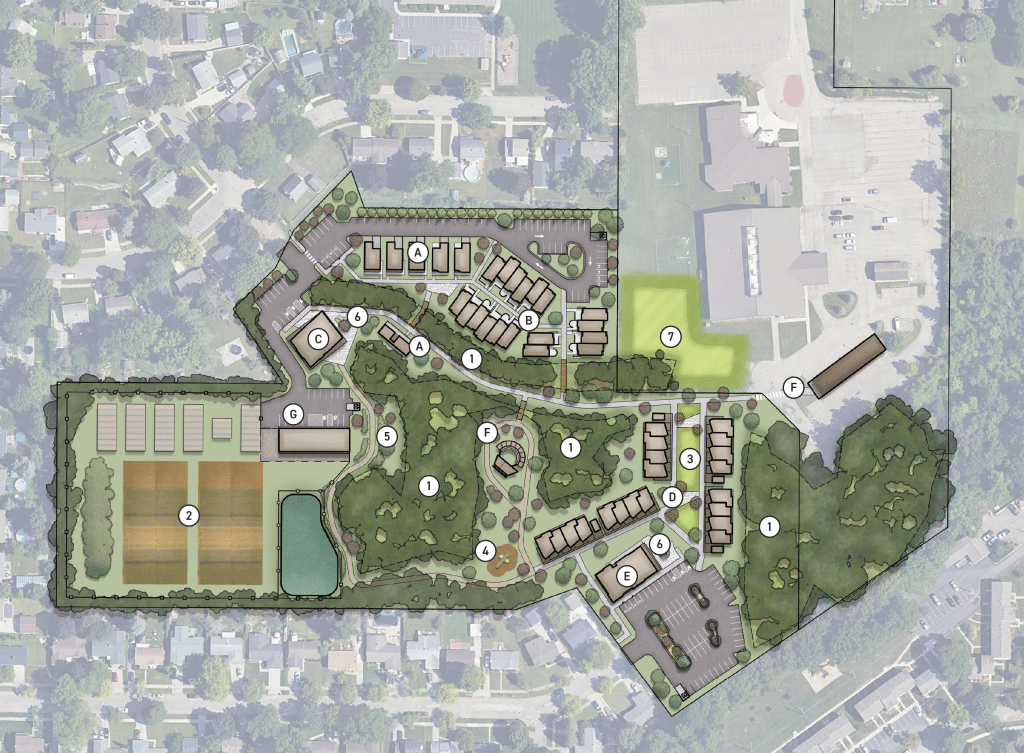
What it would look like
The neighborhood would be built on about 12 contributed acres of a larger lot belonging to the Tabernacle of David Church, where Lovell has served as a board member.
Housing and supporting the neighborhood are priorities for the church, she said.
The housing development would be 78 units, with a mix of about 20 single-family homes or townhomes, several dozen apartment units spread across several smaller buildings and a cohab building that could be used for assisted living, which is an area Lovell has specialized in previously.
Construction could begin in spring next year if it gets approval.
The project has received initial approval by Lansing’s planning commission; the next step would be city council approval, possibly in August.
The farm itself would be about 3 acres, not nearly enough to support the neighborhood’s needs, but could grow tens of thousands of dollars of food a year or more.
That’s enough to offset the cost of operating a farm and to help run a farmers market, and the farm could also provide food for residents and for organizations that help others.
“For every acre of land, commercial, you can gross up to $100k per acre and we recognize we’re not going to hit that or come close but this will be productive land for the community,” said Donald Lovell, husband of Hope Lovell and part of the development team.
The goal, he said, is to get Michigan State University or others on board, with education space and space for using innovative farming methods that could help boost production.
“The fallback plan is we hire a farmer,” he said.
Residents won’t be expected to handle farming, but can get involved with it during harvest days, for example or through a pavilion meant for farmers markets.
The financing twist
The development aims to be the area’s first community land bank trust, said Donald Lovell.
The goal is to get housing subsidies or community investments to make the homes more affordable but to do that on a one-time basis.
The model means the equity from a home increasing in value over time would significantly stay with the property to help keep the home more affordable in the long run.
That feature would likely run through a nonprofit that would own the land, while buyers purchase the home.
An average new-build home in Ingham County costs at least $325,000, which is not affordable for most people in Lansing, Donald Lovell said.
But the community trust model, if it gets investments, could sell that same home for $225,000, which may be out of reach for some stil but would provide an attractive opportunity for many to own their own home at a steep discount..
That investment equity, $100,000 in this scenario and coming from private or public sources, would proportionately stay with the house through future sales and grow in value.
In that scenario, when the owners leave in several years, and their home is now worth $500,000 on the open market, the next buyer would be able to snatch it up for around $350,000.
“You get built-in equity, but you have to pay it forward,” Donald Lovell said. “You buy with equity, but you have to leave some when you move out.”
It’s an exchange, a way for people to enter the housing market and to split the equity. Homeowners wouldn’t leave Churchill Gardens with as much equity as they would in a traditional development but having the neighborhood hold much of the equity dramatically reduces the entry cost and allows people to pay a mortgage instead of rent quicker.
And it’d be in a city-farm environment.