Wharton’s 2026-‘27 fine arts season balances familiarity with discovery
No one will pop a quiz, assess your productivity, weigh you, check your cholesterol or otherwise judge your improvement after you attend a fine arts performance at the Wharton Center.
The arts …

No one will pop a quiz, assess your productivity, weigh you, check your cholesterol or otherwise judge your improvement after you attend a fine arts performance at the Wharton Center.
The arts remain a blissfully metric-free zone where weird and wonderful things from around the world are absorbed through the eyes, ears and brain, for the sheer joy of it.
Let director Eric Olmscheid and his staff sweat over the metrics. Balancing ineffable, ephemeral pleasures with the financial bottom line is their stock in trade.
Wharton’s 2026-‘27 fine arts season, announced today, juggles world-class performers like the brass of the Berlin Philharmonic and the star duo of pianist Emanuel Ax and cellist Yo-Yo Ma with fresh discoveries like blast-furnace singer-pianist Brittany Davis and unexpected revelations like the Ballets Jazz Montréal’s “Dance Me,” a probing excursion into the world of singer-songwriter Leonard Cohen.
The geographic scope of the fine arts series is the globe itself, from the spectacle and thunder of the Yamato Drummers of Japan to the all-American swing of the Count Basie Orchestra and one of its star vocal alumni, Michigan State University favorite Carmen Bradford.
For audiences, it’s a lavish banquet, but for Olmscheid and his team, every dish is the result of three-dimensional planning.
“There are so many amazing and worthwhile artists out there,” Olmscheid said. “We could fill every night of the calendar with amazing artists, but it’s a matter of finding the few that we can put into each genre or category that really make sense for our community, our season, to provide a little comfort food but also offer some new discoveries.”
The present moment can be scary, but not as scary as the past and the future. With pandemic shutdowns and empty stages still resonating in public memory, and addictive AI simulations sending eager feelers into our brains, live arts programming fills a clear and present craving.
“Nationally, we continue to see increased interest in attending live events to experience culture,” Olmscheid said. “But in my observation, that comes with parameters. People want a quality experience. They are less culturally curious than they once were. They want to make sure they will enjoy what they’re spending their resources on.”
The era when a sizeable group of arts mavens habitually went to the concert hall, the theater, the cinema or the art gallery — as a matter of cultural hygiene, to expand their horizons, or just to see what was going on out there — is over.
“Almost every single event we present in our performing arts season requires some level of support or subsidy,” Olmscheid said. “It’s a matter of at what scale, and how does it add up at the end of the year?
There’s another “nail-biting piece of the planning,” Olmscheid said: People are waiting longer to buy tickets.
The rise of a secondary ticket market, a major factor in big, commercial arena acts, has filtered down to all performing arts venues.
“There’s this idea that there are tickets always available, that nothing ever really sells out,” he said. “So, the need to plan early doesn’t feel as urgent to many people. But it is to us, and it makes our planning more difficult.”
As a result, the 2026-‘27 roster is an eclectic mix of safe bets, strong hunches and a modest leap of faith or two.
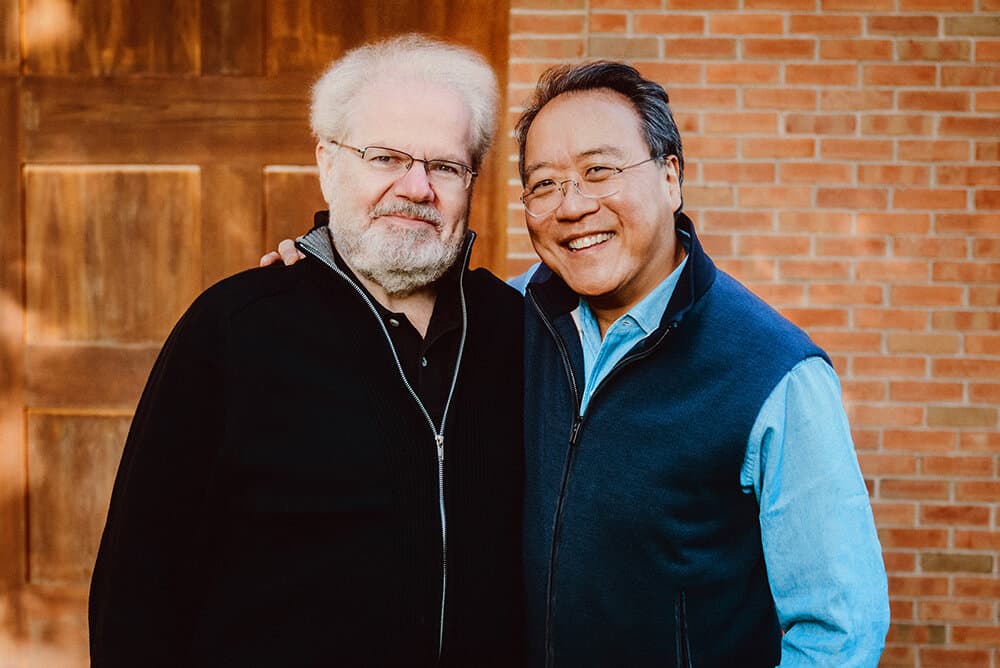
A season highlight will be a chance to bask in the beautiful 55-year partnership between two of the world’s greatest musicians, cellist Yo-Yo Ma and pianist Emanuel Ax (Dec. 8).
Ma, Ax and violinist Leonidas Kavakos treated a packed crowd to a heaping helping of their “Beethoven for Three” project at Cobb Great Hall in January 2024.
“That was a captivating concert,” Olmscheid said. “They hardly said a word from stage, but their expressive musicianship told you everything you needed to know.”
New Yorker readers were treated to a behind-the-scenes glimpse of the duo a couple of weeks ago, as Ma joined Ax for the first installment of his informal, “Car Talk”-style classical podcast, “Classical Music Happy Hour.”
Both musicians lead busy lives, and the Wharton date is one of only a handful scheduled for next season. (A representative of both Ma and Ax, who happened to be in the Wharton Center’s office last week, affirmed that the facility has a “sterling reputation” and both artists had a “great experience” there in 2024.)
Olmscheid felt lucky to watch them warm up backstage, bantering and revving up to perform.
When MSU gave them Spartan baseball caps, they debated whether to wear them on stage. One was eager to; the other said, “Are you out of your mind?” To avoid telling tales out of school, Olmscheid wouldn’t say which was which, but it’s not hard to guess.
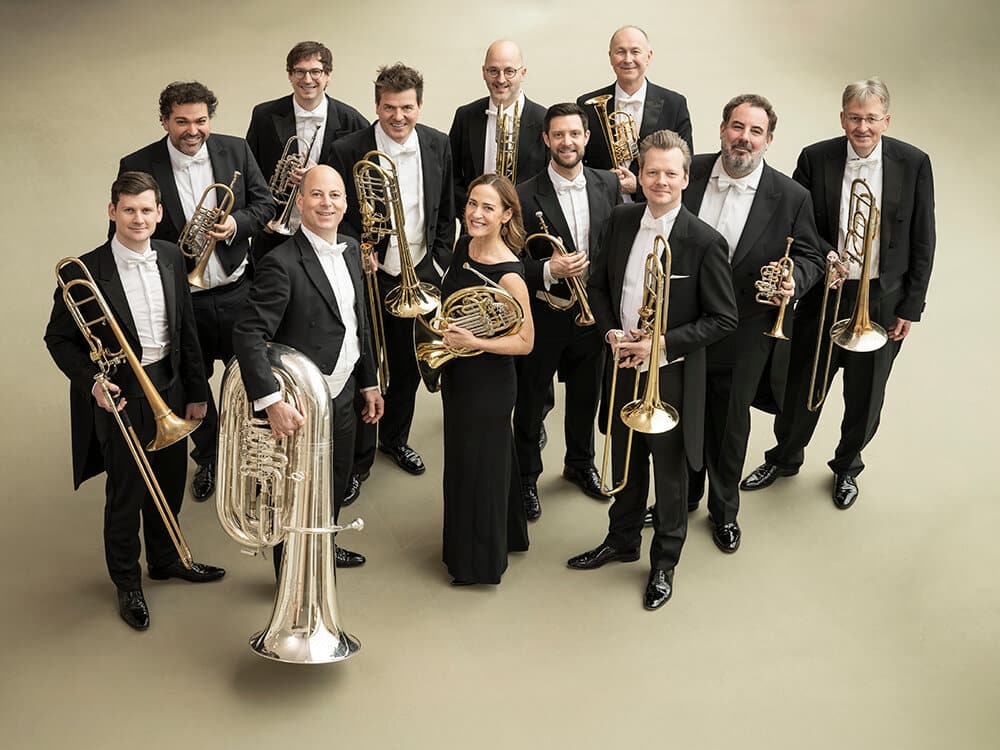
Another highlight of the fine arts season is the peerless Berlin Philharmonic Brass (Feb. 2, 2027). The Wharton Center is among only three dates on a whirlwind American tour, wedged into a layoff week in Berlin.
“The Berlin Philharmonic is one of the finest, if not the finest orchestra in the world,” Olmscheid said. “Why not seize the opportunity when it was given to us?”
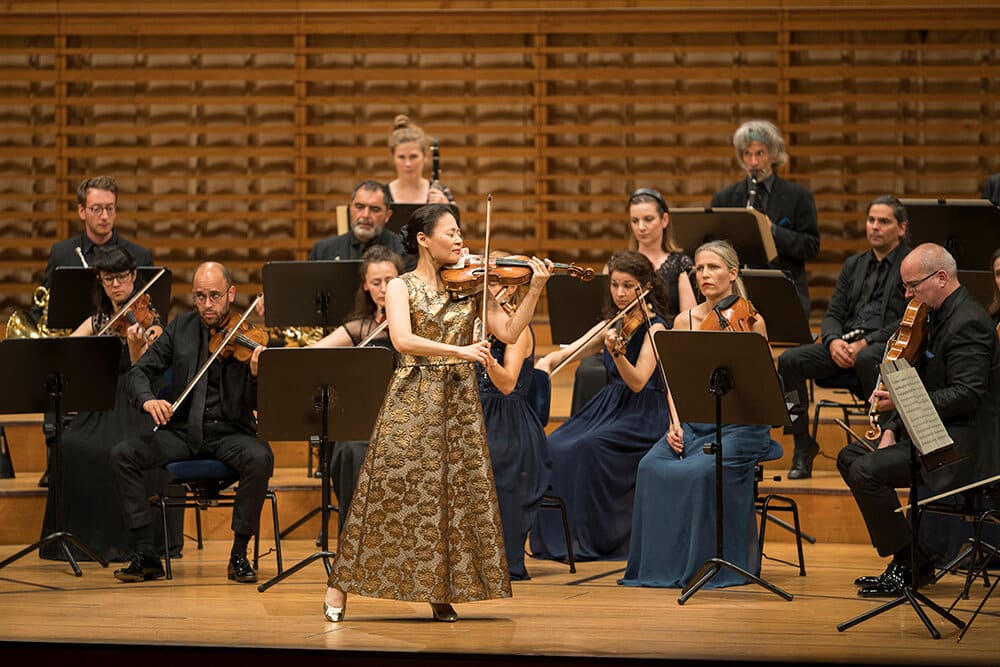
The Lucerne Festival Strings, with superstar violinist Midori (Feb. 21), is a conductor-less, ultra-tight vehicle for music of many eras, from baroque to romantic to modern, and is numbered among the top chamber ensembles in the world.
The wild card in this classical lineup is the duo of mandolinist Avi Avital and accordionist Ksenija Sidorova (March 17)
“There’s a niche audience that will be very excited about Avi Avital,” Olmscheid said. “A mandolin-accordion duo! That’s crazy. But he’s the only Grammy-nominated solo mandolin player.”
The season’s focus on first-drawer ensembles of limited size, like the Lucerne and Berlin groups, doesn’t mean Wharton has dropped its commitment to bringing full orchestras to the Cobb Great Hall.
“We don’t have a full, traditional orchestra next season, but it will be back again in the future, to be sure,” Olmscheid said.
The season’s jazz offerings mix local connections with world-class artistry — not that there is any real distinction between those categories anymore, given the international profile of MSU’s jazz studies program.
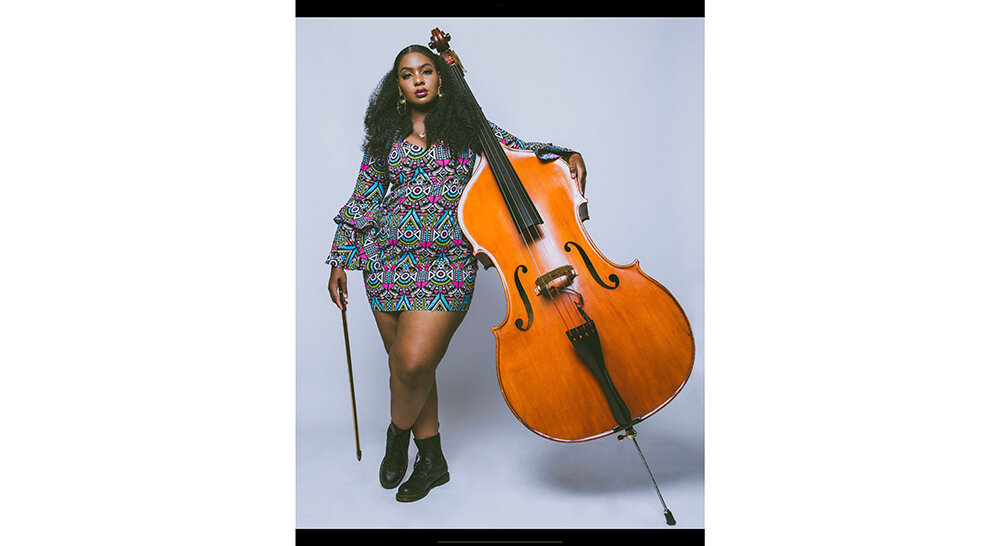
Since graduating from MSU, bassist Endea Owens has broken out as a charismatic, joyous composer-singer-bandleader with a national reach, including a long run as bassist of Stephen Colbert’s “Late Show” house band.
Owens will bring her own trio, The Cookout, to Wharton’s Pasant Theatre Oct. 9. Owens’ homecoming will overlap with MSU’s homecoming week, “a lovely coincidence,” Olmscheid said.
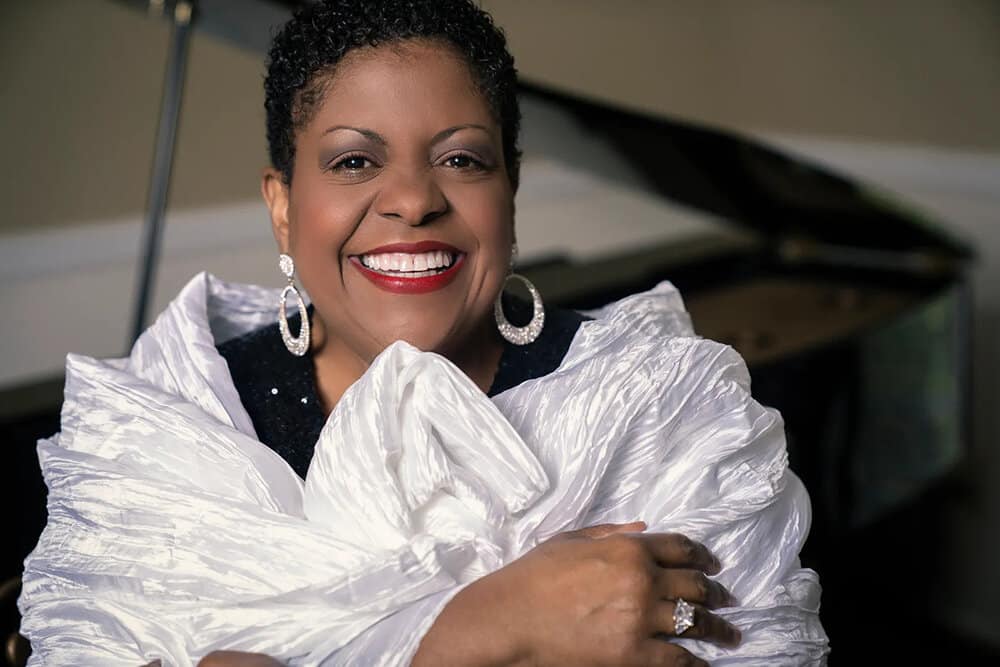
Vocalist Carmen Bradford, a recent addition to the MSU jazz studies faculty, has already treated local audiences to her vocal stylings in a variety of settings, but on Jan. 12 she will have a chance to showcase her longstanding association with the Count Basie Orchestra.
Bradford scored big with audiences as part of a tribute to the late Dolores and Clifton Wharton at their namesake venue in September 2025.
“The response to Carmen’s performance with the MSU Orchestra was overwhelmingly positive,” Olmscheid said. “I pulled her aside immediately and asked if she would consider doing one of our jazz series concerts.”
Back in the 1980s, Bradford was a sophomore in college when Count Basie himself recruited her for his world-renowned orchestra, and she sang with the band for nine years. Reuniting Bradford with Basie’s powerhouse legacy band, a frequent visitor to Wharton, was a natural fit.
Like many music fans, Olmscheid first learned about pianist Emmet Cohen (March 3) during the pandemic, when Cohen established a livestreamed concert series from his Harlem apartment that set new standards for engineering and musical quality and quickly drew tens of thousands of viewers.
Wharton’s commitment to presenting dance is holding firm, and then some. This season brings back the pioneering Dance Theatre of Harlem (Feb. 17), a company that performed during Wharton’s very first season 45 years ago.
“Arthur Mitchell, their visionary founder, believed that dance belonged to everyone, which is a strong ethos we share,” Olmscheid said. “And they were a favorite of Mrs. Wharton’s.”
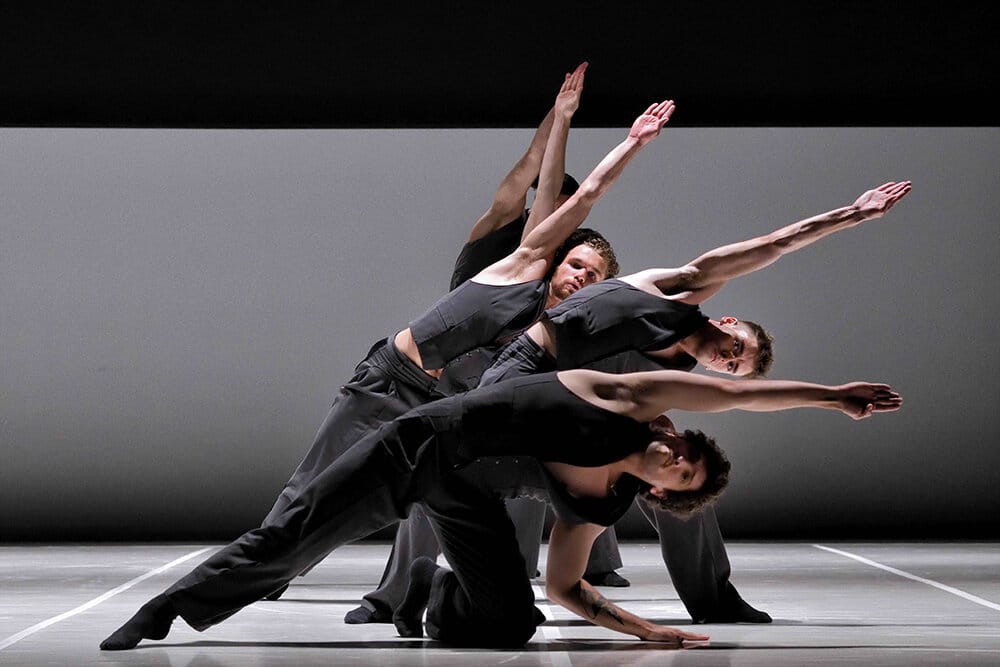
Ballets Jazz Montréal brings “Dance Me,” a program based on the songs of Leonard Cohen, on Nov. 5.
This is the last chance to see the acclaimed Cohen production before the dance company’s license to use his music expires. Cohen himself approved the production in 2016, shortly before his death.
Critics have praised “Dance Me” for its sophisticated handling of Cohen’s songs and thoughtful probing of his mordant worldview.
“It’s a great hook into contemporary dance and movement,” Olmscheid said. “I’ve presented this company several times in my career, and they are just stunning. They continue to grow in their artistry.”
The dance series is rounded out by the “full cultural dance spectacle” of Ballet Folklórico de México de Amalia Hernández (March 2).
Furthering Olmscheid’s goal of returning live theater to Wharton, The Acting Company will take a break from a New York run of Shakespeare’s “A Midsummer Night’s Dream” to bring a fully staged version to Wharton (Feb. 9).
“They are one of the greatest classical touring theater companies that are left, and there aren’t many,” Olmscheid said.
Actor Richard Thomas, most widely known for his portrayal of John-Boy Walton in “The Waltons” television series, will embody humorist and author Mark Twain in a one-man performance (May 6).
Thomas as Twain is a first-time pairing at Wharton, but it’s also a double encore. The originator of “Mark Twain Tonight,” Hal Holbrook, brought the play to Wharton decades ago; Thomas came to the Wharton two years ago in a stage version of “To Kill a Mockingbird.”
Flipping from the folksy to the freaky, “The 4th Witch” (Nov. 10) is a striking new project from Chicago interdisciplinary theater company Manual Cinema, mixing on-stage music, live actors and old-school shadow puppets and projectors to take the audience into hitherto unplumbed nooks and crannies of Shakespeare’s “Macbeth.”
Among the high points in the fine arts season is a cabaret-style evening with Tony-winning star Sutton Foster (Oct. 3), one of the most prominent actors and singers on the Broadway stage today. Foster grew up in Troy, Michigan, and is the namesake of Wharton Center’s Sutton Foster Awards, which recognize top Michigan high school theater productions and performances. While she’s in East Lansing, she’ll work with students on stage, hold master classes and generally serve as a beacon of Broadway energy.
“We’re going to wedge a lot of things in with her in a short period of time,” Olmscheid said.
The Yamato Drummers of Japan (March 16) will add thunder and spectacle to the season’s variety offerings.
Wharton’s newest venue, Club 750, will continue to offer a diversified slate of music, comedy and Broadway-based cabaret nights in an intimate setting with food and drink available.
A familiar face from late-night talk shows, John Heffron (Jan. 8), and viral TikTok goddess Leah Rudick (March 25) will provide the comedy. In a neat intersection with Wharton’s full-scale Broadway offerings, Club 750 will serve up intimate, cabaret-style evenings with Caroline Bowman (March 24), who will no doubt share wicked stories of frozen, kinky boots (see what I did there?), and Nicholas Rodriguez, performing the music of Stephen Sondheim (Jan.7).
The two bold music entries in the Club 750 series do not rely on tried-and-true formulas. The vibrant duo of violinist-vocalist Layale Chaker and harpist Maeve Gilchrist bring a completely original musical fusion (one is of Celtic heritage, the other Levantine) to explore the past, present and future (March 23).
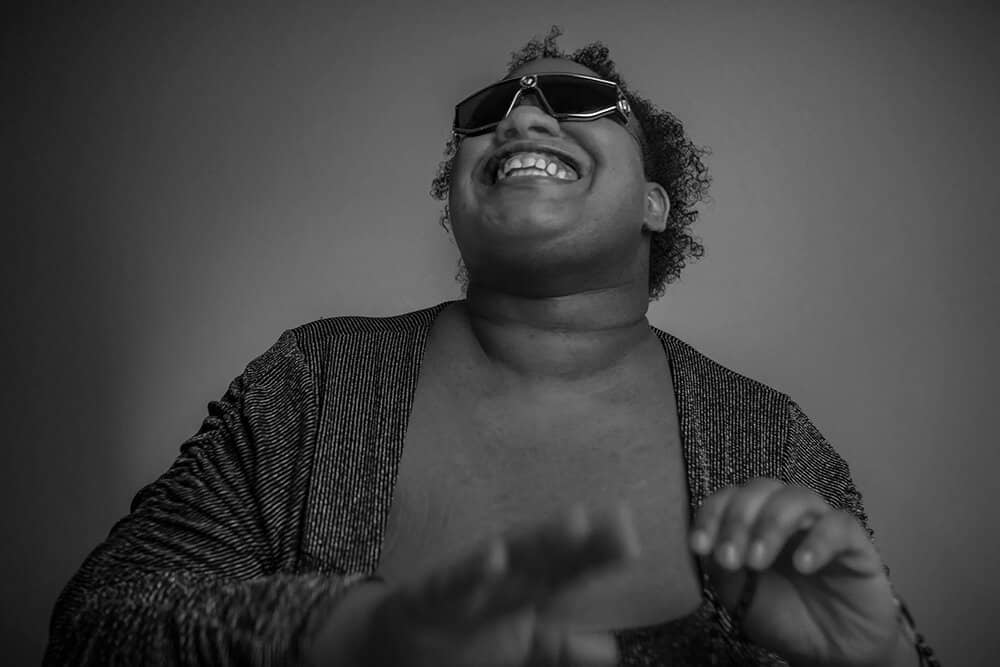
But the secret weapon in the series is Brittany Davis (Jan. 6), a charismatic, powerful singer-songwriter-pianist who fuses gospel, blues, hip-hop, jazz and funk with overwhelming originality and energy.
Olmscheid doesn’t like to play favorites, but after presenting unfamiliar artists like Davis or that off-the-wall Avital-Sidorova mandolin-accordion duo, stepping back and watching people’s jaws drop to the floor is what really floats his inner tube.
“If it’s only household names, we’re leaving a lot of amazing artists off the table,” Olmscheid said. “Remember that there was a time when no one knew who Yo-Yo Ma was.”