‘Vibing time’ as Chuck Redd, Warren Wolf meet in rare vibraphone summit
It’s a rare enough treat to catch a jazz vibraphonist live on stage. The spectacle of two vibraphones, manned by two of the most virtuosic vibraphonists alive, promises a night like no other at the Summer Solstice Jazz Festival.
Listeners will be hard pressed to keep up with the four arms and four sticks of Chuck Redd and Warren Wolf as they meld into a blur and send ringing chords and intricate melodies from 74 tintinnabulating metal bars into the night.
Festival artistic director Randy Napoleon has worked with both Wolf and Redd and conceived the idea of a vibraphone summit.
Wolf said such summits are a “rarity,” but he has played several of them in recent years, including a four-vibraphone extravaganza at the 2024 Detroit Jazz Festival. Wolf and Redd have met on stage several times.
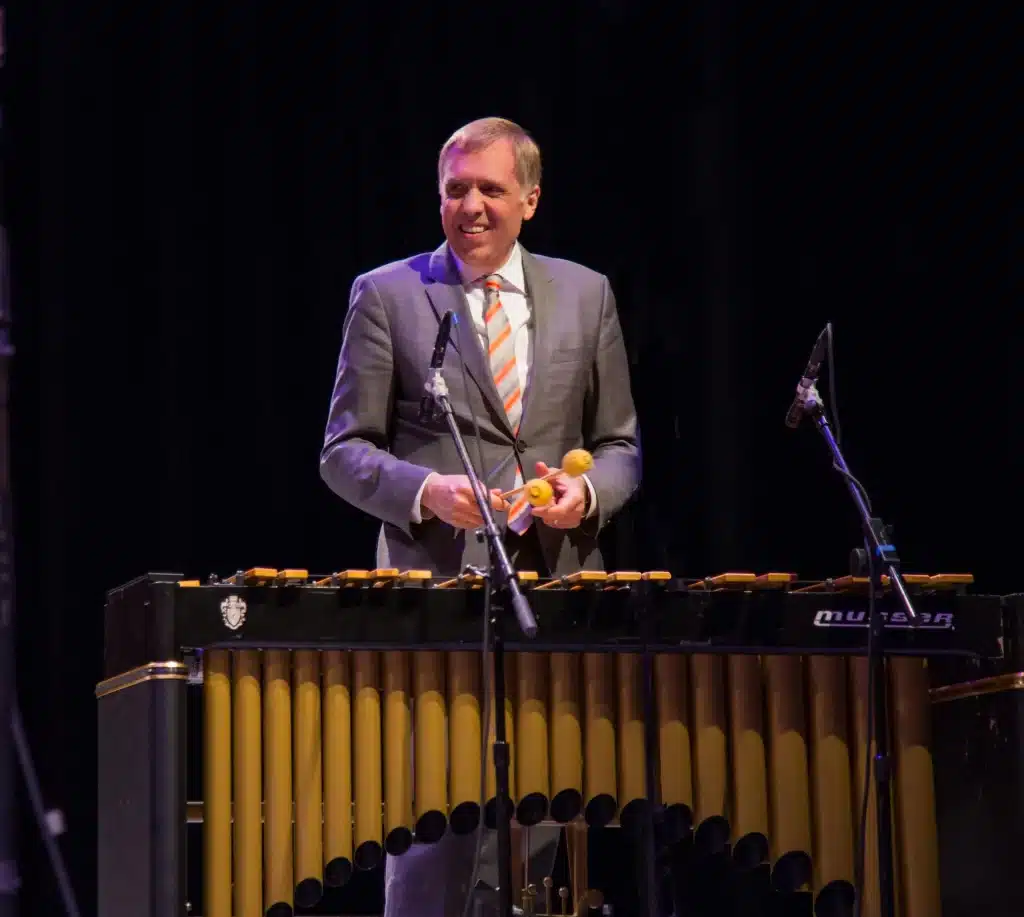
“We’re good friends,” Redd said. “It’s always collegial and always fun. We keep the music first, even though there’s an almost vaudevillian quality to it.”
“It’s always a little competitive, but never to the point where you want to cut somebody’s throat,” Wolf said.
It won’t be hard to tell who’s playing what, even when they both play at once.
“You may hear the same timbre of the instrument, but our own personalities stick out,” Wolf said. “Chuck is more of a traditional player, and I’m more of a hybrid player — swing to modern and a lot of other things. It will be a nice mix, a grand old vibing time.”
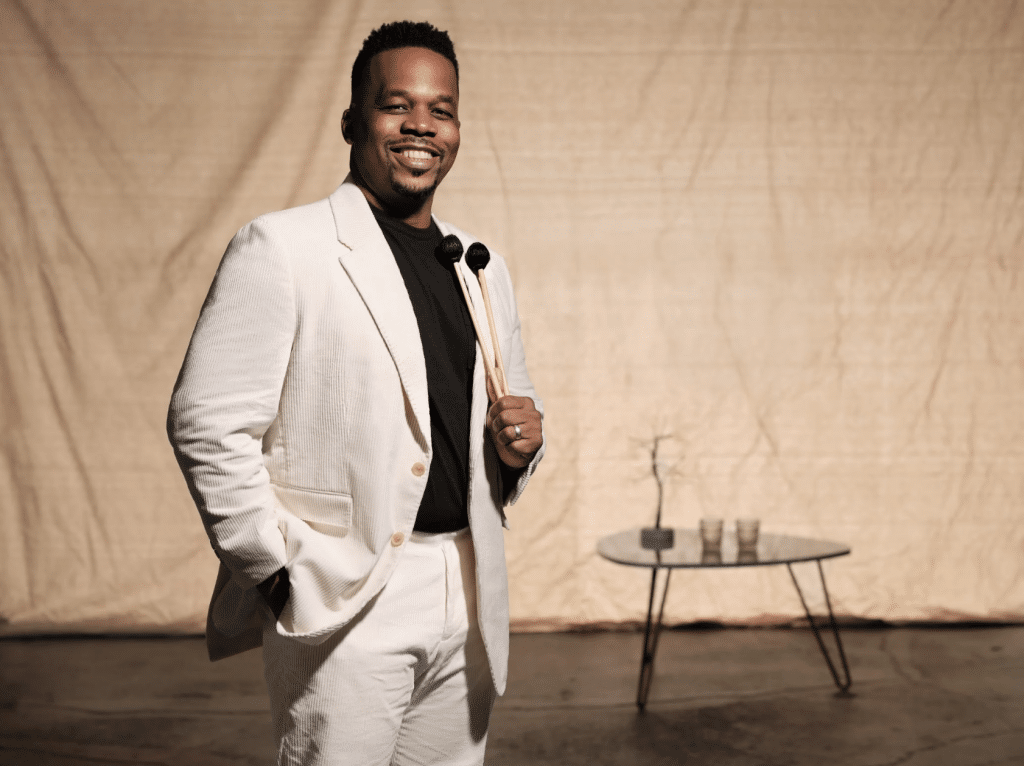
Redd half joked that when it comes to music, he takes his motto from the field of medicine: “first, do no harm.”
“If I’m playing vibes behind someone else who’s playing the melody, I have to think like an arranger and do something that enhances what’s going on, even if it means not playing anything,” he said.
He summed up his job in the words of one of his most cherished mentors, guitarist Barney Kessel.
“He told me that as a drummer, it’s your responsibility to know what’s going on and what to do about it,” Redd said. “That was worth a hundred drum lessons. That translates to any musical situation on any instrument.”
The Vibe Summit
7:30 p.m. Saturday, June 27
Al and Beth Cafagna Founders’ Stage
Redd doesn’t drop the ubiquitous jazz buzzword “swing” lightly.
“Swinging is a very deep experience, a very deep way to communicate with people on a visceral, emotional level,” he said. “People coming out of MSU, with great teachers like Randy (Napoleon) and Rodney Whitaker, they’re swinging, they’re ready to bring it to people.”
Pianist Rick Roe, a former MSU faculty member and frequent visitor to the Lansing area, will join Wolf and Redd on piano, with veteran Ann Arbor bassist Paul Keller and drummer Michael Reed.
The two vibists have already mapped out the territory they plan to explore Saturday, including bebop, bossa nova and blues, with a special tribute to recently deceased jazz giant Sonny Rollins. Watch for a coordinated jump-blues assault as Redd and Wolf launch into “Air Mail Special,” a hyper-speed romp made famous by jazz vibraphone pioneer Lionel Hampton.
Wolf and Redd are both total musicians, adept on drums as well as vibes. Wolf is also a pianist, with roots in both classical and jazz music. He was a guest soloist with the Baltimore Symphony for 14 years and did a stint as principal timpanist for Johns Hopkins University’s Peabody String Sinfonia.
But his dad’s record collection, particularly the hit albums of soul-jazz sunshine purveyor Roy Ayers, put a hook into him.
“For some reason — I have no idea why — he decided to buy a vibraphone in 1978, a year before I was born,” Wolf said. “He gave me lessons on vibraphone, drums and piano at the age of 3. He’s the one who got me started.”
Wolf shaped his own intricate, soulful approach to the vibraphone at venues around Boston while keeping up his studies at Berklee College of Music.
With every solo, he builds up mesmerizing sonic architecture, with room for baroque tumbles of notes straight out of Bach or Vivaldi, pools of cool blue from Miles Davis, honeyed licks in the style of Ayers and a myriad of flavors all his own.
“Sometimes I honestly wish I played the trumpet or saxophone, because they’re much easier to deal with,” Wolf said. “But it’s still a great thing because it’s not a common instrument. People don’t see it or hear it every day, and when they do, they’re really amazed at what you can do with it.”
The passion and intricacy of his live performances and albums turned heads in the jazz world. Vibraphone great Bobby Hutcherson called Wolf “one of the premier keepers of the flame.” NPR aired a 60-minute video of Wolf’s November 2011 gig at the 92nd Street Y’s Tribeca venue.
In 2005, Wolf moved back to Baltimore and joined some stellar company, including saxophonist Bobby Watson’s sextet, drummer Karriem Riggins’ Virtuoso Experience and bassist Christian McBride’s Inside Straight.
Redd and Wolf both consider vibraphonist Milt Jackson among their greatest heroes.
Jackson pushed the instrument to multiple heights, from expressive blues and soul to intricate bebop to the classical elegance of the Modern Jazz Quartet.
On a tour of Japan, Redd played drums with Kessel on a double bill with Jackson’s group.
“I got to hear my hero every single night for two weeks,” Redd said. “It was a dream come true. He transcended the instrument. The emotion, the heat — he could really rock when he wanted to. It was all there.”
Redd had a memorable experience playing in Africa in 1990 with Dizzy Gillespie for the Namibian independence celebration.
“It was just like being around a giant ray of sunshine,” Redd recalled. “He was constantly teaching and always learning, too. Unlike a lot of veteran musicians who are just in their groove, doing their thing, he was very analytical, very intelligent, and would talk very specifically about what he wanted.”
The band met to rehearse only once, in Gillespie’s hotel room.
“He talked through everything, pounded rhythms on his knees for me and showed me what he wanted,” Redd said.
Despite his experience with some of the greatest jazz legends, it’s the younger musicians that really excite Redd.
“They give us hope,” he said.
Redd’s latest album, due out in July, blends longtime collaborators like pianist Mike LeDonne, guitarist Peter Bernstein and bassist Peter Washington with “much younger” players like drummer Aaron Seeber and saxophonist/clarinetist Will Anderson, both graduates of The Juilliard School.
“Aaron and Will are about my son’s age, but they fit right in on a high level,” Redd said. “They’re inspiring me, and we’re inspiring them.”
Meanwhile, Wolf is touring with two of the world’s top jazz ensembles, Inside Straight and the SFJAZZ Collective, while holding down teaching duties at the Peabody Conservatory and the San Francisco Conservatory of Music. His own ever-morphing group, the Wolfpack, goes back decades and is still active. The Wolfpack’s latest guise, “Warren Wolf and Smoov,” circles back to the soul-jazz style of Ayers.
“It’s very much jazz. It’s not a smooth project, but the point of the record is for the listener to not have to dissect it, just relax and enjoy it,” Wolf said.
He’s working on Chick Corea’s “Lyric Suite,” a classical-jazz hybrid that features vibraphone, piano and string quartet, and he has written new music for the avant-garde percussion duo Escape Ten.
“We’re in 2026,” he said. “We should be writing and playing new music.”
Redd’s musical exploits spilled off the stage and into the news earlier this month, when Washington Superior Court Judge Tanya Jones Bosier dismissed a lawsuit filed by the (then) Trump-Kennedy Center against him.
After hosting the Kennedy Center’s free Christmas Eve Jazz Jam for several years, Redd dropped out of the concert in 2025 in response to Trump’s name going on the building.
“I’m very pleased with the ruling, and that’s about all I’m encouraged to say right now, when it’s very fresh news,” Redd said. “Later on, I might say more, but I’m just really relieved at the moment.”
However, he changed his mind and took one more chorus.
“One of the beautiful things I have in my life is simply music — being inside this joyous musical space we share with others,” he said. “It gets me through everything. And I will, and always have, played for everybody because it bridges some of these divides that are happening right now.”