
From farmers markets to food pantries, how the cyclospora outbreak is hitting Lansing’s food system
Amid the cyclospora outbreak, vendors at Greater Lansing area farmers markets are hoping the headlines – including a visit from British social media duo Josh & Jase to a market on the Capitol Lawn on Tuesday – will bring more shoppers back to local farm stands.
“I do think it’s important for people to know that farmers markets exist and that there are local farmers whose livelihoods are based off of the local community supporting them,” local grower Tyler Sharp said.

Caleb Bancroft’s farm, based in DeWitt, saw a boom in sales during the COVID-19 pandemic, but sales dropped off once restrictions were lifted, a trend he fears could repeat this time.
“I really wish people would remember,” Bancroft said, “because we’re going to be here trying to bring you the best produce we can.”
Food recalls aren’t surprising.
The United States Food and Drug Administration (FDA) reported over a thousand food and cosmetic recalls last year. Reasons for recalls included undeclared allergens, like wheat and milk, on ready-to-eat sandwiches and mislabeling items that needed refrigeration.
More alarming reasons include Salmonella contamination, seasonings potentially having small metal fragments and possible seafood exposure to Norovirus.
In many of these cases, the source is easily traceable. Steps are taken to remove the product from grocery stores and limit the public’s risk.
But when the cause, source and contaminated product aren’t clearly identified, any way of minimizing harm gets muddy.
Michigan ranks at the top of states currently seeing a large and developing outbreak of cyclosporiasis, an intestinal illness caused by cyclospora, a microscopic parasite that can contaminate fresh food and water.
The illness is characterized by “frequent, watery diarrhea,” according to public health officials.
Communication from federal health departments about sourcing is murky. The FDA reported in mid-July that a sample of Taylor Farms iceberg lettuce grown in central Mexico showed evidence of cyclospora. The traceback investigation detected shredded lettuce from Taylor Farms de Mexico, which was sold to Taco Bell locations across the Midwest, as a possible source. The company issued a voluntary recall the same day.
Officials walked that statement back a few days later, calling it a “false positive.”
In a press release from around the same time, the Michigan Department of Health and Human Services (MDHHS) identified lettuce or salad greens as a possible source, but clarified that “other food items cannot be completely ruled out.”
Officials said they are continuing to investigate additional suppliers, restaurants, retailers and distribution channels to trace the source of the outbreak.
Local Alternative
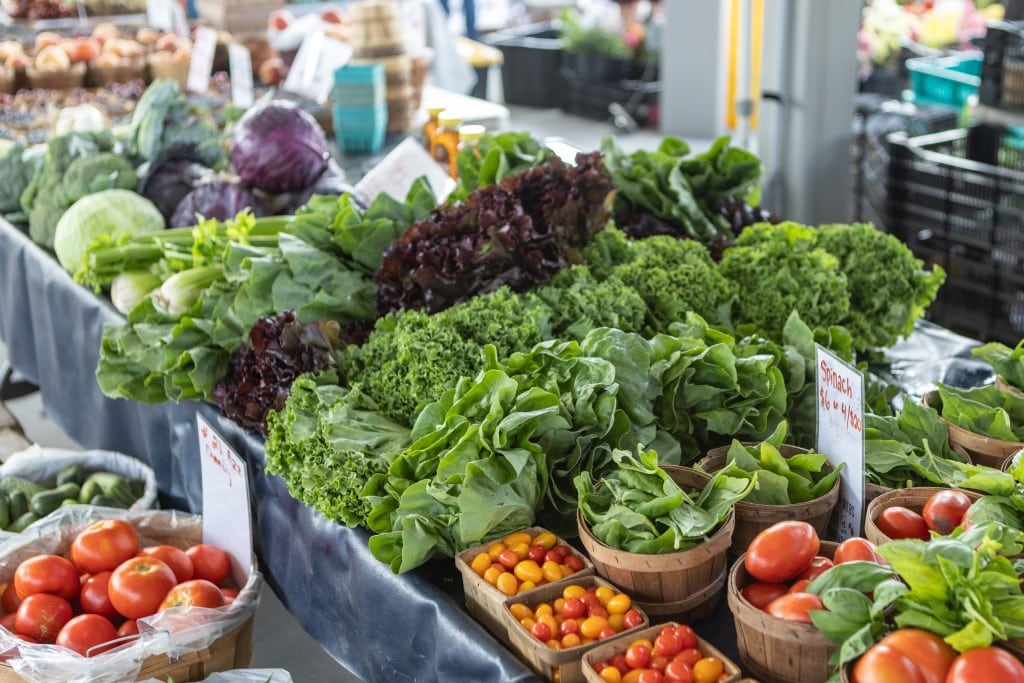
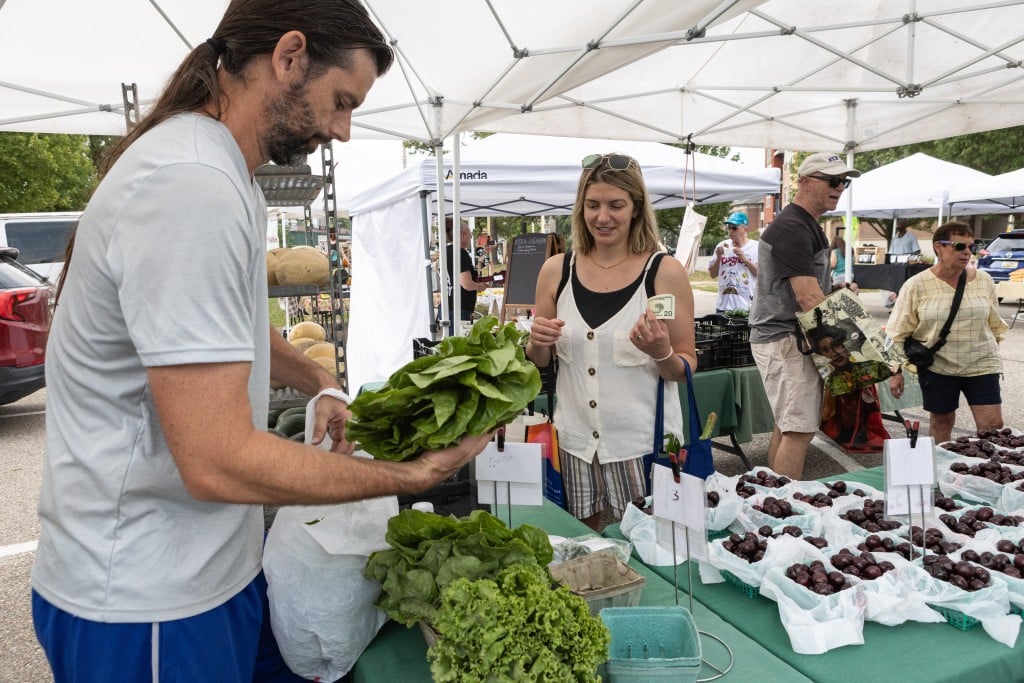
Many are turning to local gardens and farmers markets to find produce. Greater Lansing offers multiple farmers markets throughout the week, giving residents alternatives to typical grocery store produce.
Those going to the Allen Farmers Market on Wednesdays can find vendors in the side parking lot, look under the mural on Shepard and Kalamazoo Street, as well as inside the Allen Neighborhood Community Center.
The market’s website issued an alert for July 22, assuring customers that local growers at the Allen Farmers Market can “provide safe, healthy, and delicious produce” and emphasizing an absence of cases traced back to local farms.
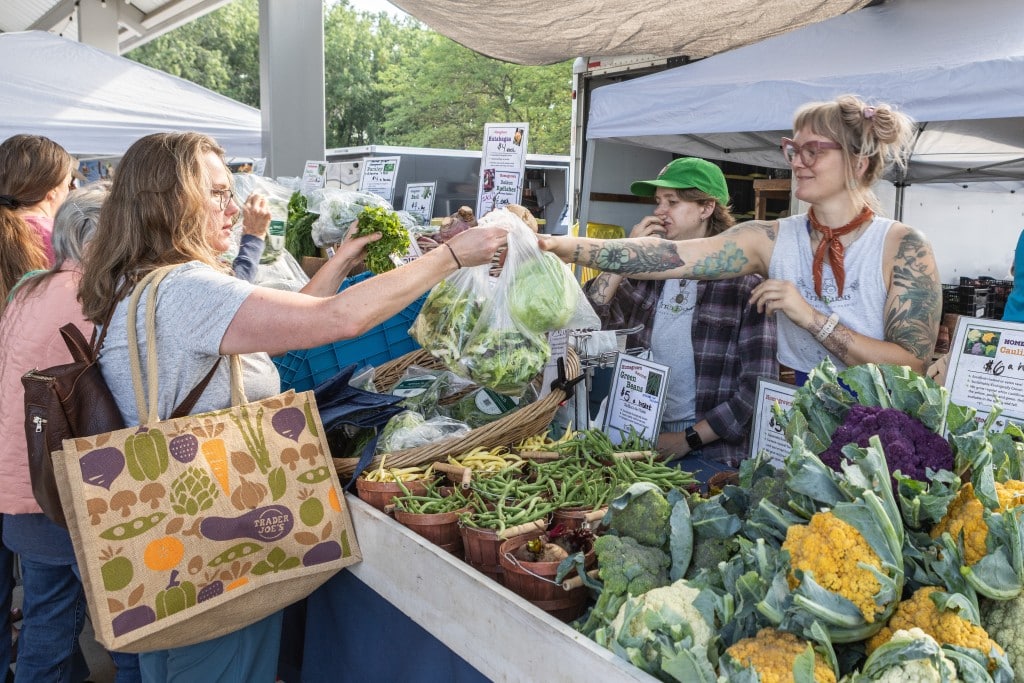
“We’ve seen an increase in interest in locally grown produce, absolutely. They ask where our farm is, if we are local, are we following good safety practices.” Bee Queener of Titus Farms in Leslie, MI (on right), at the Meridian Township Farmers Market.
Photo by Raymond Holt.
Coleen Stowell, of Coleen’s Greens, has noticed more customers are showing up to the farmers market.
“I’ve seen a lot of new faces,” she said.
Three Lakes Gardens’ Tyler Sharp said customers are asking a lot of questions and showing concerns about buying at grocery stores.
“It’s actually opened up a lot of opportunities for us as local farmers to describe our produce, our habits of growing, how we package and store it,” he said.
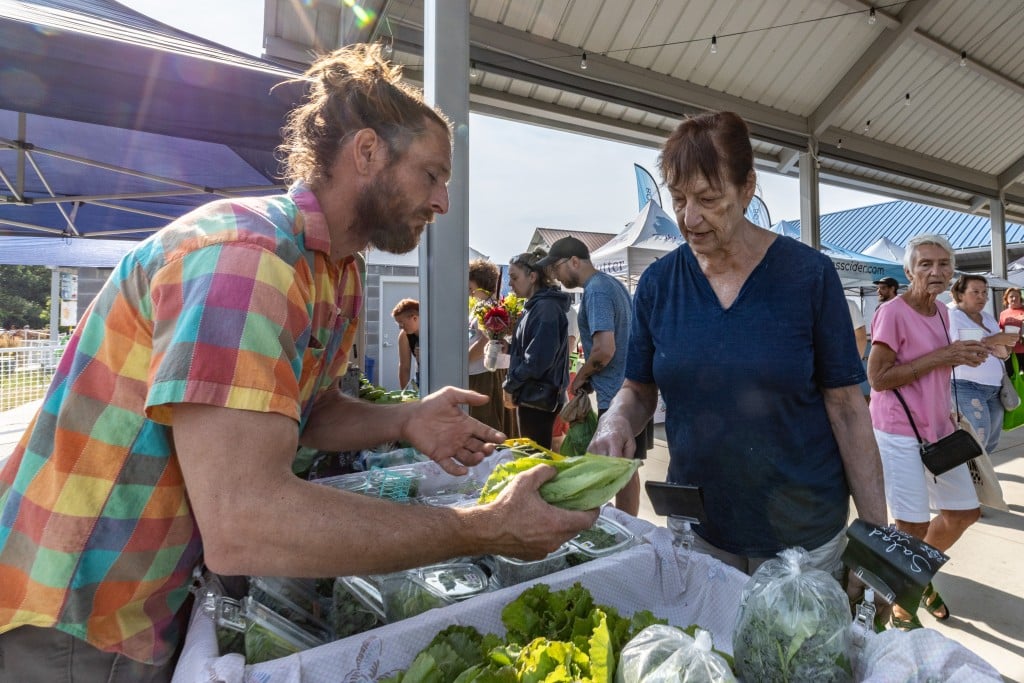
Photo by Raymond Holt.
The farm has seen a boom in sales, starting with the first market after the outbreak was announced. “Actually, we’ve had our best sales in the last couple weeks,” Sharp said. “I think people are going from the grocery chains to come in and buy local.”
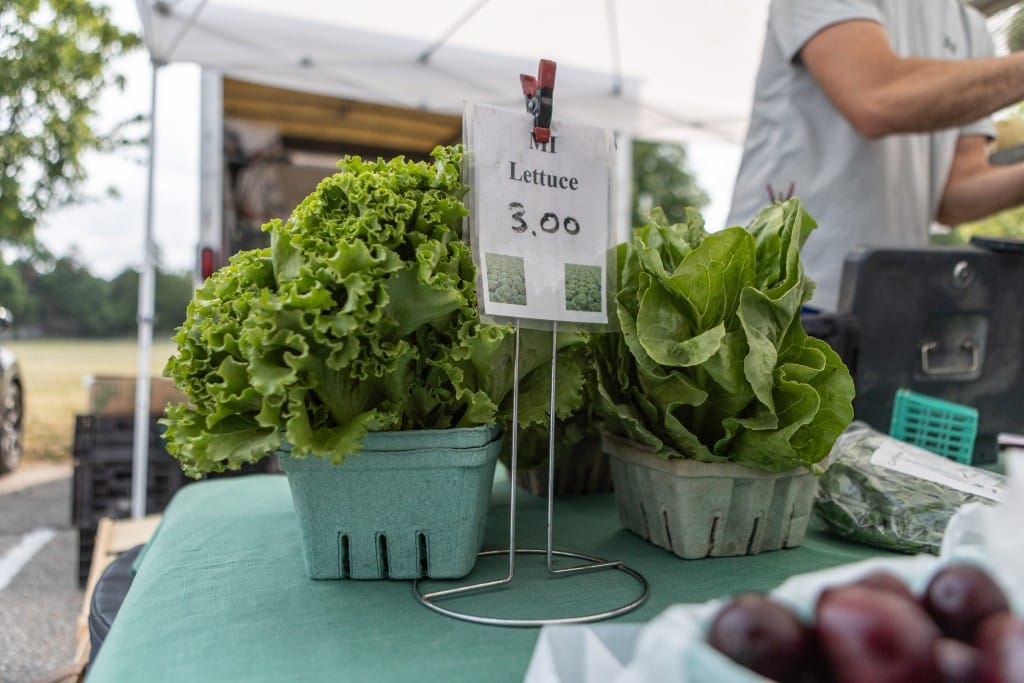
Across in Okemos, the Meridian Farmers Market is open year-round. Caleb Bancroft is part of Pondside Farms, located in DeWitt. He goes to as many farmers markets as possible, but with the huge uptick in customers, keeping produce on his market tables is a juggling act.
“For the past few weeks, it’s been packed for the first hour, hour and a half, and we sometimes run out of produce,” he said.
His crops took a hit with the recent heat wave. Romaine lettuce prefers cooler weather. When romaine lettuce sales soared, he tried to accommodate by planting more, but the hot weather caused it to go bitter.
“We never foresaw this,” he said.
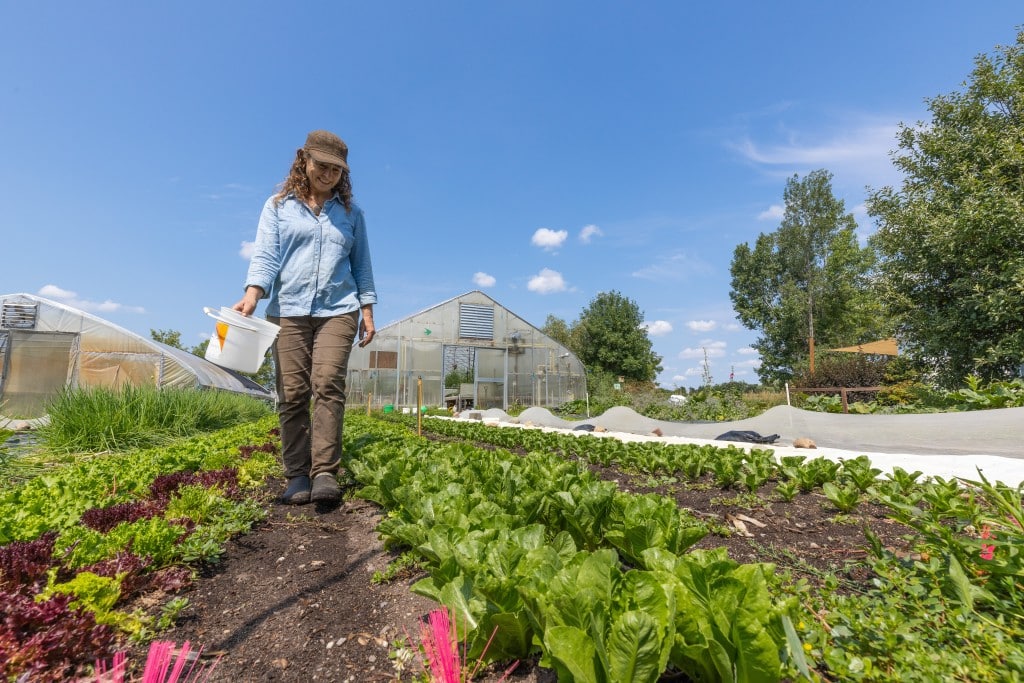
Photo by Raymond Holt for City Pulse.
Like Three Lakes Gardens, Bancroft said sales have surged, approximately 25%.
Hailey Collins operates Turnip the Beets Farm with her husband.
Usually, lettuce doesn’t sell out for the first two hours, depending on how much there is, she said. But recently, the lettuce is gone within a half hour.
“We have a lot more growing, but it’s just the two of us,” Collins said, gesturing to her husband. “We’ve been thinking about needing more, but who knows for how long?”
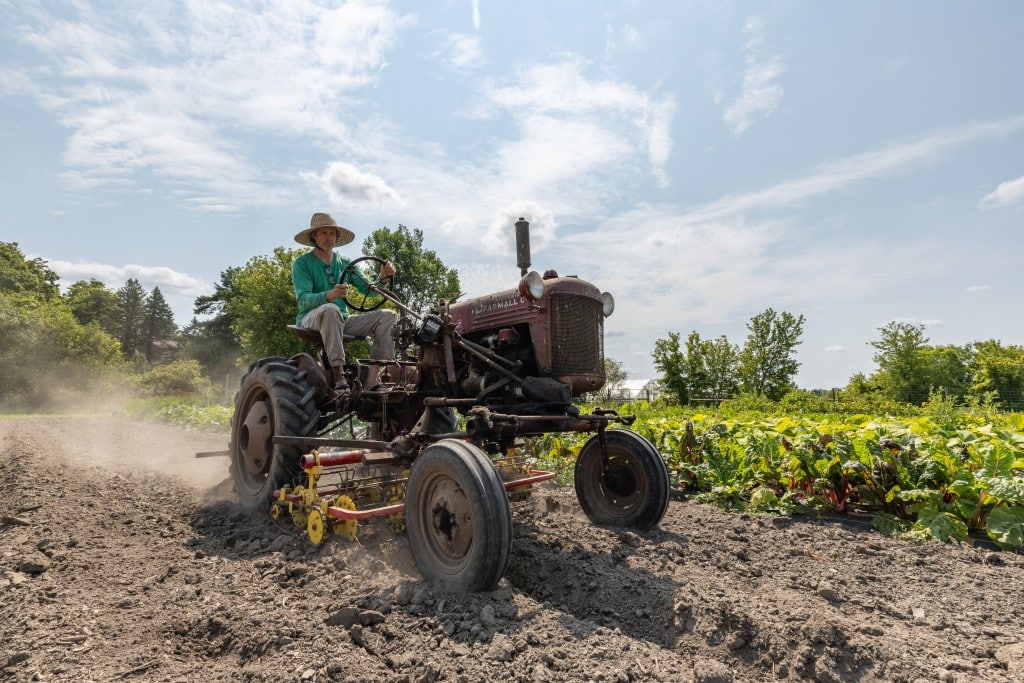
Photo by Raymond Holt for City Pulse.
Collins and Bancroft are both struggling with the demand for produce and the hands available to harvest it.
“Because we have two full-time employees, we can only do so much, and we bring as much produce as we can,” Bancroft said. “The thing is that we’re just selling out faster.”
Customers at the Meridian Farmers Market shared doubts about buying produce from grocery stores. “I feel more comfortable being here,” one shopper told City Pulse. “I trust the farming practices more.”
A family with small children commented they now only buy produce they plan to cook from the grocery store. “We usually buy from the farmers market anyway,” one parent said, “But we’ve had to adjust our budget because it’s more expensive here.”
Anne Rauscher owns and operates Swallowtail Farms in Mason with her family.
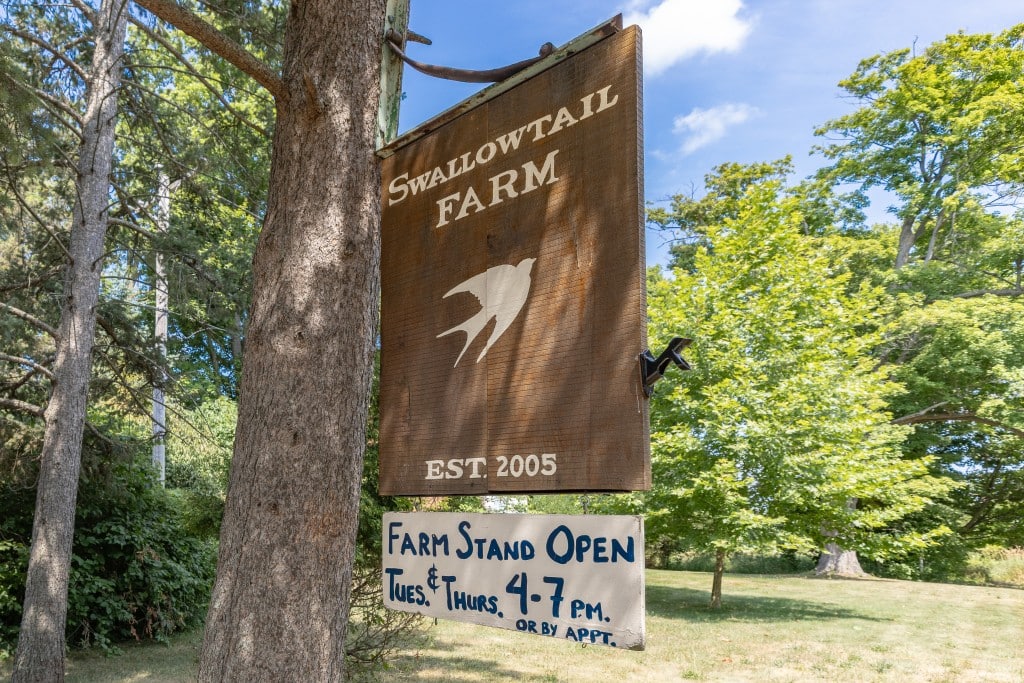
Photo by Raymond Holt for City Pulse.
They have a staffed farm stand open twice a week and have had to rearrange parking instructions because of the uptick in customers. “We’ve had a little bit of a lineup right as we open,” she said.
“Lots of people have said ‘this is the only produce I’m eating, or this is all I can trust.”
Chain Reaction
Concern for food safety goes beyond the grocery store shelves.
“What has been so challenging with this outbreak in particular is there hasn’t been a specific product that the issue has been sourced to,” Katlyn Cardoso said. Cardoso is the spokesperson for the Greater Lansing Food Bank (GLFB).
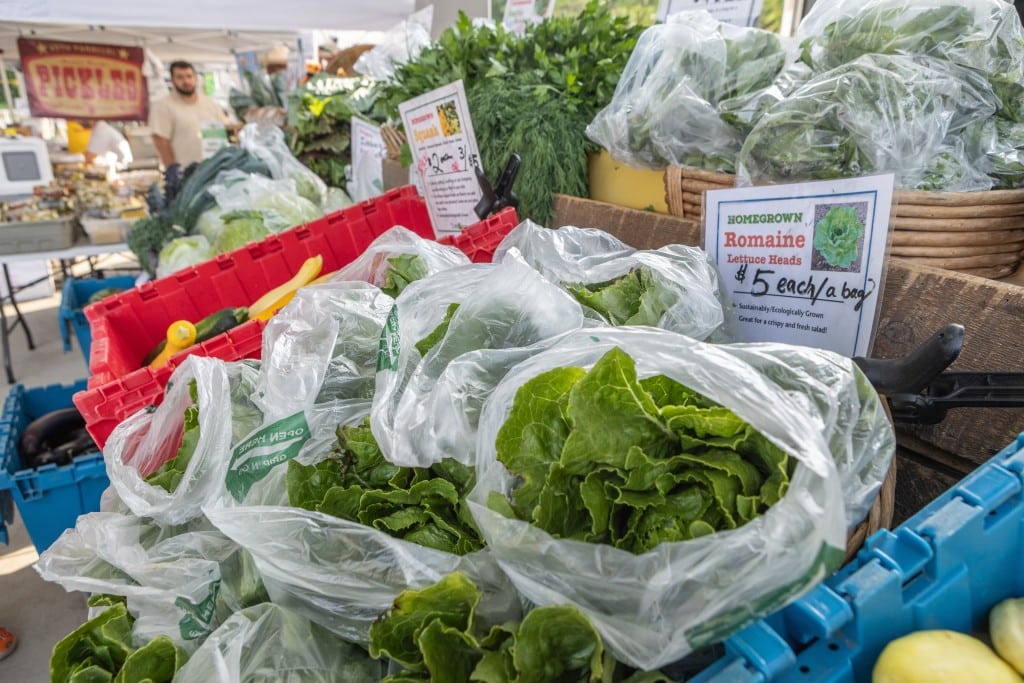
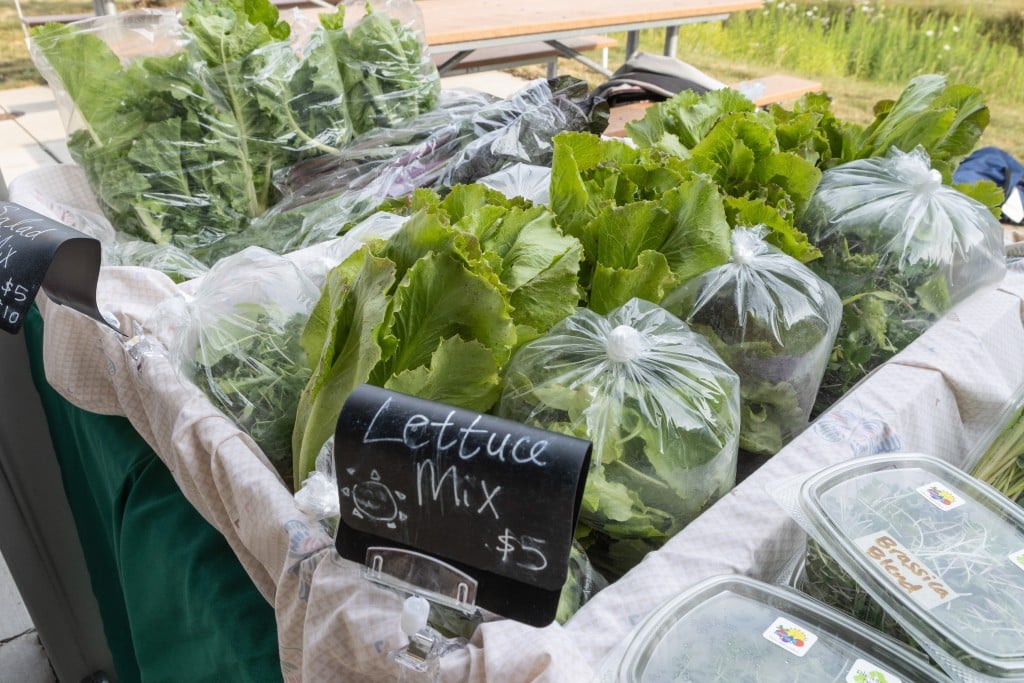
When more information was released connecting the outbreak to bagged lettuce and salad mixes, GLFB stopped distributing it immediately. “We’ve pulled all of that product from our warehouses,” she said. “We’re not accepting donations of any of those kinds of products.”
GLFB estimates that 800 to 1,200 pounds of food a week are being discarded because of cyclospora concerns.
To curb food waste, the food bank brings unusable products to an anaerobic digester in Holt.
Cardoso said the organization follows food safety guidelines exceeding those of a grocery store or restaurant, and expects partner groups to meet the same standards, despite the misconceptions around food banks.
“Food safety is at the core of our philosophy with distribution efforts,” she said.
A study published by the National Institutes of Health in 2021 connected food insecurity to chronic stress, compromising an individual’s ability to stay healthy.
This extends to resiliency against foodborne illnesses, according to Cardoso.
“It’s not fun for anyone, but if you are generally in good health, your body is able to cope with [a foodborne illness] and respond to it appropriately,” she said. “If you have other limiting factors…then something like a foodborne illness can be a lot more severe.”
Food insecurity is often an indicator of economic instability, which comes with more complications when illness is on the rise. Factors like access to healthcare and the means to pay for it all play into how someone experiencing food insecurity manages a foodborne illness.
“You now are facing that choice between being unable to pay a hospital bill and just trying to stick it out and hope for the best,” Cardoso said.
With a tight budget, buying produce from the farmers market is out of the question, making the idea of tossing valuable fresh food complicated. “Especially if it is fresh produce that is nutritionally dense,” she said, “it’s a very difficult choice.”
Some Michiganders served by the food bank don’t have access to running water or refrigeration, which are both critical when it comes to food safety.
GLFB offers alternatives, like frozen and canned produce. Cardoso said those options can sometimes have a higher concentration of nutrients compared to the fresh produce, and have a lower barrier of access. “So if you have people with mobility concerns, or if you have single parents…that don’t have time to sit and clean a bunch of carrots,” she said, “it gives people a choice.”
“We want to make sure that neighbors have the same quality and dignity and respect within their food choice, no matter where they’re getting it from.”
Whether or not more people visit the food bank during the current outbreak won’t be known for a few months down the road. Data about food bank utilization during the federal shutdown last fall wasn’t available until the winter months.
Cardoso emphasized anyone can experience food insecurity, and with soaring prices across the board, it can be a single missed paycheck or unplanned expense away. “We kind of have this false idea of safety that there’s something that we are or aren’t doing that protects us from that experience,” she said. “Most of the time it’s luck.”
Bigger Picture
Experts in food safety said the cyclospora outbreak is the result of multiple factors, including warm weather, humidity, and the time it takes for the parasite to mature.
“The conditions have just been right for this to happen,” Wade Syers said. Syers is a food safety and security specialist at Michigan State University Extension.
Syers said because symptoms can take up to 14 days to appear, tracing the source may take longer than usual. “It’s just really hard to remember everything you ate two weeks ago,” he said.
Public health officials urge those experiencing cyclosporiasis symptoms to contact their health care provider and ask for cyclospora testing.
“[Getting tested] helps public health officials identify outbreaks and track how widely an illness may be spreading,” Syers said. The reported number of cases is just one piece of the puzzle, he clarified, because not everyone seeks medical care.
Like Cardoso pointed out, Syers said seeking medical care and getting tested isn’t an option for everyone.
While the reported “false positive” means there isn’t indisputable evidence of the parasite’s presence on Taylor Farms de Mexico lettuce, Syers explained that epidemiological and traceback evidence, including the number of confirmed cases, could give officials a trail to find the source.
Echoing the concerns of Cardoso, Syers cautioned that certain populations, like older adults, very young children, and those who are immunocompromised, are at higher risk for poorer outcomes regarding foodborne illnesses.
Buying produce from farmers markets is not definitively safer than buying from the grocery store. “Those germs that make us sick don’t care where they’re sold at,” Syers said.
The usual food safety practices are a good bet for staying healthy: rinsing produce under cool running water, using a produce brush when appropriate, keeping produce separate from other kinds of foods.
“That will go a long way towards keeping our produce safer,” Syers said.
There have been 734 reported cases of cyclosporiasis, including 6 hospitalizations, in Ingham County as of July 24, according to Anne Barna, deputy Ingham County Health Officer.
She said those numbers are unprecedented for the county. Ingham County ranks fourth for the highest number of cyclosporiasis cases; there are seven counties with a larger population than Ingham.
MDHHS reported more than 9,000 cases and 160 hospitalizations statewide on July 24.
When buying lettuce and salad greens, officials recommend purchasing a whole head, discarding the outer layers, washing the inner leaves, and prioritizing cooking to an internal temperature of 158℉ (70℃) to avoid ingesting the parasite.