A case for the future as MSU College of Music marks 20 years of growth
The Michigan State University College of Music’s 2026-‘27 season is poised to bring Greater Lansing a rolling, world-class music festival, bigger and more diverse than ever.
The college is celebrating its 20th year with a bottomless cornucopia, from cutting edge 21st-century music to mainstays like Mozart and Bach, diverse global sounds, opera, early music, huge ensembles, chamber groups and a barrage of bebop and beyond from one of the most acclaimed jazz studies programs in existence.
Courtesy photo
Like the ambrosial ice cream at the MSU Dairy Store, the concert series gives the college an appealing public face, but there’s a lot more to the story. Just as the ice cream comes from vats, churns, chillers and pipes leading to cows and fields unseen, the music, too, is the product of careful cultivation and hard work.
The fully winged College of Music emerged from its larval status as a department in the College of Arts and Letters in March 2007, with the support of then-Dean Wendy Wilkins and interim Dean Patrick McConeghy.
It was no mere bureaucratic shuffle.
“It was a vote of confidence that music has a distinct place in the fabric of Michigan State and that the arts play a role in the lives of people,” College of Music Dean James Forger said.
The “college” designation put the music program on an equal footing with engineering, human medicine, law, agriculture and other fields of human endeavor to which MSU has made a lasting commitment.
MSU College of Music 2026-‘27 season
“It enables you to make a case for your future,” Forger said. “Our donor base is very broad. Like the library or athletics, it’s a discipline, a medium, most people have in their lives.”
College deans work directly with the provost and with other deans on many levels, including the all-important area of fundraising.
“It enables you to develop your own fundraising operation and take greater responsibility for raising dollars for a discipline that has some major expenses,” Forger said.
Courtesy photo
That capability proved invaluable as the college looked to upgrade its aging facilities and grow its international reach.
No angel swooped into the picture, as billionaire Eli Broad did when he bankrolled a new art museum for MSU in 2012. When the College of Music was formed, capital outlays were drying up like watering holes in the Gobi Desert.
“It went from 100% to 75%, to 50, to 25, to ‘good luck,’” Forger said.
Long-held dreams of a brand-new facility proved to be unrealistic, so the college tapped its loyal pool of donors, found some new ones and undertook an incremental, judicious mix of renovation, innovation and new construction. Fairchild Theatre, MSU Auditorium and Cook Recital Hall got state-of-the-art acoustic redesigns by a Chicago-based acoustic designer. Demonstration Hall was refitted to protect the hearing of the marching band.
The 1939 Music Building’s “old wheezer” of an HVAC system was replaced. Practice and rehearsal rooms got floating floors that dampen vibrations.
The crowning achievement is a new facility, the Billman Music Pavilion, seamlessly joined to the historic Music Building. It holds new classrooms, rehearsal halls, student lounges and a heavy dose of cutting-edge sonic science — another top priority for the college as it trains students in computer-assisted sound design, video game music and other new frontiers of the music industry. The ambisonic speaker array in the Billman Pavilion’s Eichler Hall, with 146 surround-sound speakers, is the largest such array in North America.
Students love the new learning spaces, and audiences appreciate the acoustics and comfort, but it’s people, not facilities, that give the College of Music its resounding impact.
Forger singled out three goals the college has pursued in the past 20 years.
“One is to develop the very best professional training for performance, music education, composition, and work in theory and history — it’s all related,” he said.
Standards are high. Out of about 240 people who apply and audition to study piano, for example, about 60 are invited to campus, and maybe 40 are admitted.
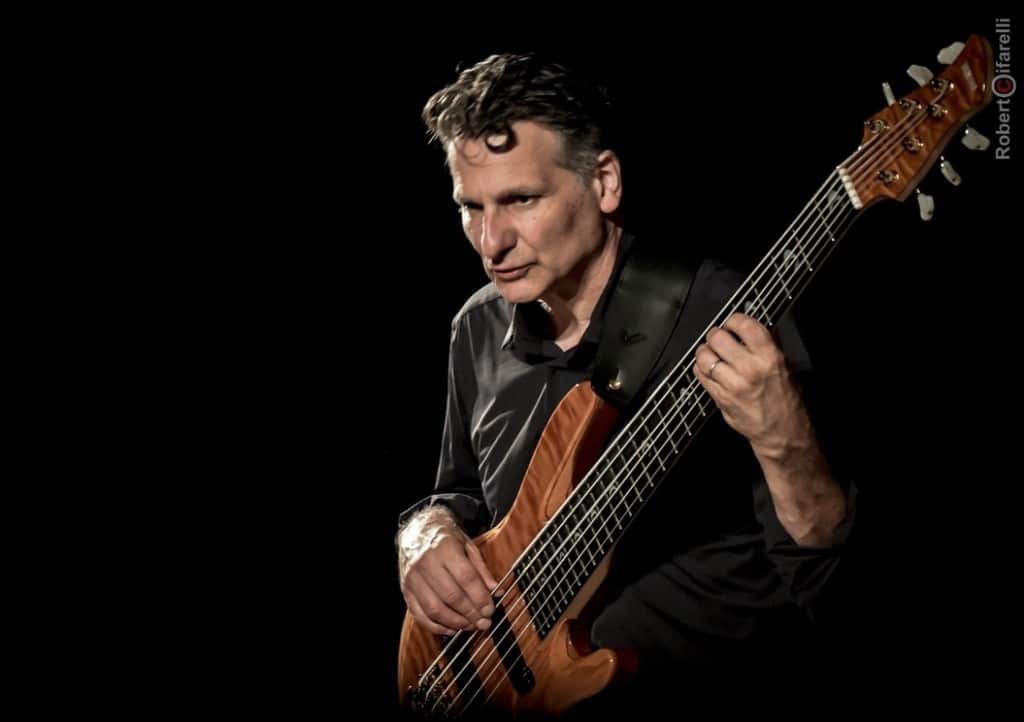
Photo by Roberto Cifarelli
But when it comes to impact, the College of Music is the opposite of a bubble — it’s more like a lawn sprinkler, with about 2,500 non-music majors dancing in the spray each year, joining about 600 music majors.
That’s Forger’s second big priority. The non-majors do many things, such as playing in the Concert Orchestra, singing in choral ensembles and studying computer music to develop game design skills, helping weave music into the broader university while enriching their own lives. Virtually every college has students in the MSU Marching Band, including engineering, veterinary medicine and nursing.
“For students to take classes in business and electrical engineering and then be able to have a few hours singing in harmony with other human beings — the power of music, doing something collectively with others, is an important part of our contribution to the MSU campus,” Forger said.
The college’s third priority, after professional training and offerings for non-majors, is outreach.
Among the highlights of the past 20 years is the establishment of a Community Music School in East Lansing that serves about 1,000 people, offering early childhood to adult beginner bands and jazz bands, private lessons and music therapy.
To make a mark beyond the campus, the college raised $600,000 a year to start an early childhood program in Detroit that serves about 1,000 kids between the ages of 0 and 5 at 35 sites across the city. The program brings musical education to public schools, charter schools, Head Start programs and temporary shelters serving battered women and children.
“We have music therapy in the Detroit children’s hospital,” Forger said. “We use the power of music for palliative care, cancer care. Music plays a role in health and wellness.”
Even the ice cream the college has produced along the way — its concert series — has thickened and diversified in the past 20 years.
The college has held the torch aloft for the familiar Western canon, with evenings devoted to the likes of Mozart, Bach, Chopin and the rest, but its offerings have exploded beyond the classics, with new music woven into the programs of every ensemble, large and small.
“It’s about all kinds of different music,” Forger said. “Music education has courses on hip-hop in the classroom, and there’s improvisation throughout the curriculum.”
To pick a few cherries from the 100-plus events scheduled for the upcoming season, Chicago’s Ensemble Dal Niente will bring a globe-spanning banquet of music Sept. 23, from hypnotic microtones to impressionistic washes of harmony. Homegrown new music specialists Musique 21 will mount four concerts of ear-stretching new sounds, spread throughout the season.
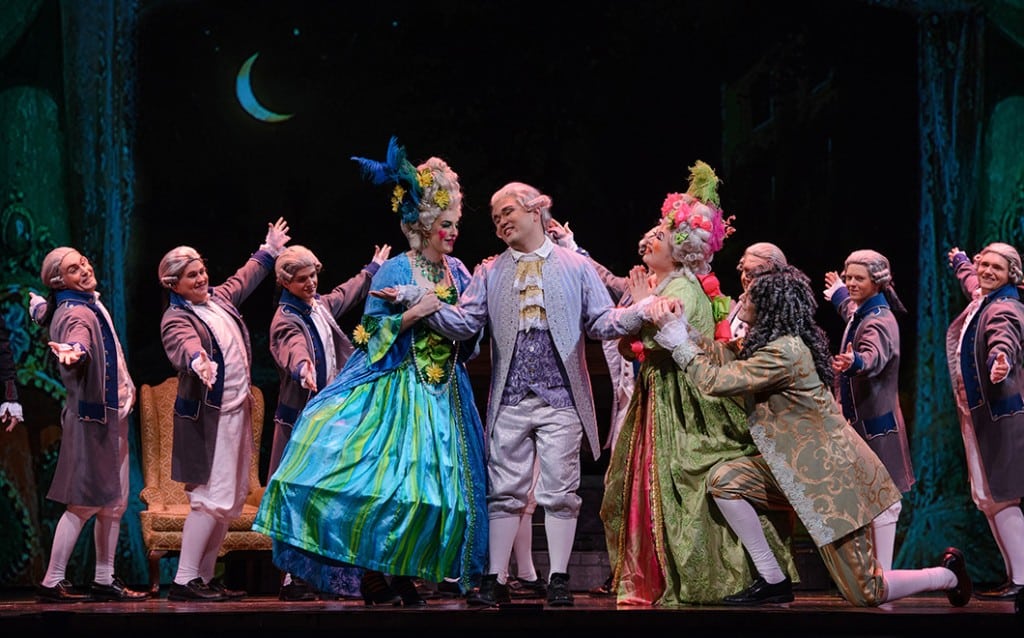
MSU Opera Theatre will mount two fully staged audience pleasers, Gilbert & Sullivan’s “The Gondoliers” in November and Mozart’s “Così fan tutte” in early April.
The Dutch chorus Cappella Pratensis and the wind band Piffaro will join forces to bring a Renaissance mass by Spanish master Francisco Guerrero to the Fairchild Theatre March 2.
Jazz studies will roll out another stellar slate of artists in residence, sponsored by MSU Federal Credit Union, to work and perform with students, including guitarist Ed Cherry (concert Oct. 11), trombonist Andrew Martin (concert Dec. 6) and saxophonist Ralph Moore (concert April 23). One of the world’s top jazz stars and living legends, bassist John Patitucci, will join the student jazz nonets for a memorable March 18 Jazz Spectacular concert.
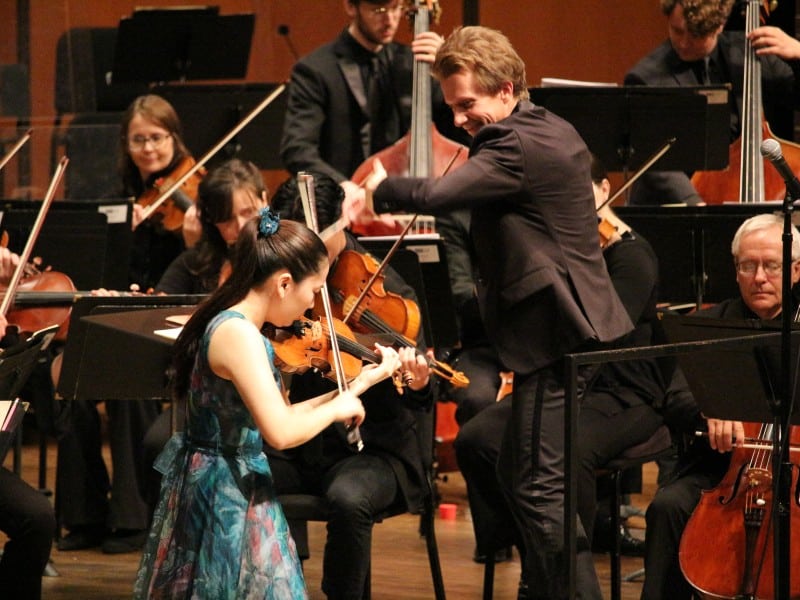
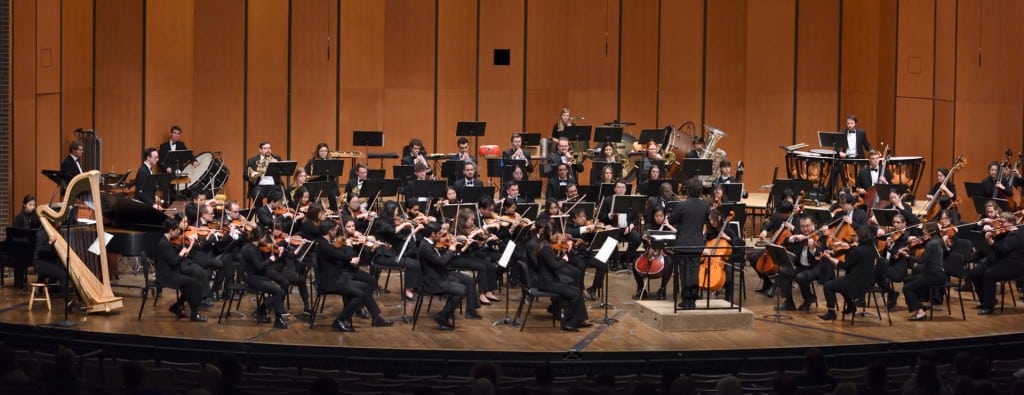
MSU’s Symphony Orchestra and Concert Orchestra will stretch out in 10 ambitious concerts this year, including the local premiere Feb. 9 of MSU composer Ricardo Lorenz’s “Humboldt’s Nature,” commissioned and premiered to a standing ovation by the Los Angeles Philharmonic last fall.
The Symphony Band, Wind Symphony and Concert Band, all mighty pillars of fire that are underappreciated amidst the college’s musical riches, have dozens of ambitious new works up their sleeves in a full slate of five concerts at Wharton Center’s Cobb Great Hall. The Wind Symphony will preview its Carnegie Hall debut concert, featuring new music by two MSU composers, Feb. 4 at Wharton.
The African Diaspora Percussion Ensemble will mount two concerts, Nov. 5 and April 9, and who can forget the low-but-not-slow Tuba and Euphonium Ensemble, rumbling into the Fairchild Theatre Feb. 3?
The 20th anniversary season will reach its apotheosis in a special May 1 “Collage Concert” that will throw just about everything against the wall and dare it to stick.
“It will flow seamlessly from small to large ensembles, jazz bands, a solo flute in the audience, people hanging — it will be the best of the best,” Forger said.
We’ll let that cryptic “people hanging” remark hang and quickly mention another concert keyed explicitly to the 20th anniversary: a 20-year reunion of the h2 Quartet, a virtuoso alumni saxophone quartet whose repertoire spans classical, modern and jazz music. The members of the quartet are converging from Virginia, Florida and Oklahoma, where they are all leading educators, performers and administrators, to show their national-award-winning stuff at their alma mater Oct. 13.
“They all stepped up, knowing it was the 20th year,” Forger said. “It’ll be phenomenal.”