An ancient language from the South American Andes finds eager listeners at Michigan State University
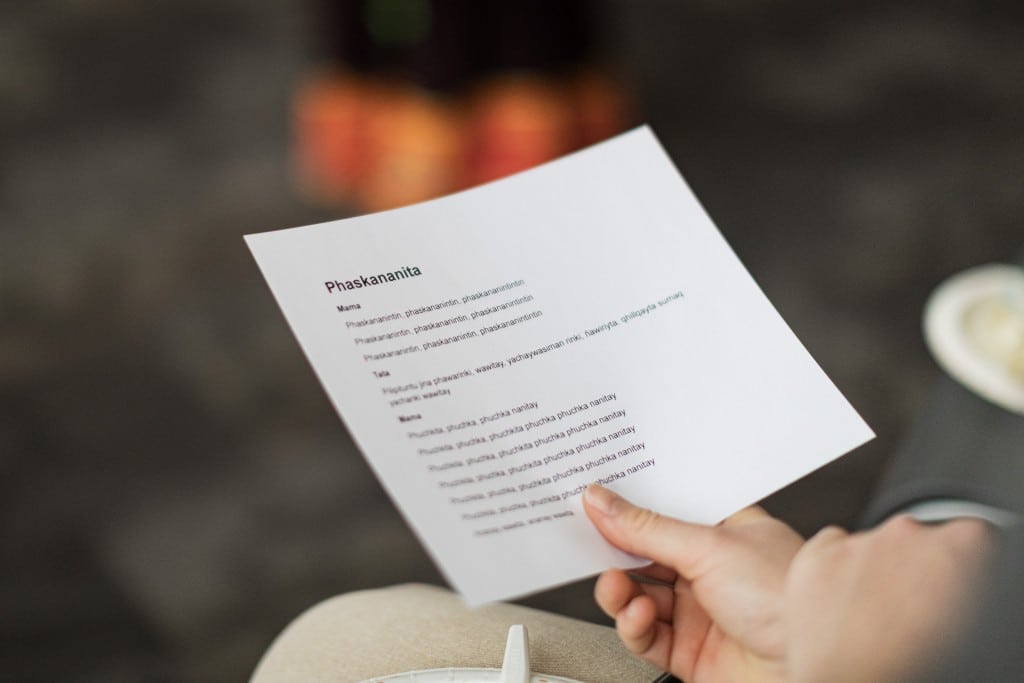
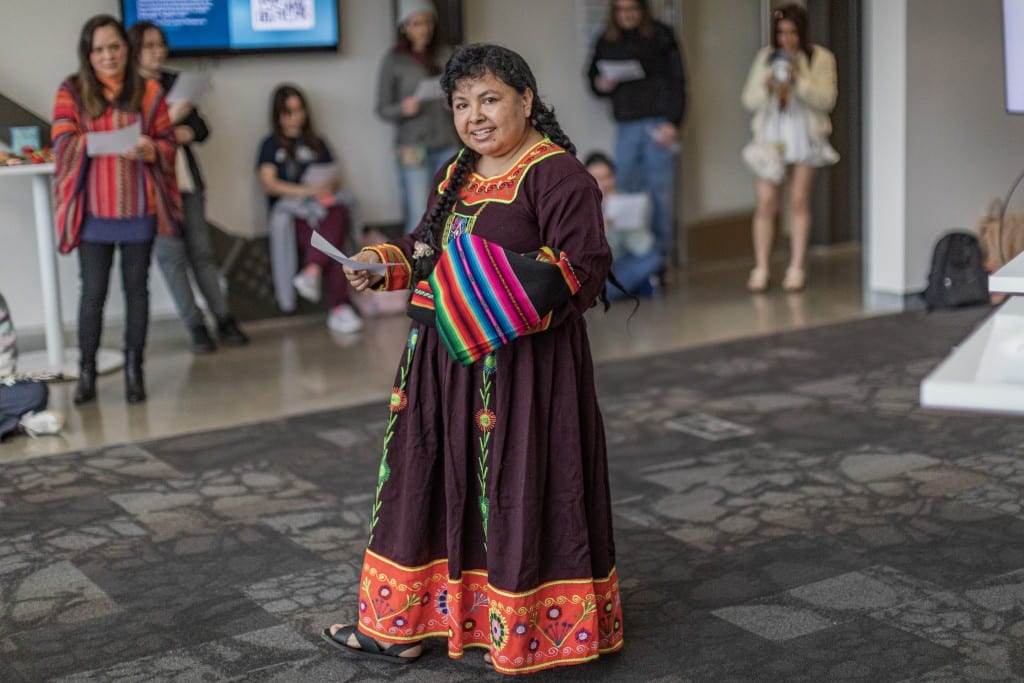
Photo by Erick Díaz Veliz
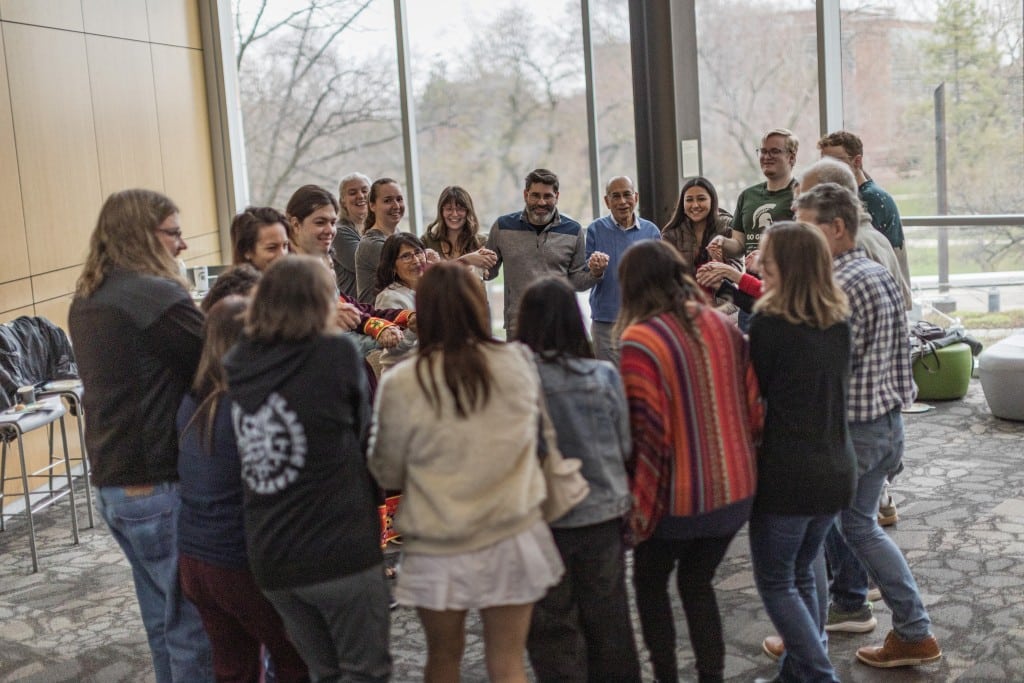
Photo by Erick Díaz Veliz
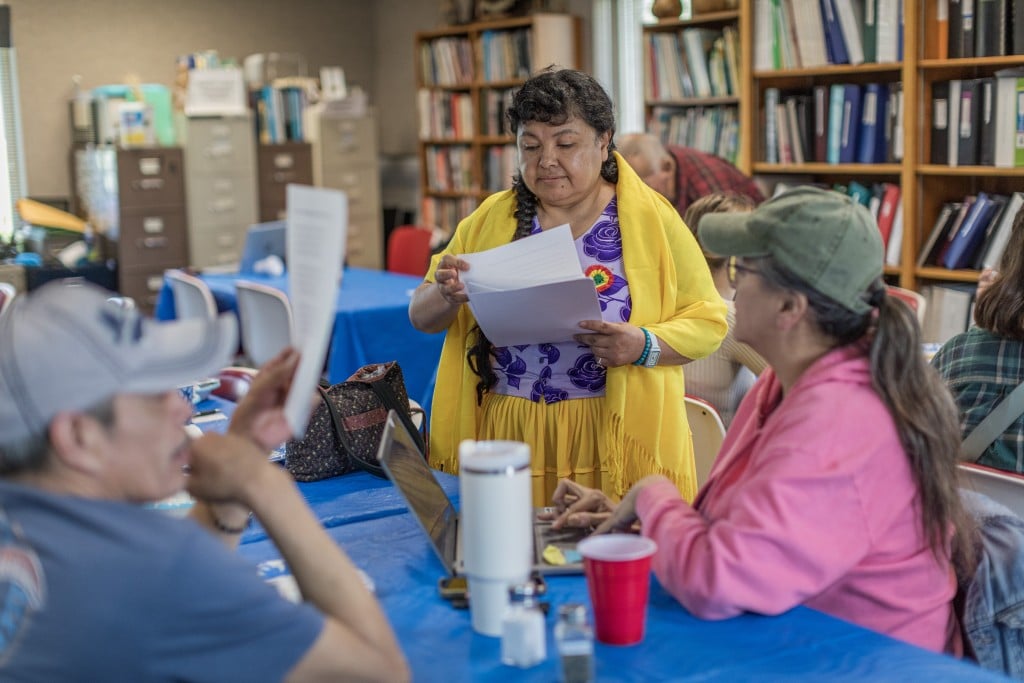
Photo by Erick Díaz Veliz
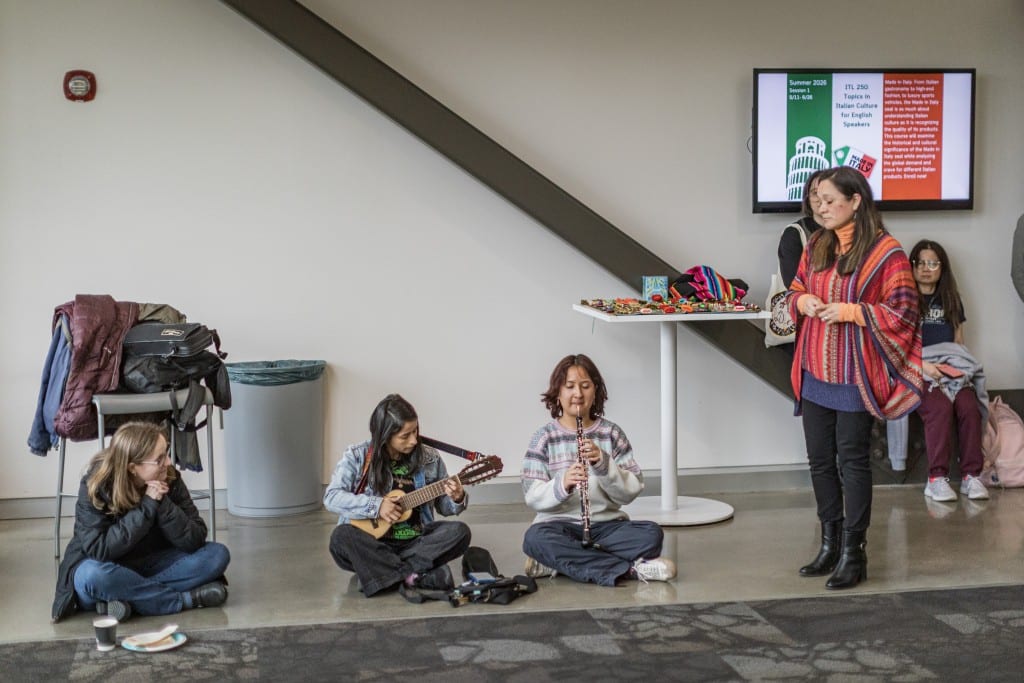
Photo by Erick Díaz Veliz
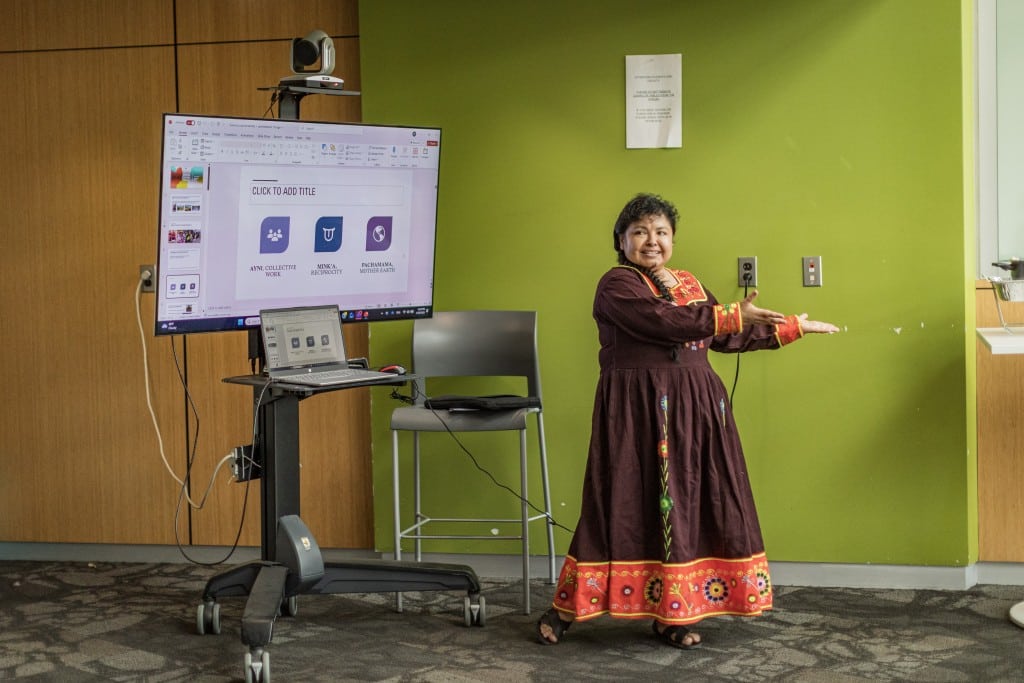
Photo by Erick Díaz Veliz
Photo by Erick Díaz Veliz
Jenny Isabel Nogales Copa welcomed a crowd of about 20 faculty and students from Michigan State University as they gathered for a cultural meeting in Wells Hall.
She offered traditional snacks from her home country, Bolivia, including mote (thick corn), fresh cheese, hard-boiled eggs and flaxseed water. Then, she invited everyone to sit for “a small taste of the Andes,” a presentation on Bolivia’s Quechua culture and language.
Nogales Copa shares Quechua and its culture with MSU students through regular classes, cultural presentations, food, some dances and song teachings.
For her, it’s a blessing and a way to resist cultural displacement.
“We are heavily influenced by other countries, by other people, and we want to imitate that, to attain that, instead of embracing who we are on the inside,” she said. “That is where I see the true richness. We should get to know ourselves first, to embrace who we are without rejecting others, because you cannot live in isolation from the rest.”
Born and raised in Cochabamba City, Bolivia, Nogales Copa came to MSU a year ago as part of a cultural and academic exchange through the Fulbright Program, through which she also learned about American people and culture. Part of the program includes teaching several undergraduate and graduate students the Quechua language and the traditions that her parents and grandparents passed to her.
“My parents speak Quechua,” Nogales Copa said. “My grandparents, and my great-great-great-grandparents before them, spoke it too. It goes back a very long time. So, I have heard Quechua spoken ever since the day I was born.”
At MSU, she has found a new home and made new friends. She has connected with the Latino community, her local church, her host family and with North American native organizations.
Diana Mogrovejo, a doctoral student in anthropology and one of Nogales Copa’s students, said she had been interested in learning Quechua ever since she began conducting fieldwork in Peru, as it is vital to her research. She also highlighted the importance of preserving such languages, which are useful across various fields.
“Native languages should be preserved and expanded,” Mogrovejo said. “Well, the only way to do so is by promoting the learning of those languages.”
Nogales Copa also worked alongside Nokomis Cultural Heritage Center, an Anishinaabe community learning center in Okemos, where she learned about the Indigenous people of the Great Lakes region.
“It feels all too brief. What can I say?” she said. “There is still so much left to discover. But from this small glimpse I’ve had of this place, I am immensely grateful to Fulbright for opening up this opportunity for me because, on my own, I never would have been able to achieve it.”
With its roots in pre-Inca civilizations in the Peruvian southern Andes, Quechua is one of the predominant indigenous languages in the Andes region of South America, which stretches from Colombia to Argentina, crossing Ecuador, Peru, Bolivia and Chile.
It was the official language of the Inca civilization more than 500 years ago, before the Spanish showed up and Quechua went through a process of Christianization.
According to UNESCO, in Andean countries such as Peru, Bolivia and Ecuador, where different variants of Quechua are widely spoken, there has been a rapid decline in the language, mainly driven by migration and that Quechua is often considered secondary to Spanish.
“Both of my grandmothers spoke Quechua all the time,” Nogales Copa said. “They found it difficult to communicate with others in Spanish; they had to make a tremendous effort to do so. Yet, with us, they spoke in Spanish.”
In some Andean areas, Quechua is no longer part of daily life; people no longer learn it from their parents or grandparents. This is a common pattern. Spanish and English have taken over the linguistic landscape, seen as tools to achieve progress through better jobs or education.
“Sometimes they forbid you from speaking Quechua,” Nogales Copa said, using the Quechua word for the Quechua language.
“‘Amaparlaichi,’ they would tell us, ‘Don’t speak that,’ because they want you to have better opportunities.”
In schools, Nogales Copa said, even though teachers spoke Quechua themselves, they demanded their students speak Spanish.
In Bolivia’s 2001 national census, 62% of the population identified with one of the Andean nation’s 36 indigenous peoples. By the 2012 census, this figure had dropped to 41%, and in the most recent census, from 2024, this downward trend continued, settling at 38.7%. This pattern is also being observed in other Latin American countries.
The census also revealed the fragility of several endangered native languages. Some have barely a dozen speakers, such as Canichana, Moré and Cayubaba, or, in the case of Guarasu’we, just a single speaker.
Although several indigenous languages are protected by law, mandating their acquisition by public officials and workers, cultural displacement continues to advance. The loss of indigenous languages proceeds at an alarming pace, making the act of teaching the languages an act of cultural resistance.
“It is our language,” Nogales Copa said. “ It is part of who we are. It does not date back merely 100 or 200 years; it goes back thousands of years. It is ours. We cannot change the color of our skin, our hair, even if we wanted to. Our eye color is beautiful, just as God made us.”