Potter Park’s Kota euthanized
Courtesy Potter Park Zoo
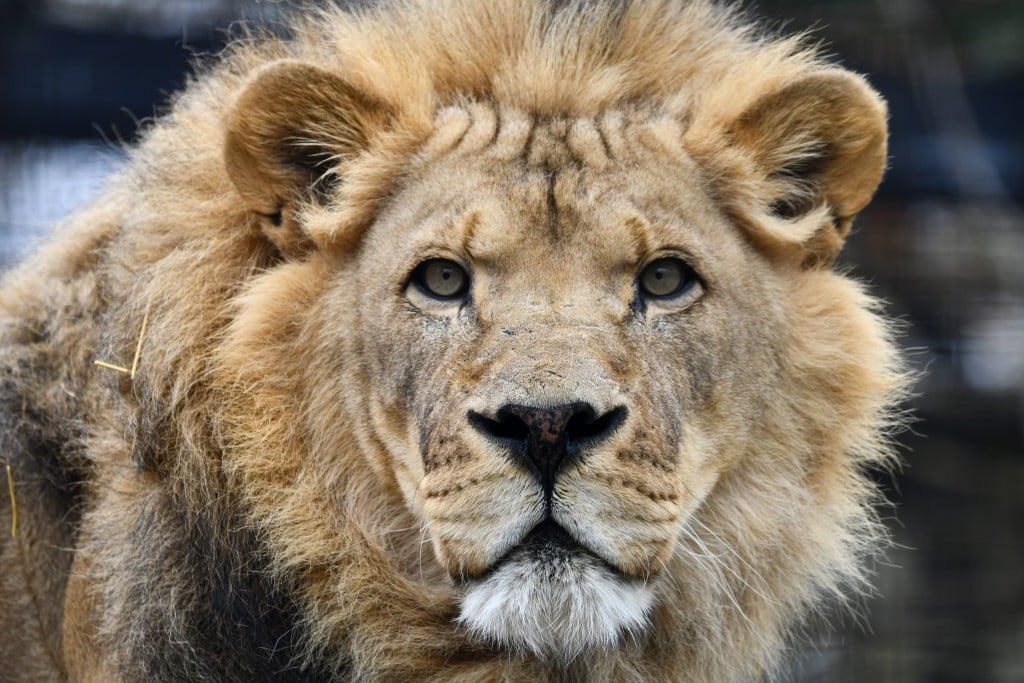
Potter Park Zoo said Monday that its lion, Kota, has been euthanized.
The 19-year-old lion recently changed behavior and was found to have a severe spinal disease, commonly seen in old large cats.
The zoo now faces an expected but significant challenge. In the last year, it has lost three of its signature animals: Kota the lion, Vikentii the tiger and Doppsee the rhino.
The zoo still has one rhino, red pandas and an okapi, along with many other animals.
But losing so many headlining animals in one year is difficult on keepers and on the community.
Like Vikentii, the death of Kota is not unexpected.
Large felines often develop back problems in zoos, where they live much longer lives, said Dr. Ronan Eustace, Potter Park’s veterinarian, who has studied mortality in lions as well as tigers. Eustace spoke with City Pulse earlier this year following Vikentii’s death.
When a popular zoo animal dies, it’s often not a surprise and zoo officials have been working for years to prepare, said Hollie Colahan, the executive director of the Arizona-Sonora Desert Museum in Tucson and chair of the American Zoo Association’s Animal Population Management committee. Colahan spoke to City Pulse earlier this year.
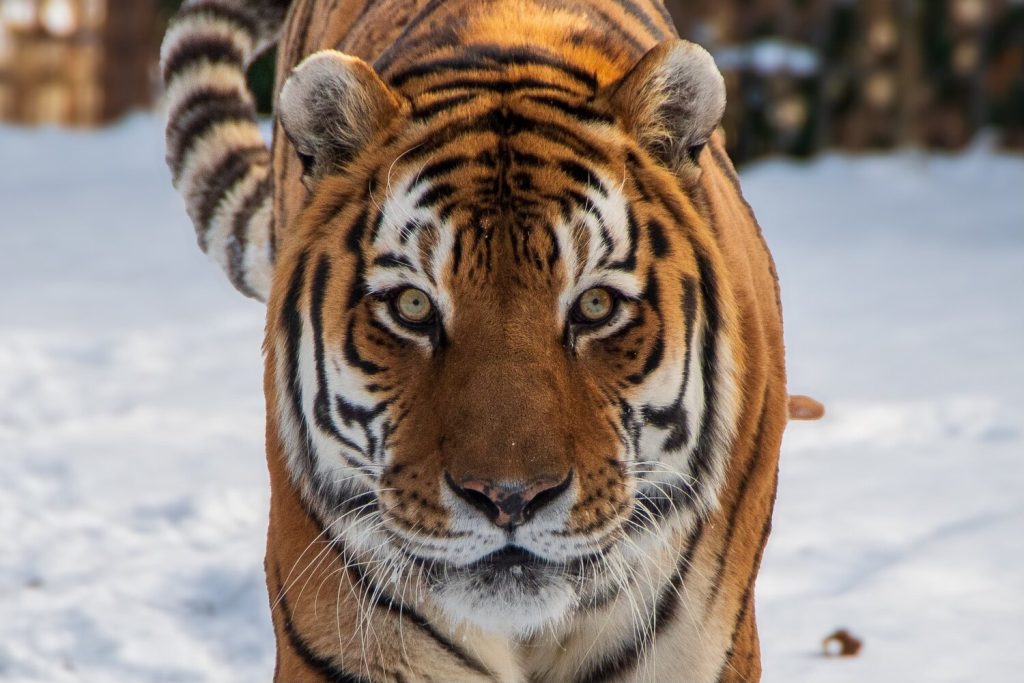
“A lion over 15, we’d call that geriatric and flag that zoo as needing a new cub,” said Colahan, who has been head of the lion part of the AZA’s Species Survival Program.
Potter Park’s lion was euthanized
Surgery was not a viable option for Kota and staff moved to providing comfort and quality of life until the lion no longer responded, according to a statement from the zoo.
Kota spent most of his life at the Potter Park Zoo, it is rare for a large animal like a lion to spend their entire lives at a smaller zoo like Potter Park because of breeding opportunities elsewhere. Kota was one of the oldest male lions in an AZA-accredited zoo and was past the median life expectancy of almost 17 years.
Kota was known for an unmistakable roar and was an ambassador for lions.
Why do zoo animals get euthanized?
“Age isn’t technically a disease,” said Dr. Ronan Eustace, the zoo’s veterinarian, when he spoke to City Pulse earlier this year following the death of Vikentii. “But Vik was 16. In people, we’d say a slipped disc, the same thing happens in animals. In big cats, their heads are so big and heavy, they tend to have this. We see a lot of spinal disease.”
Eustace is involved in a national mortality study of all the lions in the U.S.
“We see similar diseases that are very common in these big cats,” Eustace said. “I think it’s because they’re living longer in zoos than they would in the wild, and then they have very big heads, and they’re very muscular and have that big heart. I think they just wear their spines out.”
He said one of the common concerns from zoo visitors is that the big cats are too skinny.
What people see is the healthy and appropriate weight for those animals, Eustace said, because zoo cats get their food weighed each time since spines are such a big concern.
The hardest part of being a zookeeper
Hanging over the zoo is the idea of perpetual loss.
There are hundreds of animals at Potter Park Zoo, most of them have shorter lifespans than their human caretakers.
In the 1970s, Potter Park Zoo, like many community zoos, was known for its elephant.
Purchased in part with donated coins from elementary school children, Bingo the elephant was named for big fundraiser Bingham Elementary.
Bingo died in 1979, likely from complications from eating a large rock. Bingo, Wagner said, was likely the last zoo animal’s death to hit keepers as hard as Doppsee.
Thousands of kids, parents and visitors got to interact with Bingo and, generations later did the same with Doppsee.
Wagner said she was Doppsee’s keeper when the rhino arrived, and for many years.
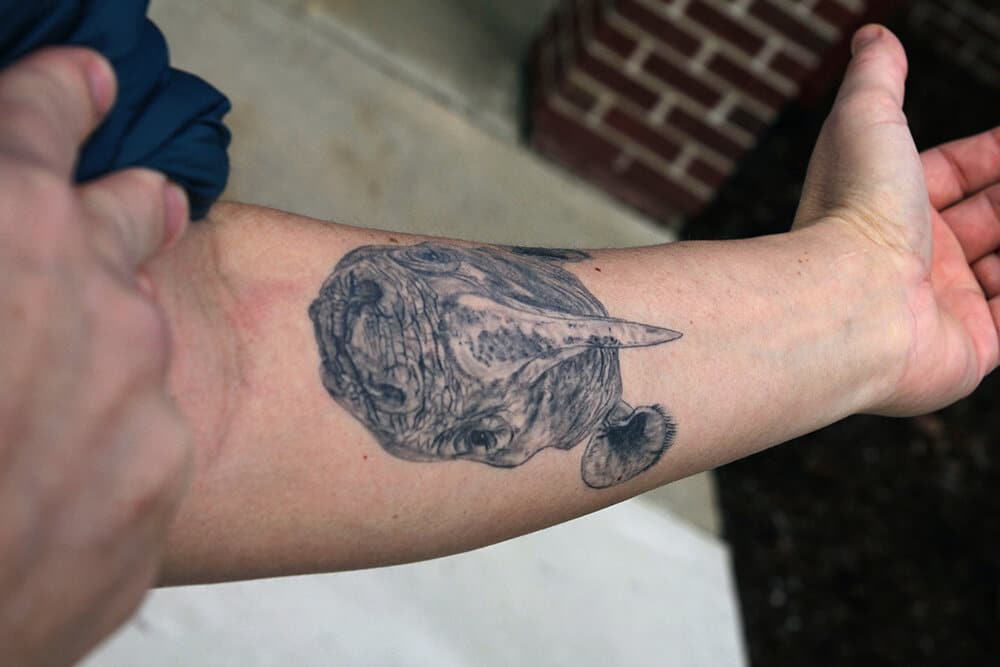
Wagner has recently gotten Doppsee’s face tattooed on her left arm.
She said the zoo’s role is to balance the needs of the animals and the public, to create spaces where both are thriving.
Finding animals like Doppsee and connecting them to the public is so important, and visiting the zoo is how people build those relationships.
“We’re trying to create spaces where our animals have choice and control and make decisions about where they’re spending their time,” Wagner said. “So come out this summer, we have keeper chats, and you can talk to us about why an animal may or may not be seen right now.”