Biggest spender no longer guaranteed to win
Someone, somewhere still watches TV regularly. It’s not me. If that person is you, my condolences.
You saw WAY TOO MANY Haley Stevens and Perry Johnson ads. Way too many. And they didn’t work … in the sense neither candidate got the bang out of ads that they had hoped for.
The American Israel Public Affairs Committee (AIPAC) and other traditional Democratic supporters wanted Stevens to win her U.S. Senate primary. Badly. So badly, they spent a combined $60 million on TV and streaming advertising alone, according to AdImpact’s count.
That’s the most outside spending on one Democratic U.S. Senate primary candidate in American history. Sixty million dollars nearly matches the annual gross domestic product of the small Polynesian country of Tuvalu.
All that money, just so we would vote for Haley Stevens.
Her opponent, Abdul El-Sayed, and his friends? They spent $6.5 million, about a tenth of Stevens & Co.
Then we have Johnson. This guy is so wealthy he wrote a $32 million personal check on TV and streaming ads. Just so he could win the Republican nomination to be governor. If he won, Johnson planned to take no salary.
That $32 million is more than all Republican candidates and their friends spent on TV ads for the entire 2022 gubernatorial campaign – primary and general election. That’s almost more than the $35.5 million Dick DeVos spent in 2006 in both the primary and general to become governor.
Johnson was contested. His opponent, John James, and some friends of his (including DeVos’s brother) spent a combined $8.2 million, or about a quarter of what Johnson spent.
What does this all mean?
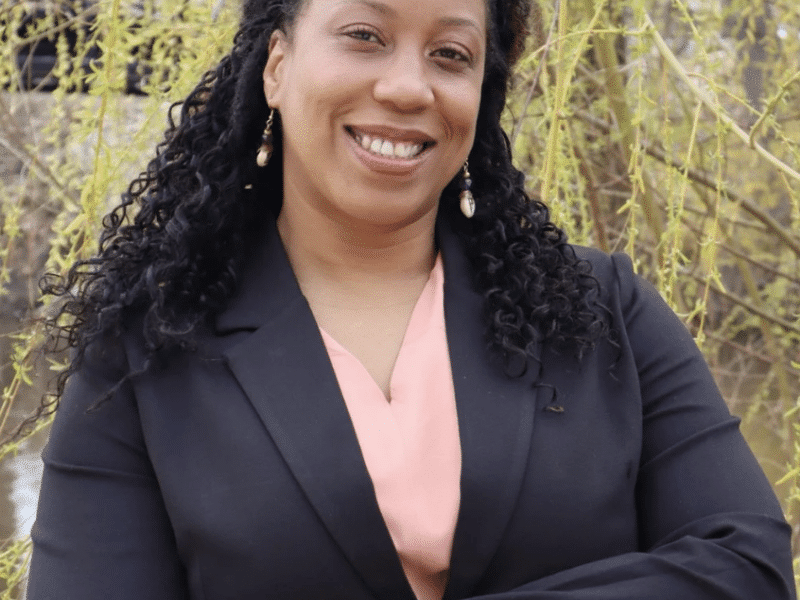
According to Elena Greer, a political analyst for Vote for Change, it’s proof that the old model of running voluminous TV ads in order to win is breaking down.
Money can buy attention and turnout, she says, but it cannot reliably buy trust. It can’t buy persuasion. And it can’t buy your vote, especially in competitive races.
Now, money isn’t bad, of course. You’d rather have more than less. However, Greer says outside money becomes less effective — and may even backfire — when voters recognize and dislike the group paying for it.
For example, EPIC-MRA polling last week showed that of the 49% of people who had heard of AIPAC, 56% of voters don’t like them.
El-Sayed and his supporters succeeded in tainting that money.
Before spending wildly on a race, Greer suggests testing multiple messages to see what works.
Overall, small-dollar donations reached record numbers this cycle. That’s good for campaigns . . . except the campaigns are now fighting for that same Jane Smith from Main Street who gave $25 to Democratic congressional candidate Curtis Hertel in 2024, for example.
What that means is Smith is being targeted by all Democratic candidates now.
In 2026, Jocelyn Benson may call Smith and get $15 from her. Stevens may call her and get $10. By the time Bridget Brink calls, her budget for the congressional race is $5, as opposed to $25 two years prior.
As I noted in last week’s column, Will Lawrence’s congressional campaign is proof that knocking doors works, but it’s got to be done right.
Greer’s analysis is that paying a bunch of people to knock on as many doors as humanly possible and read a 45-second script to whatever face shows up at the screen door doesn’t get the job done.
The key, she says, is getting local people to knock fewer doors. Have longer, personable conversations with voters who haven’t made up their minds.
If the canvasser spends 10 or 20 minutes at a door? That’s not a bad thing if that conversation could mean a vote with an undecided, Greer argued.
That doesn’t mean every doorstep conversation should be 20 minutes. Changing minds is the key. If that only takes 30 seconds in some cases, so be it. But stay focused on the goal.
Campaigns tend to reward the number of doors knocked. That mentality, she said, isn’t working.
In this fast-moving world, campaigns may just need to slow down. Think before they spend. And really talk and listen to voters.