Croptober meets the wholesale tax squeeze Can Michigan’s sun-grown market survive the harvest?
If you drive past the agricultural fields just outside Lansing or up through the west side of the state right now, the smell of weed hits you before the hoop houses even come into view. It’s late September, which means “Croptober” is officially here.
For as long as cannabis has been legal in the Mitten, the autumn harvest has followed a predictable, almost rhythmic pattern. Millions of square feet of sun-grown flower mature all at once, hitting the market in a massive wave of biomass. In years past, that sudden flood has triggered a temporary seasonal glut. Prices plummet, processors buy up cheap flower by the truckload for concentrates and edibles, and indoor boutique cultivators hold their breath until inventory clears out around January.
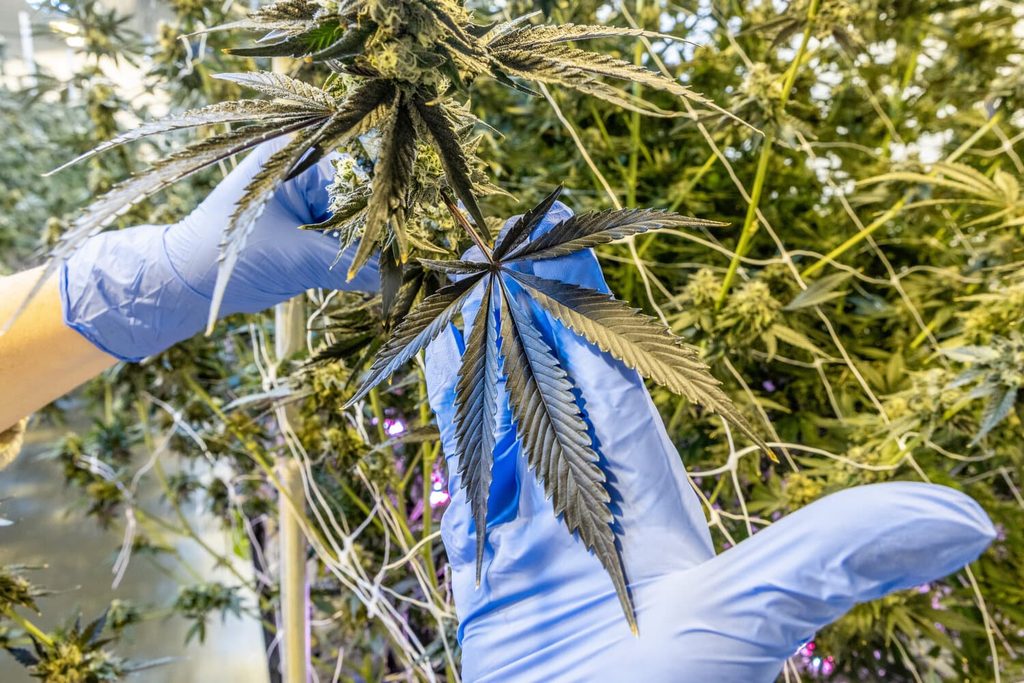
However, this is the first fall harvest operating under Michigan’s 24% wholesale tax framework, and the math facing cultivators and processors has never looked quite this brutal.
To understand why this harvest is different, you have to look at where the retail shelf sits right now. According to the latest numbers from the Cannabis Regulatory Agency, average adult-use flower prices are hovering around $58 to $59 an ounce. For consumers, that’s a golden era. You can walk into nearly any shop along Cedar Street or Michigan Avenue, drop a $50 bill and walk out with solid smoke.
For the folks growing that weed, however, the margins have become paper thin.
With the Department of Treasury setting the state’s wholesale benchmark for flower around $640 a pound, a 24% tax hit at the wholesale level adds roughly $150 per pound in tax burden before a single bag even moves onto a delivery vehicle. In a high-margin market where flower sells for $3,000 a pound, a 24% tax is an annoying line item. In a saturated market where sun-grown biomass yields as little as $200 to $400 a pound for processing extraction, that same tax becomes an existential threat.
The real pressure point of this harvest isn’t actually the dispensary shelf — it’s the extraction lab.
Historically, Croptober harvests don’t all end up in pre-rolls or jars. A massive percentage of sun-grown flower goes straight into hydrocarbon labs and ethanol extractors to be turned into distillate, live resin, vape carts and gummies. Processors rely on this fall harvest to stock up on raw material for the upcoming year.
This fall, processors are caught in a double bind. First, they have to figure out how to calculate the wholesale tax on raw plant material coming in from outdoor farms, knowing full well that finished products like carts and edibles are already facing extreme price resistance from consumers.
Second, they’re doing it under the watchful, uncompromising eye of a CRA that has made enforcement its top priority. Just this month, the agency finalized a historic $2 million fine and license revocation against a Pinconning processor following a multi-year investigation into extraction room compliance and inventory tracking. The message from regulators in Lansing is clear: If you try to get creative with your biomass tracking or off-the-books processing to dodge tax hits, the state will shut your doors permanently.
In the middle of this squeeze between high tax rates and low wholesale prices, a quiet pivot is happening among mid-Michigan’s independent and craft operators. For years, the mantra in Michigan cannabis was sheer scale — grow as many plants as the license allows, pack the hoop houses and churn out raw weight. But when raw weight yields slim margins after taxation, scale stops working as a safety net.
Instead, smaller outdoor and hybrid grows around Lansing are double indexing on quality-driven processing. Rather than selling off bulk biomass to commercial extractors for pennies on the dollar, more and more independent cultivators are partnering directly with boutique processors to produce solventless live rosin, ice-water hash and fresh-frozen craft drops.
These solventless, terpene-heavy products command higher retail price points and foster fierce brand loyalty among knowledgeable consumers. By shifting focus from cheap volume to high-value specialty products, smaller growers are attempting to carve out a protected niche that can actually absorb a tax hit. It’s a risky gamble — it requires higher up-front processing costs and careful cold-chain handling during harvest — but for operators without deep corporate pockets, it may be the only path toward long-term survival.
So, what happens when a massive influx of seasonal supply meets an aggressive tax framework and a tight regulatory landscape? We are likely looking at the most decisive consolidation event in Michigan cannabis history.
Independent cultivators without in-house processing or retail storefronts are in the clear danger zone. Selling raw biomass on the open wholesale market at current price points — after factoring in the tax burden — is, for many, a losing proposition. We will almost certainly see fewer outdoor cultivation licenses renewed when spring comes around.
On the flip side, multi-state operators and large, vertically integrated Michigan brands are better positioned to absorb the shock. By transferring their own outdoor harvest directly into their own extraction labs and onto their own retail shelves, they can utilize internal transfer valuations to lessen the blow and capture the margin at the final register.
For the average consumer stopping by their favorite local provisioning center this weekend, Croptober will still feel like a celebration. The shelves will be stocked, autumn-themed edibles and spiced cider drinks will be plentiful, and prices will remain aggressively low.
But behind the counter, the operators are doing complex financial triage. Michigan’s cannabis industry built its reputation on producing massive volume at unmatched price points. As the harvest comes off the stalks and hits the scales, this fall will test whether sheer volume is enough to keep local farms afloat — or if cheap, abundant, sun-grown Michigan weed is about to cost a whole lot more to produce.
Chris Silva never smokes outdoor flower. Have a tip or question? Reach him at silvachr@gmail.com.