‘Everybody is a superstar’
For 25 years, Lansing-based pianist and recording engineer Sergei Kvitko has worked behind the scenes, helping other musicians sound their best. Most of the time, he keeps his head down and his ears …
Through helping others, Sergei Kvitko snags his own Grammy nomination
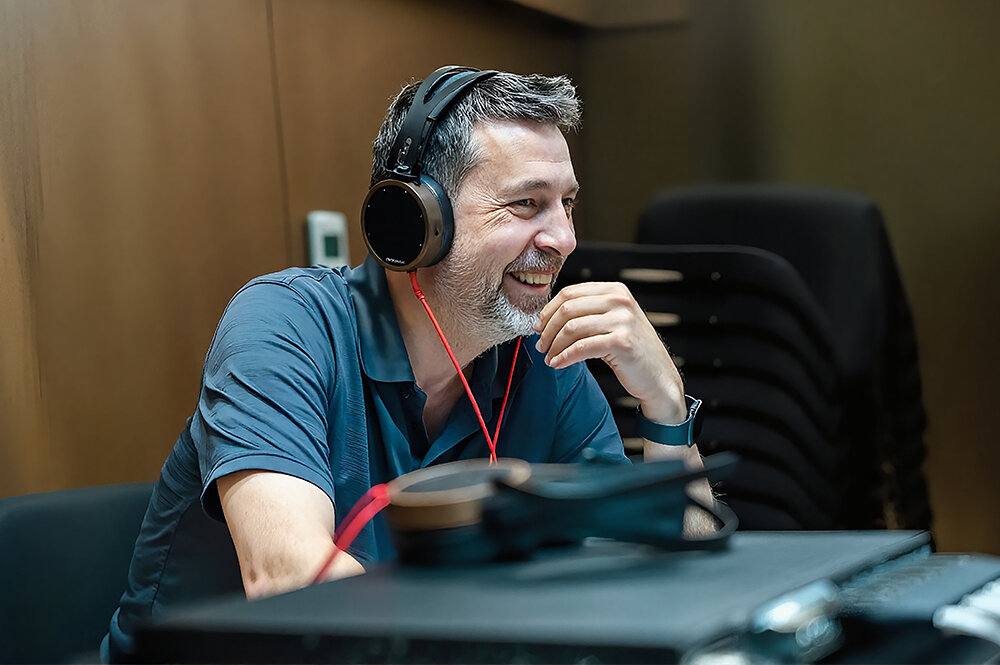
For 25 years, Lansing-based pianist and recording engineer Sergei Kvitko has worked behind the scenes, helping other musicians sound their best. Most of the time, he keeps his head down and his ears up, listening, balancing, perfecting.
From now on, it’s going to be harder for him to keep a low profile. During the Nov. 7 Grammy Awards livestream, he was nominated — for the first time — for the most coveted award in his profession: classical producer of the year.
The nomination puts him in the same league as the recording industry’s top producers and engineers.
Kvitko prefers to see it as a “validation” of the many local and Michigan State University-based musicians who appear on the nine discs he submitted to the Recording Academy, from clarinetist Tasha Warren and percussionist Gwen Dease to the Michigan State University Wind Symphony and composer David Biedenbender.
“The performances and the musicians are the key,” Kvitko insisted. “No matter how well it’s recorded, if it’s crap, it’s crap.”
The magic often happens in his home studio, tucked into a barrel-vaulted ballroom atop the historic Potter House, but he also records soloists, ensembles and orchestras at large and small venues in Michigan, across the United States and abroad.
He rarely sits still for long, but he found a few minutes to ponder the honor on the morning of New Year’s Eve.
“I love doing what I’m doing,” he said. “Even if I became independently wealthy, I would still do it. It’s just fun making music, working with other people, because everybody is a superstar in my eyes.”
He follows the Grammy livestream each year to see which musicians among those he’s worked with will get a nod.
“I always hope one artist or ensemble will get nominated, because they’re so awesome, but I couldn’t even dream of producer of the year,” he said.
It was a shock when he saw and heard his name listed among five nominees, including multiple-Grammy-winning masters of the art, during the Nov. 7 livestream.
Kvitko doesn’t work with the Cleveland Orchestra, like fellow nominee and industry giant Elaine Martone, but he has an ace in the hole.
Technical proficiency alone won’t get you nominated. The award listing calls for “consistently outstanding creativity in the production of classical recordings,” and creativity is where Kvitko shines. All of the nine albums he submitted for Grammy consideration feature unusual combinations of instruments, fresh and innovative compositions, or both.
“I wanted to show the diversity of things that I do with different groups, large and small,” he said. “But I also try to do something that has never been done before, because that’s what’s exciting to me.”
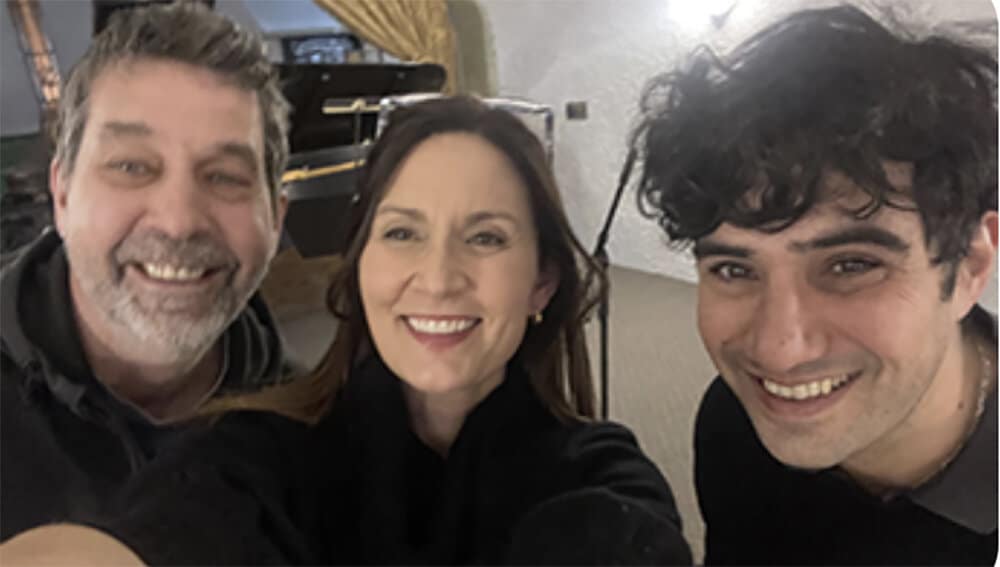
He produced 20 recordings last year — most of them issued on his Blue Griffin label — often shaping the overall concept, repertoire, artistic approach and even the cover art in collaboration with the musicians. He left traditional recordings of staples like Beethoven and Chopin off the submission list.
One album, “Dancing in a Still Life,” put the spotlight on a rarely featured instrument: the rumbling bass clarinet, played with almost shocking lightness, lyricism and sheer fun by MSU faculty member Tasha Warren.
The project challenged Kvitko to blend the low-end murmurs, growls and outcries of the bass clarinet with a varied array of musical collaborators, including legendary Cuban American bandleader and saxophonist Paquito D’Rivera. “Riding to School with Samuel Beckett,” inspired by the unlikely encounter between the minimalist playwright and a very young André the Giant, paired Warren with the go-to cellist on planet Earth, Dave Eggar, who has performed with Tony Bennett, Patti Smith, Wynton Marsalis, Beyoncé, Taylor Swift, Paul Simon and just about everyone else in the industry.
The album sounds so warm, spontaneous and alive that it’s hard to believe it was recorded piecemeal over a year and a half, working around the guest artists’ busy schedules.
“It was tricky to make a coherent album out of it — to make sure the bass clarinet is there, but also make the guest artists shine,” Kvitko said. “When we were done, and Tasha said everything sounded incredible, that was one of the proudest moments of my life.”
By contrast, “Here and Now,” a luminous album of trumpet music by Virginia composers, was recorded in a quick three days at Virginia Tech’s state-of-the-art Moss Arts Center.
“It’s a stunning hall, and we used the space,” he said. “For that recording, I set up my microphones and moved people, instead of the other way around. We wanted to capture the hall as well as the musicians.”
Kvitko’s skill at painting a big sonic canvas is showcased in “River of Time,” an ambitious odyssey of music by MSU composer David Biedenbender, featuring the mighty MSU Wind Symphony firing on all thrusters.
In “River of Time,” Kvitko had to balance symphonic-scale tumult with an eloquent trumpet solo evoking the quiet mysteries of time and space. (The Lansing Symphony performed the concerto last year.)
Kvitko is especially proud of “Four Hands, Two Hearts, One Hope,” an album of contemporary Ukrainian and American music by Ukrainian piano duo Anastasiia Larchikova and Mykhailo Diordiiev.
Kvitko called it “a very special labor of love for everybody.” He recorded, engineered and mastered that album for free and successfully pitched the recording to a sympathetic classical label, Reference Recordings, that agreed to donate proceeds to Ukrainian humanitarian organizations.
A piece in Fanfare called the disc “splendid” and “fascinating,” and a rave review just appeared in the American Record Guide.
Kvitko also likes to add a twist to his own projects as a pianist. He’s working on an album of his “favorite music not written for piano,” which he’ll play on piano, of course. The provocative, Kvitko-esque title is “Exit Music (for the End of Time).”
“It goes from Björk to Bach, from Mozart to Radiohead,” he said. (He’s also including his favorite hymn, “Take My Hand, Precious Lord.”)
“It’s just the most beautiful music ever written, transcribed for piano,” he shrugged.
He wrote some of the transcriptions himself and commissioned the others. He’s piloting the music at several concerts in the coming weeks, as well as one in Lansing this spring.
Meanwhile, his producing workload is not about to let up. Did somebody say classical music is dead? And so are CDs? If so, the zombies are attacking in force. Starting Jan. 9, Blue Griffin will drop a new album each week until mid-March.
“I honestly have no idea when I’m doing all this,” he said. “It feels like the projects are getting bigger and more interesting.”
Last month, he was in Vienna recording an album of soprano vocal music. He got sick on the way back, but he soldiered through two end-of-year sessions at his home studio. The following day (New Year’s Day), he schlepped most of his studio equipment to the University of Illinois’ gorgeous Krannert Center to record “An American Dream,” an opera by composer Jack Perla about the internment of Japanese Americans during World War II, for the Pentatone label.
“It’s crazy — the biggest production I’ve done in a very long time,” he said. “So, I’m a little nervous and excited.”
He’ll go from there to Central Washington University to record a piano duo, then take a flight to Salt Lake City to judge a piano competition and play an “Exit Music” concert, fly home to Lansing for one day, fly to Houston, drive to Louisiana to record a flute and piano project, play another concert in Houston Jan. 30 and, finally, fly from Houston to Los Angeles for the Grammys Feb. 1.
Are there any limits to how much Kvitko can pack into his life? He’s about to find out. His phone and email have been blowing up since the nominations were announced. More frequent and higher-profile jobs are almost surely in the offing.
“I don’t know what’s going to happen,” he said. “It’s kind of fun.”