From farm to cup: Inside Lansing’s oldest coffee roaster
Whether you realize it or not, you’ve probably had coffee roasted by Paramount Coffee Co.
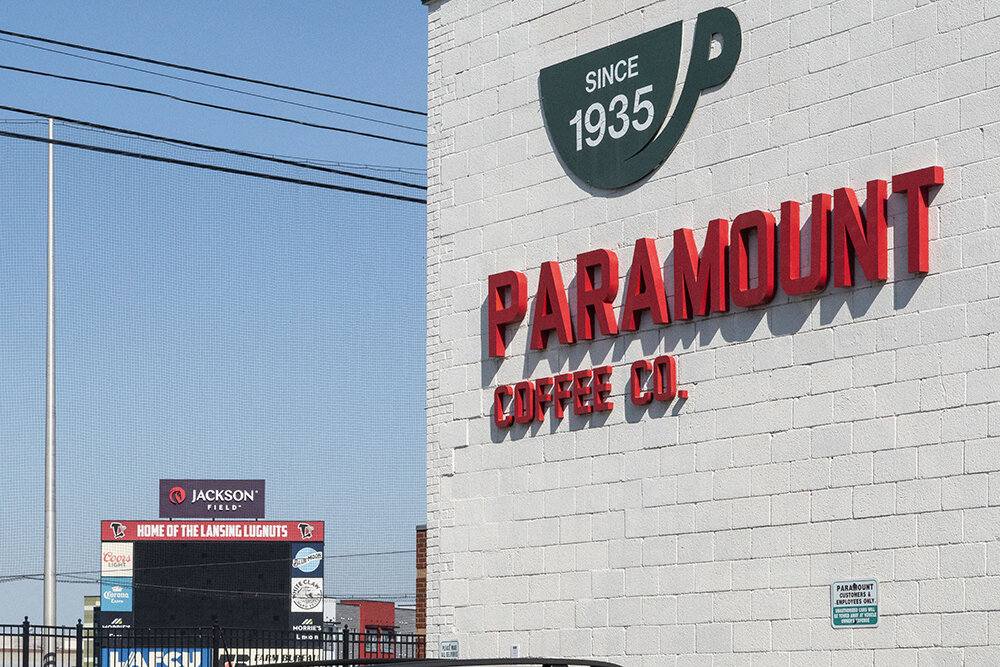
From its facility right across from Jackson Field, Paramount roasts coffee for its eponymous Paramount …
Whether you realize it or not, you’ve probably had coffee roasted by Paramount Coffee Co.
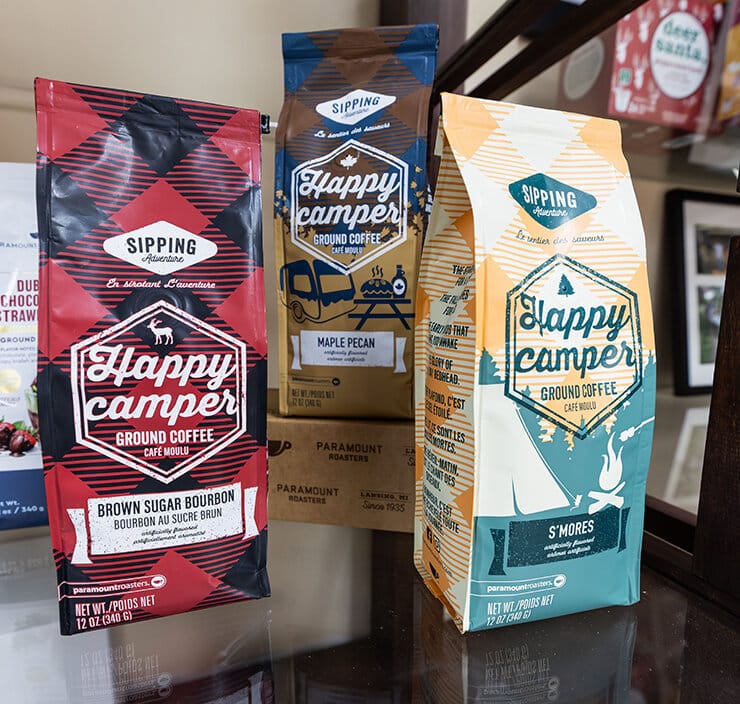
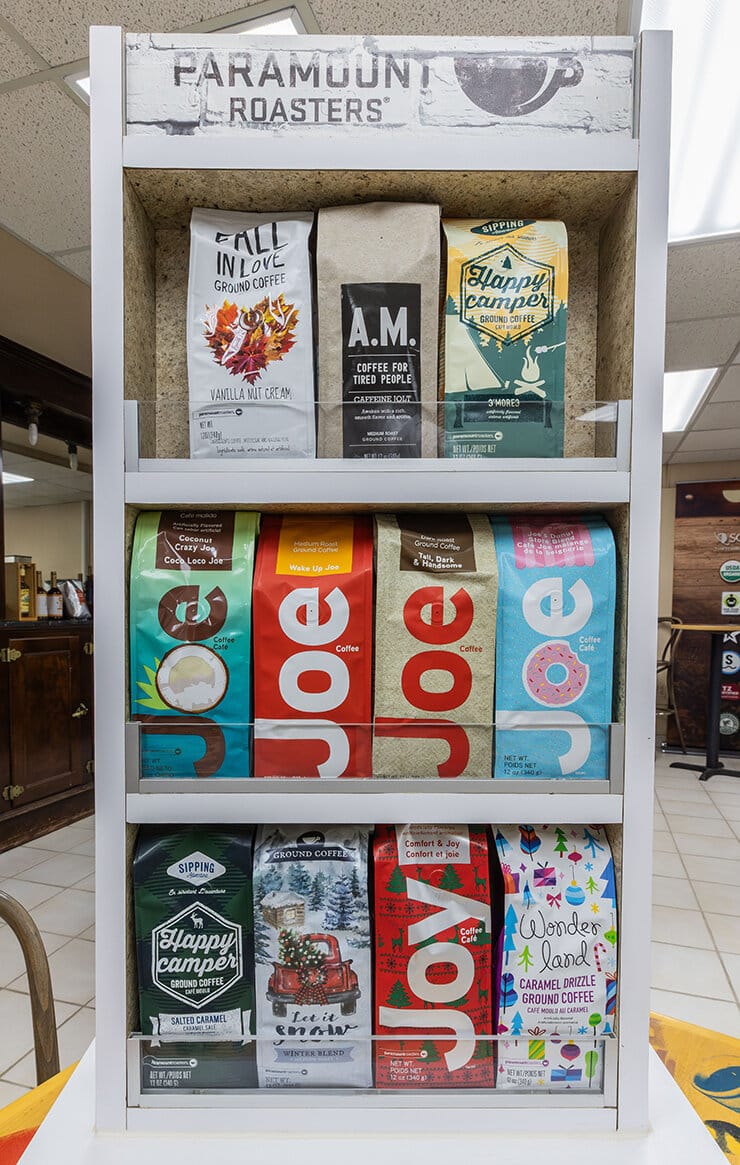
From its facility right across from Jackson Field, Paramount roasts coffee for its eponymous Paramount Roasters brand, as well as the brands Joe Knows Coffee, Happy Camper, Fall in Love and Sweetie Pie, which can be found in stores such as Marshall’s and Costco.
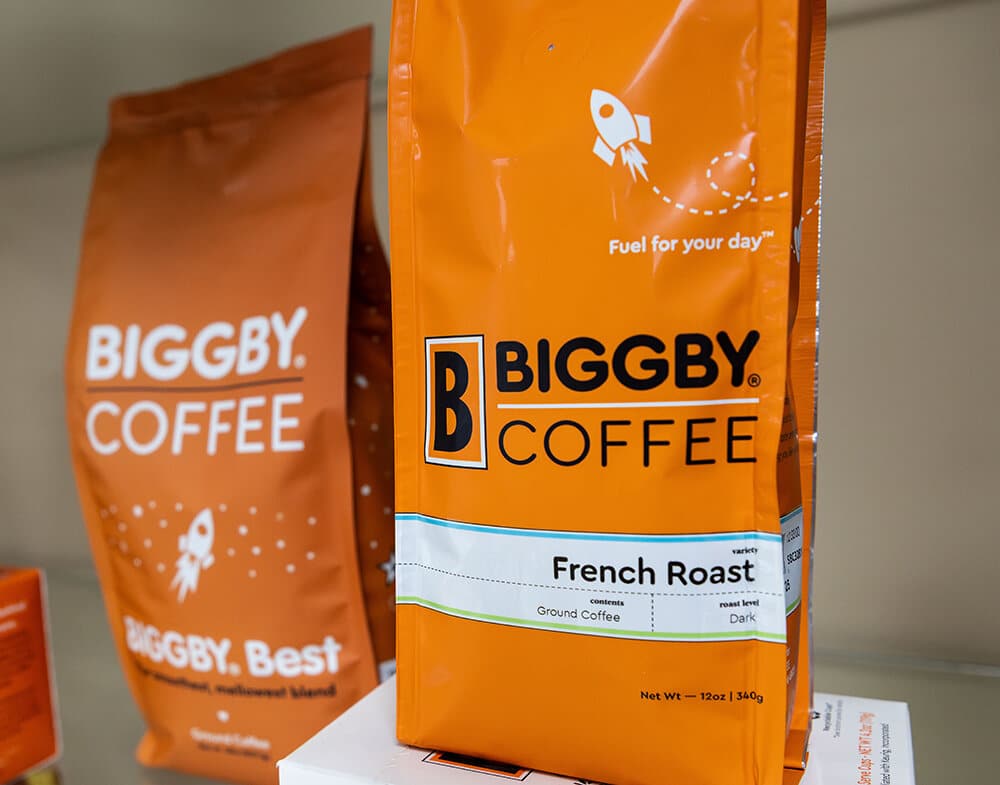
And that’s not even taking into account its partnership with Biggby, the East Lansing-founded coffee chain that has since spread across Michigan and beyond. Every drop of Biggby coffee, espresso and batch brew has its beginnings in the same Lansing roasting facility.
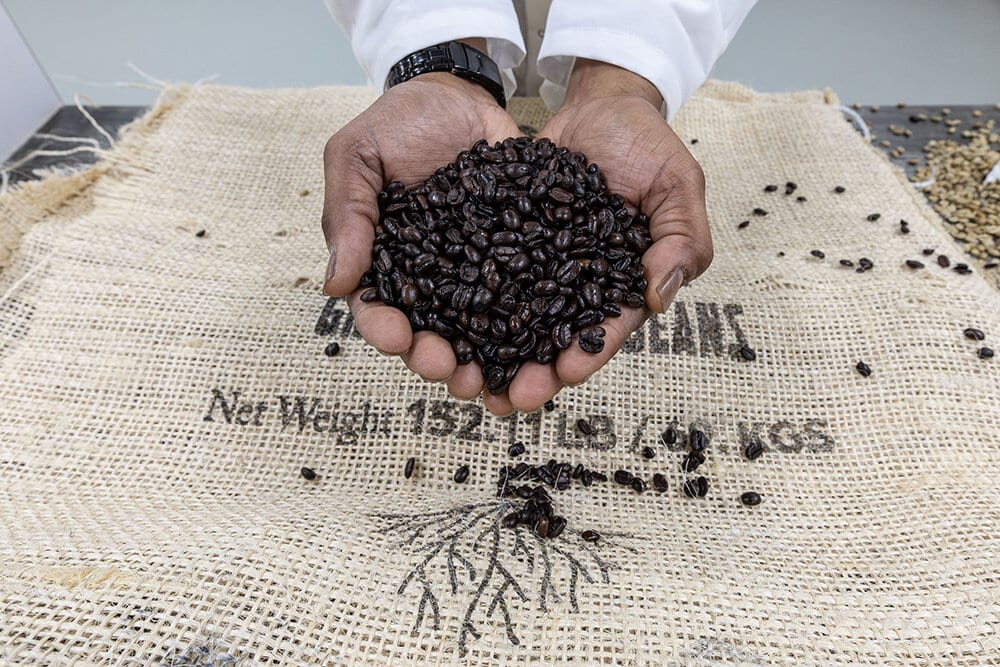
Paramount sources its coffee from Colombia, Brazil, Nicaragua, Mexico, Ethiopia and many other places. It starts with a little red fruit called a coffee cherry, the seeds of which are cleaned, removed and dried to form coffee beans.
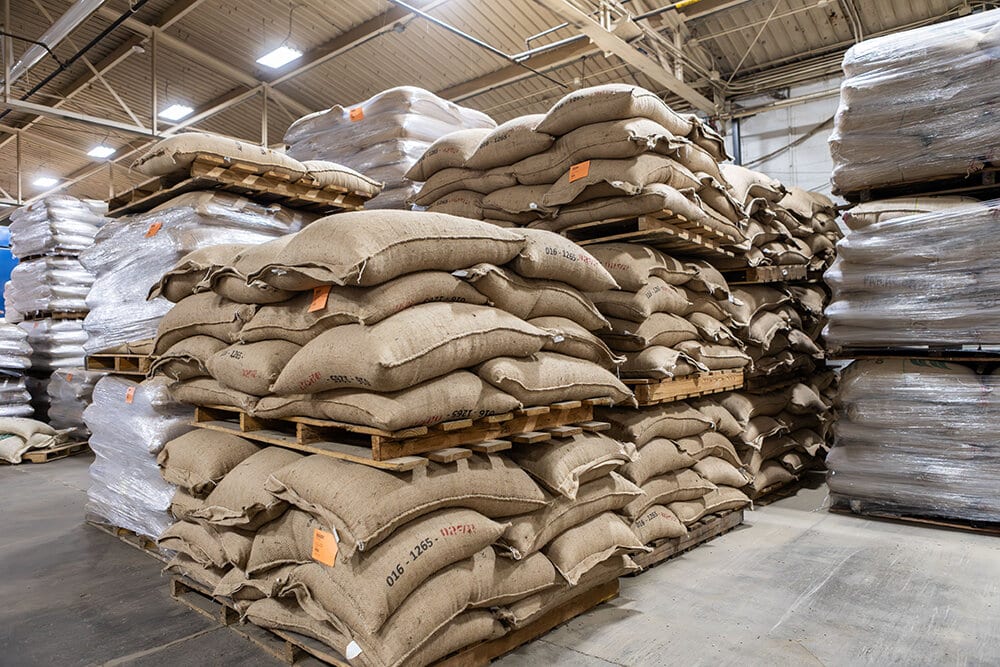
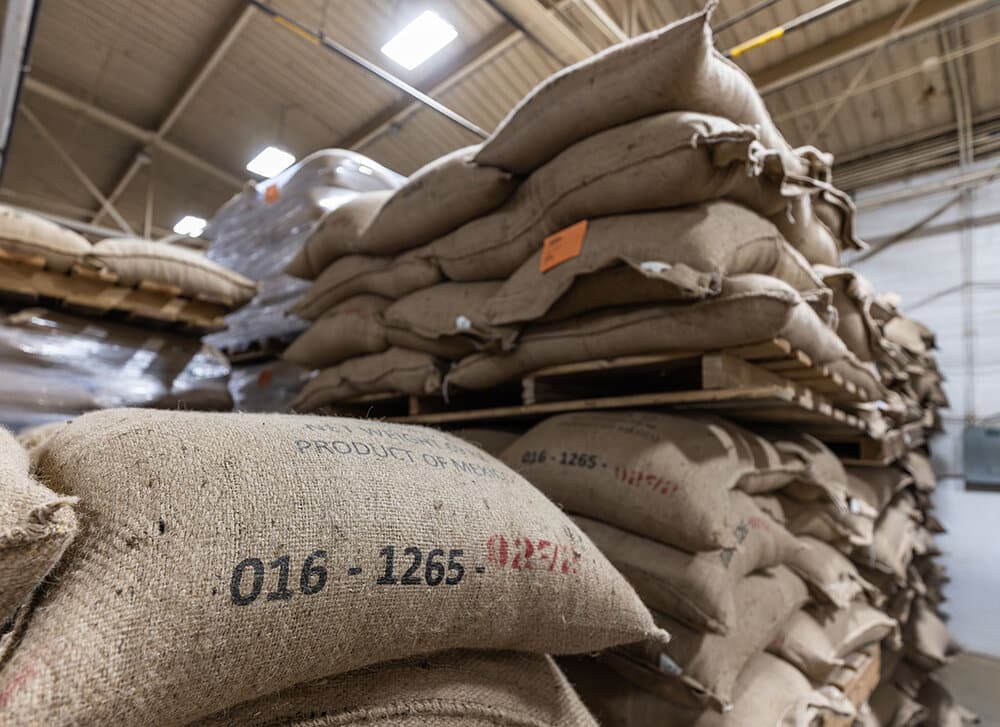
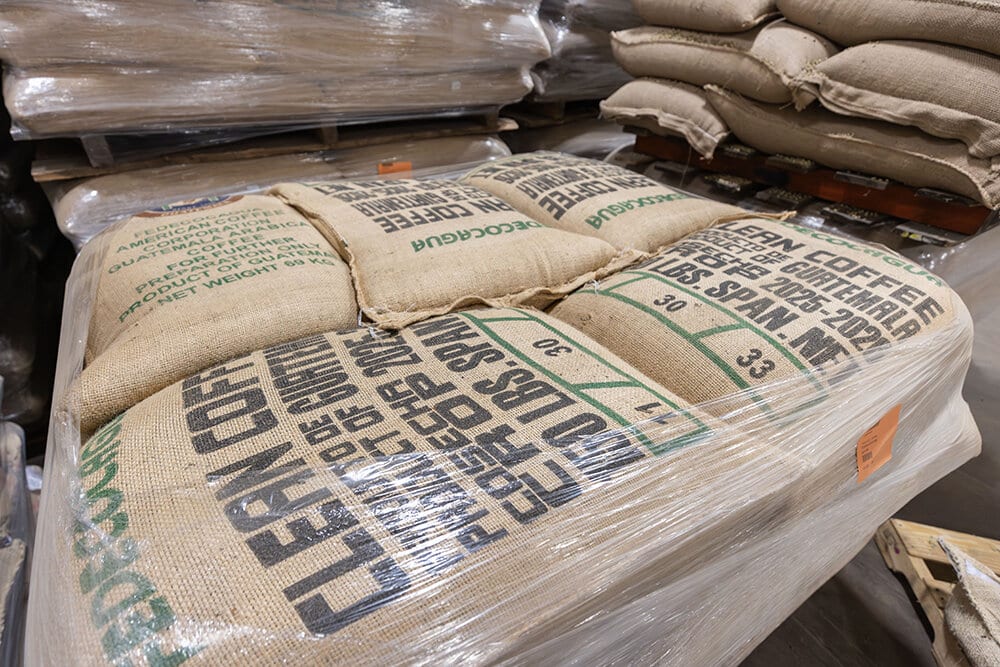
Those beans are shipped to Paramount. In the “green bean room” (not to be confused with the actual green legumes also called green beans), stacks of huge burlap sacks from growers and distributors are moved around with forklifts. They’ll go through a sorting process, then roasting.
When Paramount began operating in 1935, it was a distributor of already-roasted coffee in the Chicago area. After the 1950s era, Paramount bought a roaster and started doing it themselves. That meant buying beans from coffee distributors, the intermediaries between growers and roasters.
Most of Paramount’s beans are still sourced this way, but some come directly from farms. Its partnership with Biggby extends to Biggby co-founder Bob Fish and his wife Michelle Fish’s One Bigg Island in Space nonprofit, which aims to make all Biggby coffee “farm direct” by 2028. That means researching, visiting and ultimately purchasing from producers without middlemen, which helps ensure coffee beans are ethically sourced and the producers are paid well. Paramount recently started offering a direct-to-consumer line of farm-direct coffee as well.
Rod Carpenter is Paramount’s farm-direct manager. Along with Paramount’s general counsel Steve Weyhing, Carpenter gave City Pulse a tour of Paramount’s roasting facility to show what’s actually going on in there when the Stadium District starts smelling like coffee.
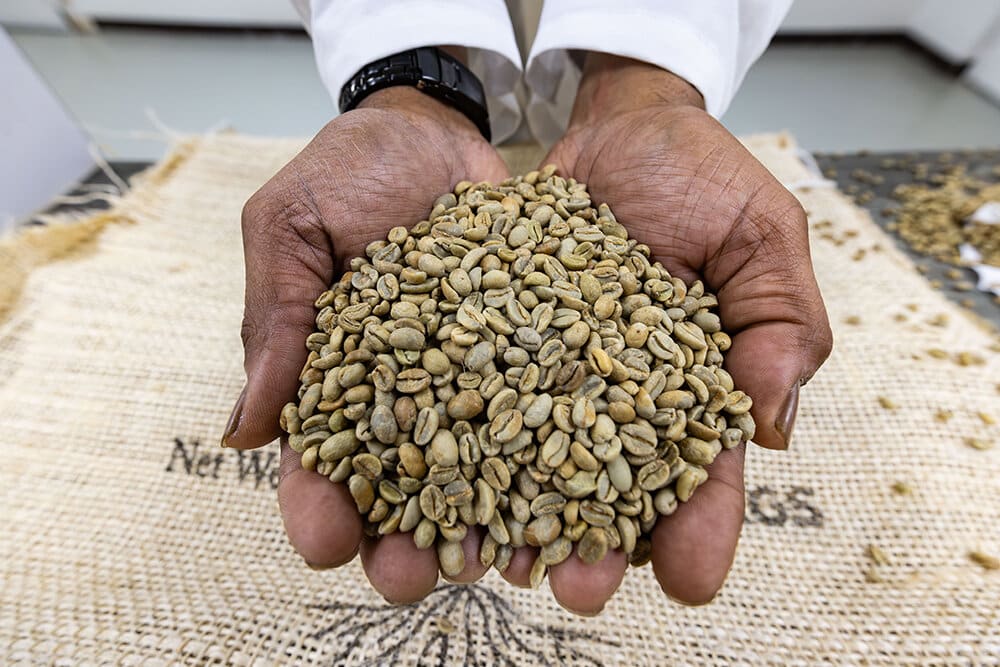
Before Paramount orders huge batches of coffee from growers, it needs to know if the beans have the flavor notes it wants. There’s a team of four “cuppers” — think sommeliers but for coffee. Not only do the cuppers select and test the beans Paramount roasts, but they play a role at the other end of the process as well, testing to make sure the roasted coffee tastes consistent across a batch.
But beforehand, the cuppers are testing to see how well the coffee was grown, if there are any notes of fermentation (usually an undesirable flavor, though some growers intentionally allow coffee beans to ferment inside the cherry via the “natural process,” granting the beans a fruity note) and whether it tastes as they expected given the beans’ region of origin and type.
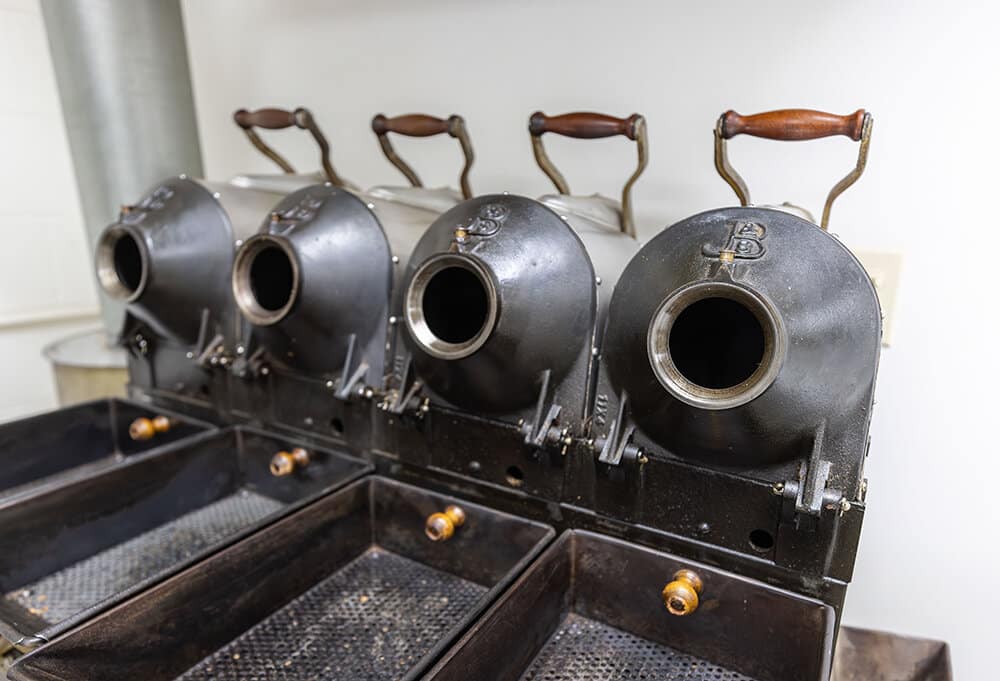
Cuppers at Paramount roast sample beans themselves in an antique roaster. It doesn’t have all the analytical tools as Paramount’s larger roasters, but the cuppers can taste what they need to.
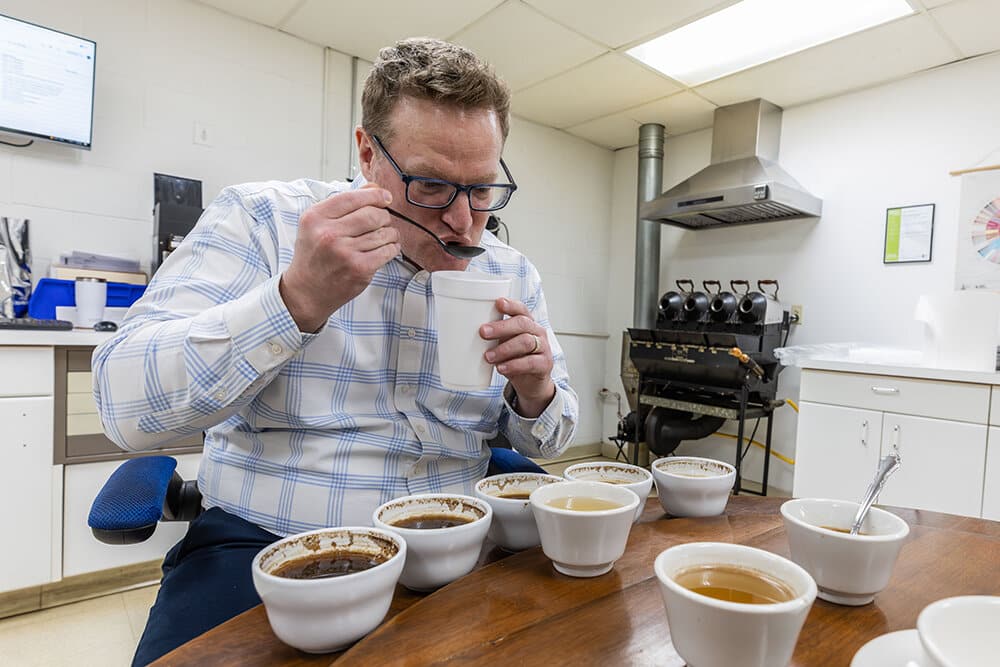
The key is just-boiling water, poured directly onto coffee grounds across several cups. It can be different coffees or the same, depending on whether the cuppers are sampling new coffee or testing an already-roasted batch for quality control. The cuppers allow four minutes for the coffee to brew before scooping the grounds out with a spoon.
“It’s kind of the most rudimentary way you can do it,” cupper Chad Calder said, “but it’s also the cleanest way you can brew it and get a look at what’s going on there.”
Cuppers aggressively slurp coffee from each cup off a spoon, intentionally engaging their olfactory system to pick up on scent and flavor notes.
Those notes, ranging from chocolatey to fruity to medicinal, can be desirable or undesirable depending on Paramount’s needs. The cuppers spit the coffee into a styrofoam cup between samples (though the spittoon Paramount’s original cuppers used is still in the room) and dip the spoon in water, avoiding cross contamination.
Calder compared the process to taste testing different soda brands.
“If I took a Mountain Dew and a Sprite and a Sierra Mist and did a lineup of five or 10 things you went through, you’d probably be able to pick your favorite out, because you’ve had it so many times in your life and you know exactly what that is,” he said. “If I did that same lineup for you 100 days in a row, I bet you would get better and better at it. You’d be able to say, ‘Oh, that’s a 7 Up over here, that’s crisper and brighter, it’s not as sweet as the Sprite over here.’”
Once a coffee is cupper approved, it sits in the green bean room until it’s ready to be used. Then, it’s emptied into a bean sifter, a machine bigger than some kitchens (and far, far louder) that removes any debris from the farm or the route to Lansing.
Then it’s time to actually roast the beans.
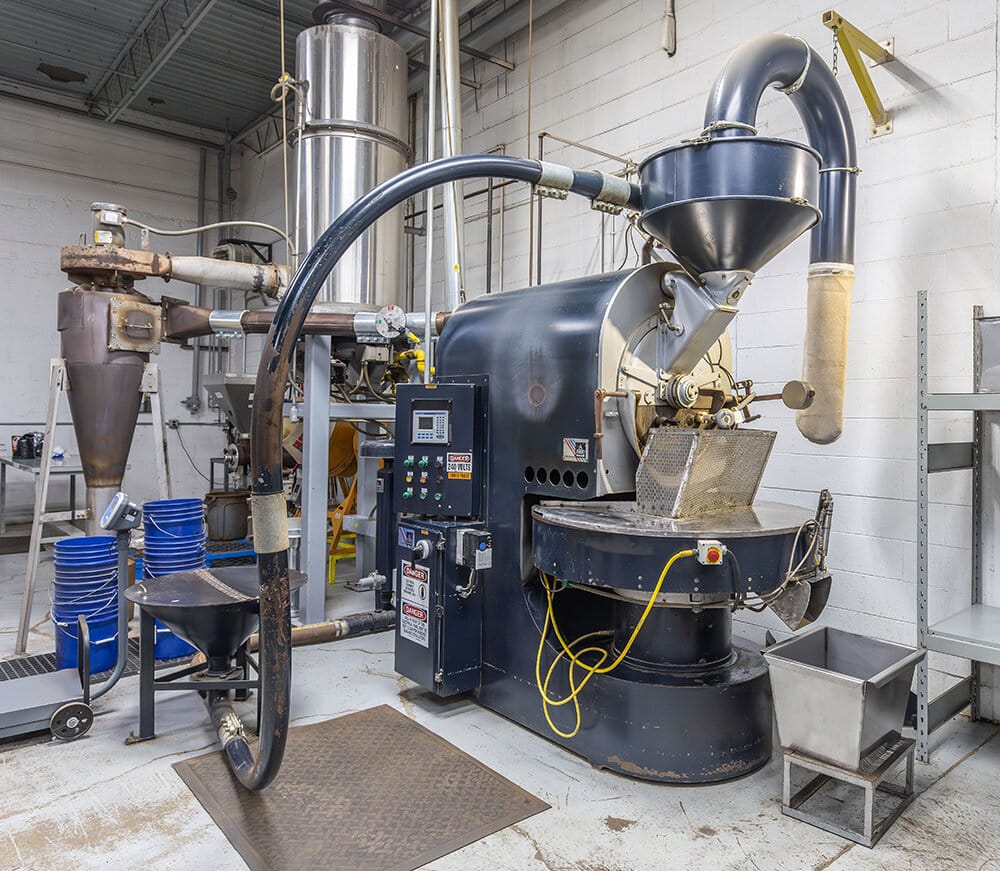
Wholesale customers, which make up a large slice of Paramount’s business, specify how much coffee they need and at what roast level. For orders under 400 pounds, which usually come from cafes, Paramount uses a smaller-sized roaster, which is pictured above. Its larger roasters, which can produce about 750 pounds of coffee in 13 minutes using an elaborate series of pipes, hoppers and machines, are not pictured to protect Paramount’s proprietary process.
Technically, these roasters can operate with little intervention. The coffee comes in from the green bean room, gets piped into the machines and is roasted. Some is ground, and some is sent over to machines in the bagging room, which is larger than some New York City apartments. The bags are injected with nitrogen to maintain freshness before being sealed.
In practice, though, these processes require a lot of attention — particularly roasting. Anyone who’s roasted a lot of food in their oven knows it’s a fickle process, with identical roast times and temperatures sometimes yielding dramatically different results. In a home kitchen, no one will complain too much if the roasted vegetables come out a little crispy, but for an industrial coffee roaster, variability must be avoided.
Master Roaster Rich Roberts electronically monitors specific facets of the roasting operation. He’s looking at roasting temperature, air flow, bean moisture and even the amount of time roasted beans spend in a hopper before they’re bagged. All of this can change flavors.
When a batch is done, an employee will take a sample, grind it and put it into a specialized spectrometer made by Agtron that scores the darkness of the roast. Agtron scores dip as low as about 20, which would be a very dark French roast that would take finesse not to burn, and extend to the high 50s, which would take similar skill to roast that lightly while still cooking out the raw, grassy notes of green coffee.
Some variability is inevitable, so Paramount specifies that Agtron scores must be within two points of the target. A batch being roasted to an Agtron score of 47 — a relatively light roast — came out at 47.7 during City Pulse’s visit.
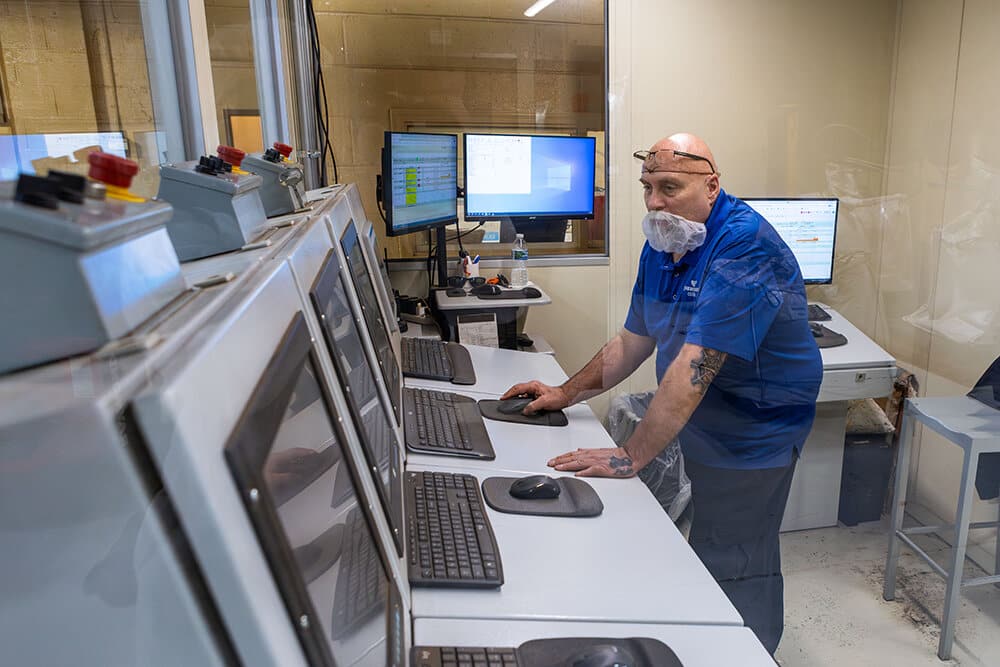
Most of the coffee beans or grounds will be bagged within a day or two and shipped off. But every 30 minutes, one bag is snatched off the floor by the quality department, which ensures the bags are properly sealed and the beans have the correct level of moisture, alongside checking for other potential defects. Ensuring not too many beans in the batch are broken — Paramount specifies no more than 15% — is one of them. To do this, the team uses a specialized sifter, then weighs the chunks versus whole beans. Too many broken beans tells them there’s too much pressure being used to inject the beans into the roasters, which can also cause a darker roast.
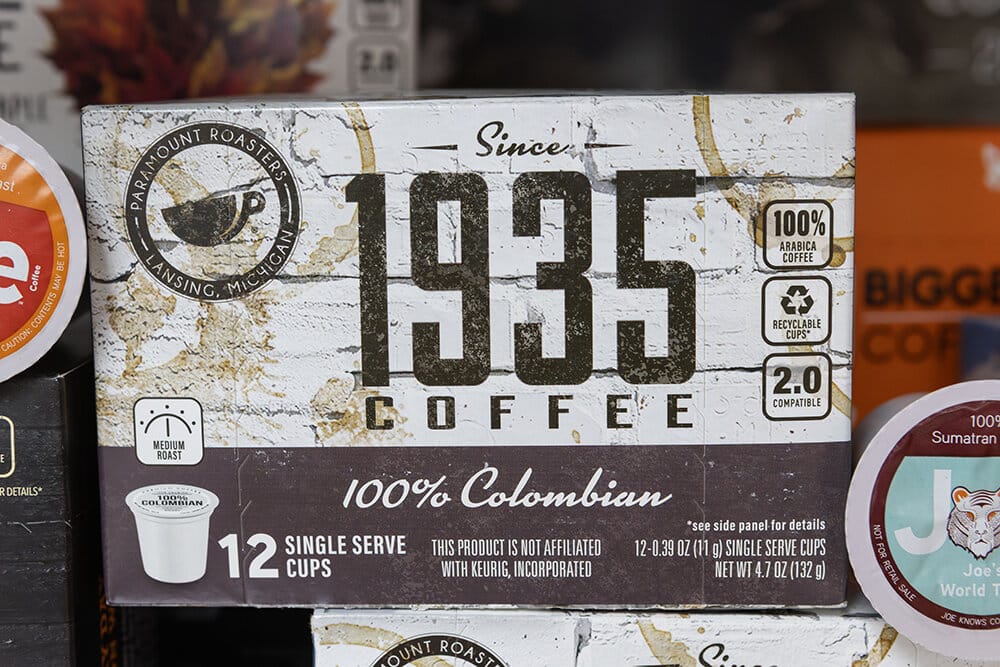
Rather than being bagged, some coffee grounds are sealed into single-use coffee pods. These machines, similarly sized to the bagging machines, take in coffee grounds and little cups and output sealed, ready-to-use K-Cups in one fell swoop.
Throughout this whole process, organic and non-organic beans are kept separate to avoid cross contamination. Pipes are even purged between batches.
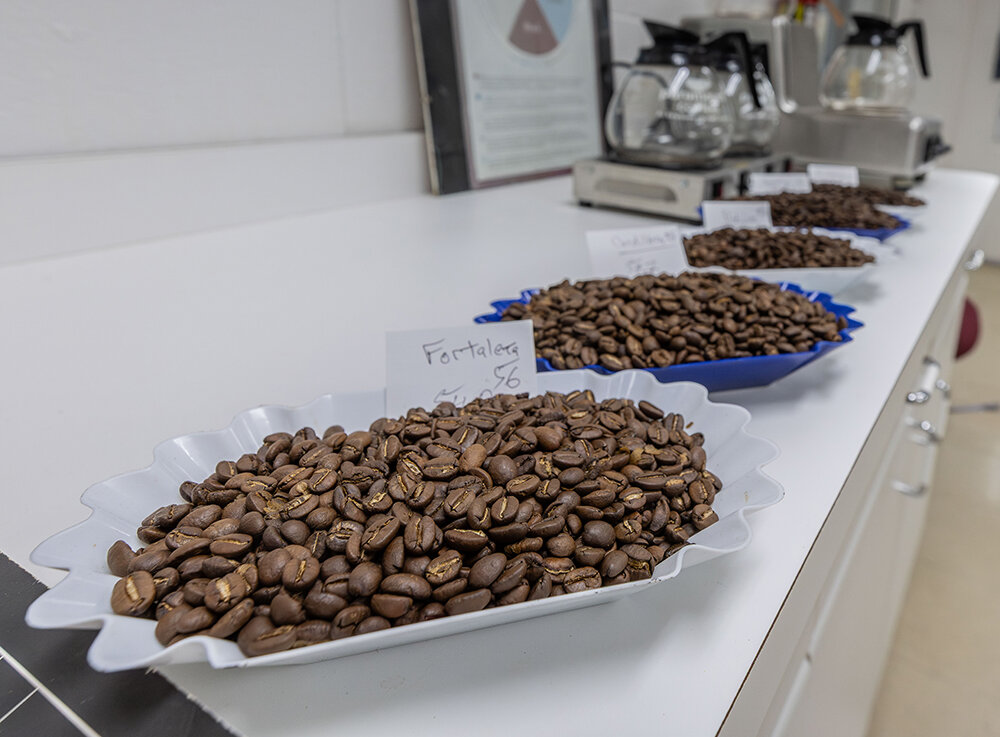
Once the coffee is bagged and ready to go, the cuppers’ other responsibility comes in. First, they test the coffee before it goes out using the same brewing methods customers use, such as a standard home coffee machine. In the cupping room during City Pulse’s visit, the coffee pot contained a coffee roasted to an Agtron score of 56, much lighter than Paramount usually roasts. The customer specified the roast level, but it’s Paramount’s job to ensure its coffee actually tastes good.
The cuppers must also test large batches to ensure consistency across the whole batch.
“We want to look at multiple cups to make sure there’s no variance,” Calder said. “There are undesirable things like ferment, chemical notes, pesticides, insecticides, any kind of iodine or medicinal notes — there’s a whole range of things that we want to weed out before they even come in the back door,” he said.
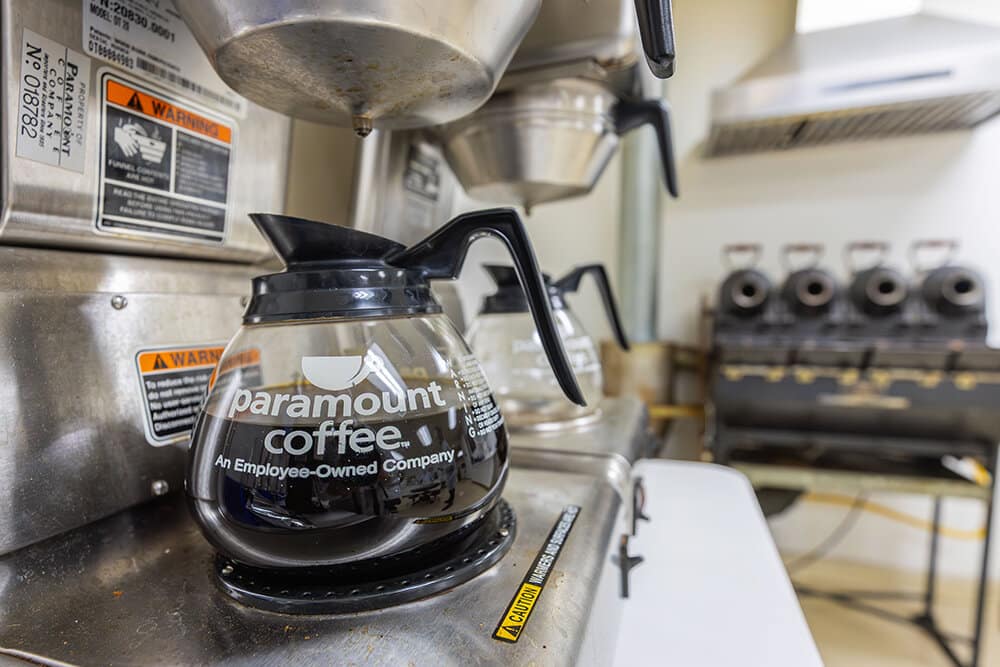
Knowledgeable cuppers ensure that a coffee tastes right based on its origin and roast level. A Colombian coffee, for instance, should have a medium-to-high level of acidity and a similarly strong body, or a thicker mouth feel, Calder said.
They can also pick up on more obvious things. One time, Calder said, a batch of roasted coffee was stored in a burlap sack next to another batch of flavored coffee over the weekend. By Monday, the cherry flavor had pervaded the unflavored coffee, necessitating a redo of the whole process.
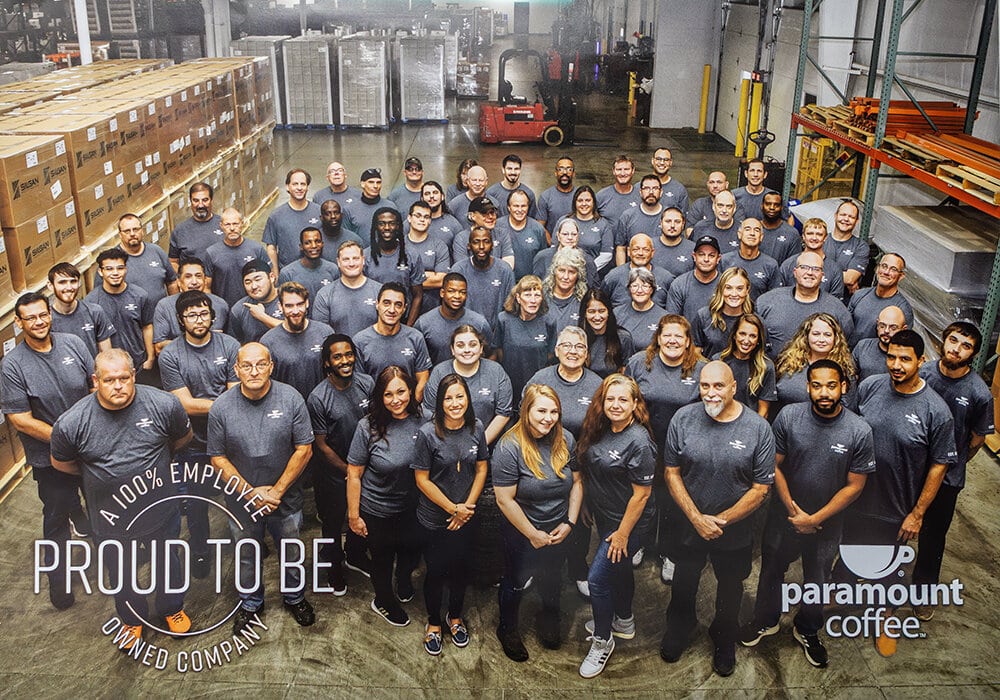
It’s a process that’s evolved over the 90 years Paramount has been operating. For about 25 years, the company has been employee owned, meaning decisions are made communally, Carpenter said. That means there isn’t one person to ask what’s coming next.
So, when the Stadium District smells like coffee, that’s what’s going on behind the scenes. And on your next trip to Biggby, you’ll be drinking the results.