How to make a beat: When schools were losing arts programming, Ozay Moore put his life in hip-hop to work for Lansing’s next generation
Step 1: Dig in the crates
Every good beat begins with listening.
In 2008, my crates were YouTube videos: West Coast underground hip-hop, freestyle sessions, cyphers. One discovery led to another. The Procussions. Then Lightheaded, whose sample-heavy boom bap paired classic hip-hop rhythms with positive lyrics.
Within that sound, I found an emcee named Othello. His second album, “Live at the Assembly Line,” led me to his MySpace page, where he’d announced he was moving to Lansing.
Of all places. Years later, I would understand what a lifetime in hip-hop could offer a city whose young people were losing opportunities to create.
Step 2: Find your sample
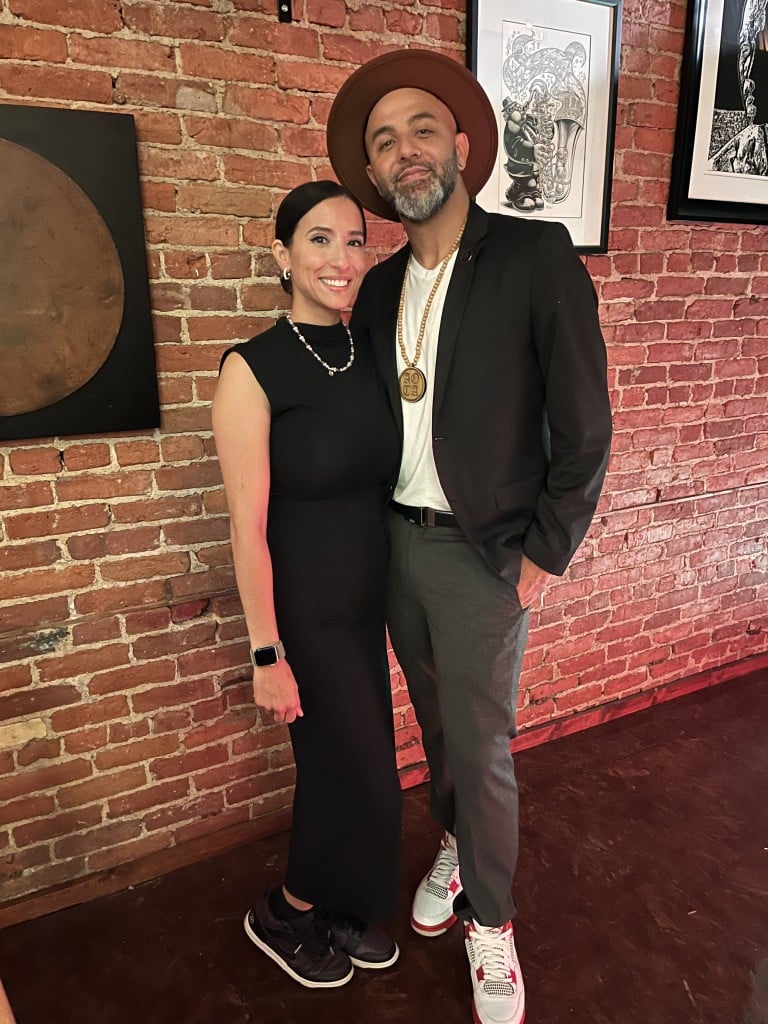
Before he was Ozay Moore, founder of All of the Above Hip Hop Academy, he was Othello, a rapper who was signed to a record label at 18 and toured internationally, including on the Warped Tour, while raising a newborn with his wife.
Touring meant booking shows, building relationships and surviving between gigs. When Moore and his wife moved to Lansing to be closer to family, he brought those experience with him.
Moore had moved to Michigan to work, but budget cuts were drying up that work. The same cuts threatening his livelihood were also taking teachers and arts programming out of schools. All of the Above Hip Hop Academy emerged from that shared uncertainty.
He remembers thinking, “Use what I know for something. They’re pulling P.E. teachers out of the schools; the arts are suffering. Man, what if we stepped in with hip-hop-based programming?”
A cut to an arts program means fewer chances to pick up an instrument, write something or find an adult who takes your creativity seriously. The need for those experiences doesn’t disappear with the funding.
Step 3: Find the break
On Michigan State University’s campus, Moore found Code of the Cutz, a hip-hop shop owned by Jaime Wilkins (DJ AddVerse). It sold records, graffiti paint and supplies. Freestyle cyphers brought people together there. So did conversations about Darfur.
Through his work with Ingham Academy and Detroit Public Schools, Moore had been gaining experience in teaching and developing programs.
At Code of the Cutz, he saw another kind of learning happen around records, paint and cyphers. When the shop closed around 2007, Greater Lansing lost another gathering place.
Step 4: Flip the sample
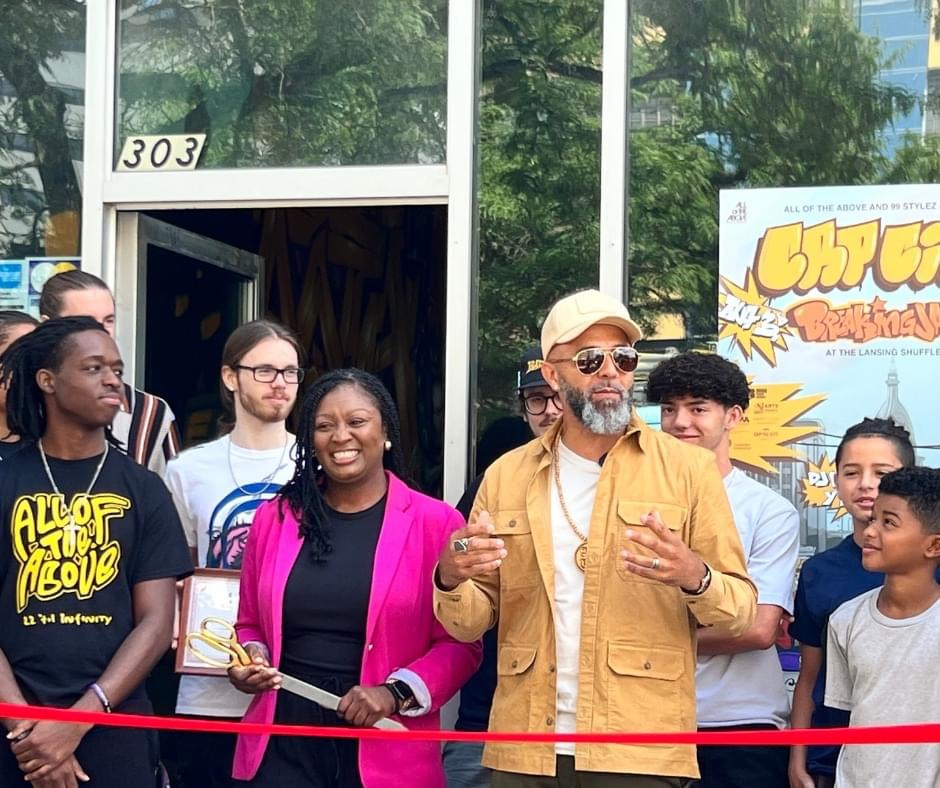
Moore took the energy of Code of the Cutz and mixed it with his years of touring, booking and teaching. The result was All of the Above Hip Hop Academy.
An afterschool program, The Cook Up, pairs students with local teaching artists in beat making, rhyme writing, graffiti, breaking and DJing.
They get lessons on all that, but the biggest lesson is learning how to use the pool of resources and skills to make school and life better.
Moore had to take several odd jobs to survive between shows and tours. Working artists have knowledge to share, but they also have bills to pay. All of the Above helps create paid opportunities for local artists to mentor students while continuing their own careers and fostering the next generation.
After all, what’s more hip-hop than taking the best of the scraps you have and creating something big and dope for the community?
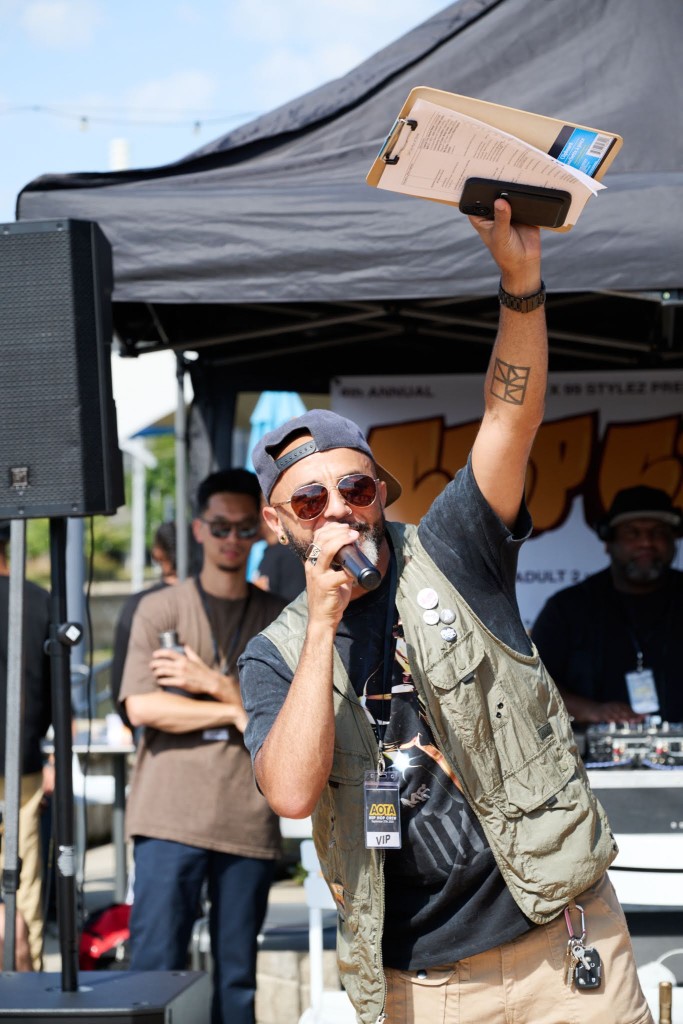
Step 5: Leave room for another verse
Moore still raps, but these days, being an executive director, husband and father takes priority.
He smiles when he talks about The Player, an artist from The Cook Up: his consistency, his desire to get better, his willingness to put himself out there. The Player has released projects consistently since 2020 and rocked shows at The Robin Theatre and the Wharton Center. Look around town and you’ll probably find a flyer for an event he’s hosting.
I’ve been on the receiving end of that mentorship, too. As I built The Poetry Room, Moore became someone I could ask about grants, boards and programming.
He helped me land my first paid gig.
The artist I’d discovered online had become someone helping me make room for other artists. We talk about running organizations. Sometimes we just talk about obscure hip-hop history that only a couple of heads would remember.

Step 6: Let the beat build
Eighteen years ago, Moore had no idea that anyone in Lansing was listening, or that we’d become peers in building spaces for the next generation.
Back then, I wondered why someone like Othello would move to Lansing. Now I wonder who’s been listening to us, watching our moves.
And what they’ll create next.