‘More of the same for Lansing’
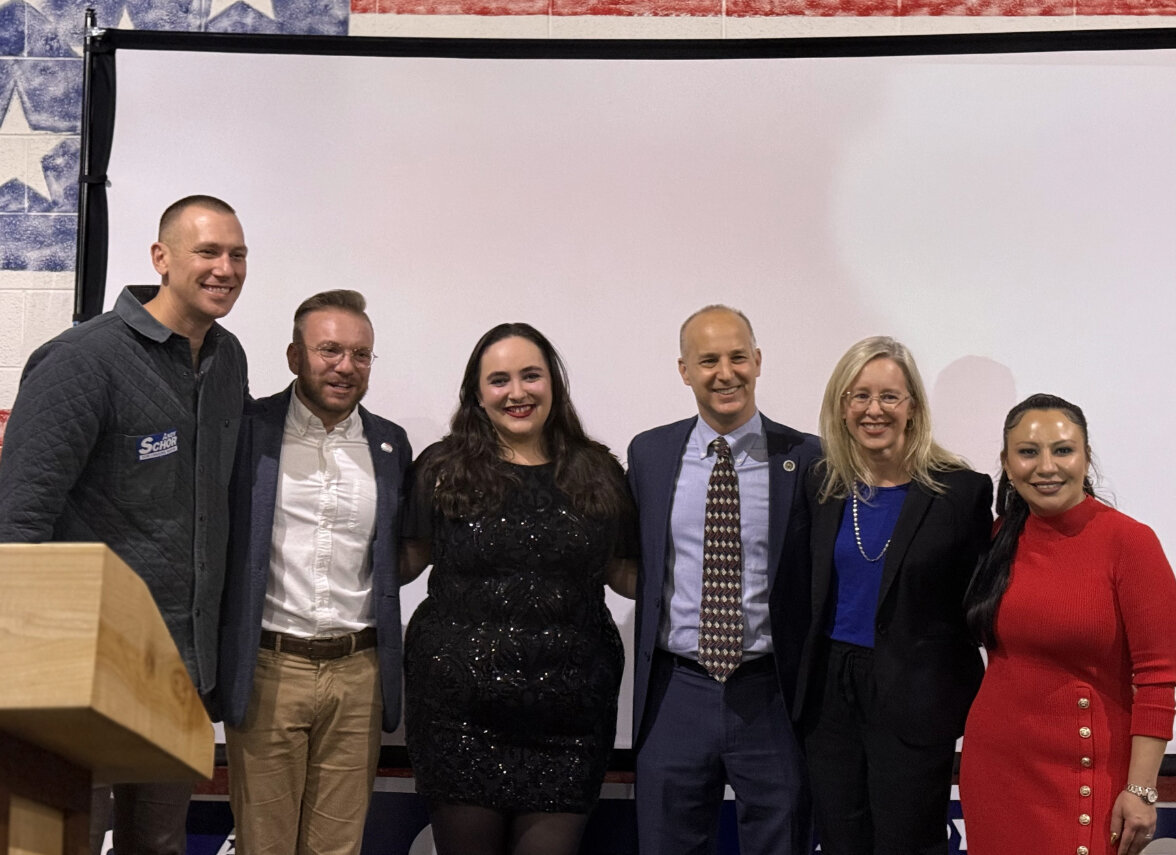
Early in the evening at an Election Day party at Eastside community center The Fledge, Lansing’s more progressive candidates were having a good time.
Hosts played the movie “Mean …
Money speaks loudest as grassroots candidates lose Lansing election
Early in the evening at an Election Day party at Eastside community center The Fledge, Lansing’s more progressive candidates were having a good time.
Hosts played the movie “Mean Girls” on a projector. Mayoral candidate Kelsea Hector and friends played trading card game Magic: The Gathering, with a rabbit-themed deck. At-large city council candidate Julie Vandenboom, 2nd Ward council candidate Erik Almquist and 4th Ward candidate Heath Lowry mingled with supporters and each other.
Around 9:30 p.m., a host leaned over a balcony, announcing that Zohran Mamdani, a democratic socialist, had won New York City’s mayoral race. The room erupted in cheers.
An hour later, as Lansing’s absentee results began to roll in, any excitement had faded into a bleak picture.
Vandenboom came third in a four-person race for two seats behind Clara Martinez and Jeremy Garza. Both Martinez and Garza were endorsed by the Lansing Regional Chamber-Political Action Committee.
Almquist, who ran a spending-free campaign and was active in online political groups, got only 28% of the vote against Deyanira Nevárez Martínez, endorsed by Schor and the LRC-PAC.
Lowry lost to Peter Spadafore, a current at-large councilmember who will now serve in the 4th Ward.
And Kelsea Hector, who ran a longshot campaign against Schor that raised under $1,000, garnered 33% of the vote against him.
As with the primary election, money separated the candidates.
Campaign finance reports show Martinez raised about $45,700. Garza raised over $48,000 according to his primary election report and $12,500 according to his general.
Vandenboom, despite a much longer list of individual donors, raised about $17,500. She came in third place, after Garza, by fewer than 1,000 votes.
Neil Thanedar, executive director of the Michigan Campaign Finance Network, said that kind of support could have made the difference.
“Sometimes organizational support is actually what wins these close elections,” he said.
The race was the second time in a year that Vandenboom narrowly missed elected office. She finished 10th in the 2024 election for a nine-member charter commission. That commission’s proposed charter, which Vandenboom opposed, passed the same night as her most recent loss.
Thanedar said Vandenboom and at-large candidate Aurelius Christian, who dropped out of the race a month before the election, were the subject of dark money attacks in this campaign.
Mailers sent by dark money group Michigan Vindicated in June criticized Christian’s role in the Ingham Community Health Centers’ 2024 troubled budget, and phone calls targeting Vandenboom and claiming to be from Michigan Vindicated told recipients that she was a socialist and asked them to pledge to vote for anyone else.
501(c)(4) nonprofits are often called “dark money” groups because they do not need to disclose their donors. While the donors are more likely to dictate who the ads target than the group itself, Thanedar said, the donors need the money to do so — meaning they are more likely to have a pro-business swing and target anti-establishment candidates, Thanedar said.
While money may have played a role in the mayoral election, where Schor had over $100,000 before the election and secured 67% of the vote, it doesn’t seem to have had much of an effect on his challenger’s chances.
In 2021, Kathie Dunbar lost to Schor with 35% of the vote with a war chest of nearly $35,000. Hector, this year, raised less than $1,000 and ran a relatively minimal campaign while still managing 33%, nearly as much as the better-funded Dunbar, who also spent 16 years on city council prior to her mayoral bid.
That a third of voters went for a more progressive candidate who campaigned minimally shows “growth in the anti-establishment base,” Thanedar said.
That said, he doesn’t think a more expensive campaign could have pushed Hector past the finish line.
“If someone raised $200,000, that might change the dynamic,” he said. But, having a natural voter base as an established incumbent candidate with no major controversies, Schor would likely have triumphed even if Hector raised similar amounts to Dunbar, Thanedar said.
Mark Grebner, an Ingham County Commissioner and political consultant who was recently profiled in the New York Times, agrees.
“What she was really getting there was just the people who would have voted against any incumbent who wasn’t especially popular,” he said.
Despite an “increased anti-incumbency feel” compared to previous elections, Grebner said the lack of a consistent anti-Schor narrative means he was always likely to win. If 10 people gathered to complain about Schor, he said, they’d all have their own reasons to dislike him.
“So there’s an incumbent, the incumbent’s running for re-election, the incumbent’s done an OK job, and the city is holding together,” he said. “What you’ve got is a kind of, ‘how do you feel about oatmeal for breakfast’ question, you know? ‘Do you ever have orange juice?’ It’s that kind of election.”
Asked if he thought Christian, who received 3,500 votes despite having dropped out, was a spoiler candidate for Vandenboom, Grebner said no.
“I don’t think that you should assume those votes would have gone anywhere under any condition,” he said, “because some of them were shared with Julie, and some of them were punk votes, and some of them were shared with the candidates who already got the other vote.”
Thanedar said the most likely reason Christian dropped out is he simply ran out of money. The primary was a crowded playing field, and Christian only narrowly scraped by into the general after raising over $14,000, most of which was spent.
Erik Almquist, who lost in the 2nd Ward, did not report any campaign spending.
Thanedar said victory by a spending-free campaign is possible in a race of that size, but requires a lot of concerted effort.
It’s also mostly thankless, he said, though it can win over some voters.
“The vast majority of people don’t ever find out that you didn’t spend a dollar, but the people who know about it like it,” he said.
In the end, the more establishment-supported, business-friendly candidates won out in the election, Thanedar said. Whether that’s a good thing depends on whether voters believe Lansing is on the right track already.
“It looks like it will be more of the same for Lansing,” he said.
— LEO V. KAPLAN