MSU grad Ben Williams joins all-star tribute to Miles Davis
The best thing you can say about “Unlimited Miles: Miles Davis at 100,” the all-star jazz tribute hitting Wharton Center March 26, is that Miles himself might have crossed 52nd Street to check it …
Unlimited Miles: Miles Davis at 100
7:30 p.m. Thursday, March 26
Wharton Center Pasant Theatre
Whartoncenter.com
1-800-Wharton
The best thing you can say about “Unlimited Miles: Miles Davis at 100,” the all-star jazz tribute hitting Wharton Center March 26, is that Miles himself might have crossed 52nd Street to check it out.
Miles Davis was notorious for running in the opposite direction of memory lane, but “Unlimited Miles” is not an ordinary tribute. Don’t expect note-for-note re-creations of Davis’s countless classics — not even “Kind of Blue,” the quintuple platinum masterpiece widely regarded as the greatest jazz album ever recorded.
In a storied career stretching from early bebop to early hip-hop, Davis “changed music five or six times,” in his own words, and was the least likely person on the planet to revisit his old tunes.
In that restless spirit, pianist-arranger-bandleader John Beasley has called “Unlimited Miles” a free-floating “dream of Miles,” tossing aside chronological or thematic order to reach for unexpected connections and uncharted territory.
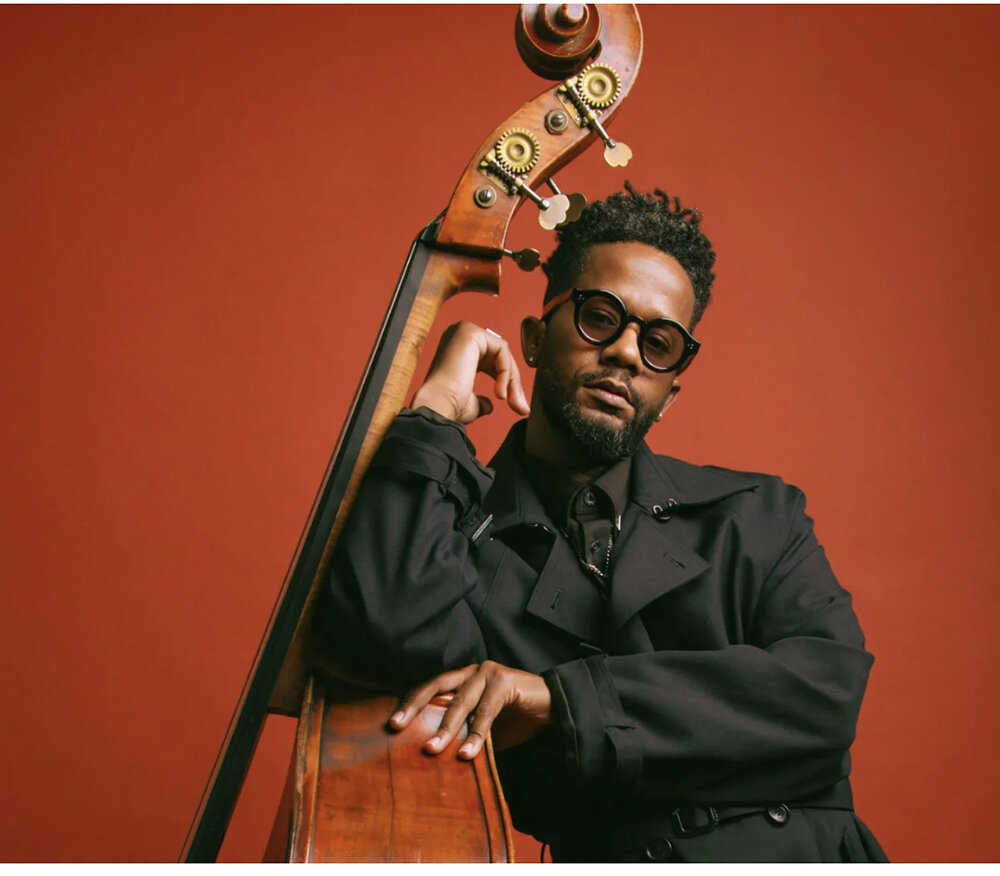
Bassist Ben Williams, a proud graduate of MSU Jazz Studies, was elated to join this stellar group, but couldn’t help wondering how they would deal with it all.
“My first question to John Beasley was, ‘What the hell are we going to play?’” Williams said with a laugh. “We’re talking about 50 years of music, and all these drastically different styles he led us into.”
The music of Miles got Williams hooked on jazz in middle school, when a teacher gave him a “Kind of Blue” cassette.
The legendary “Kind of Blue” ensemble, with saxophone great John Coltrane and pianist Bill Evans, quickly morphed into an elastic, exploratory and younger group now known as the “second great quintet.”
That group stretched familiar standards like “My Funny Valentine” into five-dimensional taffy, quickly moved on to all-new compositions and set the stage for electrified fusion, streetwise funk, ambient idylls, salvos of hip-hop and many other Miles-ian adventures to come.
When pressed to choose, Williams picked the second great quintet as his favorite Miles Davis group, a five-headed meltdown machine with saxophonist Wayne Shorter, pianist Herbie Hancock, drummer Tony Williams and one of Williams’ most cherished heroes, bassist Ron Carter.
“I’m just such a Ron fan,” Williams said. “His playing has been super influential for me personally. That group created the mode for what a modern jazz ensemble sounds like.”
“Miles Unlimited” bandleader John Beasley is a sophisticated pianist, an inventive arranger and the only member of the “Unlimited Miles” group who actually played with Miles Davis. In 1989, after hearing an audition tape, Davis invited Beasley to join his touring band.
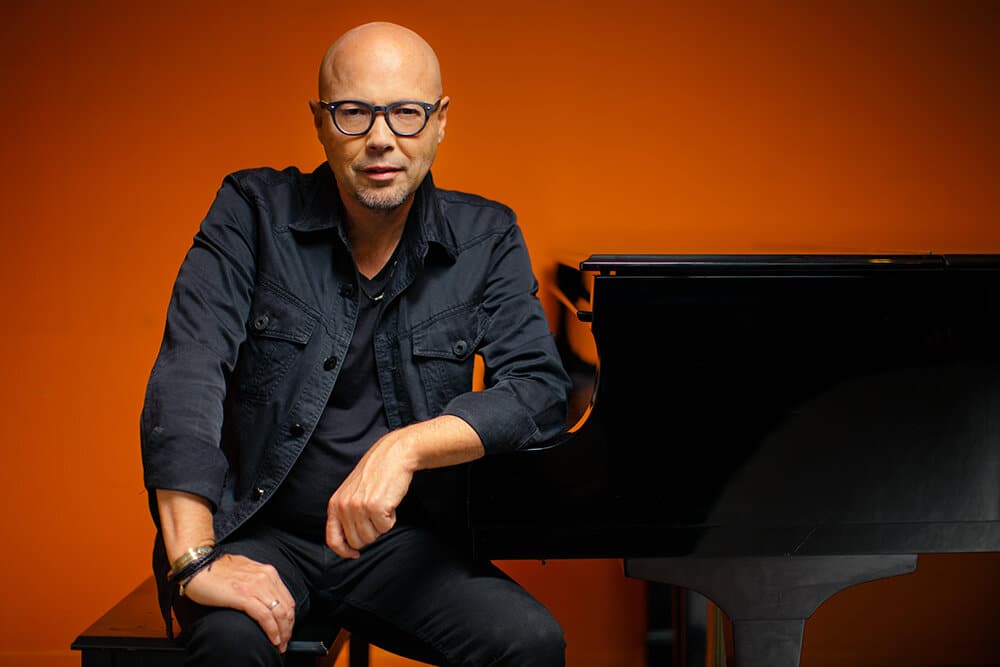
Beasley later said he learned from Davis how to leave space for soloists and let them set the direction, and Williams appreciates that approach.
“I don’t think this project could be in better hands,” Williams said. “As Miles would do, you’ve got to leave room for the cats. John is not just a great pianist and composer in his own right, but he’s a great musical director. He’s pulled it all together and figured out the direction, and that’s what good musical directors do.”
After graduating from MSU two decades ago, Williams studied at the Juilliard School and won the Thelonious Monk International Jazz Competition in 2009. Three years later, he toured with jazz guitar great Pat Metheny and earned a Grammy for Best Instrumental Jazz Album as a member of Metheny’s Unity Band.
Along the way, Williams has played with Lauryn Hill, George Benson, Wynton Marsalis, Robert Glasper and many other top artists, while making his own strong musical statements in albums like his 2020 release “I Am a Man.”
Williams said his time at MSU prepared him well for the adventures to come.
“Studying with the great Rodney Whitaker — he’s beyond being a great bass teacher,” Williams said. (Whitaker is a world-renowned bassist and director of MSU Jazz Studies.) “He really prepared me as a human being. I was 17 when I started at MSU — not just a developing musician, but a developing young adult. He helped me understand this music, not just from the perspective of any one instrument, but culturally, how it impacts the world.”
Williams’ deeply personal musical vision came to full flower on his most recent album, “Between Church and State,” released last May, with incandescent saxophone powerhouse Kamasi Washington.
Teaching is a big part of his life.
“I always think of something Professor Whitaker told me once: ‘This information you’re getting doesn’t belong to you,’” he said. “At the time, I didn’t really understand how deep that was, but he was planting the seed in my head that this is a lineage. It’s your responsibility to give that information to somebody else.”
He was elated to learn that one of his former students is now playing with Metheny.
“You can’t get any more poetic than that,” he said.
On top of his many other talents, Miles Davis always put together a first-rate band. Williams likened him to a “great casting director.”
“I look at Miles almost like a university,” Williams said. “I think of all the other greats we know because of him.”
The “Miles at 100” ensemble aspires to similar heights. For Williams, it’s a mix of old friends and new stimuli. He’s known trumpeter Sean Jones since they were both teenagers at a jazz camp.
“We’ve been good friends for over 20 years,” Williams said. “I just played with him last weekend in Baltimore.”
Jones has already covered a lot of Miles in a band with pianist Marcus Miller.
Williams also has known drummer Terreon Gully since his MSU days, and they had a blast playing together in vibraphonist Stefon Harris’s Blackout group.
Guitarist Kurt Rosenwinkel is a wild card in the “Miles at 100” deck, bringing a fresh sensibility and superhuman chops to any melody, groove, or free-floating digression that may arise.
“You can clearly hear the influence of Kurt Rosenwinkel on an entire generation of guitar players,” Williams said.
“It’s our first time touring together, and I’m super looking forward to that.”
Saxophonist Mark Turner, an eloquent storyteller often likened to John Coltrane, is “one of the singular voices of a generation,” in Williams’s words.
That’s a powerhouse lineup by any standards, but, in the spirit of Miles, Williams wouldn’t guess what will happen when the band hits.
“I don’t know yet, to be honest,” Williams said. “We have a great set list, covering a few different eras, and we’re finding our own way to play them. I’m just as curious to see what it will sound like. This is our first stop on the tour, so you guys will hear the first note of this band.”