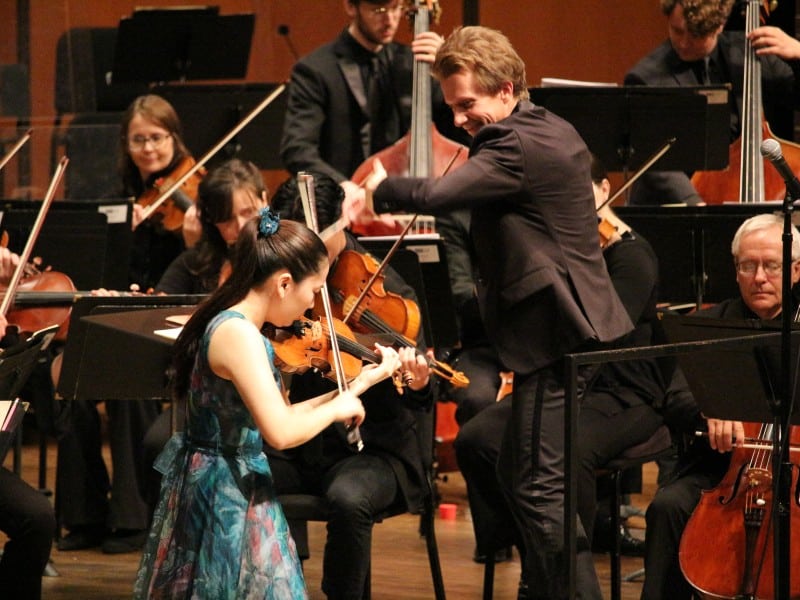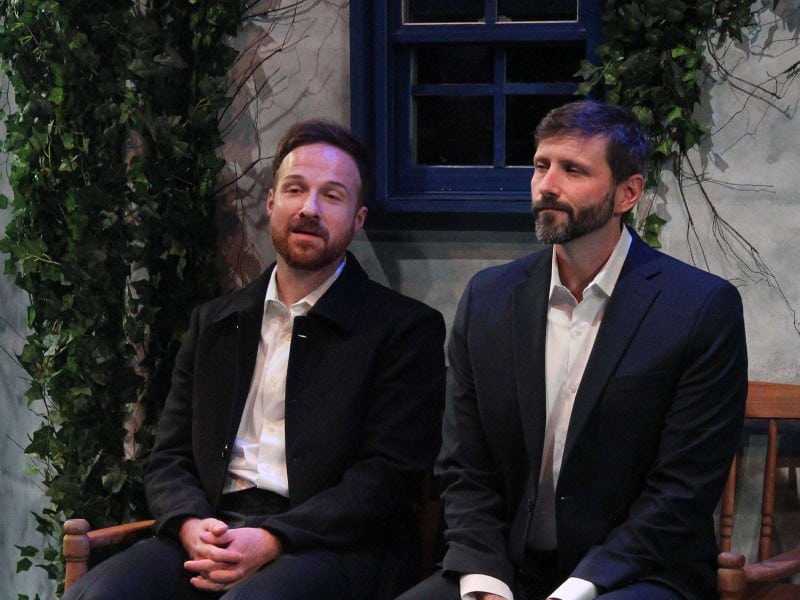
Red Cedar Roots Festival aims to revive East Lansing’s folk and traditional legacy
By Mike Ellis
The Flint Southernaires introduced themselves with the succinctness that comes from a band that has spent 60 years performing on stages around Michigan.
“You’re going to hear some good gospel music, alright.”
And with that, the second night of the inaugural Red Cedar Roots Festival began.
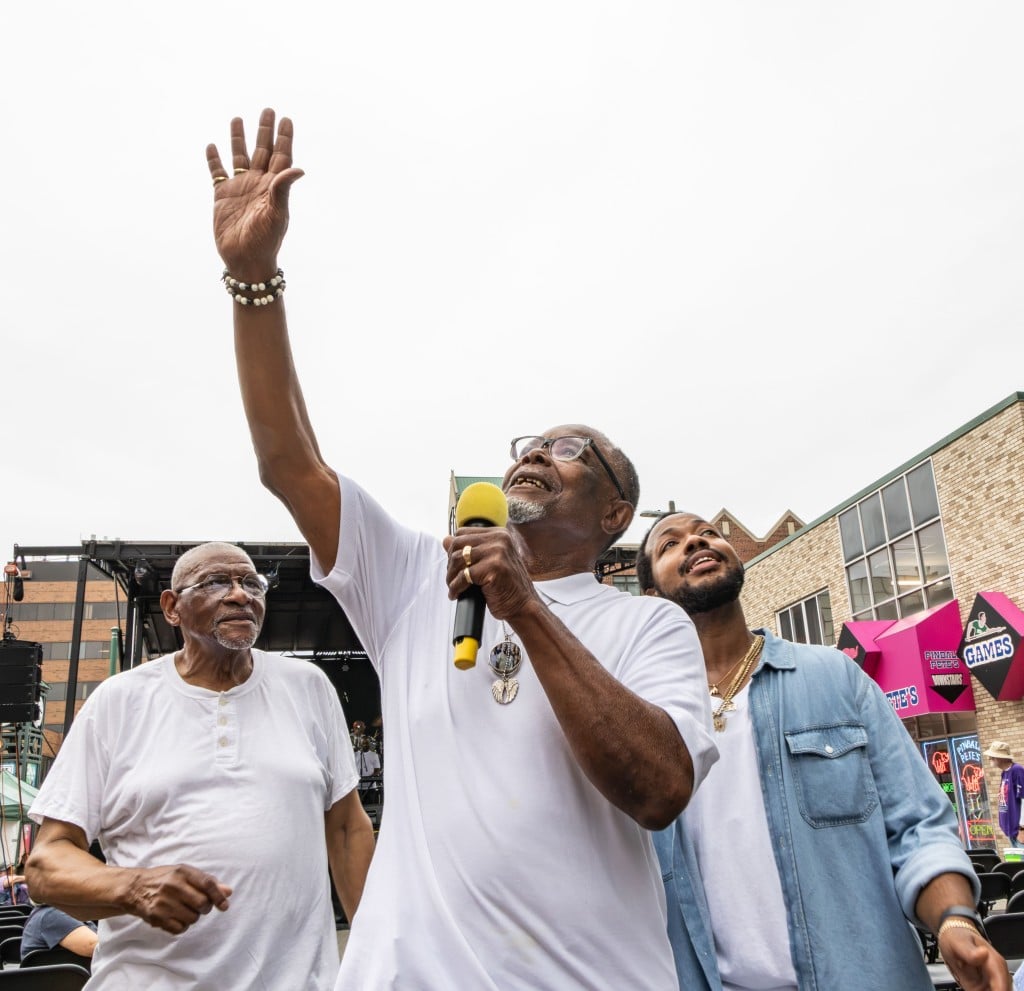
The classic quartet delivered silky harmonies with a thumping back-beat band.
The festival is the successor to the legendary Great Lakes Folk Festival, which was put on ice in 2017.
Starting small this year with a single stage in downtown East Lansing, organizers plan to grow the Red Cedar Roots Festival to fill some of the Folk Festival void.
The Southernaires were recognized this summer with a heritage award by the Michigan Traditional Arts Program but bathed on stage in golden-hour sunlight, the band continued to prove they’re no museum pieces as they spent Saturday night (Aug. 15) performing soulful counterpoints and melting the air with their crooning praise.
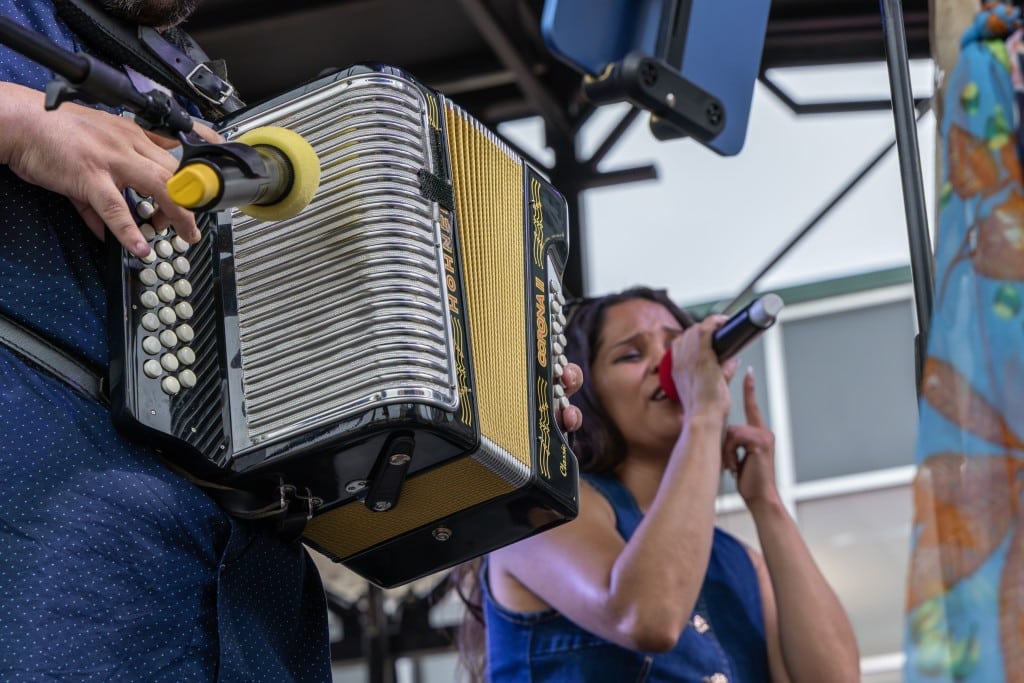
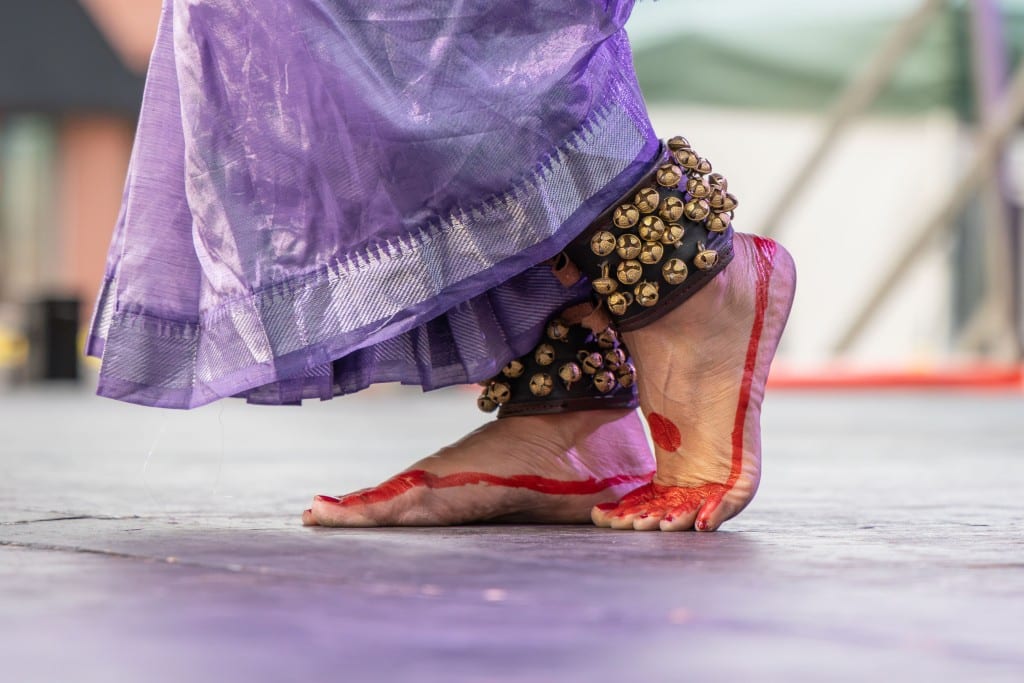
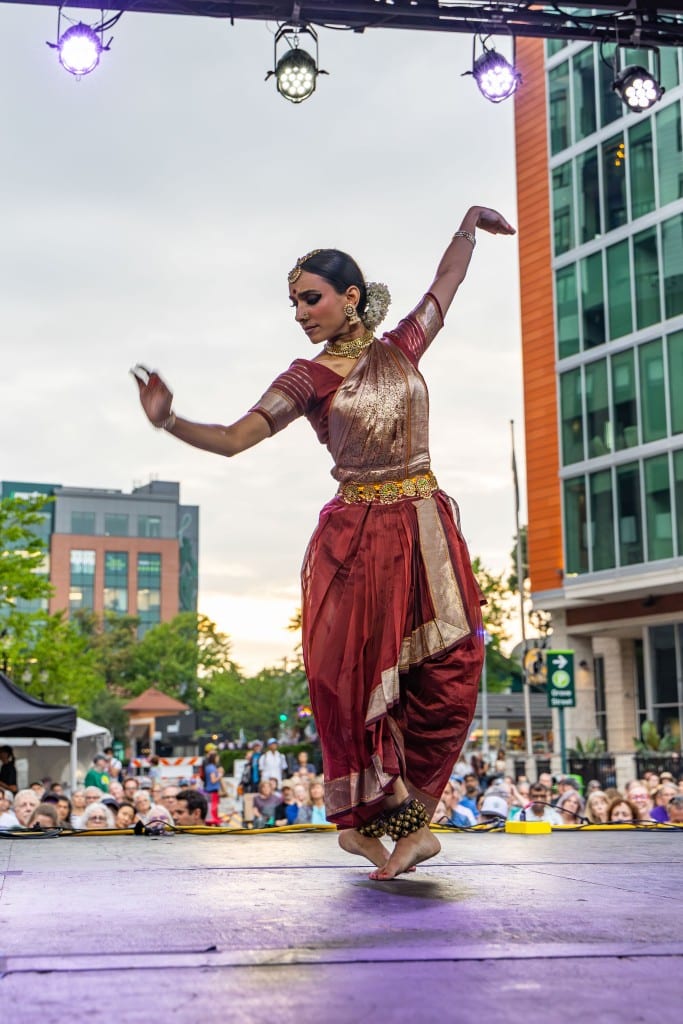
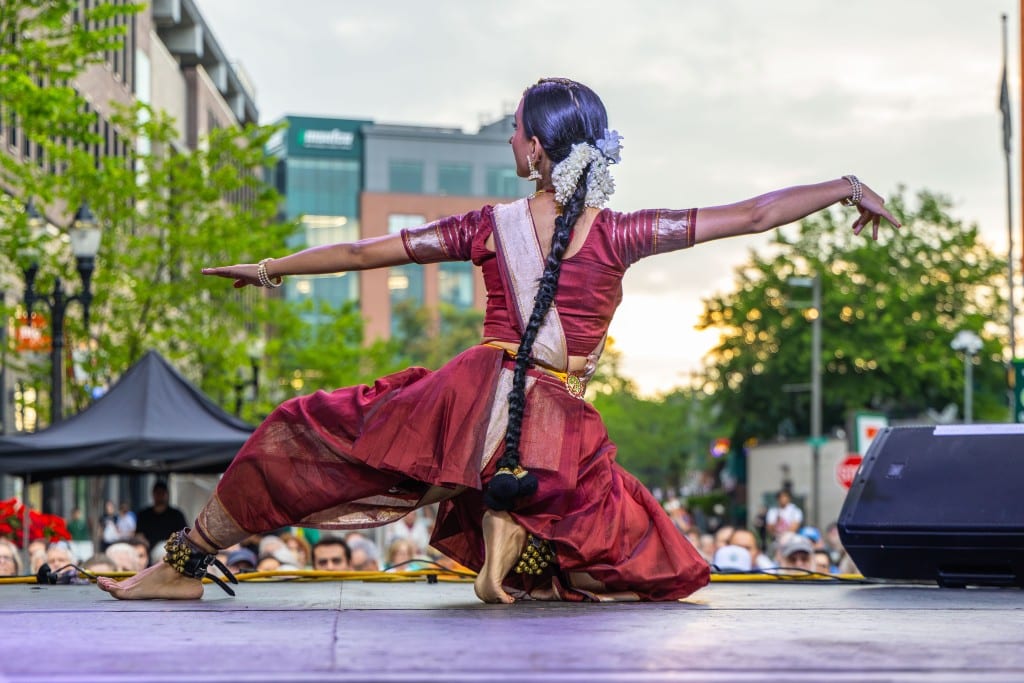
They were followed on stage by Celestina y Los Sanchez, a Tejano/conjunto band and Kritya Dance Ensemble, performing traditional Indian Kuchipudi dances to a rapt audience, no phones in sight, just jaws dropping at the effortless-looking choreography.
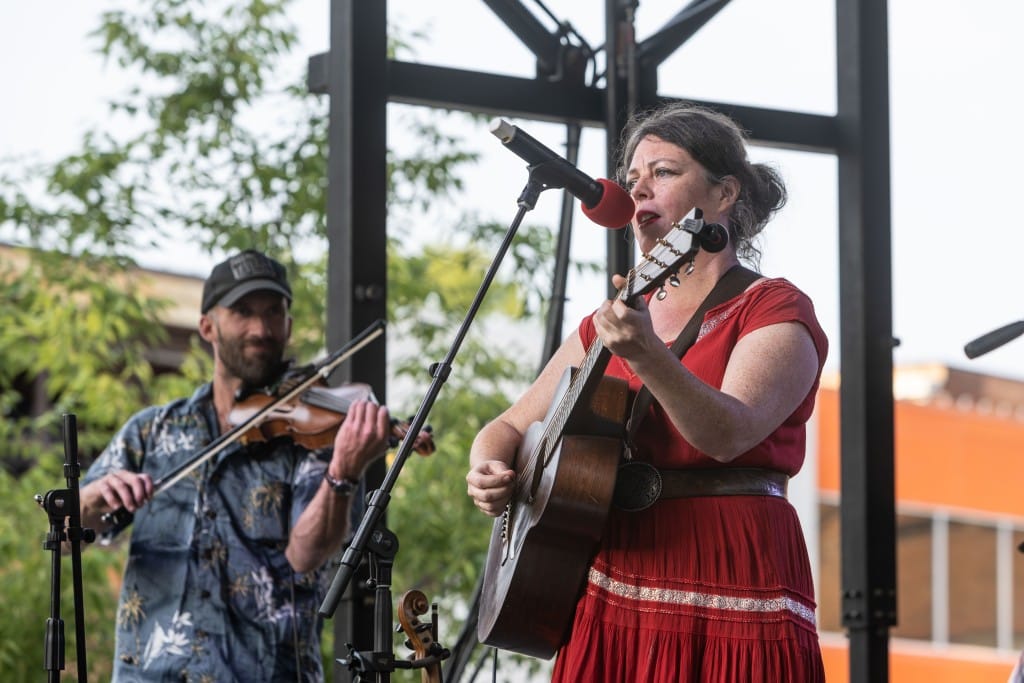
Wilson Thicket closed out the second night with their swinging, thumping bluegrass and Americana set against the night sky of East Lansing’s tall buildings and the neon glow of Pinball Pete’s beside the stage.
Those were some of the acts that helped to re-introduce East Lansing to a gone, but not forgotten, folk festival that traces back to the early 1980s.
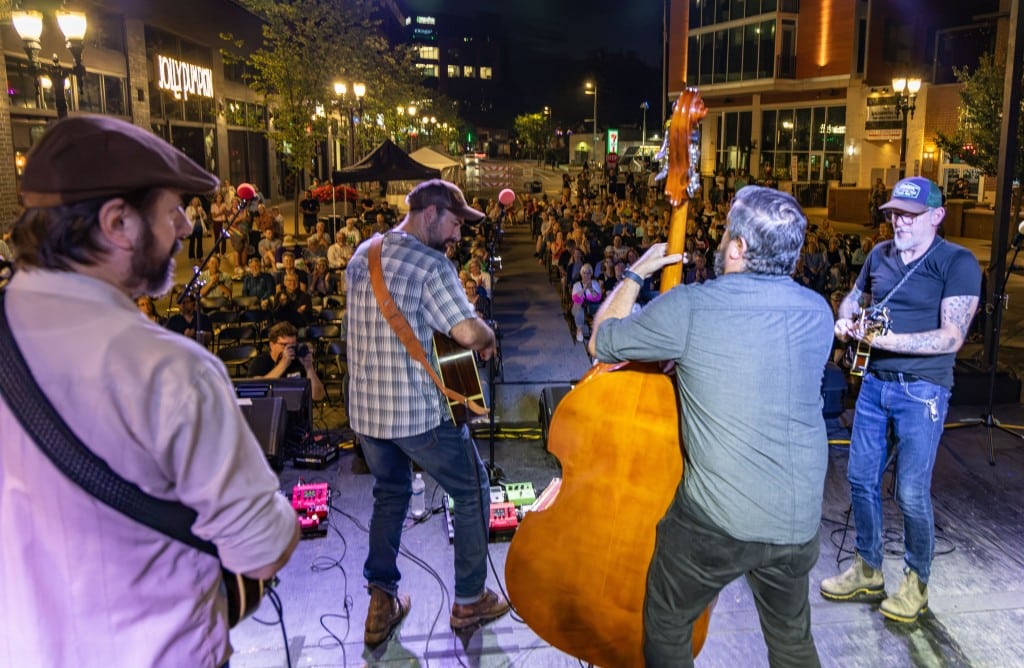
The new festival, Red Cedar Roots, is small by the standard of its closest ancestor, the Great Lakes Folk Festival.
The former folk festival brought more than 80,000 people a year to the area and ran for more than a decade before ending in 2017 when a new MSU Museum director (who didn’t last long) pulled the plug.
But the GLFF, one of the biggest and most beloved festivals in East Lansing’s history, wasn’t original.
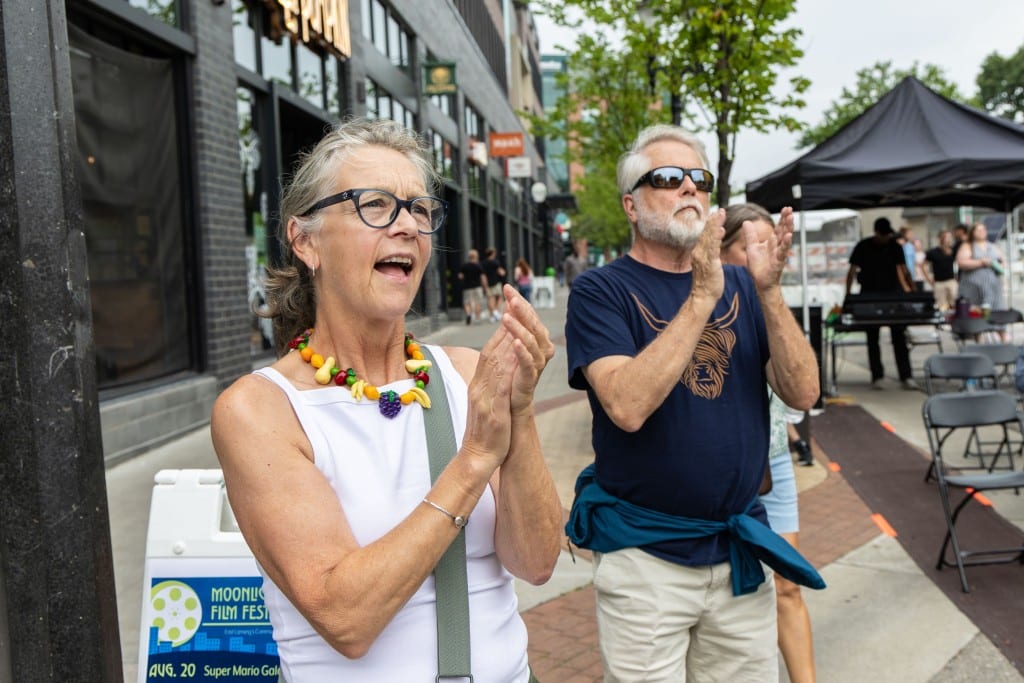
Very little, if anything, in folk is truly original if you follow the roots.
Like the new Red Cedar Roots upshoot, the Great Lakes Folk Festival was a continuation, a natural extension, of the folk festivals that have run in East Lansing for generations.
The roots of the Roots Festival
The origin of today’s Roots Festival goes back to at least 1983, when MSU Museum officials began to try to get into the annual Smithsonian Festival of American Folklife, said Kurt Dewhurst, former MSU Museum director.
At the time, the national festival had a few components, and one state each year would get to show off academic research, culture and state pride through interactive exhibits in D.C.
Michigan was picked for the 1987 Festival of American Folklife, coinciding with Michigan’s sesquicentennial (150th anniversary).
Michigan brought members of the Flint Sit-Down Strike, a cherry tree and other Mitten State representation.
They also brought real (enough) ice fishing to the sweltering D.C. summer, with a frozen platform and a tank with a spearfisherman.
After doing all the work and getting state and Smithsonian money for the projects, Dewhurst said, he and the others asked themselves: “Why not bring it back to Michigan?”
That’s part of the origin story, but also the same year, the Michigan Festival, a week-plus music-focused festival, launched on Michigan State University’s campus to coincide with the sesquicentennial. It would run until 1997 and brought artists including Aretha Franklin. The music side was generally ticketed, with a folk life component being free for the community, Dewhurst said.
The popular concert series side died around 1997, and a successor was fostered from conversations with Mark Meadows and then-city manager Ted Staton, Dewhurst said.
Staton knew about the National Folk Festival, which set roots in a single place for about three years, and he helped recruit it to East Lansing.
Like the Smithsonian-inspired iteration, this version included research components, museum exhibits and live interactive folk demonstrations along with music.
When it came time for the festival to move onto the next town, there was enough demand to launch a new series, the Great Lakes Folk Festival, which got critical financial support from the National Endowment for the Arts and the Michigan Council for Arts, Dewhurst said.
Very few festivals had not only the music, but the research and volunteer base to get those kinds of grants, he said.
“Great Lakes blended those in a successful way,” Dewhurst said. “Two completely different models.”
The Great Lakes festival helped to inspire generations of people, including musicians from Wilson Thicket, a bluegrass band that helped to close out the first Red Cedar Roots Festival.
Is this a return of the Great Lakes Folk Festival?
When people hear about a ‘folk festival,’ there’s a real split.
Some people’s minds go right to one of the literal meanings of folk music and folk art like the continuation of traditions.
On the other hand, a lot of people hear “folk” and file it away under either Bob Dylan or “I Am a Man of Constant Sorrow”-sounding acts.
“On paper, that term (folk) should be the most encompassing,” said Micah Ling, who booked the acts at the Red Cedar Roots Festival. “Louie Armstrong said all music is folk music and to me folk means: of the people, all people. … But people hear there are specific music genres and people feel it’s not a space for them.”
Ling is the associate director of the Michigan Traditional Arts Program at Michigan State University and has a PhD in folklore and related music. Her work with Red Cedar is on her own time.
She said the name Red Cedar Roots connects to traditions as well as the place and can be interpreted all sorts of ways, including as a watershed that nourishes.
Reviving a festival
Every part of the GLFF’s structure – the touring industry itself, the local venues and parking lots, the non-profit and government grants and the attendees – has been shaken since 2017.
COVID upended things, some of which are just settling now, said Sally Potter, booking manager for Ten Pound Fiddle.
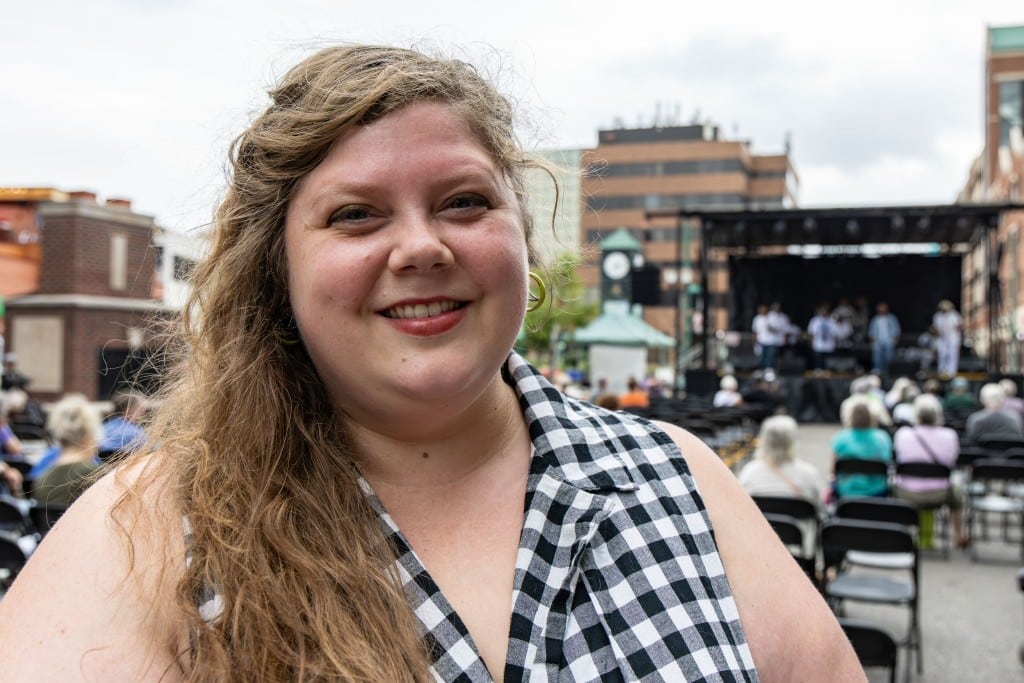
Potter may book more ‘folk’ acts than anyone else in the area, coordinating performances at several venues to reduce overhead and juggling the various schedules of her venues and bands around the Midwest as well as all the local technicians, producers and support staff.
She said folk is a diverse range – from Celtic and zydeco to blues and singer-songwriter and well beyond – and it includes dance and art and food and more.
Potter said the festival is coming at a good time.
The post-COVID blues at venues is starting to let up, not quite comfortable, but easier than a year or two ago, she said, as she watched the first night of the new festival.
“This was the beginning of: will the people come, will people want to do this next year?” Potter said.
She said the ground is ripe in Lansing for the festival’s next iteration and with a full year of people getting excited for it, she’s excited to see the festival continue.
What’s next?
This year’s festival had no official MSU involvement.
The previous iterations generally included heavy lifting by the MSU Museum, making the festival into a cultural event as well as a music festival.
East Lansing put up the money for the festival this year, said Julie Levy-Weston, festival coordinator for Red Cedar Roots. She was the technical coordinator for the GLFF for 15 years.
“We don’t know what’s going to happen next year,” Levy-Weston said. “You can’t do big, good, festivals without some money.”
Potter said the technical staff for the festival, including Levy-Weston and veteran stage manager Katie Doyle, are the best in the region.
Ling said she hopes that a longer timeline in 2027, and a full year of people getting excited for a revived festival, will help Red Cedar Roots to reach more people and potentially add cultural booths, a marketplace and food as well as more dancing.
“That is something that’s important to me, as a person who loves and studies folk material,” Ling said. “In the future, I would love an expansion of our footprint and of activities and the range of performers we can bring.”
But the Red Cedar Festival won’t be the Great Lakes Folk Festival, she said.
“The context isn’t there,” Ling said.
The new context, she said, a reborn festival with deep roots in the region’s broad folk traditions, is ripe for revival.
Folk music is, after all, rarely the most popular music beyond the hootannies of Woody Guthrie’s pre-war New York and Bob Dylan’s post-war heights.
But it’s a form of music that – going well beyond the Guthries and Dylans – always survives and thrives, said Levy-Weston.
“Because people will always make music, it may not be mainstream but there are always people who will love and support it,” she said.
Just like the festivals.