
The art of not forgetting: MSU professor revisits the window his students leaped out of during the mass shooting three years ago
It was still daytime, and classes had been canceled at Michigan State University, as they had been on Feb. 13 for three years now.
Marco Diaz Muñoz, a humanities assistant professor at MSU, was …
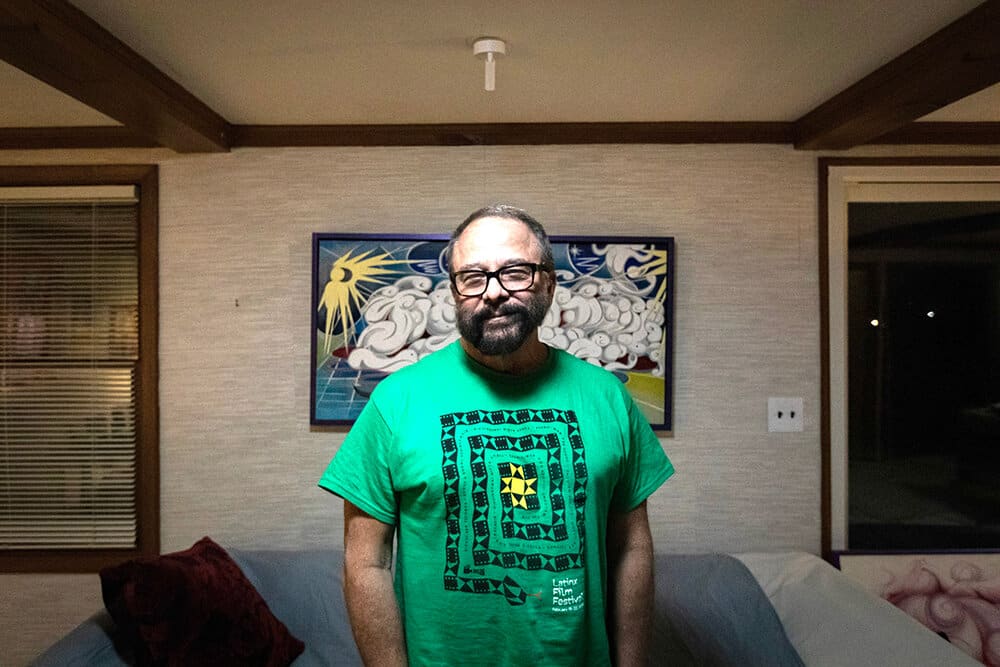
For Marco Díaz Muñoz, the shooting that took place at MSU three years ago was the first gun-related tragedy in his more than sixty years of life. Born and raised in a country that does not have an army, the tragedy struck his classroom at MSU that night. Headlines about mass shootings remain a common occurrence in the United States, and as gun laws remain immutable, he is determined to keep alive the memory of what he witnessed.
It was still daytime, and classes had been canceled at Michigan State University, as they had been on Feb. 13 for three years now.
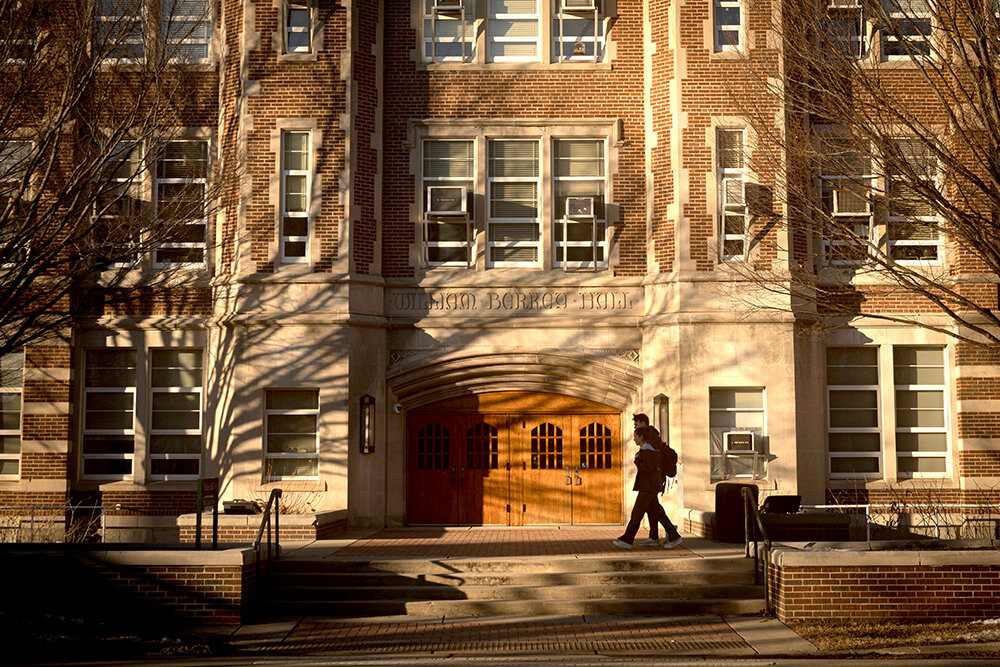
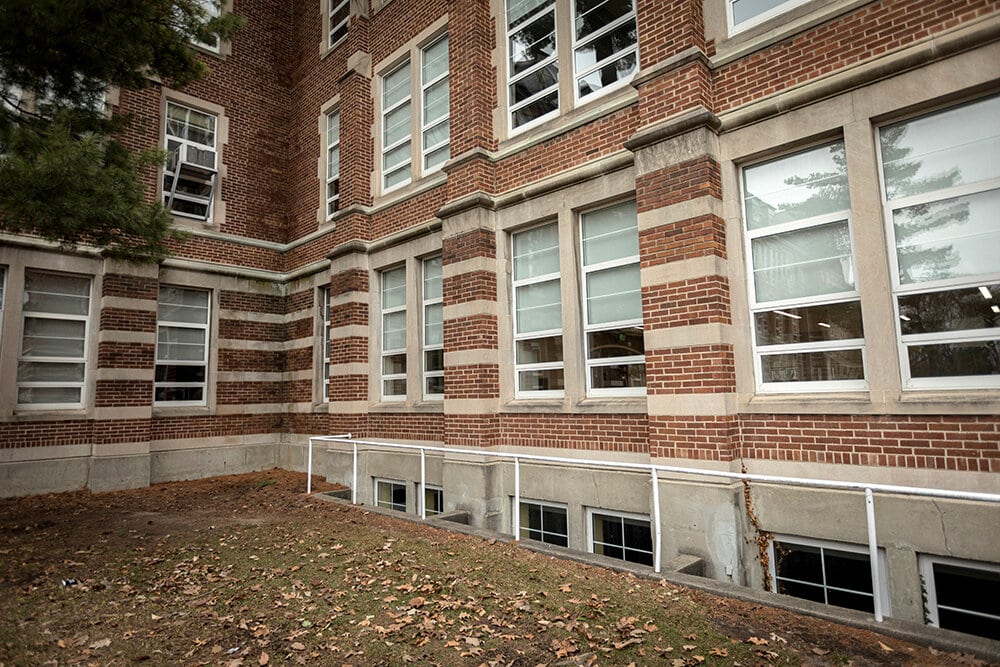
Marco Diaz Muñoz, a humanities assistant professor at MSU, was about to finish his little walk around Berkey Hall. It was sunny, a little below freezing. A high window facing the art museum reminded him that, three years ago to the day, more than 30 of his students leaped out into the cold night through a not-so-large window opening to save themselves from the shooter.
“I don’t know if there was concrete or grass outside that window,” he said. “But if it was concrete, some of them must have injured themselves severely. How much is that—nine feet high? I mean, the desperation to save your life makes you do anything, doesn’t it?”
At least seven students stayed inside to aid the wounded as police and ambulances raced there. Two students, Arielle Anderson and Alexandria Verner, died in that classroom. A third, Brian Fraser, was shot and killed near the MSU Union.
This year, Diaz Muñoz saw a car pull up. A young woman approached the foot of that one window, setting down a bouquet of flowers.
Diaz Muñoz started to walk closer, slowly.
“Could it be her?” he wondered. “Who else could it be?”
Who else would recognize the significance of that window, that spot next to a trash container, in the same way he did?
The student, whom Diaz Muñoz did not want to identify publicly, saw him too.
They came together in a long embrace; not a single word was spoken as they both broke down in tears beside that window, three years after their lives changed.
“I allowed myself to break down in tears for the first time since that night, after three years. I just started crying. That hadn’t happened to me since the tragedy,” Diaz Muñoz said. “She told me in tears, ‘I graduated a year ago. I don’t come here anymore. I just came to leave the flowers.’”
Eventually, she got into her car and drove away.
Diaz Muñoz sat down on the curb and kept crying.
She had left him her phone number and her personal email so they would stay in touch.
“You feel like there’s a part of you that only that person has — or that I have a part of her that only I carry,” he said. “And you feel the need not to lose that connection, because that person understands you. I know she and my students from that night feel the same way I do. It was like: I don’t want to let you go. You know what I’m living through. You and I know what we lived through that night. No one else.”
It is not that Diaz Muñoz has fewer emotions than a rock.
The very first thing a counselor told him – that night in 2023 while everyone was sheltering inside the art museum and the gunman was still at large – was: “You have already dissociated.”
He can recount everything from the night, which he describes as a nightmare from which he can never wake up.
For days and days after the shooting, Díaz Muñoz would tell the same story again and again to reporters, who formed in lines outside his door.
“I had tucked my memories—my mental images—away into my subconscious. I put them in a drawer, the way you might place something inside a desk and store it away. So, I would narrate the events, but with a sense of detachment, in third person,” he said. “It was as if I were reading a book. But there are moments when it all comes rushing back, and my eyes tear.”
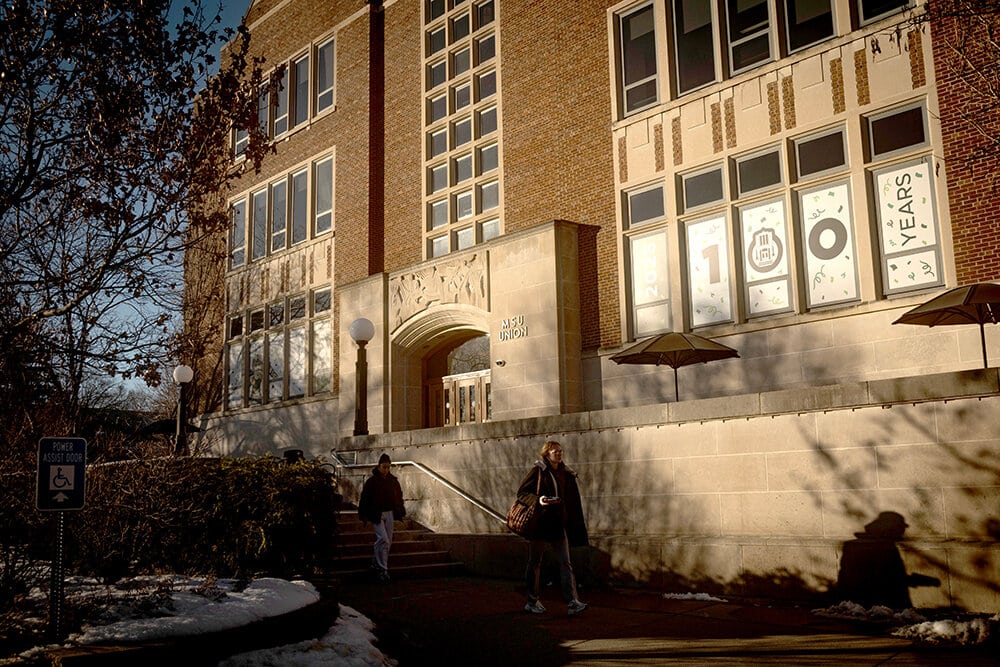
Diaz Muñoz hadn’t set foot in Berkey since that night in 2023.
Sometimes, when passing by, he wouldn’t even look that way—or he would take a different avenue just to be away from it.
He was not ready to go back to what is left of classroom 114, where he had been teaching Cuban Identity and Culture when the shooting occurred.
This year, he took the same path he used to take back in the 90s, when he was a graduate student walking from the Old Horticulture Building.
“I watched as the building—in perspective—began to loom larger and larger, growing bigger as I drew closer. So, well, this was the moment to confront that memory.”
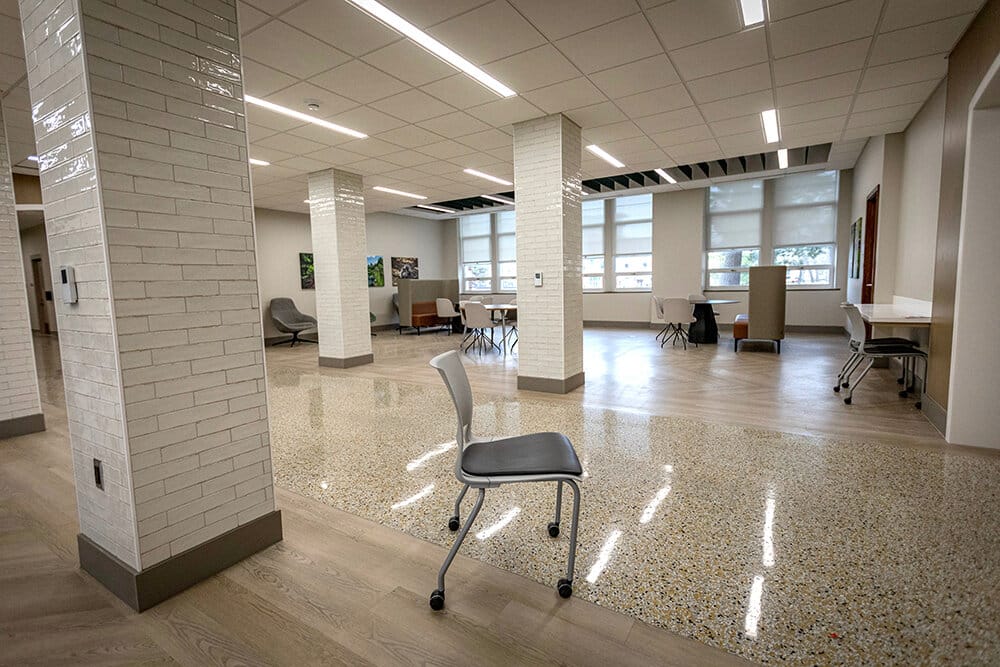
Díaz Muñoz reached the main entrance of Berkey and stood motionless for a moment, observing with curiosity the empty hallway, the texture of the floors and walls, the classrooms and their doors, the new benches, chairs, and tables, examining everything in minute detail
“As if someone wanted to do a painting,” he said. “Not because I was going to paint it, but with that same curiosity, you know? Because I needed to remember that place, since it had been the site of such a profound trauma.
“So, after not wanting to even see that building for so long, now I actually wanted to see every detail. But I didn’t want to go inside—going inside was something I didn’t want.”
He recognized the building door, facing Grand River Avenue. Diaz Muñoz did not stop.
“There were no flowers here. But I looked through the window and saw the hallway again in this direction — from Grand River Avenue. That’s where I saw him,” he remembers. “It was like I had this urge, not exactly an urge, more like a need to remember that space, to see it again.
Even though, obviously, it’s different now.”
Don Diaz Muñoz is a man of easy speech— charismatic and with a calm disposition. He was born and raised in Costa Rica, a country similar in size to West Virginia and located in Central America, which, together with Panama, bridges North and South America.
Costa Rica has no military forces; they were abolished in 1948 following a civil war, although current government initiatives have proposed establishing U.S. bases within the small country to combat regional crime.
Guns and blood were something Diaz Muñoz barely heard of before, but it has been a common sight in news headlines since he started living in the U.S. more than 40 years ago.
In his home city, Costa Rica’s capital of San José, Díaz Muñoz had only seen handguns carried by police officers—never pointed at him or at anyone else. He witnessed violence once as a kid when neighbors caught and beat a petty thief who had stolen a neighbor’s purse. He saw blood from a car accident near his neighborhood and when a cousin accidentally cut herself.
For Diaz Muñoz, the fact that there are more guns than people in the United States reflects an epidemic driven by a false narrative of self-defense, a narrative he rejects.
In the wake of the shooting at MSU, news of other mass shootings or gun-related casualties became just another part of a numbing normality: thoughts, prayers, and vigils.
“People continue to turn to guns, killing one another,” Diaz Muñoz said. “And it has become a normality here, people have grown so used to these things that they have become desensitized; they no longer feel anything; they are no longer annoyed.”
Last year, according to a report by the Administrative Office of the State Courts, 514 “red flag” risk protection orders were requested in Michigan, 407 were granted. This represents a 31% increase compared to 2024, when 385 orders were requested. Under the red flag law, judges can temporarily confiscate and retain firearms from individuals deemed to pose a risk—an initiative passed alongside other regulations restricting gun acquisition in Michigan more than two years ago, changes that face widespread Republican opposition.
On the night of Feb. 13, 2026, three years after the MSU shooting, a 3-year-old girl died after a 21-year-old man opened fire with his father’s shotgun at her family, having nearly struck them with his vehicle while they were walking in Delta Township. A man allegedly confessed that he opened fire 12 times because someone had threatened to harm his family if he did not kill someone else, according to early investigation reports. A few weeks earlier, on January 21, another young girl—aged 4—died from a gunshot wound in North Lansing, in what police believe was a self-inflicted shooting involving an unsecured weapon.
In Michigan, current law permits legal gun owners aged 18 and older to carry a pistol in public without a permit, provided that the weapon remains visible. However, to carry a concealed pistol, legal gun owners aged 21 or older must obtain a license before they are permitted to carry a hidden firearm in public. Failure to do so constitutes a five-year felony. Under a new legislative proposal introduced by the House Republicans, the requirement for a concealed pistol permit would become a thing of the past.
Citing the need for self-defense against crime, respect for the Second Amendment, and “life, liberty, and the pursuit of happiness,” Republicans led by Rep. Joseph Fox introduced the proposal in early March. In 29 states across the country, no permit is required to carry a concealed weapon.
Diaz Muñoz said the gun industry suggests good citizens will turn to weapons to protect themselves.
“But not me,” he said. “I was in that shooting. And even after that, I don’t want to see anything related to a gun. If they’re going to kill me, then let them kill me, but I don’t want a gun. The lives of others are precious. You cannot—under any circumstances—take responsibility for another person’s life.”
Don Diaz Muñoz said he cannot forget, and for him, remembering is a powerful act. His current students hold no personal memory of that shooting at MSU—they are freshmen or sophomores, which is why his own memory is so distinct.
“The new generations of students will know what happened, but they won’t feel it the way we felt it,” he said.
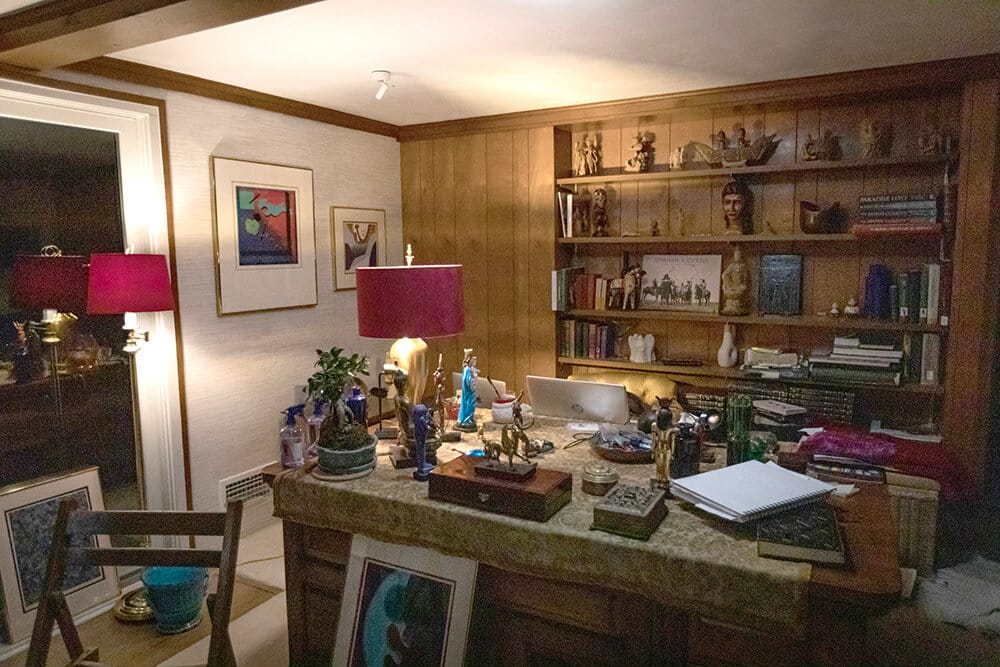
In his home office in Lansing—illuminated by an array of warm lights—is a painting that stands out among the others he has created and guards jealously. It began with remembering a black shadow, the flash of the gunshots in front of him, the bodies, the blood, the floor, and the intense cold he felt inside his head in that very instant.
]
A moment, a visual, a marker of time so it is never forgotten.
“We must not forget, but we must also move forward,” he said. “Despite the tragedy—despite the horror of what my students and I lived through—we have the right to a healthy life, without that tragedy destroying our future.”
Related Articles

Amplifying local voices
Peace Community Media, 105.3, is a new low power FM station coming to Lansing (and available online now) soon, and powered by local people