‘Think about ice cream’
On sheet music or a sheet cake, “dolce” means “sweet.” When Jimmy Chiang, kapellmeister of the Vienna Boys’ Choir, wants “dolce” from his singers, he uses …
Vienna Boys Choir: “Christmas in Vienna”
3 p.m. Sunday, Nov. 30
Wharton Center Cobb Great Hall
750 E. Shaw Lane, East Lansing
(517) 432-2000
whartoncenter.com
Vienna Boys’ Choir brings sweet holiday sounds to Wharton
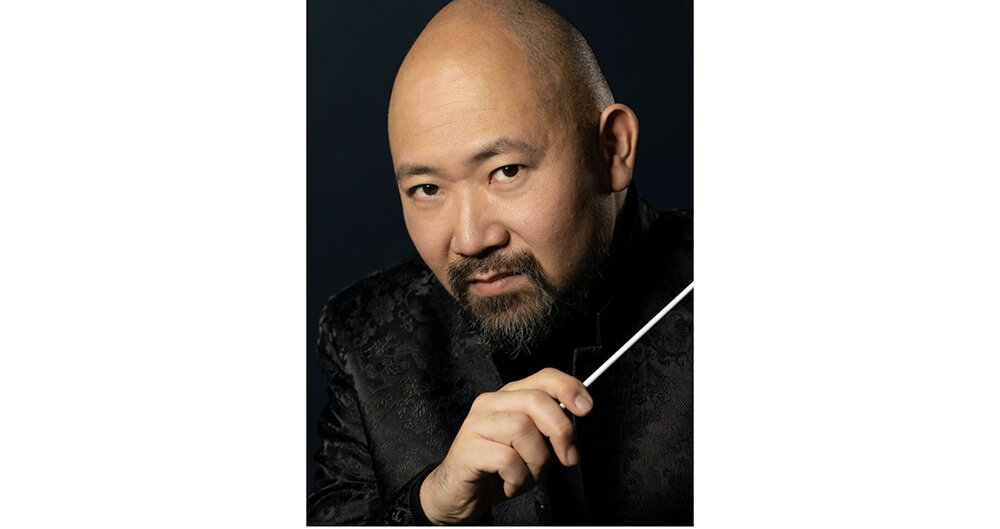
On sheet music or a sheet cake, “dolce” means “sweet.” When Jimmy Chiang, kapellmeister of the Vienna Boys’ Choir, wants “dolce” from his singers, he uses more direct language.
“I tell them to think of ice cream,” he said.
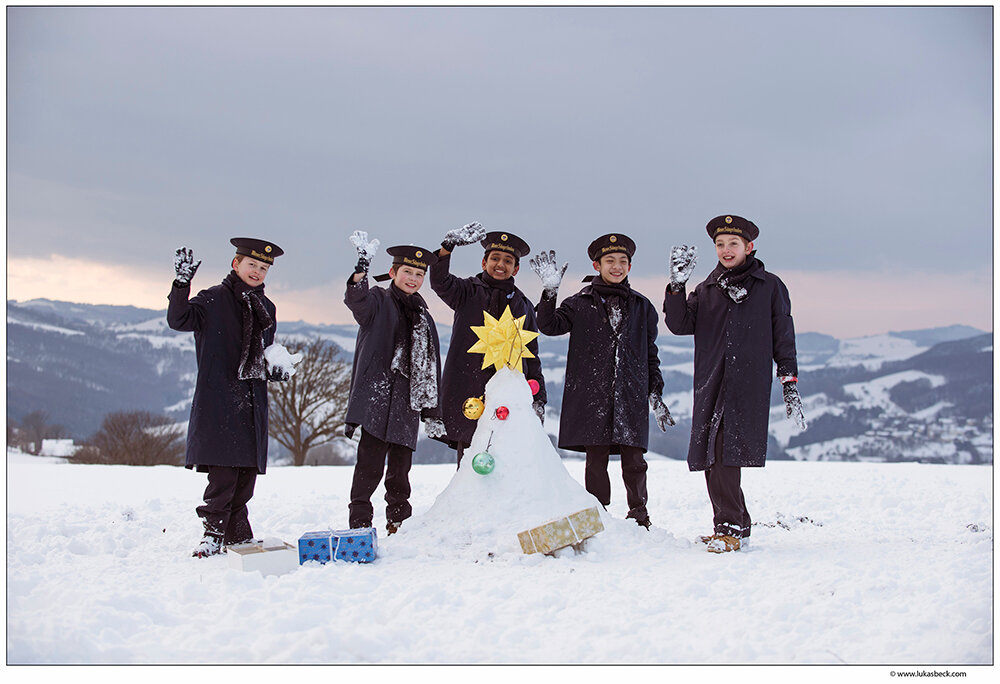
The world-renowned choir brings a luminous Christmas program of sacred music and traditional carols to the Wharton Center Sunday afternoon.
The choir’s ethereal, unearthly tonal beauty is not just the result of intense training and practice. Chiang feels an invisible “connection” with the boys, whether it comes from the hands, the eyes or a simple verbal suggestion.
“Instead of asking for a crescendo or a forte, I’ll say things like, ‘Think here you’re moving a big rock,’” he said. “It might say ‘legato,’ but I will say, ‘Just think about your mom right now.’ You don’t even think music, just concrete daily life. Then you get an immediate result and don’t need to explain ‘dolce’ 10 times. Ice cream!”
The Vienna Boys’ Choir is among the oldest, and yet the most fleeting, of the world’s musical treasures. It was founded in 1498, and that’s not a typo. Haydn played with them, Schubert sang with them, and Mozart and Bruckner worked with them.
But merciless male hormones only allow a brief window of membership in the group, from 10 to 14 years old.
Chiang is not only a conductor to the boys, but a mix of mentor, teacher, confidante, guardian and confessor.
“There are elements of being a father. I’m a father myself, and both of my boys were in the choir,” he said. “You must have their respect. Then, even if you’re strict, or if you’re angry, they know why. They know you won’t give up on them. You want them to be good.”
Before becoming choirmaster in 2013, Chiang had decades of experience conducting orchestral music, operas and theatrical music. He drew a sharp, if not caustic, contrast between the boys in the choir and adults in professional orchestras.
“With the professionals, it doesn’t matter what you do; they will do what they do, and they just treat you like a clown, honestly,” he said. “Some orchestras will play something wrong, just to test if you heard it. The boys are honest. They don’t do it on purpose. They know sometimes they’re crazy, but they want you to keep them on track.”
The choir’s working year lasts about 10 months, from September through spring, with three months of touring and seven months of school.
The current 10-week North American tour is longer than most, with 37 concerts in 19 states, but the choir always makes time for sightseeing. Last week, they had a picnic at Golden Gate Park and planned to visit Alcatraz.
“We were in China last year, and we took them to the Great Wall,” Chiang said. “It’s great life education, and that includes life skills, like packing a suitcase. Yesterday we went to the laundromat and the boys folded their own clothes.”
Chiang takes pride in broadening the choir’s repertoire, adapting music from Gregorian chant to Michael Jackson, but the holiday show requires adherence to tradition.
“There won’t be any Michael Jackson,” he cautioned.
The first half is devoted to sacred music, from medieval chant through Mozart, Pergolesi and “Virga Jesse,” a radiant motet by Anton Bruckner that Chiang arranged for the boys.
But Chiang is always looking for ways to sneak in some new music. “I Heard the Bells on Christmas Day,” based on an 1864 poem by Henry Wadsworth Longfellow, was written at the height of the COVID lockdown in 2020 by British composer, pianist and conductor Alma Deutscher.
“She came to Vienna when she was only 13, conducting, playing and even writing operas,” Chiang said. “I knew her personally, and we became friends.”
Chiang asked her to arrange the carol for the boys, and she gladly complied.
“We are happy to have music from a woman composer, a living contemporary composer,” he said.
The second half moves into traditional Christmas material, including British composer Benjamin Britten’s ethereal “A Ceremony of Carols,” a proven tearjerker. There will also be carols from Italy (“Gesù Bambino,” or “Baby Jesus”), Germany (“O Tannenbaum,” or “O Christmas Tree”), the U.S. (“Little Drummer Boy”) and Ukraine (“Shchedryk,” the original version of “Carol of the Bells”).
“We’ll sing it in Ukrainian, especially because we have a Ukrainian boy in our choir,” Chiang said.
Chiang is the first Hong Kong-born conductor in the choir’s long history. His father was a pastor for the Basel Mission of a German Lutheran church in Hong Kong, and his mother was a choir director and singer.
He took to the piano at a young age and still maintains a career as a concert pianist. After graduation, he left for Vienna to study conducting. Though he had an early passion for extroverted maestros like Leonard Bernstein, he came to model himself more after “minimalist” conductors like Kurt Masur and Lorin Maazel, “who were intelligent and intellectual but also had the magic.”
Conducting a boys’ choir has its limitations, especially when compared to Chiang’s greatest conducting passion, grand opera. But the job also offers unique rewards. Year by year, he watches his charges mature and grow and faces the challenge of welcoming an incoming group of “freshmen.”
“You have to convey a certain gesture everyone can understand without you saying it, and that takes a connection,” he said. “That can come from the eyes, or just a smile.”
After guest conductors work with the choir, the boys often come to him and say things like, “He took an hour to do what we did in five minutes.”
“I’ve worked with several really great conductors, but only a few could do a great job with the boys,” Chiang said. “Riccardo Muti is one. He doesn’t talk much. But the boys sit better, sit up. Some others, you can tell they’re not really paying attention, and that’s the first sign.”
Among Chiang’s favorite moments are those when he gets help from inside the house. He often observes fourth-year members helping first-years through a piece, saying, “This is what Jimmy wants.”
“That’s when I realize I must have done something right,” he said.