This is why we mustn’t cut funding for the arts
I had the pleasure of attending the opening night of “The One Good Thing or ‘Are Ya Patrick Swayze?’” at Williamston Theatre, and I’m here to say it is absolutely worth spending your time and money to see this show.
This was my first time attending a performance at this theater, but it definitely won’t be my last. It is very small, so there are no bad seats, and if you are in the first row, you can literally reach out and touch the actors. (Please don’t do this. Don’t be that guy.)
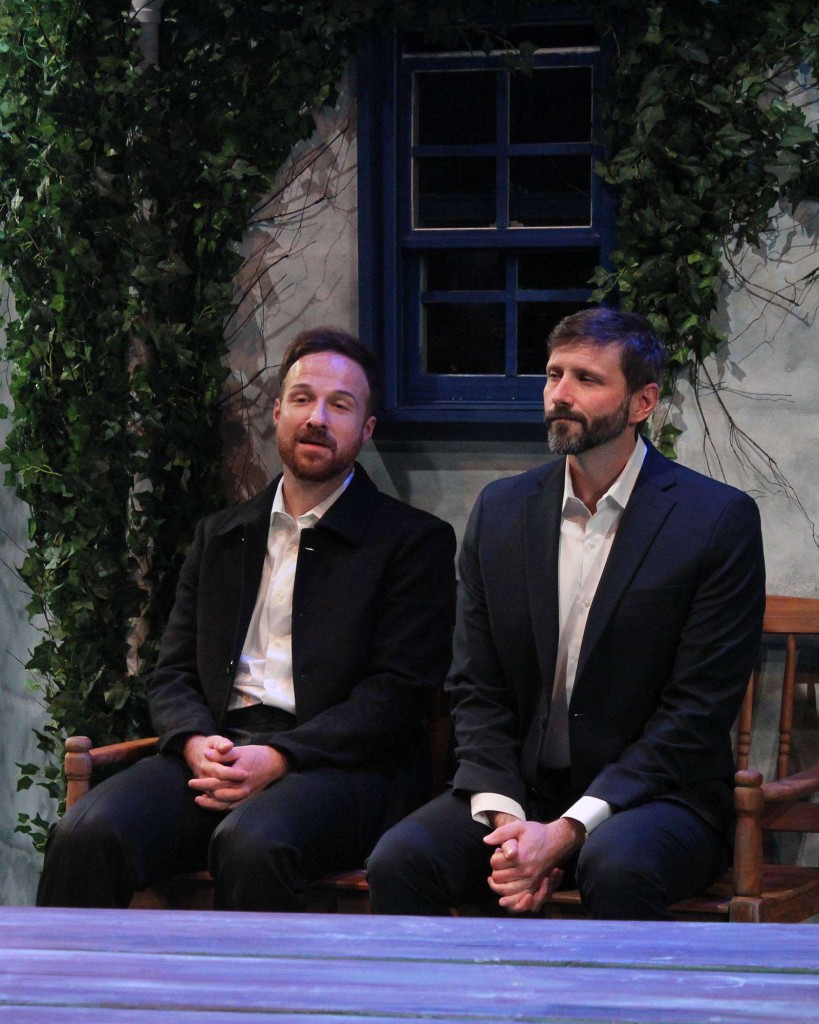
The theater’s intimate setting is perfect for a well-written play in the hands of two skilled actors. There’s nowhere for the performers to hide, no elaborate spectacle to distract you, and no chorus of people singing and dancing to give you a convenient place to look when things get emotionally uncomfortable. It’s just the two actors, a story and an audience sitting closely enough to feel every shift in mood.
That’s right: I said two actors.
Despite there being several characters in the play, there are only two performers in the show. The entire story is told through dialogue between brothers Jamie and Tommy, who are living in a cottage on the coast of Ireland, and somehow it works beautifully. More than that, it feels completely natural.
“The One Good Thing or ‘Are Ya Patrick Swayze?’”
Through Oct. 25
2 p.m. Thursday, Saturday-Sunday
7:30 p.m. Friday-Saturday
Williamston Theatre
122 S. Putnam St., Williamston
(517) 655-7469
Playwright Joe Bravaco does a brilliant job of exploring heavy themes like grief, love, guilt, forgiveness, regret and hope without being heavy handed or maudlin. This is a story about people carrying around the things they have done, the things they haven’t done, the things they wish they could change and the people they love despite everything. What is potentially a recipe for two hours of emotional misery is instead really funny. And occasionally, it punches you directly in the feelings.
I can’t say enough about actors Connor Allston and Cody Robison. From the moment the play starts, both men have the audience’s full attention. When the lights come up for intermission, one could be forgiven for thinking only a few minutes had passed rather than the entire first half of the show. The two are completely engaged with each other and with the story, and their performances never feel like they are simply waiting to deliver their next line.
Unless you are the rare person that has never experienced heartache or loss or regret, this play will hit hard, in a way that makes you feel welcome and seen. It’s not like tearing open an old wound; it’s like getting a hug from someone who truly understands while you laugh and cry at the same time. And, honestly, isn’t that one of the greatest things theater can do?
The performing arts have been using stories to help human beings make sense of being human for literally hundreds of years. We need this. We need places where people can sit together in a room, listen to a story about somebody else’s life and recognize pieces of their own. We need actors who are willing to stand under bright lights and make themselves vulnerable in front of a room full of strangers. We need playwrights who can take complicated, messy human experiences and turn them into something that makes us laugh, cry, think and, ideally, leave the theater looking at the people around us just a little differently.
There is also something particularly satisfying about watching two actors carry an entire production. It takes an enormous amount of skill and trust. They have to establish relationships, personalities, history and conflict entirely through their performances, and Allston and Robison handle that challenge beautifully.
Go see this play. Sit close. Laugh at the funny parts. Get emotionally sucker punched by the serious ones. Don’t touch the actors. This show will stay with you long after the lights come up.