
To boldly go … ‘Star Trek’ celebrates 60 years
Michigan State University alumnus Michael DeMeritt has fond memories of working as the first assistant director on “Star Trek: Voyager” and “Star Trek: Enterprise,” both of which are part of the greater “Star Trek” franchise that turned 60 earlier this month.
He got to meet the very best people in their respective professions — the best actors, the best crew members, the best stunt performers, the best extras.
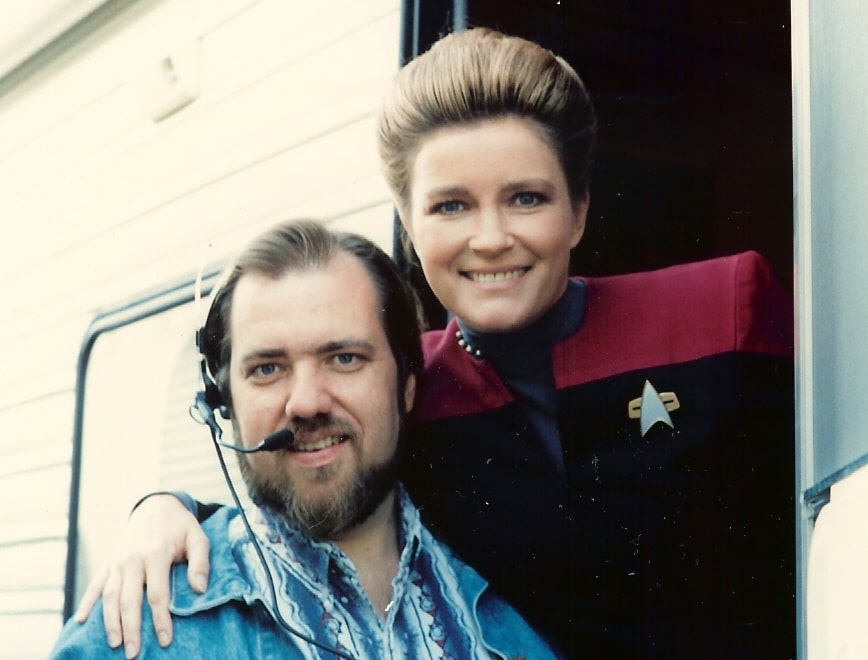
“I’ve seen (‘Voyager’ stars) Robert Beltran and Ethan Phillips having comedy wars that made my sides hurt from laughter. I watched (‘Enterprise’ star) Scott Bakula identify a frame position without the benefit of a monitor just from being told the lens size so many times; I still can’t believe he can do that,” DeMeritt said. “Jeri Ryan changed the world. Kate Mulgrew showed us the captain we all would want. I’ve seen many actors become the best directors in TV, including LeVar Burton, Jonathan Frakes, Robert Duncan McNeill and Roxann Dawson.”
DeMeritt and fellow “Voyager” assistant director Arlene Fukai gave the three Roberts on the show — actors Beltran, McNeill and Robert Picardo — their monikers Robert, Robbie and Bob, respectively, and they’ve gone by them ever since. DeMeritt has been mentioned in books, spoken on podcasts and appeared in the 2024 documentary “To the Journey: Looking Back at ‘Star Trek: Voyager.’”
“I’ve told one man to set fire to another man, told yet another person to push him down a ladder while the guy was on fire, told other people to put out the flames before they killed him, and had that person come up to me, still smoldering, and say, ‘Good job, Mike.’ ‘Trek’ was fun. No regrets,” DeMeritt said.
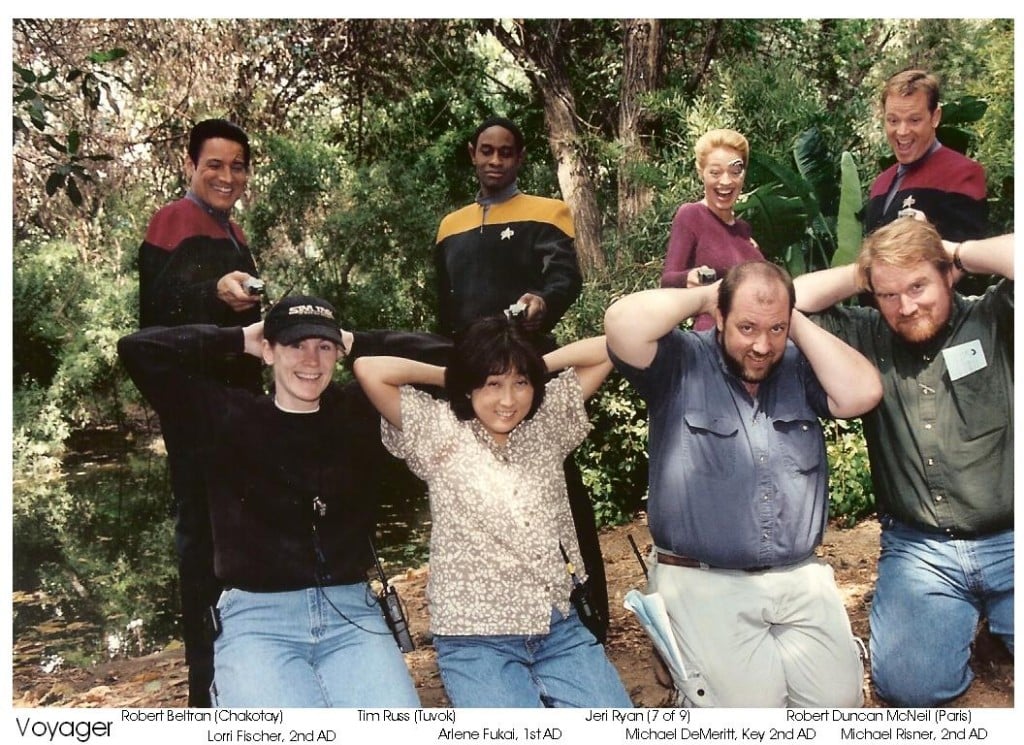
He compared and contrasted his time on both shows.
“‘Voyager’ had some stressful elements: a captain (Geneviève Bujold) who quit, a new cast member (Ryan) getting more press than the current ones and a push and pull over a female lead (Mulgrew). That seems ridiculous now, but it was a risk in those days. But that cast was a lot of fun to be around,” he said. “‘Enterprise’ had a well-oiled machine running it — just top-notch crew work there, and the cast was super professional. ‘Enterprise’ had more of a struggle to find itself, but it was awesome when it finally did.
“Both were great experiences. Both were ungodly long hours. Both are shows I still hold as my best professional work.”
Humble beginnings and a second life
Created by the late Gene Roddenberry, “Star Trek” debuted on NBC on Sept. 8, 1966, starring William Shatner as Capt. James T. Kirk and the late Leonard Nimoy as Mr. Spock. The first pilot was 1965’s “The Cage,” starring the late Jeffrey Hunter as Capt. Christopher Pike (now played by Anson Mount on “Star Trek: Strange New Worlds”), but it never aired until 1988.
NBC executives called the pilot “too cerebral” and “too slow.” However, they liked the concept and commissioned a second pilot — something unheard of — called “Where No Man Has Gone Before.” Since Hunter decided to focus on his film career, Pike was replaced with Kirk on “Star Trek: The Original Series,” which ran until 1969.
Still, “Trek” struggled in the ratings. NBC cancelled it after three seasons and replaced it with “Bracken’s World.”
“If you polled the entire human population and asked, ‘You know that mediocre, barely surviving television show on Friday nights at 10 o’clock with nobody watching?’ I don’t think you’d find anyone saying it would still be in our consciousness 60 years later,” Shatner told USA Today in August.
However, “Trek” found a new life in syndication. That’s how Grosse Pointe native and MSU alumnus Charlie Carden, host of the “Secret Friends Unite” podcast and co-host of the “Code 47” podcast, discovered the franchise in 1982.
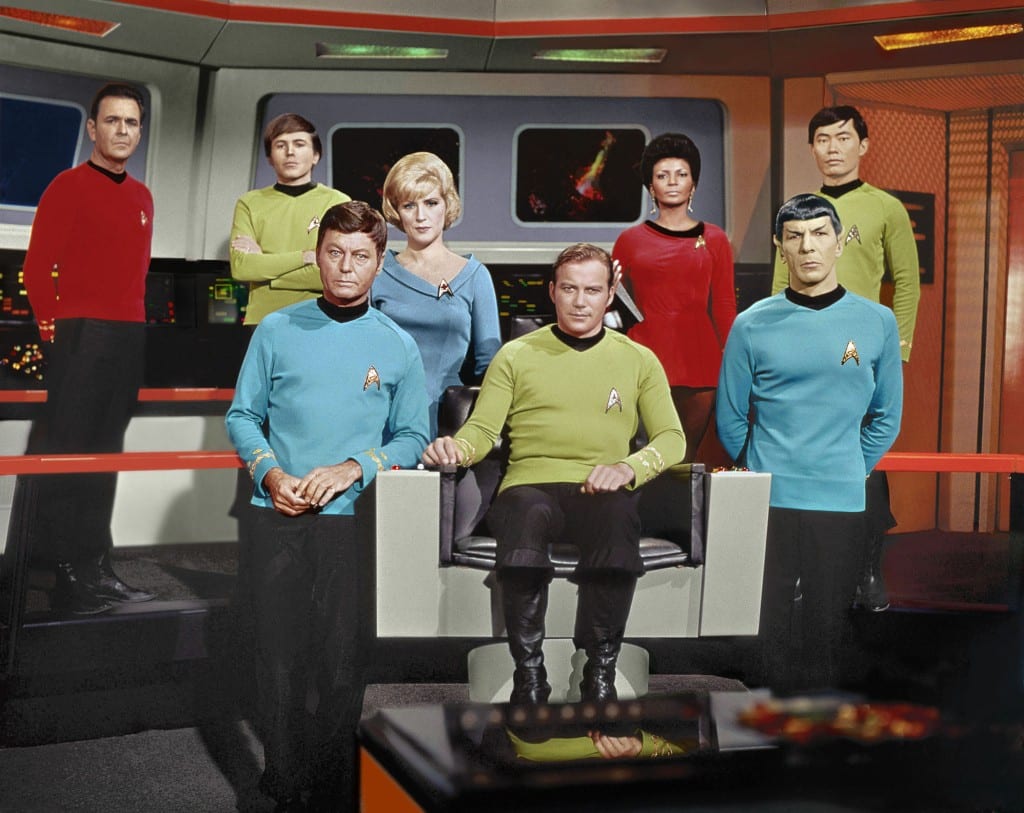
The success of 1977’s “Star Wars” also helped. In 1979, “Star Trek: The Motion Picture” was released with the original cast. This spawned 12 more movies on the big screen and 12 TV series, including the aforementioned “Voyager” and “Enterprise,” as well as “Star Trek: The Next Generation.” There’s been plenty of merchandise and other media tie-ins, such as comic books, novels, video games, toys and even fan-funded films.
“When (1986’s) ‘Star Trek IV: The Voyage Home’ hit the big screen, 10-year-old me was hooked,” Carden said. “It also helped that both of my parents were OG fans and enjoyed ‘TNG’ when it launched in 1987.”
Carden reviewed the novels in his column for The State News, MSU’s student-run newspaper. For his podcast, he’s interviewed many “Trek” cast and crew members, including Frakes, McNeill, Tim Russ (“Voyager”) and Nana Visitor (“Star Trek: Deep Space Nine”), among others.
“I’ve found them to be accessible, friendly, kind and down-to-earth people,” he said. “It’s barely hyperbole to say we live in a time when we need hope for a better tomorrow. Frankly, that’s been the case since well before 1966. The comfort of revisiting nearly 1,000 episodes and movies about reaching for the future and becoming a better humanity is what keeps people coming back to ‘Trek.’”
USA Today best-selling author Keith R.A. DeCandido, who’s penned numerous “Trek” novels, agreed.
“‘Star Trek’ has continued to thrive for six decades because its message has remained a constant one of hope and optimism,” DeCandido said. “It gives us a future where compassion and cooperation and communication are key to solving problems, not violence, not who has the bigger gun, not who can win in a fight. That aspirational future is why we keep coming back to it.”
The first female captain
Following the success of “TNG” and “DS9,” “Voyager” ran from 1995 to 2001. What made it unique was it was the first ongoing “Trek” series with a female main character. Mulgrew portrayed Capt. Kathryn Janeway, replacing Bujold, who left the show early on.
“I’ll tell you a story: At the end of season one, (then-First Lady) Hillary Rodham Clinton invited me to the White House to speak to women in science,” Mulgrew said. “I was astonished! I’m just an actress on TV playing this character. Paramount was taking a great leap of faith putting a woman in the captain’s chair. Never in a million years did they dream the first lady would be inviting me to the White House to speak to women in science, but I went.
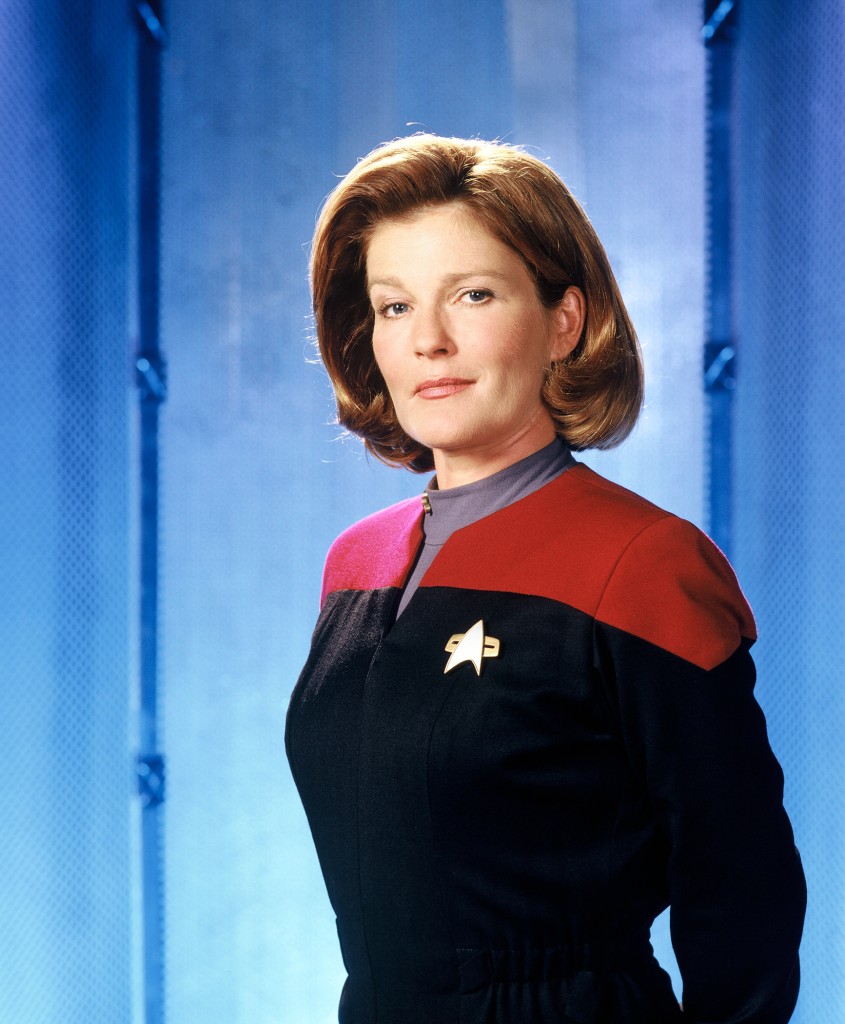
“There was a sea of female faces — wide-eyed, smart — staring at me,” she continued. “I threw my little speech away and said, ‘I have nothing to say to you. It is I who will learn from you. I want to answer all of your questions; let’s have the conversation.’ And they said, ‘If it weren’t for Janeway, I would’ve stayed in the office, but now I’m in the field and going up.’ And indeed they were.”
Janeway is former Lansing resident Laura Conner’s favorite captain.
“I’ve watched ‘Star Trek’ for as long as I can remember. I grew up with the movies starring the original cast and watched ‘TNG’ when I could,” she said. “When I started watching ‘Voyager,’ I was so impressed with the female captain. I loved that it wasn’t all about short skirts and love stories. There were new aliens, and Janeway learned new ways to combat them. Kate Mulgrew showed a strength and endurance that I’d never seen with previous ‘Star Trek’ shows. I would be first in line to see a ‘Voyager’ movie or reboot!”
The popularity of Seven of Nine
Ryan joined “Voyager” in the fourth season as Seven of Nine, a former Borg drone who joins the titular starship’s crew. She replaced Jennifer Lien, alias Kes, who left the series. Seven became one of the franchise’s most popular characters, even though Ryan initially turned down the role.
“I wasn’t terribly attracted to it originally because I wasn’t a science-fiction fan. I am now. I’ve since repented,” Ryan said, laughing. “I didn’t know much about ‘Star Trek’ beyond the fact that it had a reputation for its actors getting pigeonholed and not being able to break out and do anything else. It was early enough in my career that that was not a very appealing prospect.”
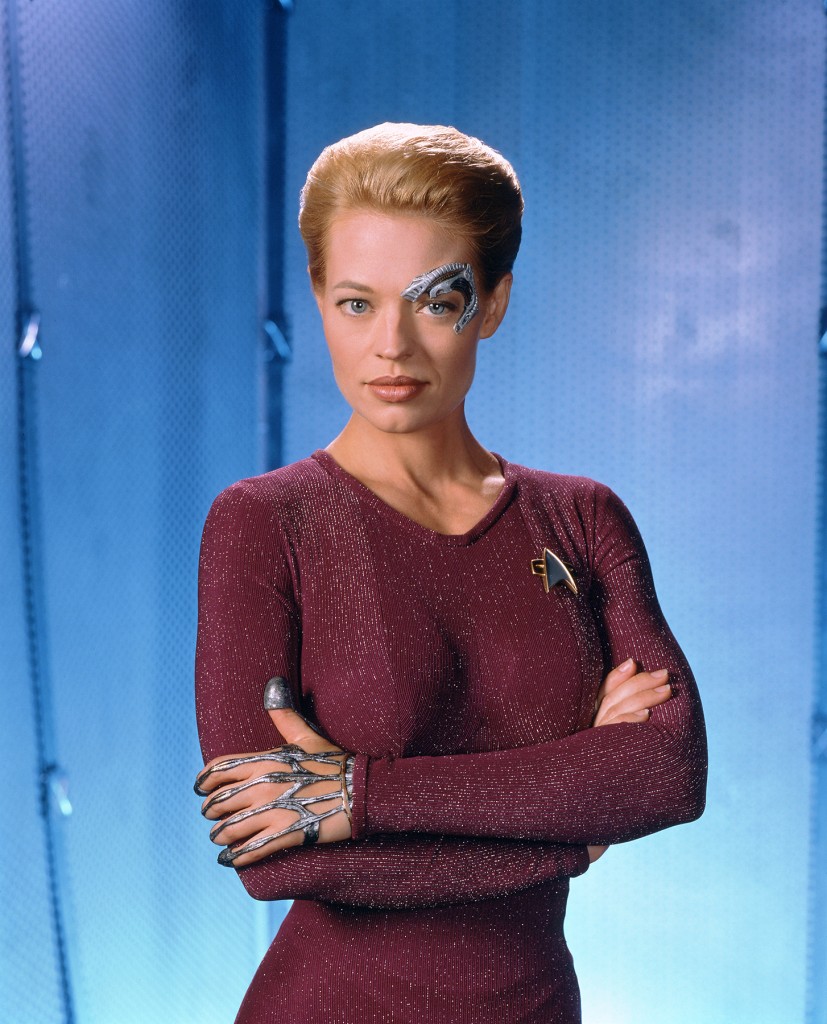
Her agent convinced her to read two scenes, though.
“One of them was the now-infamous ‘take off your clothes’ scene with Harry Kim (Garrett Wang),” Ryan recalled. “The other was a scene we ended up never shooting, but it was one of the most beautifully written scenes I’ve ever read for any project. It was a scene of Seven having her first memory of laughter. From that scene, I was able to see what the potential for this character really was. That’s what sold me on it.”
Seven undeniably revitalized the series’ creative direction and ratings, giving it a fresh dynamic.
“I know that Paramount made no bones about the fact that they saw this as their chance to break ‘Star Trek’ into the mainstream media. The publicity machine went into overdrive,” Ryan said. “For my career, it was great; for me personally, it was great; for the show, it was great. The writers had been writing the same seven characters for the previous three years, so they were salivating to have a new character to write for.”
Seven was present in a major capacity in every episode that followed. If she wasn’t the main storyline, she was the strong secondary storyline.
“I was lucky, and the writing was great,” Ryan said. “This was a beautifully written character, and that worked out to the benefit of all the characters because there was so much conflict and so much growth. I mean, she started out human and ended up being Borg, so she had to learn how to be human again. There was a lot of incredibly rich stuff to get to explore.”
Ryan spoke about joining “Voyager” midway through the series.
“They were writing off a character who had been there since the beginning and adding a new character. That’s always awkward in the best of circumstances. But I was an Army brat growing up, so I’ve been the new kid a lot,” she said. “When I first joined the cast of ‘Voyager,’ I can’t remember if it was Jonathan Frakes or (co-creator) Rick Berman who said to me, ‘You’re getting on a moving freight train, and you have no idea how fast it’s going until you’re on it.’ That was such an accurate description.”
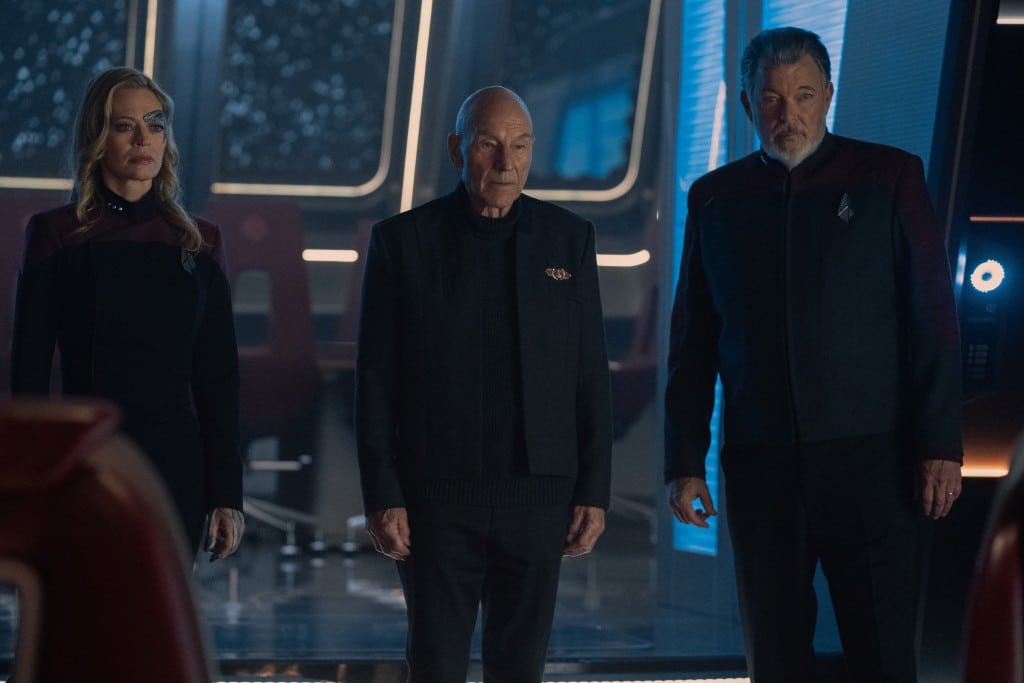
Ryan reprised her role as Seven on all three seasons of “Star Trek: Picard.”
“At that point, a lot of time had passed and I had done a lot of other stuff in my career, so I wasn’t afraid of going back to the role,” she said. “It was really fun — and scary as hell! She was so different, especially when I read the first draft of the script. It was hard trying to find her voice because she was so, so different. I was panicking because I couldn’t hear her, I couldn’t find her.”
She ran scenes with actor Jonathan Del Arco, alias Hugh the Borg (who is appearing at Motor City Comic Con in Novi Nov. 13 through 15).
“He threw out the simplest idea that was exactly what I needed: ‘What if she just made the conscious choice to sound and act as human as she can?’ That made perfect sense. I just needed that little hook and it all made sense and fell right into place,” Ryan recalled.
In the “Picard” series finale in 2023, Seven became captain of the Enterprise.
“I would’ve never in a million years come up with making her the captain of the Enterprise! That came out of left field,” Ryan said. ‘When (‘Picard’ showrunner) Terry Matalas told me that was his plan, I was beyond shocked. It was a fantastic, full circle moment for this character, which I thought was beautiful.”
That begs the question: Will there be a new “Trek” series with Seven commanding the Enterprise? Even Ryan can’t say.
“If there’s one thing I’ve learned with this franchise, it’s never say never,” she said. “I was sure that I had said goodbye to this character 25 years ago. Who knows at this point?”
Despite her initial misgivings about playing Seven, Ryan called the role an “absolute gift” for an actor.
“I was lucky enough to go on to do other roles, other series, and many other things,” she said. “Being best known for this is not anything I’m upset about at all. I know I’m repeating myself, but this character was such a rare gift. How often do you get to play a character for this long and go through this much of her life? To start as a human child who was assimilated and raised by machines in a hive mind and to relearn how to be a human, relearn how to be an individual — it’s a pretty remarkable arc, so I’ve been very, very lucky.”
Clinging to the hope of a better world
Ryan and Elizabeth Dennehy, who had a recurring role as Lt. Cmdr. (later Admiral) Elizabeth Shelby on “TNG” and “Picard,” shared their insights about the staying power of “Trek.”
“I believe Roddenberry envisioned a world without status, where nobody could lord superiority over others and use that power to make someone feel inferior,” Dennehy said. “An equitable and fair world where everyone could live their best life, be happy and free. It seems right now more of a fantasy than ever, which is why I believe people cling to that dream more fervently with each passing year. We need and cling to the hope of a better world.”
Ryan is awed by how long “Trek” has been around.
“It’s pretty crazy — six decades! It’s an amazing thing to be a part of, I have to be honest,” she said. “What makes it so unique and what’s made it have such longevity is that it’s always held a mirror up to society, but in a non-threatening way. What it does so beautifully is it gives us an optimistic view of what we could achieve if we stop being afraid of everything that’s different, everyone who’s different, and start embracing those differences and celebrating those differences. I think it’s such a beautiful message and just as important now as it was in the 1960s when Roddenberry created it.”