A.C. Fisher Aldag blends several genres in debut novel
For author A.C. Fisher Aldag, it was challenging to find a publisher willing to take on a book that combined fantasy, romance, adventure, magical realism and Celtic history.
Fortunately, she discovered City Owl Press in Staten Island, New York, which published her debut novel, “Woman Afraid of Water.”
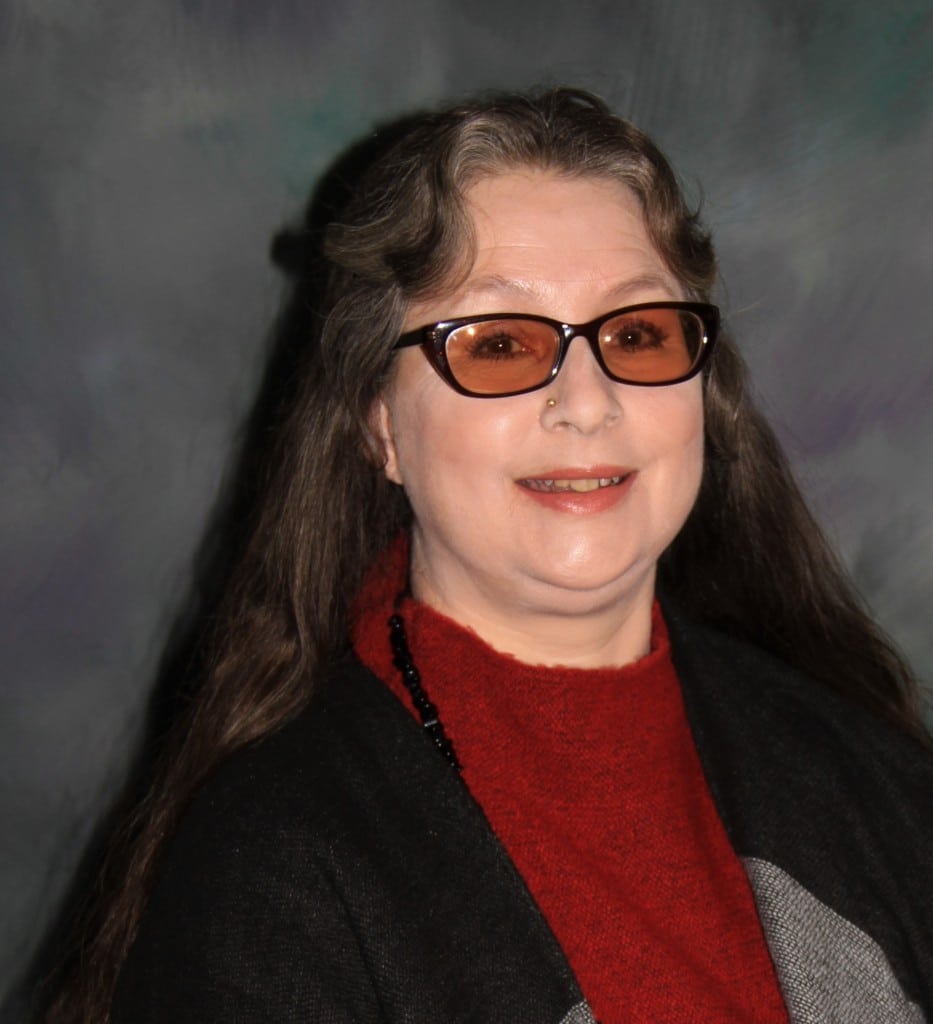
“City Owl Press was the perfect fit!” said Fisher Aldag, who lives in Bangor, Michigan, with her husband of 44 years. A Kalamazoo native, Fisher Aldag holds a bachelor’s degree in journalism from Western Michigan University, where she also completed coursework in occupational therapy.
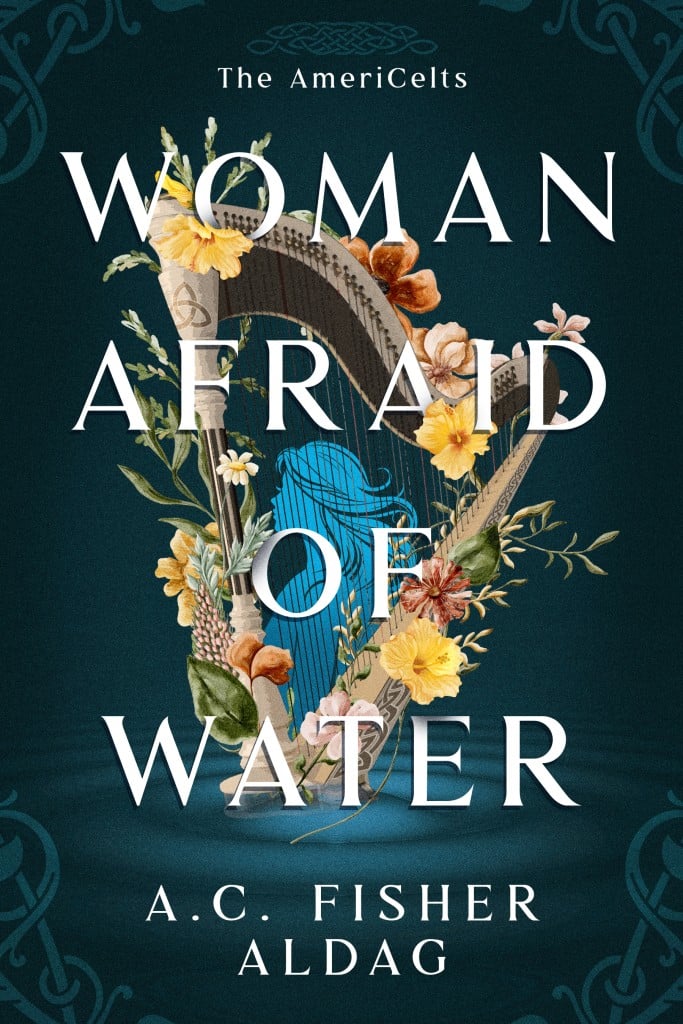
In “Woman Afraid of Water,” Dr. Joyce DelaFemina, an anthropology professor who is suffering from aquaphobia, discovers real magic while studying ancient Celtic tribes in Indiana and must help protect them from a land developer and a blood feud.
“I am of Welsh heritage, the great-granddaughter of immigrants to the Upper Peninsula who practiced a British Isles folk religion,” Fisher Aldag said. “I discovered neo-Paganism in the 1980s when a Wiccan pal noted that my version of spirituality was a lot like Wicca. My family began practicing with Wiccans and Pagans, mostly so my kids had an opportunity to experience nature religions with others. We attended a lot of gatherings and met hundreds of Pagan folks, including others from British Isles folk religions.”
She spoke about implementing this into the book.
“The Celtic tribe in my story practices the ancient folk religions of the British Isles, so I wrote from the perspective of magical realism, but there’s also a lot of fantasy magic,” she said. “The AmeriCelts in the novel do things like healing and augury, which are practiced by real folk religions, as well as Wiccans and neo-Pagans. The tribe in the story honors the Celtic deities, communicates with their ancestors and performs folk plays. The characters also do things like blood stopping, which is a U.P. and Appalachian folk belief.”
According to the author, there’s a “funny story” behind the book’s genesis.
“I am very ‘backwoods’ and lived in rural places most of my life, close to nature,” she said. “When I went to WMU for the first time, I joined a student group of neo-Pagans. A sociology professor wanted to have his students interview me about folk magick and folk religions. They came out to my house in rural Bangor — which was a culture shock, for I still cooked on a wood stove and kept farm animals — and I told them about various Celtic folktales and customs.
“At the end I took questions, and they asked things like, ‘Do you hex people? Do you believe you can fly on a broomstick?’ I felt like I had been talking to the wall!” she continued. “So, the concept of the learned, educated students interviewing the old-fashioned Celtic priestess was born.”
This eventually inspired the character of Joyce.
“Joyce represents everything both positive and negative about academia, feminism, urban life and liberal politics. My husband’s mother was a college professor, so many of Joyce’s endearing traits came from her. Of course, the more annoying mannerisms came from some of the academics I encountered in college,” Fisher Aldag said. “Joyce is called ‘Woman Afraid of Water’ because she was hesitant to drive her electric car through a low-water crossing, which is a place where a river flows across a road. During the story, Joyce has several difficulties with water.”
Lady Cairne Auldwedd, the guern (chieftain) of the Auldwedd Ffaine (tribe), represents both the positive and negative aspects of tribalism, folkways, conservatism and rural life.
“While Cairne is more progressive than most of her Celtic tribesfolk — some of whom are rather jingoistic — she still questions aspects of contemporary society that we take for granted,” Fisher Aldag said. “She’s more libertarian than conservative, and I snuck in a few digs at government dependency and regulation. However, Cairne is willing to accept things like vaccinations, genetic studies and multiculturalism, which some of her people find suspicious. Also, she has her magick, the wisdom of her ancestors and her connection to nature to fall back on.”
What makes “Woman Afraid of Water” stand out from other books is its realistic depiction of magick and its authentic Celtic folk stories and culture. Also, “romantasy” is a fairly new genre.
“I’ve been practicing magick for healing, augury, weather witchery, fertility, et cetera for years,” she said. “I was never into the ceremonial aspects of magick so much; it’s more about the connection with nature and ancestors. It’s very empowering. Note: It’s ‘magick’ with a ‘K’ to distinguish it from stage magic performances and from fantasy-story magic.”
“Water” is the first book in the AmeriCelts trilogy.
“When I first wrote the story, it ended up being around 800 pages. I had to divide it into three segments,” Fisher Aldag said. “The first part has a lot of world-building to make the Celtic tribe as realistic as possible and introduce the soap-opera panoply of characters. The second part builds up the feud between two factions of the tribe — one that accepts changes, while the other portion violently objects. This also gave the opportunity for a slow buildup of the romance between Joyce and the chieftain’s court bard, Graine Fordenham.”
The second novel, “The Summerlong Feud,” has already been sent to City Owl Press. No release date has been announced. The third novel will have a serious conflict and a partial resolution, setting the stage for further books in the series. There will also be some short stories featuring some minor characters, according to the author.
“I really enjoyed immersing myself in this fictional small town and the people who dwelled within. Researching Celtic legends and folklore was also lots of fun,” she said.
In 2019, Fisher Aldag published a nonfiction book called “Common Magick,” which was about British Isles folk magick.
“I’ve always written for secular newspapers and magazines and have always been a storyteller. Writing fiction was the next logical step,” she said.
The most important takeaway from “Woman Afraid of Water” is that people from very different backgrounds and disparate belief systems can find common ground and even become friends.
“There are characters who are LGBTQ+, people of different educational levels, disabled people and people of various ethnicities who all discover their similarities and related goals,” Fisher Aldag said. “One of the minor characters is visually impaired, as am I, so I drew upon my own experiences to write from her point of view. I also wanted to make the statement that differently abled people are valuable to society. You don’t have to be able-bodied to succeed.”
Visit acfisheraldag.com.