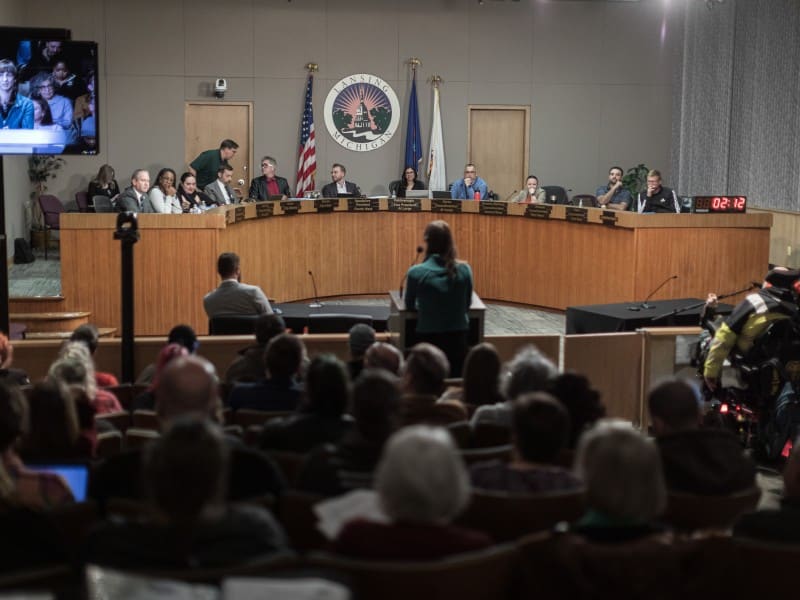
BWL’s newest ewe-tility workers
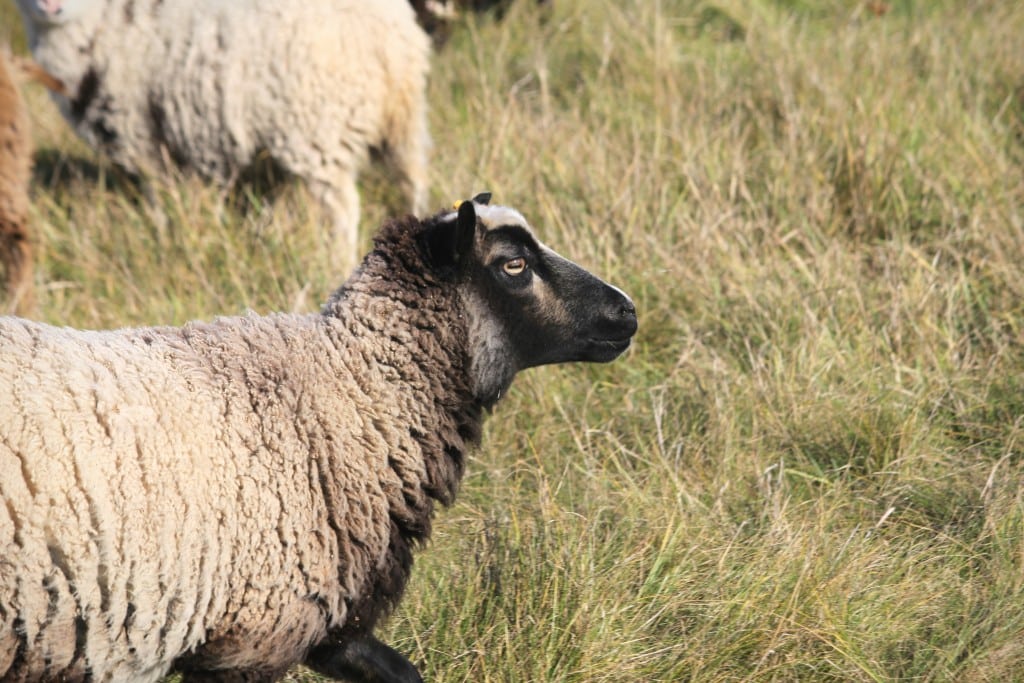
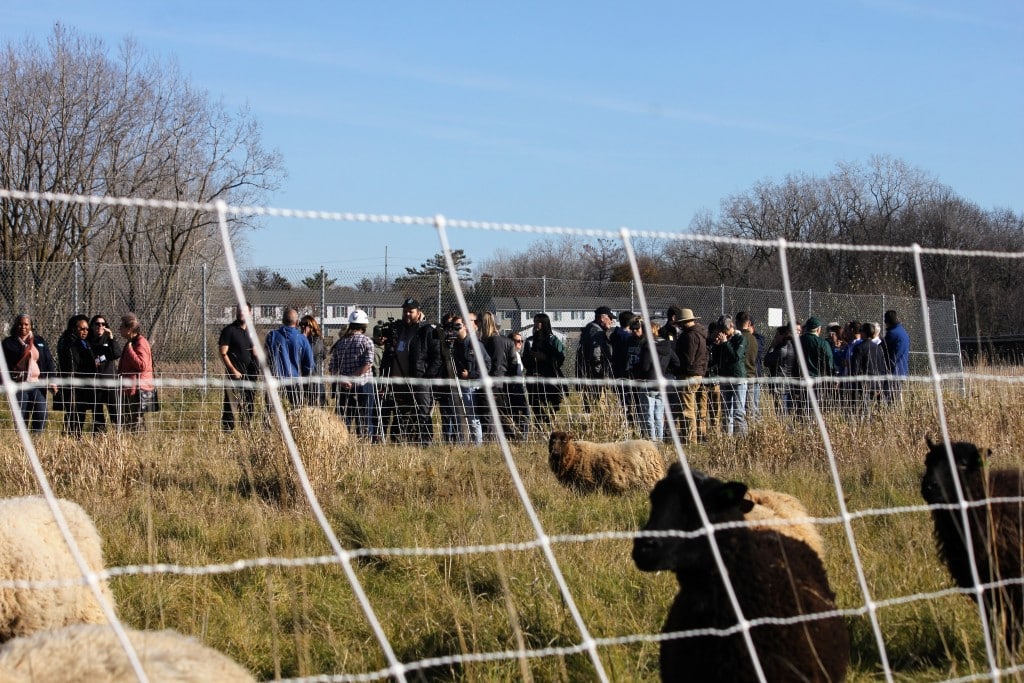
Sheep are munching away at the last of the summer grass in and around a small solar panel farm in Lansing Township. As Michigan’s first such municipal utility sheep subcontractors, the flock of 125 will soon be trucked away to warm up during the winter, and they’re getting rid of the last bit of the grass.
Sheep, it turns out, are the best grass-eaters for solar farms.
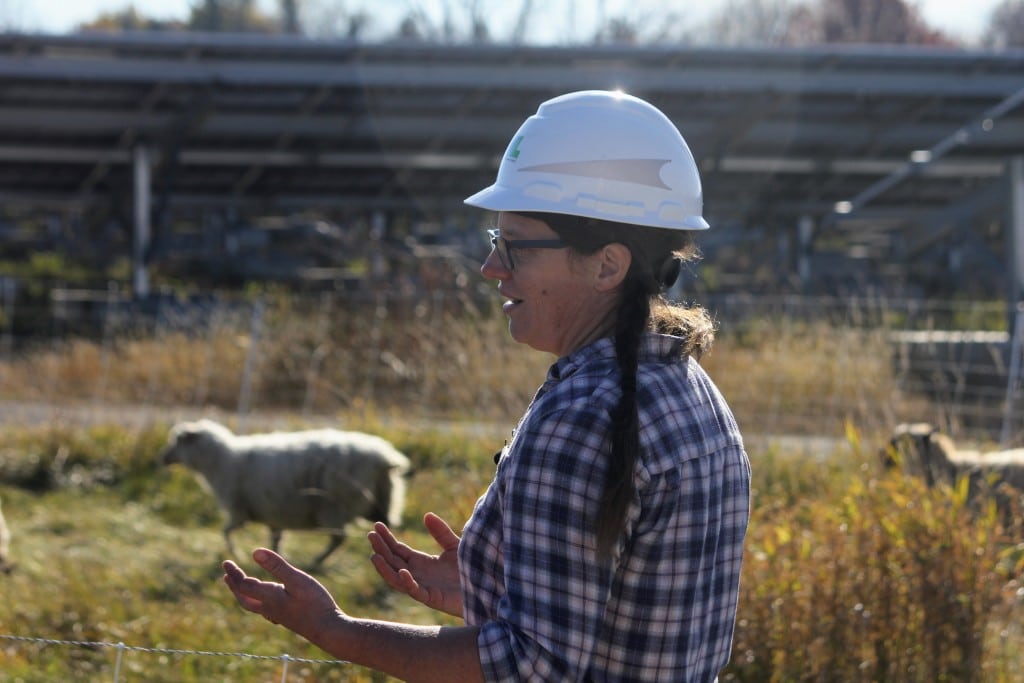
Goats are often the go-to grass chew crew. But they’re super-curious and nimble and they’d use the panels as a jungle gym. Cows would use the structures as scratching posts.
But sheep? Docile and gentle and easily-transportable sheep are exactly what a utility farm needs.
Using livestock can help save money over human mowing crews and curbing some of the gas-powered mowers will help to move the needle on the utility’s environmental goals, said Dick Peffley, CEO of the Lansing Board of Water and Light.
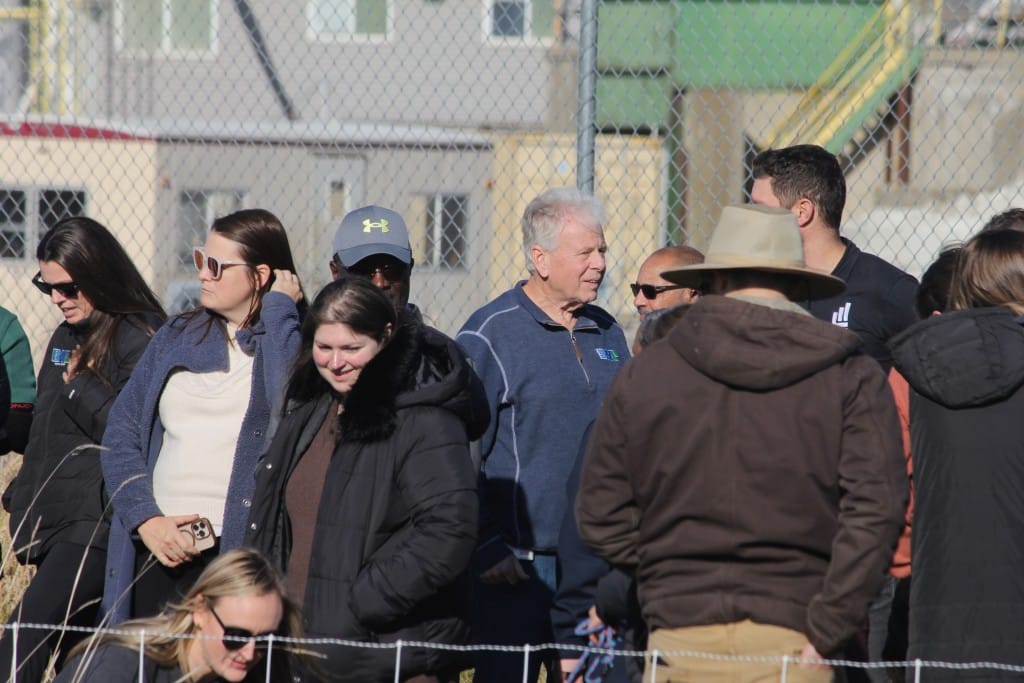
“It would take a lot of time and fossil fuel to mow this site and now we’ve got mowers here,” Peffley said, as he was interrupted a few times by the bleating of Snips, a friendly ram who shared the spotlight in front of news cameras.
The sheep arrived recently, after the Lake Lansing site was completed this fall. If the sheep are there all year, there wouldn’t be any sign of long grass on the site, said shepherd Egypt Krohn, owner of Dragonfly Downs Farm in Grand Ledge.
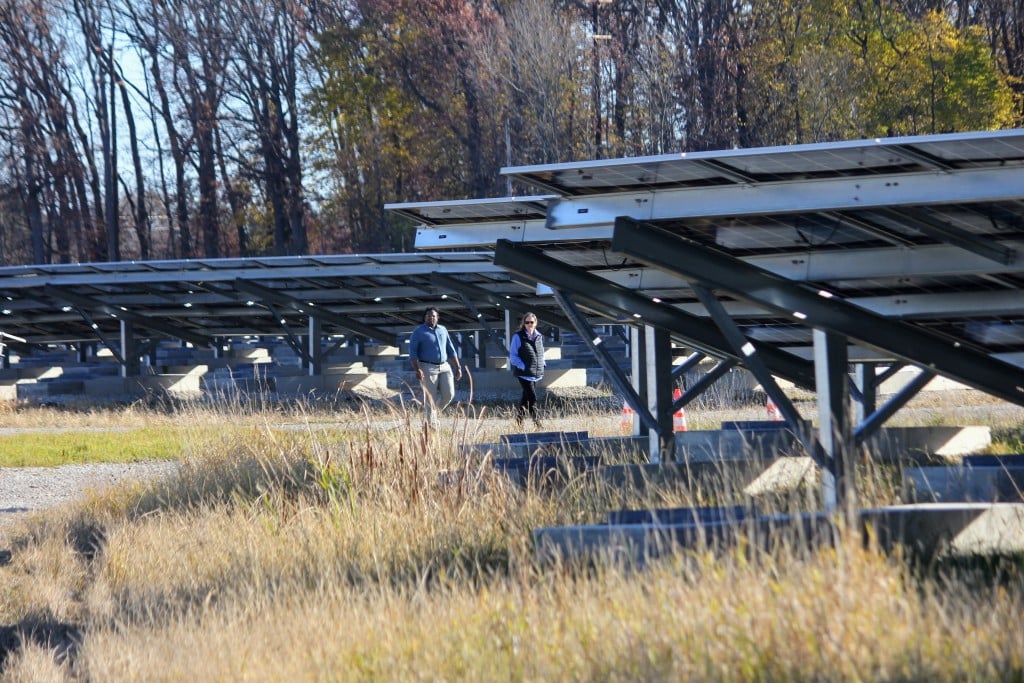
The solar farm generates about 6MW of power from about 13,000 panels on a site at Lake Lansing Road and Wood Road, on the site of a former gravel pit and disposal site. The ground is now covered in grass except for the large banks of solar panels.
The panels help to create a nice shade and shelter option for the sheep, until it gets too cold. They go back to the farm for the winter.
Krohn said her sheep require little water, no more than 20-30 gallons a day on the hot days and that fits in a small tank on the back of her truck. The flock is kept there behind a portable electric fence, run itself by a small independent solar array.
Krohn said the fence and watering flexibility means her sheep can go just about anywhere, no infrastructure required. And they don’t have a habit of eating wires, which is handy at a utility site.
The Lake Lansing Solar site is relatively small at 6MW. Solar accounts for around 10% of BWL’s generation, gas is around half. BWL gets 115MW from the Whitetail Solar array in Washtenaw County and between 10MW and 80MW from three other solar sites in Eaton, Clinton and Shiawassee counties.
But its location on Lake Lansing Road in the Lansing Township-Lansing-East Lansing borderlands makes it a prominent reminder of BWL’s green initiatives.
And the sheep should provide a little bit of amusement.
Peffley said the sheep and the site amounted to a bit of a defying act, pointing to criticism about farmland being turned into solar farms,
“We came up with this idea to do the exact opposite here,” he said. “This has always been light industrial, now we’re going to use it for agricultural use.”