A short, strange trip
A familiar, country-flavored groove, spun from tie-dyed infinity, permeated the Peanut Barrel on the cold afternoon of Feb. 3. Diners put down their burgers, and servers slowed to a standstill. The …
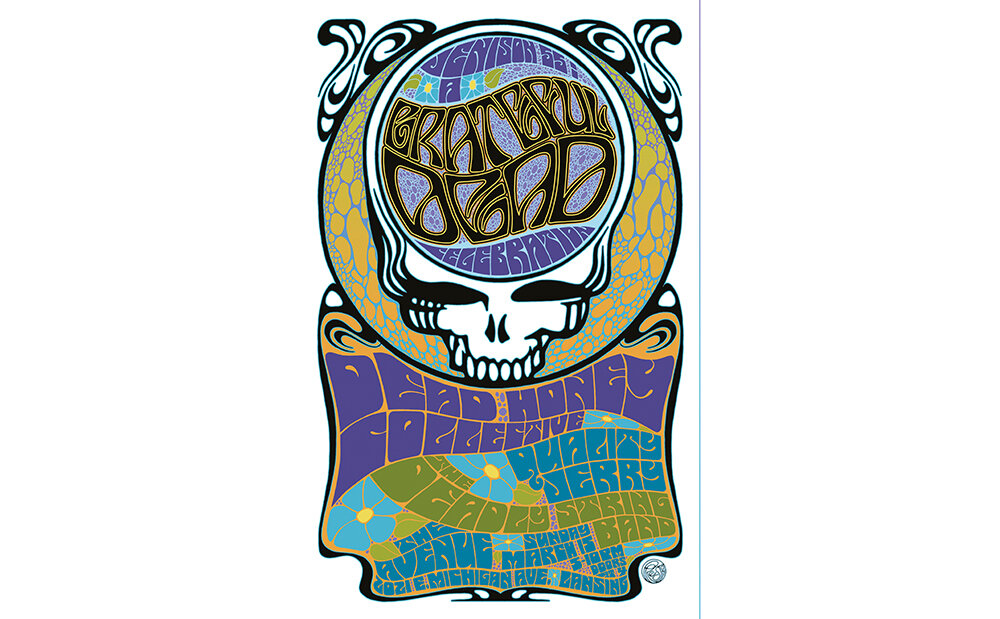
“Jenison 55: A Grateful Dead Celebration”
4-10 p.m. Sunday, March 15
The Avenue Café
2021 E. Michigan Ave., Lansing
facebook.com/avenuecafe2021
Grateful Dead cover bands pop up like mushrooms
A familiar, country-flavored groove, spun from tie-dyed infinity, permeated the Peanut Barrel on the cold afternoon of Feb. 3. Diners put down their burgers, and servers slowed to a standstill. The fries got cooler, and the beer got warmer, but nobody cared. The comfort food was already in the air.
There’s a 50-year spread between the oldest and youngest members of the eight-piece Grateful Dead cover band Quality Jerry. Whether it comes wafting through fading memories, bootleg recordings or living avatars, the Grateful Dead’s multi-generational spell shows no sign of dissipating.
A mix of seasoned musicians and devoted amateurs, Quality Jerry sounds like it’s been together for decades. But for all three (yes, three) Lansing-area Dead cover bands, it’s been a short, strange trip. None of the bands were around two years ago.
“We’re all pretty new on the scene,” Quality Jerry co-founder Tad Boehmer said. “Suddenly there’s a critical mass.”
That’s why Boehmer, a Michigan State University Libraries archivist, singer and multi-instrumentalist, decided it was time to put together a project he’s dreamed of for years.
“Jenison 55: A Grateful Dead Celebration” will assemble all three Dead cover bands — Quality Jerry, Dead Honey Collective and the Deadly String Band — to mark the 55th anniversary of the Grateful Dead’s only Lansing-area appearance on March 13, 1971, at MSU’s Jenison Field House.
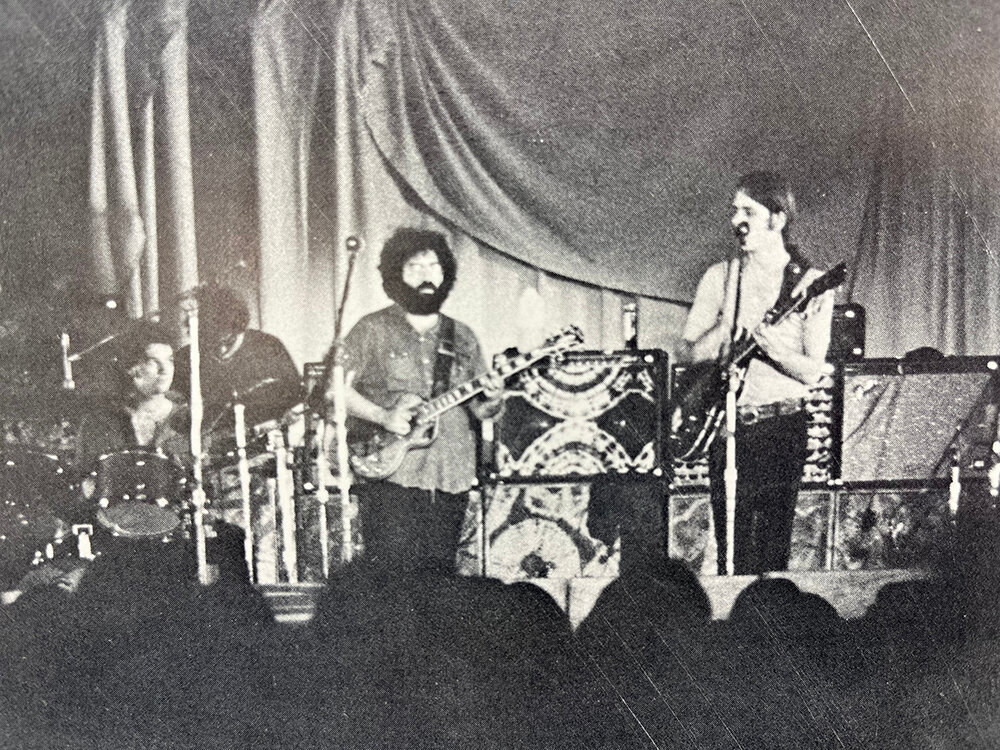
“I wanted to involve as many people as possible, make it a big party, and see where we could take it,” Boehmer said. He’s also putting out the call for anyone who attended the 1971 concert to come and share their memories.
Boehmer is only 36, but he’s fascinated by the music of the 1960s and ‘70s, when his parents came of age.
“I was always curious about the experimentation that was going on, the culture, the politics, and felt comfortable with the music, film, art, graphic design,” he said.
He only became immersed in the Grateful Dead’s world in 2022. For most of his life, he didn’t have the patience for free-form songs that went on for 20 minutes, even though he played in an amateur jazz band back home in Urbana, Illinois.
His attitude changed in late 2021, when an older scholar and collector of 1960s and 1970s music invited him to a concert by the Grateful Dead’s successor band, Dead & Co., at Chicago’s Wrigley Field.
“It just clicked for me,” he said. “I’d written it off for so long, but now I thought, ‘There’s something to this.’”
As a music lover and a student of history, he could no longer resist the gravitational pull of the Deadheads and their world.
“People are obsessed with it,” he said. “They collect the tapes, catalogue the shows and will talk to you ad nauseam about how the best show was ‘definitely at Cornell, 1977.’ I wanted to know why.”
True to his calling as a library researcher, he set himself a listening project. Each day beginning in spring 2022, he would listen to the same show the group played 50 years ago. All the tapes are out there.
He listened while cleaning the house. He listened while running. He listened and sang along while driving five hours to visit his mother in Illinois. (The singing came in handy in Quality Jerry.) And he didn’t stop at 1972.
“I’m still listening,” he said. “I’m up to 1976 now. It’s a musical education.”
He got in so deep that listening wasn’t enough. He already played trumpet in an informal, MSU Libraries-based band led by longtime Special Collections guru Randy Scott. That band dissolved when Scott retired and the pandemic came along, but it gradually reformed around Boehmer and fellow Deadheads like Peter Alegi (percussion and vocals), a professor of history; Joshua Barton (guitar), the library’s head of cataloguing; and Anne-Marie Rachman (piano and vocals), another library staffer.
They enjoyed jamming in the library and in the neighboring Beal Botanical Garden, but they quickly began to think bigger.
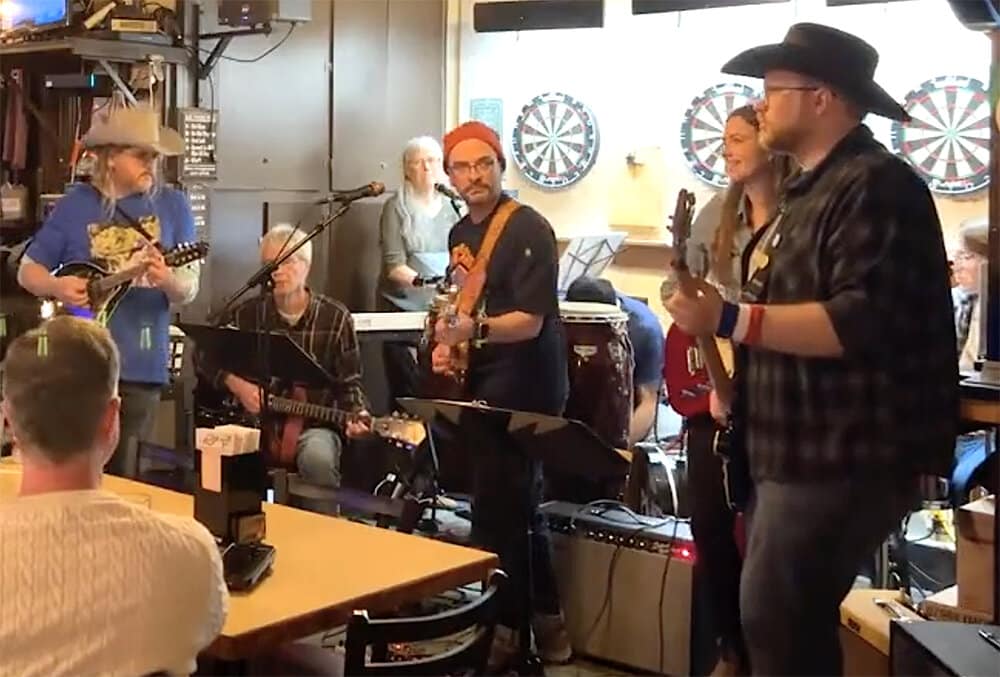
Boehmer was surprised to learn that MSU Broad Art Museum communications director Zoe Kissel, a rhythm guitarist, was interested in a Dead tribute project.
She and her brother, Dylan Kissel (a sound engineer and electronic scoreboard wizard for MSU athletics), were already accomplished musicians, recording and touring in a punk-y garage band called Sidewatcher.
“They played loud, powerful, short tunes, not much improvisation — the opposite of the Dead,” Boehmer said. “They were able to pivot really quickly to play this kind of music.”
When the band first got together, some members had heard Grateful Dead tunes “hundreds of times,” others “zero times,” Boehmer said, but the mix of younger and older members made the music feel fresh off the vine.
In October 2024, the band had a ball jamming at mandolinist Eddie Gildner’s house in rural Laingsburg, fighting off the chill with a bonfire and the 1977 Grateful Dead movie, projected on the side of a garage.
Following an irresistible urge to “be in the room where it happened,” the band got permission to infiltrate Jenison Field House and “semi-covertly” play a few tunes on the running track, to the amusement of the participants of a nearby wheelchair basketball game.
They made their Lansing debut at a benefit concert at the Fledge this January.
The Peanut Barrel show soon followed, surpassing Boehmer’s expectations.
“It was a great feeling for everybody,” he said. “We were blown away by the turnout and the energy.”
Tucked into the Peanut Barrel crowd was the Broad Art Museum’s new director, Phillip Bahar, a not-so-closeted Deadhead who couldn’t resist the siren call from across Grand River Avenue and stayed for the duration.
Boehmer decided the group was ready for prime time and invited two more local cover bands to join Sunday’s Dead-a-thon. Dead Honey Collective performs the music of the Dead, along with 1970s compatriots like The Band, John Prine and the New Riders of the Purple Sage (who shared the stage with the Grateful Dead at the 1971 Jenison concert). Dead Honey is an offshoot of Wild Honey Collective, formed in 2020 to perform originals and traditional American folk music in an electro-acoustic style.
The third band on the slate, the Deadly String Band, is an all-acoustic country-Americana ensemble formed only last year.
Boehmer hopes Sunday’s event will stir up new information about the 1971 Jenison concert.
“This is a black hole in Grateful Dead history,” he said. “There’s very little information about the show.”
The Jenison lacuna is an anomaly in the meticulously catalogued Dead saga.
“Every Grateful Dead concert from the day after Jenison to the day Jerry Garcia died was recorded,” Boehmer said. There’s always hope that an audience recording, or even a few more photographs, will surface.
If that happens, Boehmer the archivist will be overjoyed, but for Boehmer the artist, keeping the music going is the main thing. The Grateful Dead’s original members are passing from the scene — founding member Bob Weir died in January — but the Dead are far from dead. With 20 Dead cover bands in Michigan alone, and countless more around the world, there is a deep craving for the group’s comforting, welcoming vibe in 2026.
“People want light and joy in their lives,” Boehmer said. “There are some dark things in Grateful Dead songs — songs about excess, people who have lost their way, loss and death. But overall, it’s a hopeful and unifying message. Nobody ever feels bad after listening to the Grateful Dead.”