After Data Center Withdrawal in Lansing, Activists Balance Celebration with Vigilance
When Danny Raymond, 38, learned that a data center had been proposed in downtown Lansing, where she lives, she wasn’t particularly surprised. It didn’t surprise her that the mayor and the city …
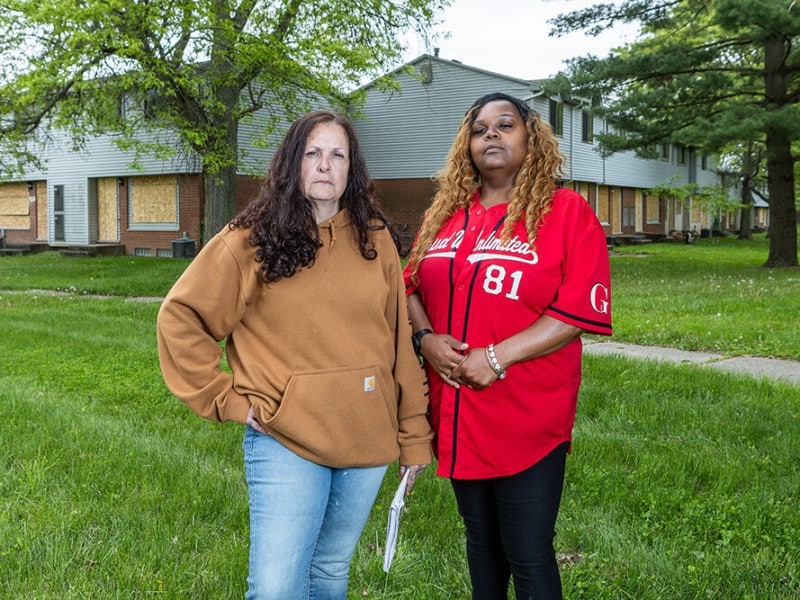
When Danny Raymond, 38, learned that a data center had been proposed in downtown Lansing, where she lives, she wasn’t particularly surprised. It didn’t surprise her that the mayor and the city council would be in favor of a project, but it became increasingly shocking to her as the plan moved closer to becoming a reality.
“Lansing is kind of built on this idea of industry over people,” she said, “with all these automotive plants and data centers feel like the next big industry. No one I talked to was happy about it.”
The mayor cited economic benefits for the city and at least three members opposed the plan, arguing that better proposals could serve the community. Raymond was relieved when the British tech company Deep Greep withdrew its 32-megawatt data center proposal hours before a decisive April vote.
Still, she believes more proposals will come and the future feels complicated.
“A lot of the city council and the mayor were on board, in support of a data center downtown, a power plant downtown. That’s the scariest part,” Raymond said. “We’ll just have to keep being persistent and annoying to push for what we want.”
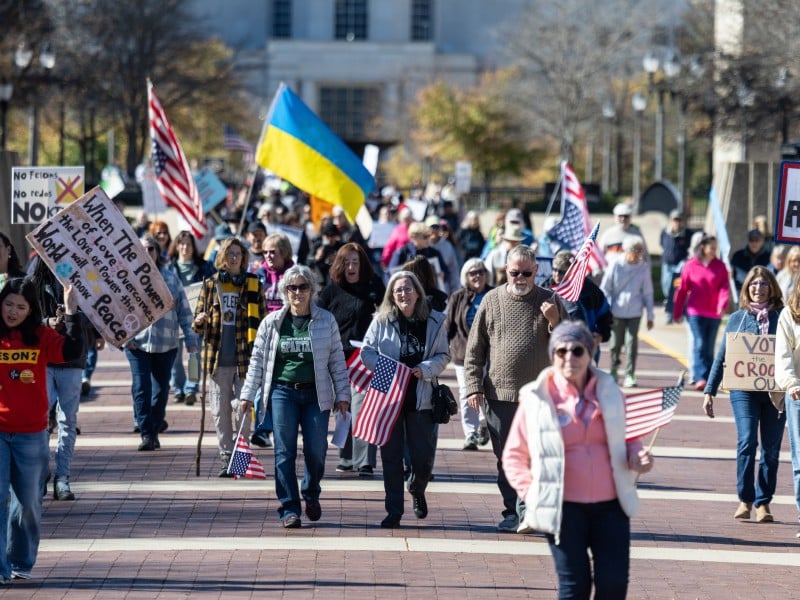
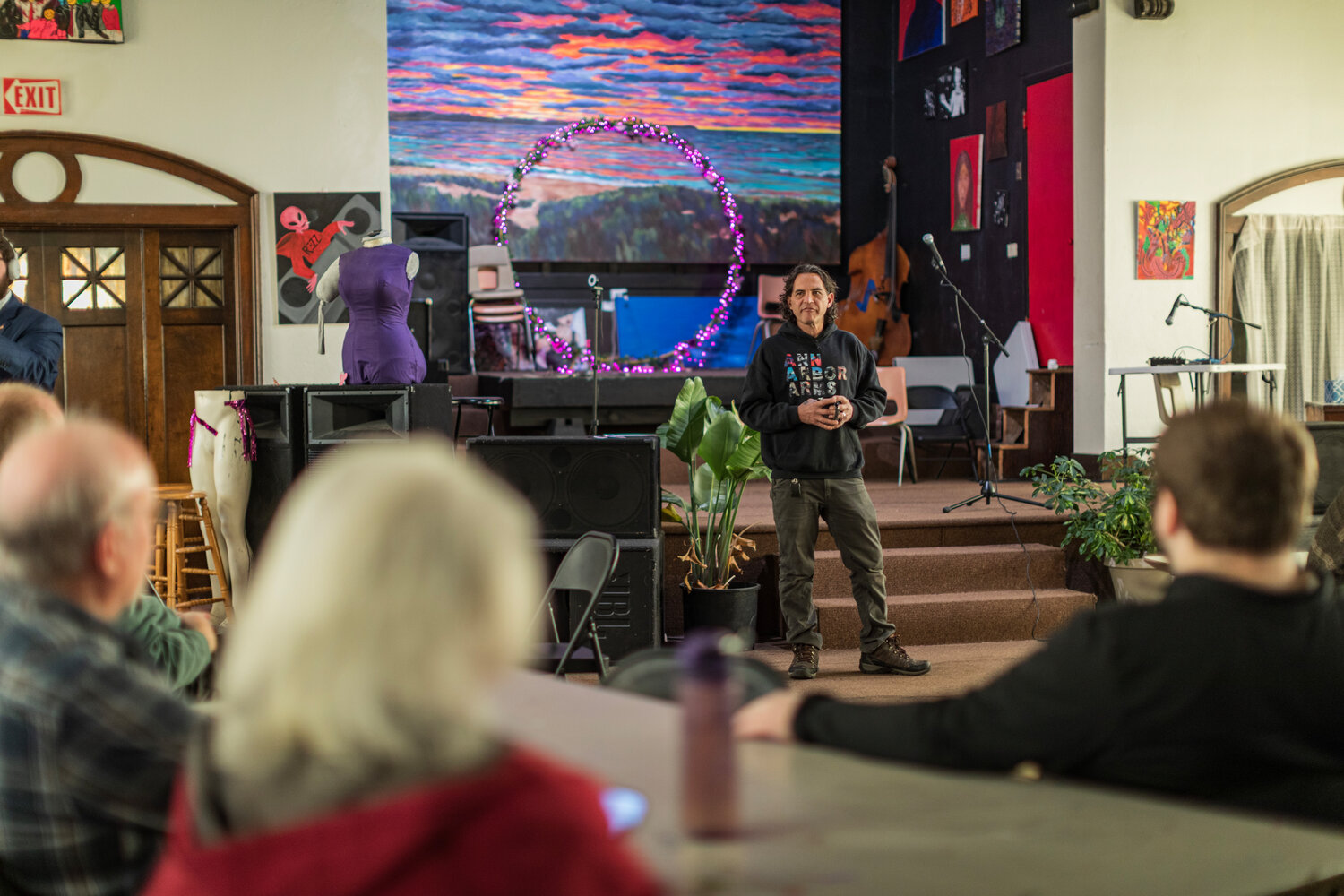
Last Saturday, several hundred people gathered in six cities across Michigan to protest against data centers, which have emerged as a new threat to environmental activists. The cry of “no data centers” rang out from Grand Rapids through Lansing, Ann Arbor, and Detroit, and as far north as Houghton. In Lansing, a few dozen gathered at The Fledge to discuss what the future will look like.
Local activists, as well as those from other cities, provided and updated information alongside community members. Anthony Hudson, the Libertarian Party candidate for governor of Michigan, also attended the event.
“People are definitely excited to see this win, but are also wary that more data center proposals may come,” said Soph Zuber, 20, a biochemistry student at Michigan State University and Spartan Sunrise activist. “We plan to push for a moratorium on data centers in Lansing through the city council and to work with other communities across the state of Michigan that are being impacted by these projects.”
Jerry Norris, founder of the Fledge and one of the rally’s organizers, said the Lansing data center proposal was less about digital infrastructure and more about competing corporate interests shaping clean energy policy. He argued that multiple companies were using the project to advance their strategic and regulatory goals in Lansing’s energy sector.
“What Lansing almost approved was a convergence of desperate interests dressed up as innovation,” he told City Pulse.
He said various interests – Lansing Regional Chamber of Commerce, local unions and the Lansing Board of Water and Light – “wanted this so badly that they handed the process to Bellwether PR and let a marketing firm run civic decision-making.”
Norris said that one of the most concerning aspects of the proposal was the construction of a fuel cell power plant intended to supply 16 megawatts to the data center.
He said people should demand independent evidence, including health impact assessments, noise studies and air quality modeling.
“Listen to the public before the contracts are drafted, not after,” he said. “And when a community raises specific, documented, technical objections, the answer cannot be another press release.”
In Michigan, proposals for large data centers are exempting major facilities from the state’s 6% sales and use tax, under legislation passed last year. To qualify for the benefit, projects must invest at least $250 million and create 30 jobs paying 150% of the local median wage. The initiative appears to have worked extremely well, as proposals and construction of hyperscale data centers have flooded into the state.
“I think there’s going to be significant momentum,” said Paula Caltrider, an activist opposed to a potential data center in Mason. “Because when tax breaks were introduced for data centers, what happened was that large tech companies began moving in, drawn by Michigan’s Great Lakes, the aquifer beneath our feet, and the availability of fresh water and a cooler climate. And I’m not talking about small, modest data centers; I’m talking about hyperscale facilities, 300 acres in size, taking over farmland and impacting air, water, and soil.”
Caltrider said people will begin to learn and understand more about data centers. “The opposition keeps growing, because nobody wants this in our communities or across Michigan.”
The future of the Lansing site, a city-managed parking lot previously earmarked for the proposed data center, is now uncertain. Mayor Andy Schor said the city is open to new proposals, including housing and other community-oriented developments and he’s challenging and encouraging data center opponents to bring proposals for the site.
Norris is skeptical.
“I don’t think the Mayor’s challenge to housing advocates was sincere,” Norris said. “Asking people who just blocked his project to bring him proposals feels like a deflection, not an invitation. He’s still carrying water for the people who got him into this, and until he puts some distance between himself and that operation, I’m skeptical of anything that comes out of his office.”
Proposals for the site range from a park or food truck zone to a department complex and community center, reflecting efforts to prevent industrial development from the community. Supporters of a park emphasize that such a designation would block future industrial rezoning and expand green space in downtown. Zuber said there has been strong interest in converting the area into a public park.
“That is not a place for a data center that needs a natural gas power plant to function,” Norris said. “That is a place for something people actually want to go to: a brewery, a food truck park, mixed-use housing and commercial. It needs to be a gathering point and it should make people proud of that corner. It needs to take advantage of what is being built around it.”