Can Lansing’s pod homeless plan succeed where Kzoo’s failed?
In November 2021, The Kalamazoo Gazette reported that a “pod community” of 50 ModPods — portable, tiny homes — was in the works and could begin serving as transitional housing …
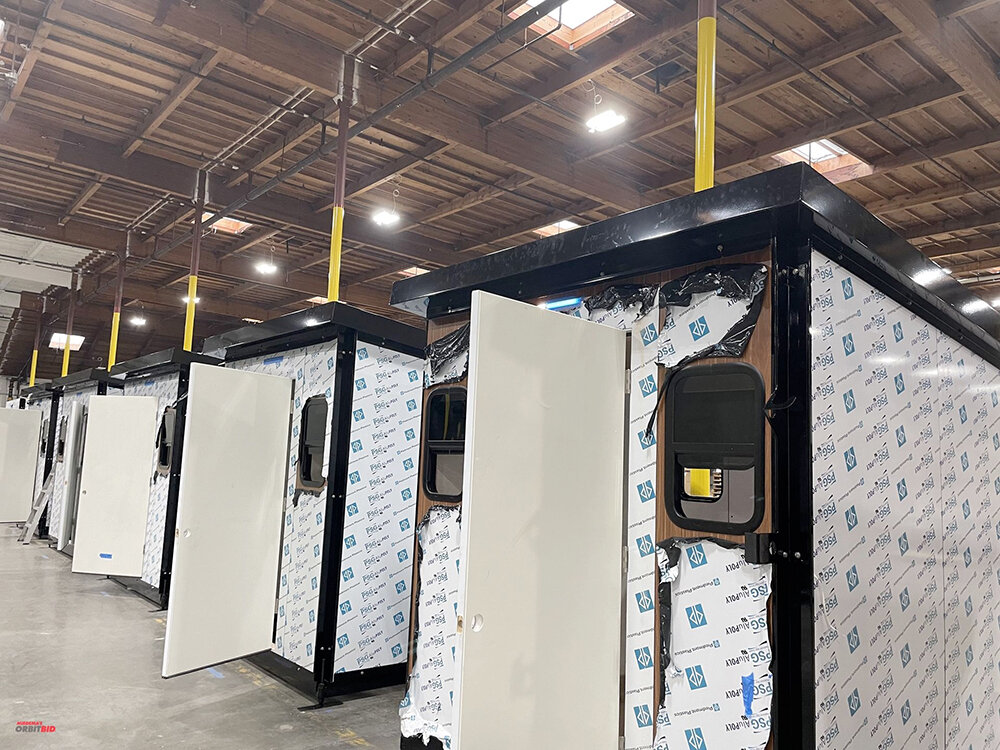
In November 2021, The Kalamazoo Gazette reported that a “pod community” of 50 ModPods — portable, tiny homes — was in the works and could begin serving as transitional housing for Kalamazoo’s homeless community within a month.
That didn’t happen. It didn’t happen in 2022 either, or 2023. Each time Housing Resources Inc., the nonprofit that purchased the pods, proposed a potential location, it was met with community opposition. After running through a dozen possible sites, HRI finally settled on one in April 2024 with the hope of opening it that coming winter. But six months later, the Gazette reported that the project had been canceled altogether, with HRI still at least $3.5 million short of the necessary setup cost. The $1 million pods went up for auction.
Last week, The Lansing City Council unanimously approved $640,000 in internal funding reallocation for the Lansing Department of Human Relations and Community Services to purchase those very same pods. Dozens came out to speak in support of the plan and urge councilmembers to approve the funding, which HRCS Deputy Director Delvata Moses said would house 66 homeless city residents in a facility that would also include onsite security and assistance to help residents transition into permanent housing. The department hopes to break ground in March and be operational by June.
But the purchase was made so quickly that the department was left with more of a plan to make a plan than anything concrete. Without an immediate path forward, Lansing’s situation bears an uncomfortable resemblance to Kalamazoo’s.
“Because the purchase was time-sensitive, we moved quickly to address an urgent need,” HRCS Director Kimberly Coleman said Sunday. She acknowledged “that speed came at the expense of upfront planning in some areas,” adding the department is only now working on developing a plan with “clear milestones.”
While the structures were purchased suddenly, the idea of a modular pod community in Lansing is not new. A homelessness study prepared for the HRCS department by local research firm Public Policy Associates in April recommended exploring “sanctioned encampment or safe outdoor spaces that provide access to basic needs (e.g., restrooms, showers)” as a “stopgap” while shelter options are expanded.
Coleman said the department had already discussed ModPods before the purchase. She said a request for proposal had been conducted in 2024 to explore “safe outdoor spaces,” and that ModPods were one of several options identified. They were unaffordable at a proposed cost of over $1.2 million, making the $640,000 cost — which includes handling and storage for the pods — worth jumping quickly on.
Another benefit Lansing has over Kalamazoo is that the pods are owned by the city, rather than a nonprofit. Lansing’s chief strategy officer, Jake Brower, said the high setup cost in Kalamazoo included site acquisition.
“We’re still looking at whether we would be using city property, versus private property or other options that would be provided by partnerships,” he said at the meeting.
Potential locations may still face community opposition, but Neighborhood and Civic Engagement Director DeLisa Franklin said her department will work to “engage” with neighborhoods once the top three locations have been chosen.
“A lot of the times the pushback comes from misinformation,” she said. “We would be a part of the entire process and have a seat at the table while this is happening, so that it’s not happening to them, but with them,” she said.
The plan comes amid opposition to the Schor administration’s handling of homelessness. In July, the city sued two property owners over allowing a homeless encampment near Dietrich Park to exist on their property, seeking an injunction that would order the owners to clear the encampment. Over a dozen advocates spoke to oppose the lawsuit at the July 28 City Council meeting, including state Rep. Emily Dievendorf, D-Lansing, and Schor’s November opponent, Kelsea Hector. Last week, a judge ruled the encampment could stay as long as the property owners provided portable toilets and trash removal services.
In a statement, Schor said the ModPods would complement other approaches the city is taking to combat homelessness.
“Solving issues surrounding our homeless and unhoused neighbors is never going to be a quick and easy answer,” he said. “Overall, we need more housing in Lansing, and we are working toward that now with several projects in various stages of development all across the city.”
He added the City Rescue Mission’s upcoming expansion would help as well, and that the ModPods are “a unique chance for the city to provide some additional services and shelter for those in need as well.”
Hector spoke in favor of the ModPod community last week, though she said she supports it as an alternative, rather than a complement, to evangelical organizations like the City Rescue Mission.
“Too often, we really do hear stories about our trans and queer neighbors who completely avoid shelters,” she said. “It’s not just because they’re afraid, but because they’ve actually experienced harassment or even a push to detransition in order to provide services.”
“A program like this is unique in that it takes that out of the equation,” she said.
The homelessness study backs that up. It concluded a prominent barrier to homeless residents accessing services was the “inflexible or discriminatory policies, particularly for people that are LGBTQIA+.”
Another benefit to the pods is their quick setup time and flexibility, Coleman said. If the city breaks ground in March, the pods could be operational by June, allowing the city to quickly address homelessness.
With unanimous support from the City Council, there is clear hope for the plan. But echoes of the Kalamazoo debacle could be heard even at the Council meeting where the purchase was approved. One resident, Brad Clark, spoke between supporters of the ModPod community to ask the city to clear the Dietrich Park encampment, in part because of its impact on property values.
“The Vallarta supermarket has been vacant for years,” he said. “Do you really expect someone to redevelop that property knowing there’s an encampment of homeless people a five-minute walk away?”