Can Old Town stay old?
In the heart of one of Lansing’s most booming districts, one decaying building hovers like a ghost.
A look over the boarded-up or missing windows of the former Frank Preuss & Son Star …
Despite continued growth, historic district lacks protections
In the heart of one of Lansing’s most booming districts, one decaying building hovers like a ghost.
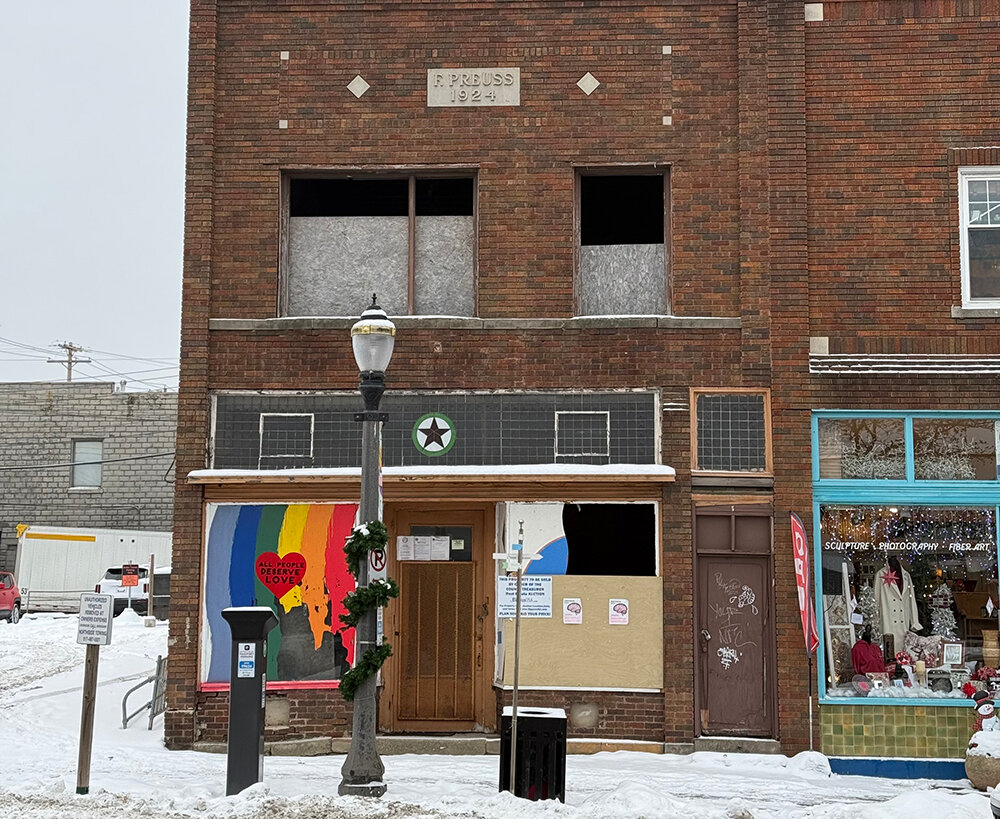
A look over the boarded-up or missing windows of the former Frank Preuss & Son Star Market at 308 Cesar E. Chavez Ave. shows the brick facade is about all that’s left. Decades of exposure to the elements have left the building without even a floor.
The building is one of 44 listed on the 1976 application that earned the North Lansing Historic Commercial District, now known as Old Town, its spot on the National Register of Historic Places. That helps with tax incentives but carries no protections against demolition by neglect or otherwise — as Lansing learned when the historic Glaister House came down earlier this year.
Many mistakenly believe that Old Town is a designated local historic district.
But Old Town, the site of the original Lansing settlement, has no protections at all.
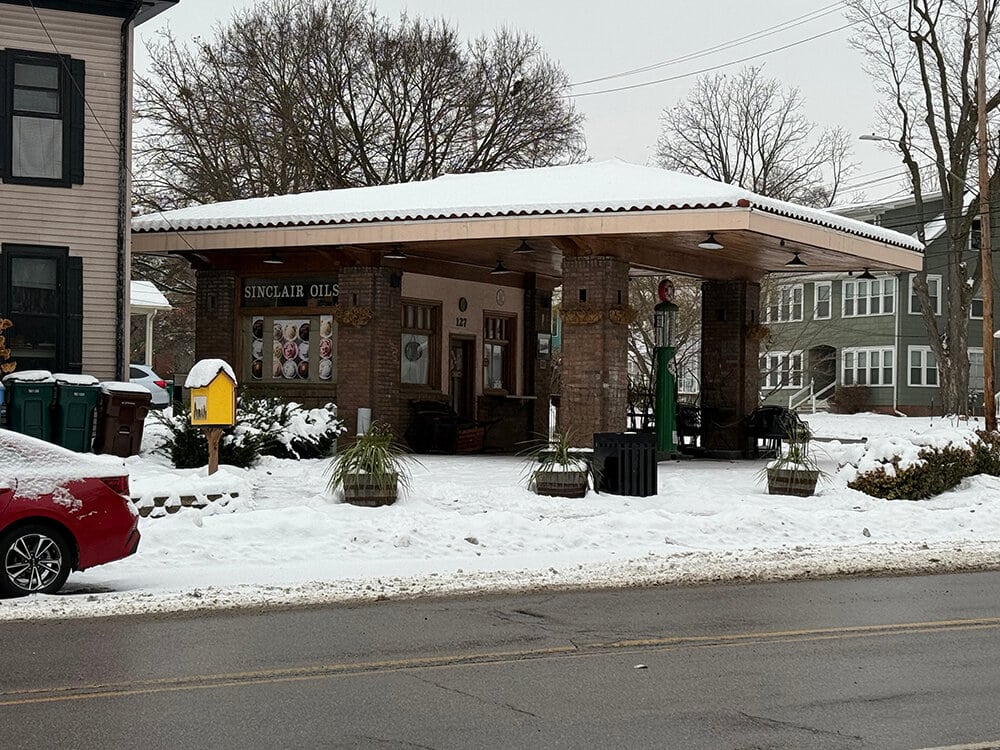
“We’re lucky in Old Town, but there are no protections for these buildings,” said Dale Schrader, a preservationist who renovated the 1923 Pulver Brothers Filling Station in Old Town. “It’s on the national register, but that doesn’t mean that somebody can’t just tear it down or do whatever they want with it.”
Nervous that the history he restored could be lost, Schrader plans to pursue a local historic district for just the filling station, which currently houses Scoops Ice Cream.
“Someday, when I’m gone, that gas station is gonna be sold, and it’s gonna happen that someone may not see the usefulness of a tiny historic gas station,” he said.
Most of Lansing’s 11 historic districts are individual buildings, one is two houses and the other is Cherry Hill. The Cherry Hill Neighborhood is Lansing’s best-known local historic district, and property owners there must obtain approval for certain exterior alterations.
The most recent historic district, in 2017, was the Central United Methodist Church; Cherry Hill was established in 1989 following two years of community organization.
Despite lapses like the Preuss building, Old Town has managed to preserve its history relatively well through dedicated developers like Schrader. But as the district continues to thrive, Schrader and others are worried the honor system won’t work forever.
He said establishing a district for the filling station would be a test for a theoretical Old Town historic district.
Old town, new tricks
Old Town is thriving like never before, several business owners told City Pulse.
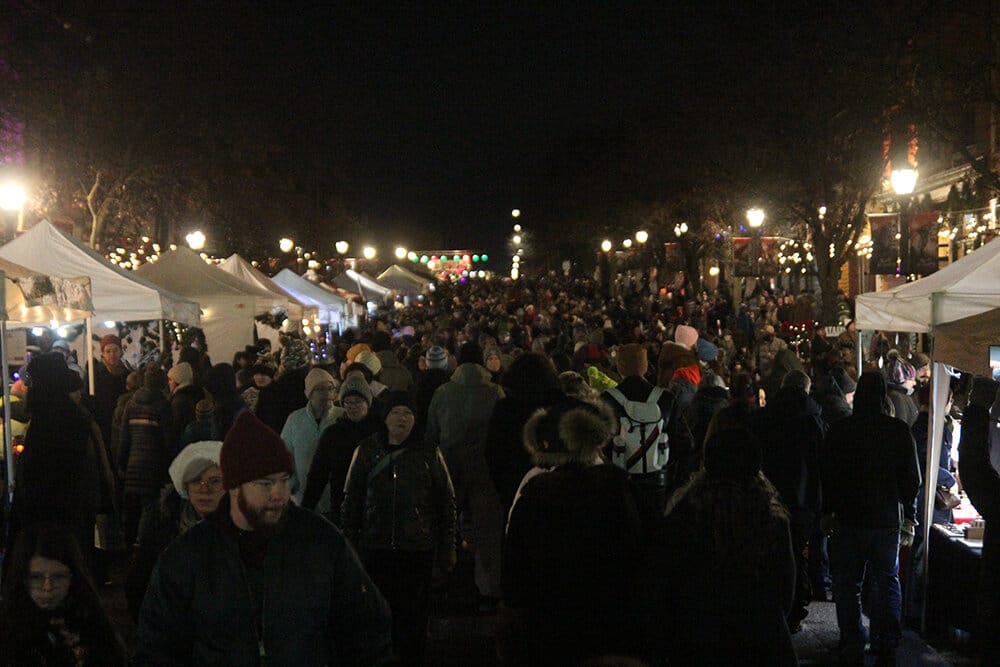
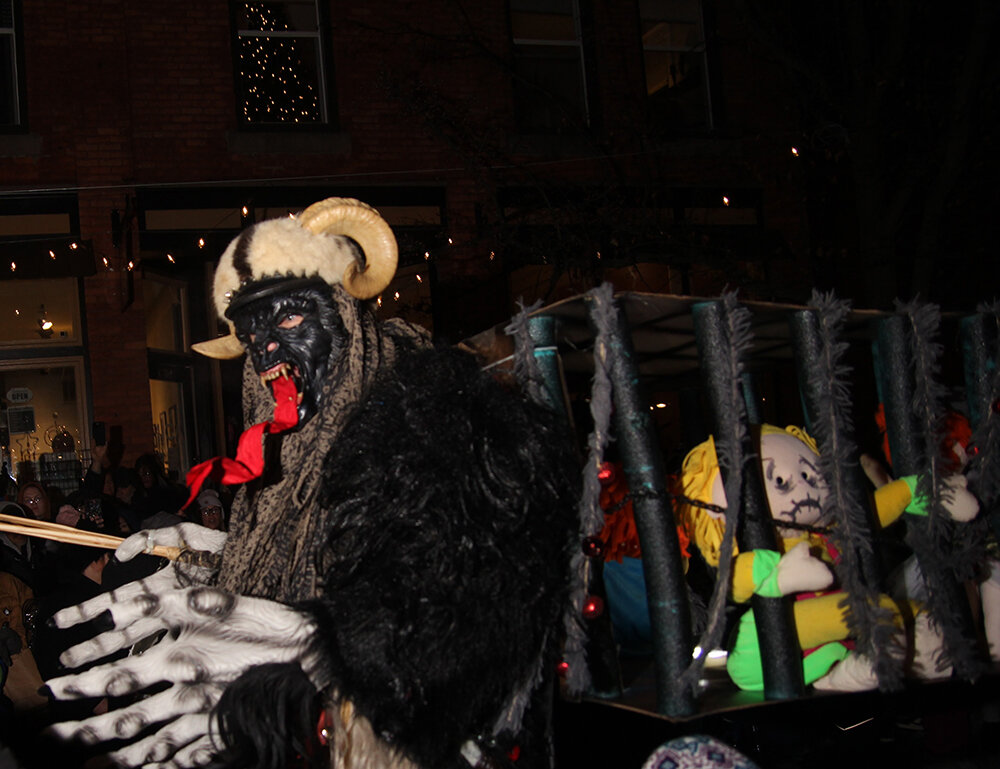
Some businesses relocated to larger Old Town buildings in the district in 2025, with new businesses taking their place. Festivals like Lansing Pride, the Lumberjack Festival and Krampusnacht bring in thousands, with more pouring in from across the city, the state and beyond every year.
“We can’t get but one game a year for the Lugnuts — and that’s usually the 4th of July — to even come close to filling that stadium, to convince people from outside Lansing to come in, spend their money and do tourism,” said City Council President Ryan Kost, who represents the 1st Ward that includes most of Old Town. “But in Old Town, that’s not true.”
“There’s some magic we’ve caught in a bottle there, and I think it should be a success story,” he said.

Increased interest has led to increased development.
The Brenke Fish Ladder was renovated this year into the Fish Ladder Music Park by the Capital Region Community Foundation. Old Town Commercial Association executive director James Lenon said several people, events and organizations are already booking the park.
The Turner North Development promises to bring 76 apartment units to Old Town and the Gentilozzi Group’s public-private New Vision Lansing project will bring 90.
A strip of properties, including the Kilbourne-Mead at 1214 Center St. was purchased by Oldtown Center Street Holdings LLC. That LLC’s registered agent is local developer Eric Hanna, who declined to comment for this story.
Greater Lansing Historical Society president Bill Castanier said the Greek Revival house may be the oldest house in Lansing, or nearly the oldest.
Just across the street from the Preuss Building is the Michigan Historic Preservation Network, where former director Nancy Finegood worked for 17 years. Finegood said new developments surrounding a historic core may eventually start to infringe on and overwhelm the historic part.
Mary Toshach has a master’s degree in historic preservation, previously served on the Historic District Commission and was the final executive director of Preservation Lansing, which announced its closure last week. She said changes are not always bad, but without an agreed-upon plan, a historic shopping district like Old Town could become an “old town” in name only with anachronistic modifications.
Citing Mackinac Island’s shopping district as an example, she said visitors often do not realize how much an area has been altered.
“I worked up there in the ‘70s, and I don’t even recognize it now,” she said. “I actually find the way it looks appalling, but people still love it. But it’s more of a Disneyland-type character.
“For people going there now, that’s what they remember, that’s what they see and they think it’s historic. And that happens a lot.”
Toshach suggested that Old Town residents, stakeholders and business owners who care about preservation create a plan, whether a local district or not, that outlines the neighborhood’s future and is on file with the city.
The potential for preservation
Lenon said the OTCA is working on “revamping and revitalizing” its historic and design guidelines for Old Town. Those guidelines include a yearlong design process, making use of Old Town’s partnerships with Main Street America and Main Street Michigan.
While those guidelines don’t have teeth, Lenon said Old Town property owners usually want to keep their own properties in character.
Lenon said the OTCA frequently discusses the possibility of Old Town becoming a local historic district, but he did not offer a firm yes.
Creating a local historic district is difficult, he said, and becomes more difficult as Old Town grows because it requires widespread community involvement and commitment.
“To be a local historic district, you need heavy buy-in from local business owners,” he said. “You have to have a board that oversees the developments and the incoming projects, and so you really do need community-wide buy-in.”
Toshach said Lansing property owners are particularly resistant to the designation.
“There’s a culture in the city in general that people don’t want the city government to control what they can and cannot do with their buildings,” she said.
“This city hasn’t had a great history of preservation,” said Kost, who was a champion of the failed effort to save old Eastern High School.
“There are forces with money who do not want to see a historic district because that means that they would have to get vetted further for any work on the outside of the property to keep it historical,” he said, adding he believes a balance can be struck between development and preservation.
Kost said he supports efforts to make Old Town a historic district.
Mayor Andy Schor said in a statement that he is “very willing to hear input from Old Town residents and businesses about what they want as part of a potential historic district,” though the matter is a legislative issue and would be between residents, City Council and the Historic District commission.

Finegood said the network had reached out to the city many years ago about creating a historic district for Old Town, but it never materialized. She said she was not surprised Old Town still lacks such a designation, in part because so many people do not realize it is not one already.
On top of his work with the OTCA, Lenon is a photographer who has been taking photos in Old Town for over two decades. Recently, he has begun taking photos mimicking those in the 1976 National Register of Historic Places application, comparing the past and present of some buildings.
In most cases, comparing the past and present shows impressive preservation and revitalization.
But in some cases, the buildings are gone or, like the Preuss building, soon to be.
“Once they’re gone, they’re gone,” Lenon said. “They never come back. You can’t build a new historic building.”
A remarkable success
Rick Preuss, founder of Preuss Pets and great-grandson of Frank Preuss, called historic buildings “Old Town’s precious resource.”
But the historic buildings in North Lansing were preserved so well precisely because they weren’t seen as valuable, Schrader said.
“In the ‘80s, nobody wanted anything here,” he said. “Then suddenly, it became a cool place, and people bought up all the buildings.”
Robert Busby, the “Mayor of Old Town,” died in 2007, but he and the other area residents and business owners who fell in love with the district were dedicated to maintaining its character from the get-go. Lenon said many original Old Townies are still on the OTCA board and otherwise active.
“Highly, highly involved individuals just fell in love with the district,” he said. “The community members wanted to see those things preserved and kept, so they formed the OTCA. We still have board members that were involved in those first meetings, and they’re still highly involved.”
Alongside the work of Busby and others, Finegood said Old Town joining the Michigan Main Street Program in 2006 helped.
One early Old Town business owner was Cheryl VanDeKerkhove, whose LGBT bookstore The Real World Emporium was open between 1994 and 1998. She said the artists and business owners who made Old Town cool were aware from the get-go of the risk of gentrification and have actively planned to avoid it.
“We knew how it goes — we create a community out of something nobody else wants, then everybody thinks it’s super cool and takes over, and then we can’t afford to live here anymore,” she said. “That anti-gentrification value went into everything.”
Thrift Witch owner Tiesha King said she did not realize Old Town wasn’t a historic district, but immediately said she would support and prioritize making it one.
“It’s a part of history, and you get to be a part of it,” she said.
Schrader said he has the same fears about Old Town as a whole that he does about the filling station.
“I worry about it,” he said. “We have some good people in Old Town, but thinking decades in scale, what’s it going to be like 20 years from now?”