Diane Les Becquets’ newest novel informed by time spent in UP
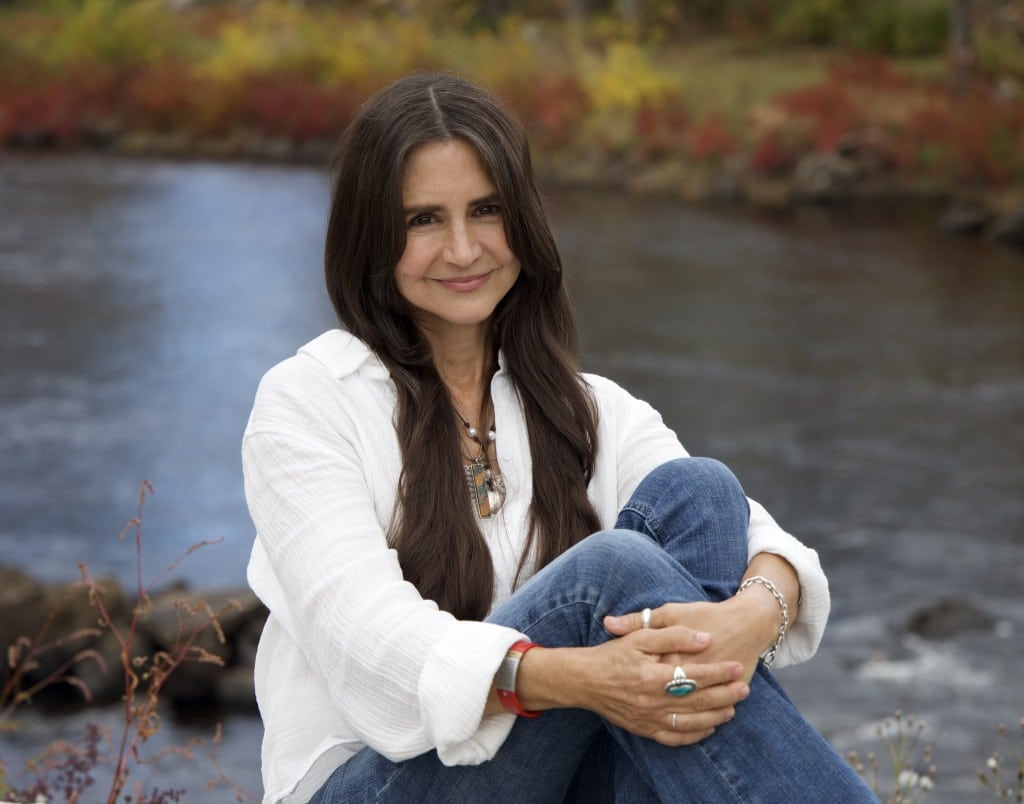
The natural world is intrinsically connected to author Diane Les Becquets’ identity.
“It has always been in beautiful, wild spaces that I’ve found my stories,” Les Becquets said. “In each of my novels, place is as much a character as the people themselves. Landscapes have and will continue to shape people’s lives. There is a sacred quality about them that brings us home to our truest identity.”
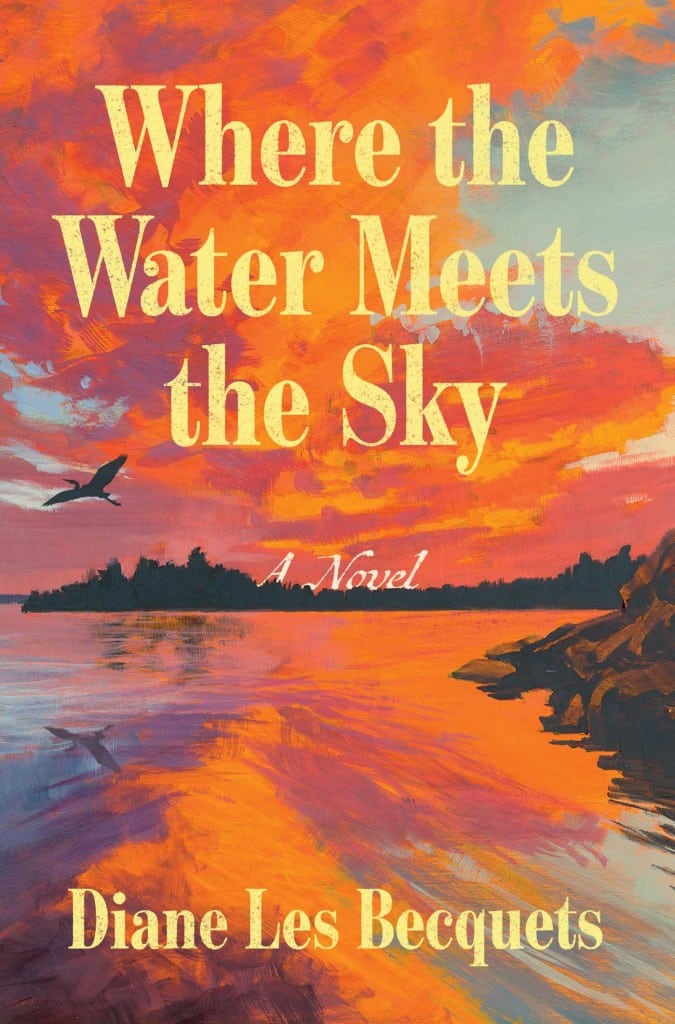
Her love for the outdoors was sparked and shaped by the time she spent in the Upper Peninsula, which is reflected in her sixth novel, “Where the Water Meets the Sky” (Simon & Schuster, $29).
Courtesy
“The novel began as a love song to the small fishing community on the Garden Peninsula in the UP where my father grew up, and to the young woman I was when everything was possible,” she said. “The images that come to me of my younger self are always those of when I was in nature: exploring the woods on the Garden Peninsula; fishing off the dock in front of my grandmother’s house or the concrete dock at the fish house; taking the aluminum boat with the outboard motor out on Garden Bay; spending days at my Uncle Billy’s hunting camp; campfires; blueberry picking; collecting rocks and bones and driftwood, then returning to Tennessee and building forts in the woods and catching crawdads and minnows in the creek; and spending time with horses and cats and dogs and all things wild.”
The author recently completed a book tour throughout Michigan.
“This tour has really meant something to me, and the people have been the best part,” she said. “Even now, in my mind, I’m revisiting the people I’ve met along the way, and there’s that ache of joy and nostalgia in my chest. There are so many really good people out there, all trying to make something of this big, beautiful life. Michigan is home to a lot of them.”
“Where the Water Meets the Sky” is a coming-of-age story set in the UP. It follows Abby, a young woman piecing together the truth about the fire that killed her mother when she was 7. Abby survived the fire but has no memory of it. After 10 years, she returns to the UP and turns to the wilderness to grieve and begin healing as she tries to remember what happened that fateful night.
“If I could hit rewind on my life to the age of Abby — 17, then 18, all grown up inside — if I could stay in that special place and time a little while longer, in the green stillness of the woods and the blue stillness of the water and the familiar smells of my grandmother’s house and the love of my family, whole and intact and sure, perhaps I would have faced the world stronger. My life over the years, like most lives, has broken apart through divorces and deaths and trauma, and each time the kaleidoscope looks different,” Les Becquets said.
More about Diane Les Becquets
The youngest of three, Diane Les Becquets was born in Nashville, Tennessee. She is the mother of three adult sons.
She holds a bachelor’s degree in English from Auburn University and a master’s degree in creative writing from the University of Southern Maine. She also completed graduate work in English literature at Georgia State University.
A resident of Henniker, New Hampshire, Les Becquets worked as an English professor at Southern New Hampshire University for 10 years, then became the director of SNHU’s Mountainview master of fine arts program in fiction and nonfiction. Before SNHU, she taught at the middle and high school levels. Prior to teaching, she was a journalist.
“I would have to attribute my greatest inspiration for becoming an author to all the back porch and back patio stories I listened to as a young child, bats and swallows swooping about, grandparents and aunts and uncles and cousins gathered together,” she said. “We children would tuck ourselves in around the grownups or else run about barefoot, playing and listening, words taking hold. But it wasn’t just the words — it was this capacity to feel the people I loved, to really hear what they were saying, to know that I was a part of them and this place and everything around us. It inspired and stirred something deep in me, this burst of beauty and emotion. It made me want to capture all of it: place and wonder and people and love, heartache and challenge, the tough things in life, the wounds and the healing. It was all there.”
Before beginning the novel, she felt unable to write.
“I went about my days searching for rocks and sticks and feathers, for stories that would bring me back to myself. As I looked, I began to slowly unfold,” she said. “Sometimes to move forward, we must go back to our foundation; we must make sure it is steady and whole. So, I traveled back to the UP to return to my roots.
“I revisited my grandmother’s house. I walked the shoreline. I walked the pathways in the woods and sat on the beach at Portage Bay,” she continued. “I went back to that place because I realized there were things in my past that needed to heal, regrets and grief and guilt that I needed to let go of. And it was there in this space that I felt myself come alive again, that I began to hear Abby’s story and feel everything was possible.”
During the course of writing the book, Les Becquets was diagnosed with five brain aneurysms.
“I’d begun experiencing a severe headache that wouldn’t resolve. I was also experiencing disturbances in my hearing,” she said. “The diagnosis of the aneurysms was an incidental finding in the process of diagnosing my hearing issues. One test showed I had superior canal dehiscence syndrome, which explained the hearing disturbances, but the other imaging showed one or more aneurysms. Further testing revealed that I had five aneurysms, two of which were breaking down.”
She had surgery to remove the two aneurysms. For the blister aneurysms, which could not be removed, the surgeon used a technique that required suspending her frontal lobe in order to access the left side of her brain. Since those three aneurysms couldn’t be treated definitively, she must follow up with the surgeon every one to two years.
Two months after surgery, Les Becquets was cleared to go about her normal activities. Three months later, she felt “mostly back to my old self.”
“I packed up my truck and drove with my dog, Izzy, across Ontario and along the northern shores of Lake Superior, then all along the UP, backpacking and camping along the way and revisiting the locations where the book takes place. The research had long been done. This was a different kind of trip. This was a trip to celebrate, to give thanks, to pay attention to life all over again,” she said.
During her trip to the UP, she hiked to the tip of the Garden Peninsula, where the majority of the book occurs.
“It’s hard to capture in words what that moment felt like, to stand in the exact place where so much happens to Abby in the novel,” she said. “It was deeply personal for me. I felt so alive. I sat with Izzy on the rocks and looked out at Lake Michigan, at the blue sky across the horizon. I wept to Jesus. I wept for life because that’s what I finally understood: This was the great promise. Life. Not somewhere in the future, not only after I leave this Earth, but now, in this moment.”
Readers have praised the book’s authenticity.
“I do believe this book is authentic not only to my life, but especially to the people of the UP and the land and waters they know so well,” Les Becquets said. “I also believe the story and writing are an antidote to so many of the ills of our broken world and environment. This is a book about healing and restoration, about attention and transformation, about hope. It reminds us of the fullness of life to be lived, and of our connection to nature and to one another.”
Keep up with Les Becquets at dianelesbecquets.com.