
Disavowed Libertarian candidate for governor Hudson holds protest against data centers
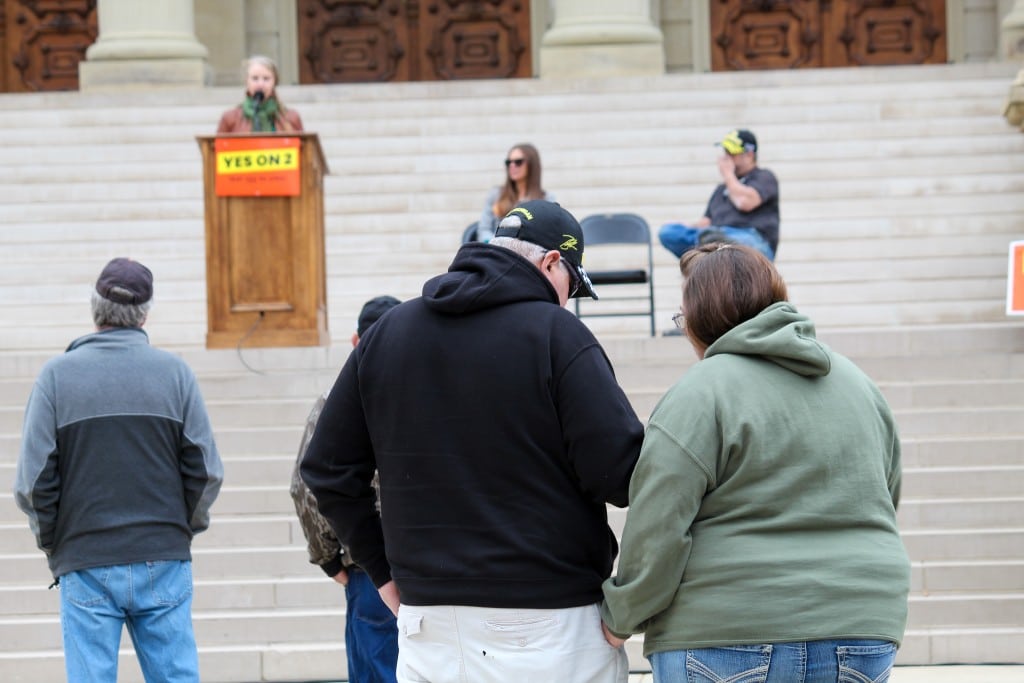
On the steps of the Capitol building’s east side, gubernatorial candidate Anthony Hudson held an event protesting data centers, Flock cameras and “getting money out of politics” on Wednesday.
Hudson, until weeks ago, was running under the Michigan Libertarian Party banner. The party disavowed him on Sep. 28 with an announcement posted on X, stating that “Public statement and platform positions of Anthony Hudson actively oppose foundational constitutional liberties, including freedom of speech and freedom of religion.”

Hudson said he didn’t need them. “I don’t want a party. I don’t want to be tied to a party system.”
The candidate made it clear that Wednesday’s event had nothing to do with his campaign.
“This is a straight-up protest,” he told City Pulse.
The protest’s marketing included a Facebook event post and drew comments from users suspicious of artificial intelligence use.
“Using AI slop to protest data centers is certainly a choice you can make,” one user commented.
Hudson said he views AI as a tool.
“You don’t have to pay a publishing company to do it,” he said. “You promote it on social media for free, and people engage. It hits the algorithm. It gets a response.”
According to Hudson, there is a difference between using AI to generate a flyer and the hyperscale data centers popping up around the state. “Things like that have nothing to do with just creating a poster,” he said. “We’ve had data centers in Michigan for 30 years for hospitals and agencies … big hyperscale data centers are more personal to us.”
Fact-checking from Bridge Michigan confirms that data centers have been used for decades, but the ones at the center of today’s debates are significantly larger than the old ones.
Hudson named the Saline data center as an example. Saline Township officials denied zoning to developers. The developers sued, and the board settled, citing the costly legal fees of fighting the lawsuit.
If elected, Hudson said he would repeal Public Act 233, passed in 2023, which made the Michigan Public Service Commission the siting authority for utility-scale renewable energy facilities.
“Bring back local control,” he said.
Under Hudson’s plans, lawmakers would write regulations for data centers and fine them a million dollars a day for noncompliance. The money would be funneled back into the communities, so “that they can be paid for the inconvenience of having a treasonous government.”
Per the event post on Facebook, the protest started at 1 p.m. while the event’s flyer marketed a 2 p.m. start time.
It was just before 3 p.m. when the first speaker approached the podium stationed on the Capitol steps.
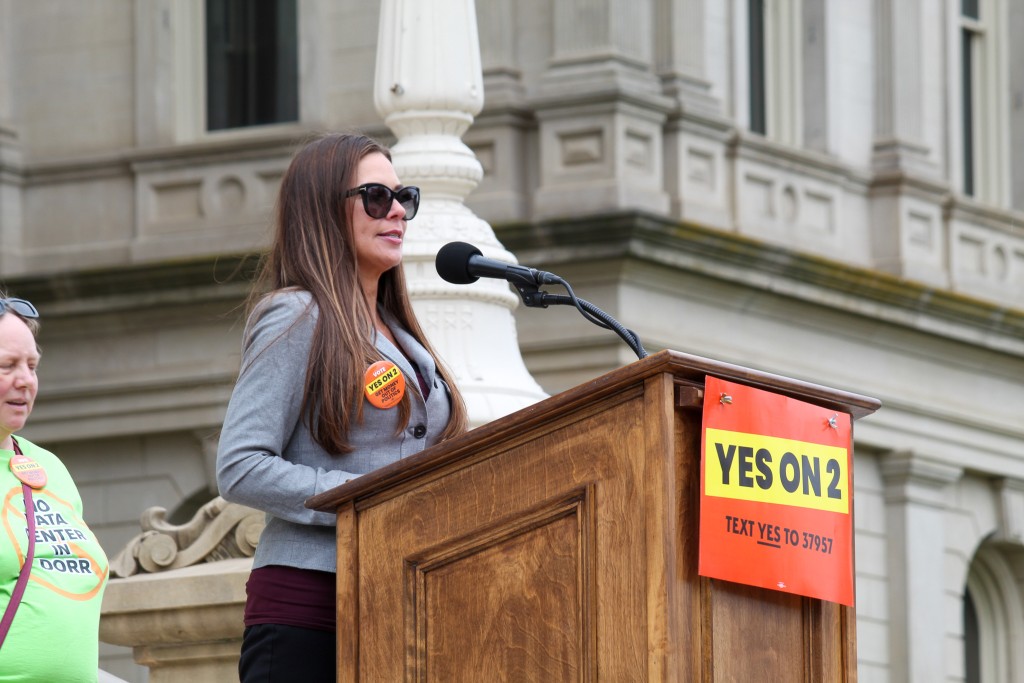
Jennifer Long is running to represent Michigan’s 77th District in the House as a Libertarian candidate. “It does not matter what political team you are on. These issues are affecting every Michigander,” she said.
Long introduced Linda Dumond from Dorr Township.
Dumond is a member of the Dorr Residents Community Action Committee. According to the group’s Facebook page, the committee was formed specifically to fight AI hyperscale data center development in the area.
Back in 2024, Microsoft purchased more than 250 acres of land to build a data center. After significant pushback from residents, the township’s board issued a 12-month moratorium on data center development by Microsoft.
According to Dumond, the majority of residents oppose data center development. “I can say easily, over 90% [of residents] are against it,” she told City Pulse.
The issue of data centers is so important to Dumond that she considers herself a one-issue voter. “I don’t care what party they’re affiliated with,” she said. “I’ll vote for the person against data centers.”
She is also worried about the repercussions of AI on the job market. “My husband and I, we’re about ready to retire,” she said. But for her grandkids, the future is murky.
During her speech, Dumond tied the influence of outside group campaign spending with data center development. “We need to start listening to what the people want, not what these big corporations want,” she said. “And that again is why we need to get the money out of politics, and that’s why we need people representing us at our state and federal levels that are going to be there for the people, not the corporations.”

Lisa Dumond, from Dorr Township, talks to people at an anti-data center event on Oct. 14 at the Michigan Capitol. Photo by Lieza Klemm/City Pulse
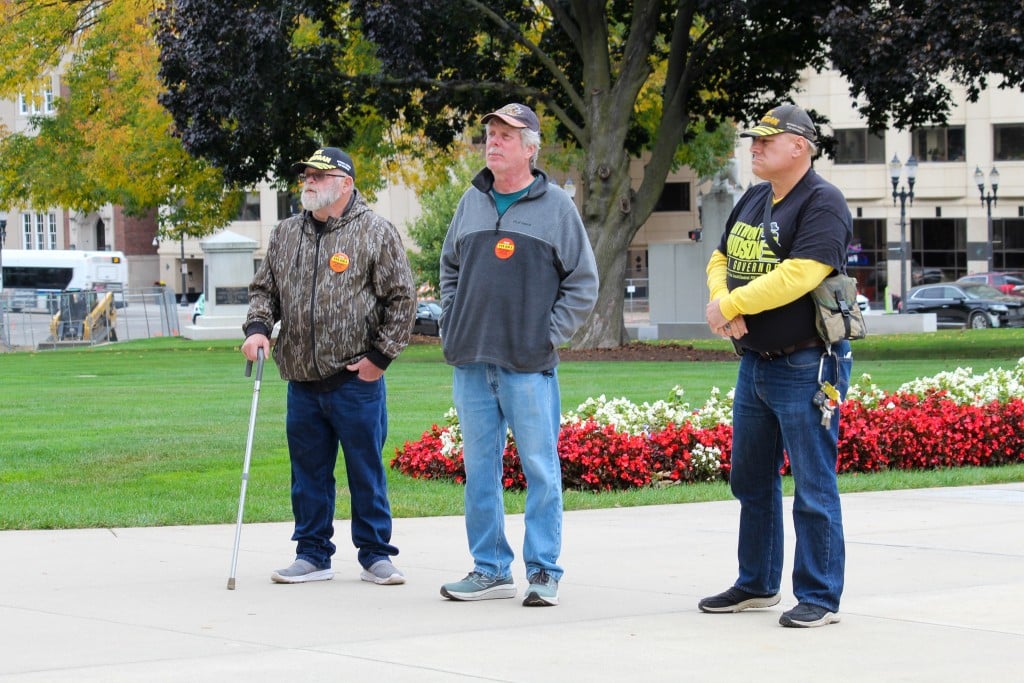
Dumond was one of seven speakers at the protest. The crowd was a handful of people; most were slated to speak.
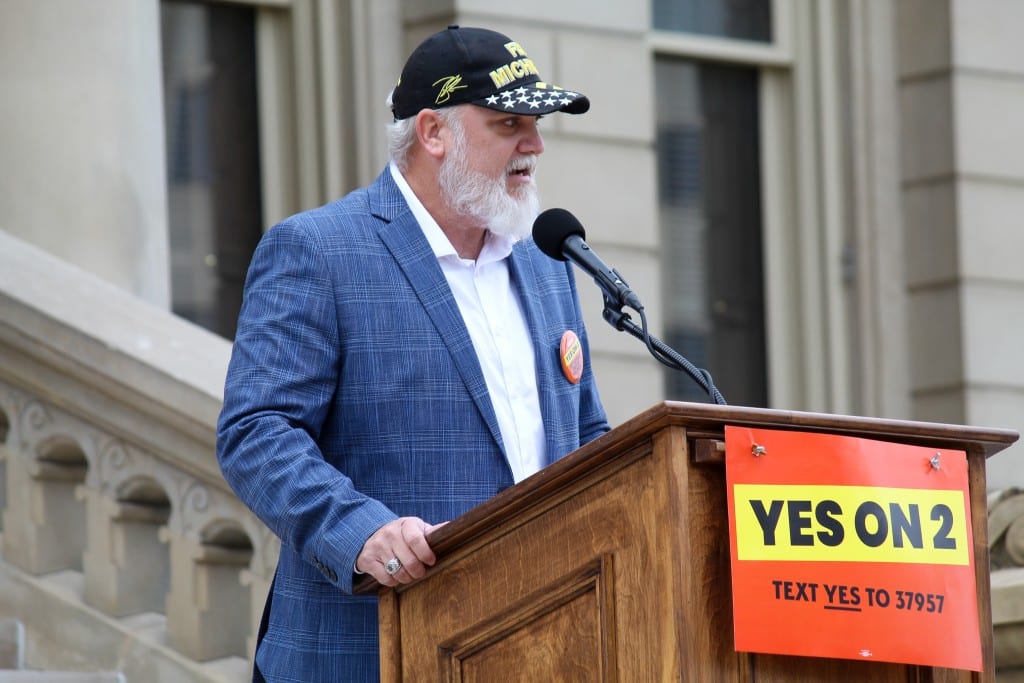
Eddie Kabacinski, a former Warren City Councilmember, is helping Hudson on the campaign trail
Kabacinski has an extensive history of interactions with the law as a councilmember. Most recent was an incident in 2024, when he was arrested and charged with one felony count of carrying a concealed weapon.
When it comes to Hudson, however, Kabacinski has hope that the independent party candidate has a shot at winning. “[Hudson] has followed all of the rules,” he said, “and he’s been in this campaign the longest.”
According to reporting from CBS News, Jocelyn Benson, the Democratic gubernatorial candidate, was the first out of the current three candidates to announce her bid back in January 2025.
Hudson followed with an announcement in March 2025. John James, the Republican candidate for Michigan’s governor position, announced his bid in April 2025.
Regardless of being disavowed by his former party or his position as a third-party candidate, Hudson continues to campaign. Even the potential of losing the election won’t deter him. “I’ll be back in four years.”