‘Dressing’ is out and seafood stuffing is in this Thanksgiving
Thanksgiving, as we observe it today, doesn’t have much in common with the original feast of 1621. The vibe between the Pilgrims and Wampanoag was tense at the dinner table, with some participants arriving ready to rumble.
Come to think of it, maybe today’s Thanksgiving table hasn’t strayed too far, being notable for bringing together people from warring political tribes, with notoriously mixed results.
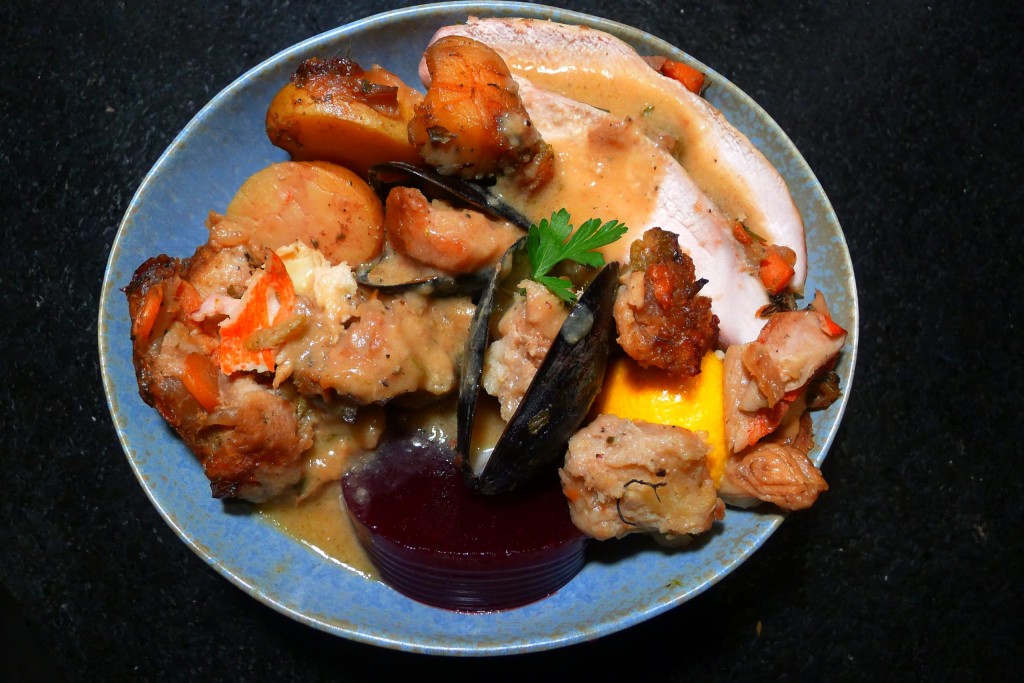
Photo by Ari LeVaux
There was no pumpkin pie, because butter and flour were unheard of or sorely missed, depending on one’s affiliation, but wild fowl was likely on the menu, which leads me, among others, to conclude there was stuffing. Historians point to their evidence, while I point to the simple fact that both Pilgrims and Indians are human beings, and human beings know how to cook. And cooks don’t let an empty body cavity go unstuffed, especially during a three-day feast.
Unfortunately, we seem to take this for granted in today’s America, where we think nothing of passing around savory bread pudding that has never seen the inside of a bird. That’s the fight I’ll pick this year.
Technically, this never-stuffed material is “dressing,” not “stuffing.” The reason this distinction is important is because the stuff that comes out of the bird is so much better than the side pan, even if the same went into both vessels. The juices from a baked bird impart an unmistakable, irreplaceable joy to the stuffing.
On the East Coast, the local diet was heavy on seafood like clams, scallops, oysters, mussels, eels and fish. I grew up in coastal Massachusetts, where we would sometimes dig a hole in the beach and fill it with ingredients like those above, in addition to hot rocks, and have a clambake.
Somewhere along the way in my Thanksgiving experimentations, I decided it would be a good idea to stage a clambake inside a bird. In order to make it taste more like stuffing, I add breadcrumbs, herbs, lemon and aromatic veggies.
This recipe depends on a diversity of quality seafood. It’s good to have at least one with the shell on, like clams or mussels, because that makes it seem more like a real clambake. Scallops and shrimp work great, too. And I really like imitation crab. It soaks up the juices like a thirsty sponge.
Chickens, ducks and turkeys all work fantastic. Rabbit tastes like chicken, so that should work, too. But whatever bird you choose, large or small, you might find yourself with more stuffing than you can possibly cram into your bird.
The easiest thing to do is to stuff it around the bird, along with potatoes, and let it melt in the pan juices. Although not literally stuffed, it sucks up enough of the juices to potentially rule out gravy.
Another option for too much stuffing: pull the skin away from the bird and stuff it on up between the skin and bird. If basted properly, this layer of stuffing can help keep the bird moist. The skin might split, especially if you cram shells up there, but the crusted stuffing becomes a new skin, absorbing as many bastings as you care to pour.
Finally, we can do the almost unthinkable: bake that excess stuffing in a side pan. Put a bunch of chicken wings on top and cook until they melt into the dressing. And just like that, after all of my huffing and puffing, I’ve figured out a way to make dressing taste like stuffing.
My favorite part of this fishy bird dish is the clam juice brine. You’ve probably heard of clam juice as a mixer, adding deep umami notes to your bloody mary. And we can thank James Beard for nationalizing the idea that you should brine a chicken before baking it, because salty meat absorbs more water than non-salty meat, so it stays moist.
My salty clam brine combines the two concepts. It flavors the stuffing via the fat and adds delicious authenticity to the feast. It may not dissolve the animosity at the table, but perhaps it will at least help keep everyone’s mouths too stuffed with food to talk. And that, my friends, is the true point of Thanksgiving.
The right stuffings
Some clam juice is salty, some isn’t. Sometimes the salty ones don’t mention salt in the ingredients, but it will show up in the RDA values for sodium. I’ve seen it with zero grams, 40 grams and 100 grams of added sodium. So, the salt can be a little tricky. Taste your clam juice, and if it’s really salty, reduce the added salt by a teaspoon or two.
Serves six
One 4-pound bird
One 10-ounce bottle clam juice
6 teaspoons salt
2 tablespoons olive oil
2 cups minced onion
2 cloves minced garlic
1 cup chopped celery
1 cup chopped carrots
One chopped apple, red or green
1 teaspoon black pepper
3 tablespoons chopped fresh sage
2 tablespoons chopped fresh thyme
1 tablespoon chopped fresh rosemary
2 pounds seafood
1/2 cup white wine
1 cup crouton-sized breadcrumbs
Three lemons, cut into quarters
Four potatoes, cut into quarters, to surround the bird
Rinse the bird, take out any giblets stashed in the cavity and brine it in the clam juice with the salt and 2 cups of water.
Push down on the bird hard, so the body cavity fills with brine. Marinate it for at least four hours in the fridge, turning occasionally.
Rinse the bird, pat it dry and put it in a roasting pan. Add the oil to a frying pan on medium heat and sauté the onions, garlic, carrots, celery and apple with the black pepper, thyme, rosemary and sage. After 10 minutes, add the seafood, wine, lemon juice and squeezed lemons and cook a few minutes longer, but don’t try to cook all the seafood. Add the breadcrumbs, stir it all together and stuff it into the bird. Place the potatoes around the bird, along with extra stuffing if you go that route.
Cover with foil and place in a 350-degree oven. After 90 minutes, remove the foil. The skin of an extra-stuffed bird will have receded like the tide. The stuffing on top, including the seafood, will hold the baste like a sponge.
Turn the oven down to 300 degrees. Baste every 15 minutes until done. After about an hour, use a meat thermometer to make sure the bird’s internal temperature is at least 165 degrees. Rest, serve and eat.