Forget the top hat
Russian-born, London-based conductor Vasily Petrenko tackles some heavy music with the venerable Royal Philharmonic Orchestra. But he dances with the ensemble so nimbly and has so much fun on the …
Royal Philharmonic Orchestra
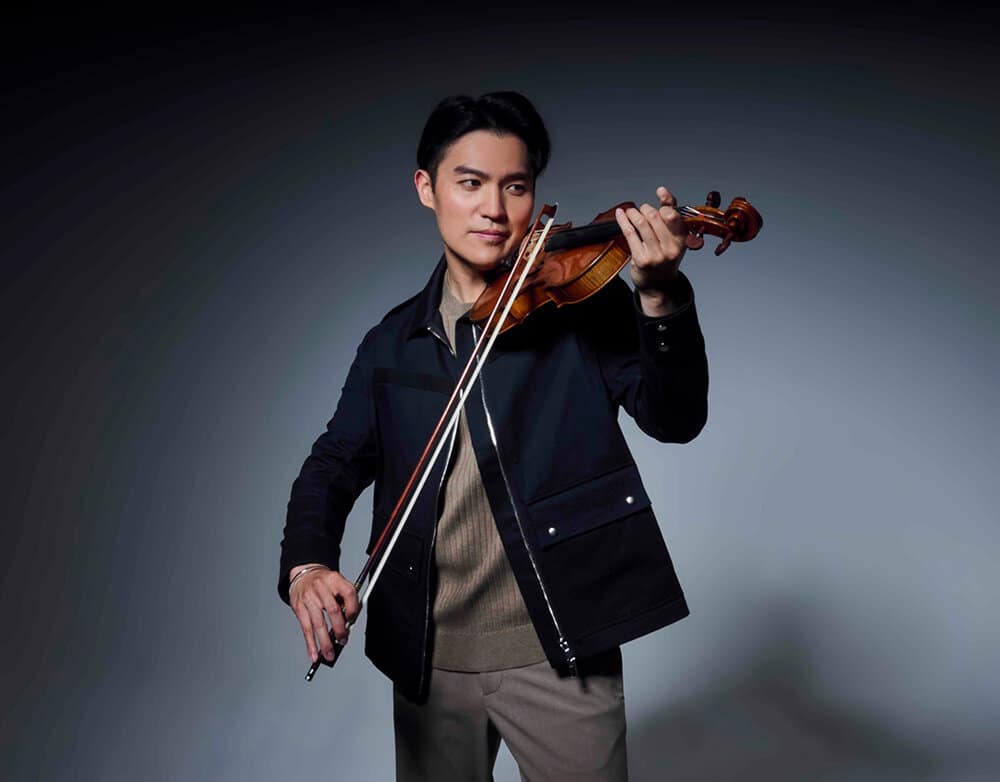
Ray Chen, violin
7:30 p.m. Monday, Jan. 26
Wharton Center
750 E. Shaw Lane, East Lansing
(517) 432-2000
whartoncenter.com
Petrenko, Royal Philharmonic storm Wharton Center with violinist Ray Chen
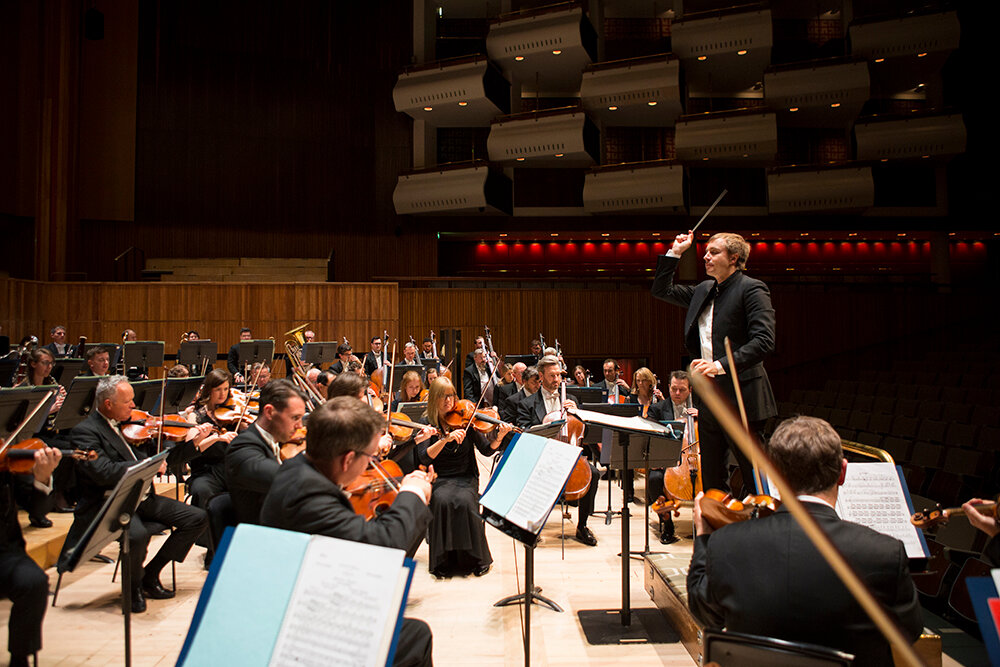
Russian-born, London-based conductor Vasily Petrenko tackles some heavy music with the venerable Royal Philharmonic Orchestra. But he dances with the ensemble so nimbly and has so much fun on the podium that you hardly feel the weight.
Petrenko brings the orchestra to the Wharton Center Monday, with ebullient violinist Ray Chen as guest soloist, to play Tchaikovsky and Sibelius.
Petrenko’s expressive body language, pastry-chef hand gestures and boundless verve have sucked in many first-time concertgoers since he took the post of music director in 2021.
“You have to radiate joy to be there,” he said. “I’ve performed with many orchestras, and a lot of them are very serious while playing music. You feel like it’s hard work. They’ve been training for 54 years and only someone who knows, say, how a dominant chord resolves can fully understand what we’re doing.”
That’s, as the British say, balderdash.
“You don’t need any education to understand the essence of music,” he said. “Even if you don’t know the music, you will feel the emotion and share the emotion with other people.”
The only dress code he endorses is “no hats that spoil the view.”
The Royal Philharmonic has a lively history dating back to 1946, when it began a slew of legendary recordings with its flamboyant founder and first maestro, Sir Thomas Beecham. Since then, RPO maestros have all been top shelf, including Rudolf Kempe, André Previn and Vladimir Ashkenazy.
Their portfolio has been diverse, to put it mildly, from a 1994 “Papal Concert to Commemorate the Holocaust” at the Vatican to the cheesy (and wildly popular) album “Hooked on Classics,” which reached the top 10 on American charts.
We caught up with Petrenko on Jan. 16 from Orlando, where the orchestra performed “Synthony,” a mashup of orchestral and electronic dance music featuring a slate of guest DJs.
Touring has always been a big part of the Royal Philharmonic’s mission. The following day, the orchestra tackled a double header, playing the Tchaikovsky and Sibelius program at the Kravis Center in West Palm Beach in the early afternoon and joining Gao Hong, master of the Chinese lute, to perform a mix of Western and Eastern sounds the same evening.
Other stops on the U.S. tour feature music by Beethoven, Berlioz and Soviet titan Dmitri Shostakovich — 15 concerts in 17 days.
But that’s almost light duty compared to the tours of bygone days.
“The first overseas tour, with Beecham, was 48 concerts in 53 days,” Petrenko said. “Can you imagine how exhausted they were?”
After conducting operas, ballets and orchestras in St. Petersburg in the 1990s, Petrenko’s star shot upward in the music world during a fabulous run with the Royal Liverpool Philharmonic Orchestra from 2005 to 2021, bringing a breezy, Beatles-ish energy to the podium in the Fab Four’s hometown. He first guest-conducted the orchestra in 2004. The relationship clicked, and Petrenko became principal conductor in July 2005, the youngest in its history.
He brought many mighty works into the orchestra’s repertoire, recording a complete cycle of symphonies by Shostakovich on the Naxos label, but he’s most proud of expanding the orchestra’s audience by some 30%.
“The most important legacy is how many new people came there and stayed there,” he said.
Petrenko is still the orchestra’s conductor laureate, an avid fan of the Liverpool Football Club and an honorary “Scouser” (look it up). He’s looking forward to a big concert this summer in Liverpool celebrating his 50th birthday.
In response to the 2022 Russian invasion of Ukraine, Petrenko, who is of Russian and Ukrainian descent, suspended his work in Russia “until peace has been restored.” His center of gravity has shifted firmly to London, where he lives with his wife and two children.
The Royal Philharmonic has a bigger portfolio than the Liverpool orchestra, with a wide range of concerts (including a tribute to Motown last summer), tours, film scores, video game music and more. Following his success in Liverpool, Petrenko has launched a variety of outreach and engagement programs that are gaining traction.
“We are very proud to say that 70 to 75% of our public is under 35,” Petrenko said.
He’s championed the epic Second Symphony of Finnish composer Jean Sibelius throughout his career, especially during his tenure from 2013 to 2020 as chief conductor of the Oslo Philharmonic.
“I love this symphony,” he said. “It’s very, very special, like a journey — sometimes a tough and dramatic journey.”
The music surges with the national resolve of Finland to resist the “Russification” policies of the Russian Empire at the turn of the 20th century.
Robert Kajanus, who conducted the premiere of the work with the Helsinki Philharmonic, described the slow movement as “a broken-hearted protest against all the injustice that threatens at the present time to deprive the sun of its light and our flowers of their scent.”
Petrenko sees the symphony as a journey “to the sunrise, to happiness, freedom of personality and freedom of the country.”
A lot of the music is vast, cool and glacial, but its cheeks are ruddy with folk tunes and rich tone painting.
“It reflects a lot of Finnish nature,” Petrenko said. “In the first movement, it’s almost like you’re walking through a blizzard. Then there are moments of stillness where you stop, and everything is under snow, beautiful in the sunshine.” He compared the main theme, starting with the woodwinds, to “a little ride on the luge.”
The second movement is a “dialogue between life and death,” in Petrenko’s words, drawing from Sibelius’ unfinished opera about Don Juan, a nasty piece of work (to put it mildly) who is called to account for his sins.
“It’s about the essence of life, how you should live so you don’t feel sorrow when you’re passing away,” Petrenko said. “It’s a complex piece, but it’s written with incredible conciseness.”
The ending opens up a head-spinning mountain view that crowns the whole climb. Kajanus called it a “picture of lighter and confident prospects for the future.”
“The very end, the glorious last two or three minutes of D major, are as close to radiance as can be,” Petrenko said.
The soloist for the Tchaikovsky violin concerto, international superstar Ray Chen, is familiar to Lansing-area music lovers. He played a Bruch concerto with the Lansing Symphony Nov. 7, living up to his reputation as a charismatic performer with a unique ability to connect with audiences.
“Every concert with him, even on tour, is not like the previous one,” Petrenko said. “It’s never routine. He’s always searching for something new, something special.”
Born in Leningrad (now St. Petersburg), Petrenko got his early musical training in Russia.
“So, Tchaikovsky is in my blood,” he said.
Audiences often think of Tchaikovsky’s music as one spasm of hand-wringing drama after another, but Petrenko also likes to bring out the composer’s intricate musical craft, the fruit of his European classical training.
“Tchaikovsky was a complex personality,” Petrenko said. “He spoke French better than Russian. He was Orthodox in religion but also a Mason. Of course, everybody hears and knows his melodies. But most of the orchestration is not Russian. It’s closer to Beethoven, Mendelssohn, Schumann. He was sort of an aristocrat, in music and life.”
Petrenko and Chen are both strong personalities, but they had no trouble settling on a common approach.
“I always follow the soloist,” Petrenko said. “I try to make it logical and adjust the orchestra. The best performance is when the orchestra and soloist have a mutual vision. Sometimes I suggest something. Sometimes he suggests something. The most important thing is that we respect the composer.”