Indie bookstores necessary but struggling, owners say
REO Town’s Deadtime Stories carries romance novels, but they’re dark romance. They carry fantasy, but it’s dark fantasy. There are even cookbooks, but they’re Stephen King and …
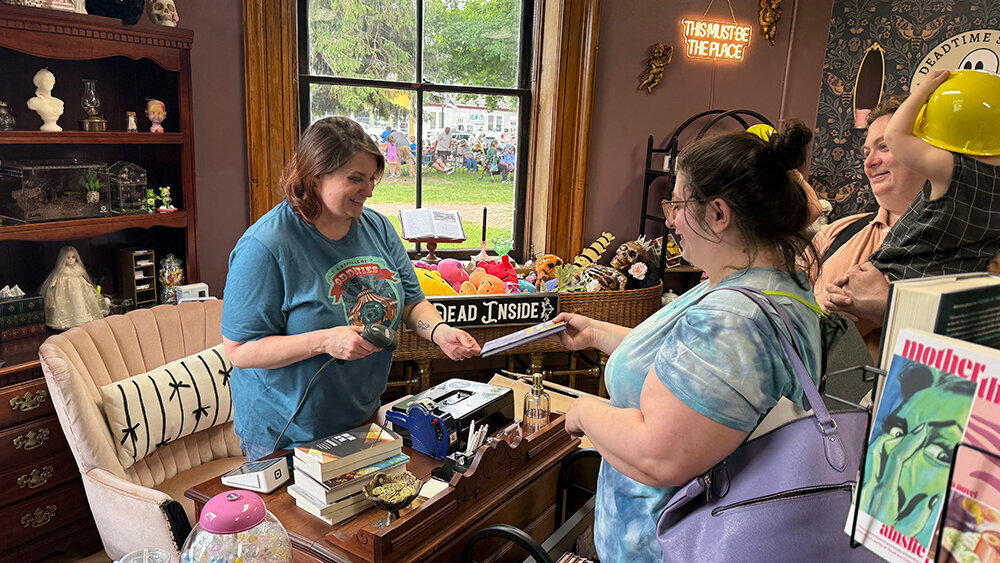
REO Town’s Deadtime Stories carries romance novels, but they’re dark romance. They carry fantasy, but it’s dark fantasy. There are even cookbooks, but they’re Stephen King and Ghostbusters-themed.
That’s why Jenn Carpenter has always been happy to send customers over to Wayfaring Books, an LGBTQ+ bookstore in the REO Town Marketplace.
Deadtime Stories opened in 2021, within a year of Wayfaring and The Robin Books, and is located within a block of each of them. Rather than compete with each other, Carpenter said the “Bookshop Row” stores collaborated, each with its own niche and each happy to send customers over to the others.
Also opened in that timeframe were downtown’s A Novel Concept, which centers feminist, LGBTQ+ and indie books; The Resistance, which aimed to create social change and featured titles by Black, Native American and transgender authors; and Socialight Society, which focused on Black women.
Four years later, half those stores are gone. The Resistance has closed completely, while Socialight Society has moved online. Wayfaring closed last month, though its owners attributed the closure to personal reasons, not financial.
As Wayfaring was selling off its remaining stock at 50% off, a second Lansing-area Barnes & Noble opened in the Frandor shopping center.
A strategy shift, beginning in 2018, has seen Barnes & Noble turn declining sales into 60 new locations this year. The bookstore chain aims to cater to local audiences. The Frandor location stocks books by Michigan authors, and even some Lansing-specific books, and features signings by local authors.
Several indie bookstore owners said Barnes & Noble can never be a replacement for small, local bookstores, where customers can chat with and purchase books from the same person who ordered them. But those stores are struggling.
When Scott Harris opened EVERYbody Reads in 2006, he did it to create a community space, not to make money.
Nearly 20 years later, he’s yet to make a profit, instead funneling money from his day job, selling insurance, to keep the store open.
“Financially, opening a bookstore is ridiculous,” Harris said. “It’s virtually impossible for anybody to open a bookstore and sell enough that we would be able to pay our bills and draw a salary from that.”
But the futility of operating a financially stable bookstore hasn’t deterred Harris from operating what he believes is a necessary community institution. Harris was inspired to create the bookstore as a place to connect people with resources and foster community, a need he became aware of after his wife died in 2002. Additionally, he believes bookstores provide a necessary service by letting people encounter, become interested in and read books that fall outside the range of internet echo-chamber-acceptable thoughts of many people.
A Novel Concept co-owners Christine Peffer and Elise Jajuga agree. They stock international, indie and other offbeat books for customers, who they said are more intentional about their shopping and willing to try new things. Customers at Amazon and Barnes & Noble, they said, are less likely to be as adventurous.
Cheryl VanDeKerkhove, who operated bookstore and LGBT community space The Real World Emporium from 1994-98 in Old Town, said profiting from owning a small bookstore was just as futile back then.
“I wasn’t really paid to work at the store,” she said. “It was a passion project, not a profit project. And the wonderful people who agreed to work as clerks in the store were getting minimum wage, always.”
The Real World Emporium was a center for education for the pre-internet LGBTQ+ community, she said, with its roots in feminist and lesbian bookstores in the 1980s.
The shop lasted until August 1998, when construction on Turner Street during June robbed the store of its critical Pride Month rush.
Despite increased awareness and acceptance of queer and transgender people, VanDeKerkhove said she’d expect running a similar store would be even harder in 2020s than it was in the 1990s.
“It was a struggle for us to really survive or thrive in the ‘90s, before the internet, before Amazon, before people having the false sense of community that’s online,” she said. “And I feel like Wayfaring was challenged in ways that we were not, and really, it was going to take some kind of monumental miracle for them to be successful.
“When Target is selling rainbow stuff during Pride, it becomes harder for an independent bookseller to sell rainbow stuff to our community, because they bought it already when they were out at Walmart.”
Carpenter opened a second Deadtime Stories location, in Charlotte’s Courthouse Square Museum, in June. When it closes permanently at the end of December, it will have been open fewer than 7 months.
In a Facebook post, Carpenter attributed the closure to the store “hemorrhaging money,” saying sales were already down nearly $40,000 from last year and that the second location just wasn’t feasible.
“The first place people tighten the reins when they need to is with the extras, the things that aren’t essential,” she said in an interview. “And so it has been a rough year.”
Another closed bookstore, The Resistance, had opened on the heels of George Floyd’s death, amid massive demonstrations and the COVID-19 lockdown. Fae Mitchell, who owned The Resistance alongside Emily Dievendorf in 2022 before it closed the following year, said a local bookstore focused on education and community was a necessary place.
“Part of the struggle we were experiencing at the time was rooted in a lot of history, and people just didn’t have access to that information,” Mitchell said.
“They’re still extremely necessary,” she said of bookstores. “I don’t think it is going well, but I think part of that is due to, regionally, we’re a cold environment. People don’t like to get out and do things in the cold.”
To incentivize shoppers to come out into the cold, Mitchell said bookstores need to get with the times.
“We would have to update our approach to something more technologically advanced and interesting,” she said. “Like, can I come in and read on a tablet, or listen to audiobooks here?”
(This article has been updated. A previous version incorrectly referred to a source.)