Jennifer Taggart Wilson unravels the conventions of fiber art
One day, Jennifer Taggart Wilson painted a picture of her friend’s cat on a whim.
Wilson, 53, then an assistant director of a toxicology lab with the State Police, had been painting since …
One day, Jennifer Taggart Wilson painted a picture of her friend’s cat on a whim.
Wilson, 53, then an assistant director of a toxicology lab with the State Police, had been painting since she was a child and had even started at Michigan State University as a fine arts major. But fears of not being able to find a steady job pushed her hobby to the wayside, leading her to a decades-long career in forensic science.
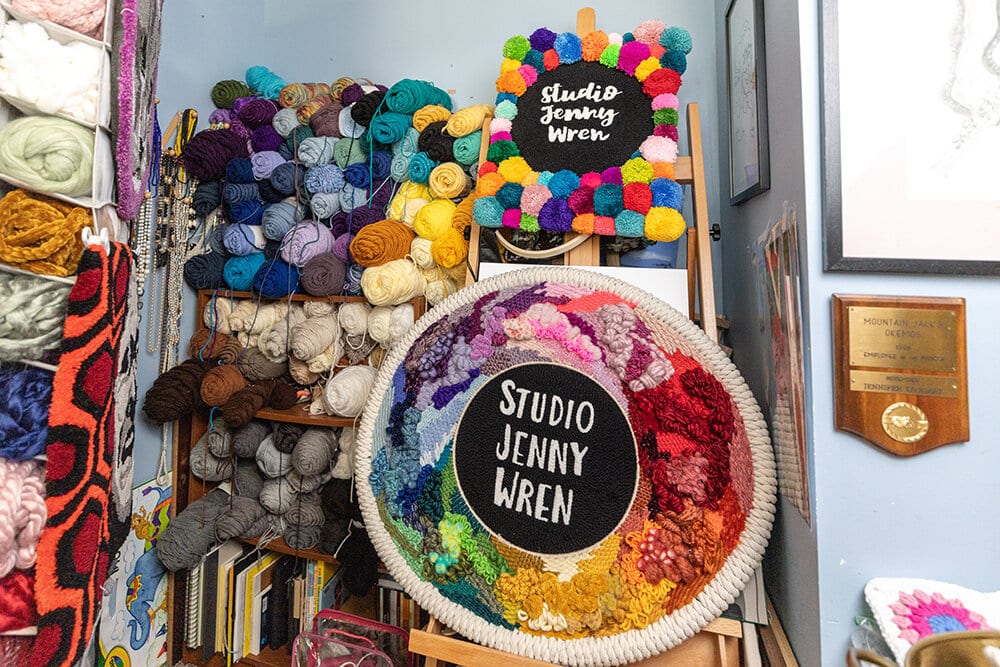
She doesn’t remember what inspired her to paint the cat, but she does remember being impressed by how well it turned out. She decided to start taking commissions for pet paintings, which turned into an enjoyable and successful side business. She named her venture Studio Jenny Wren, a reference to her childhood nickname.
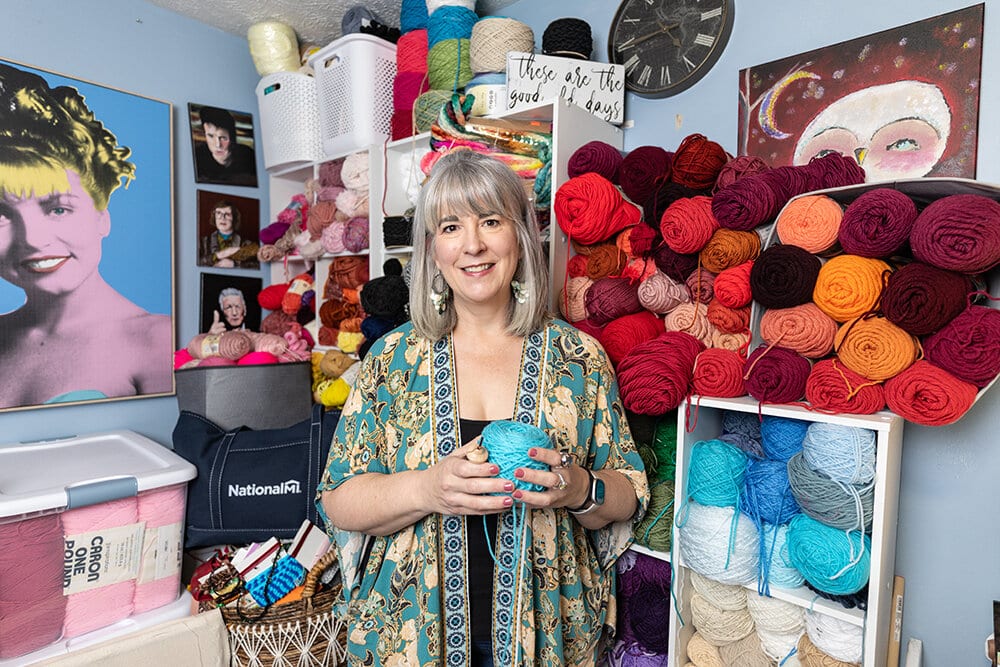
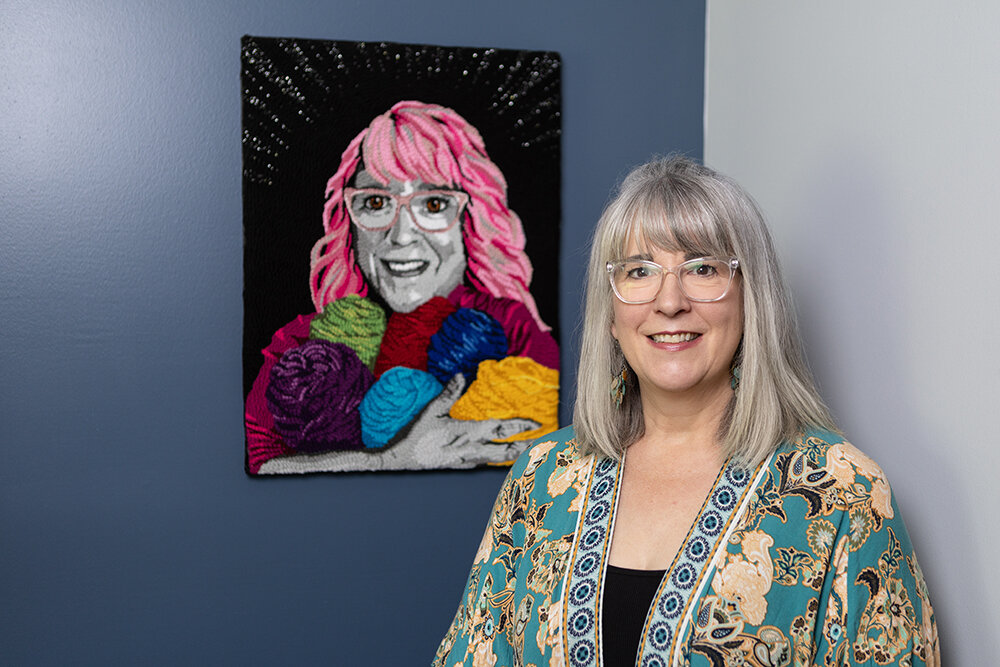
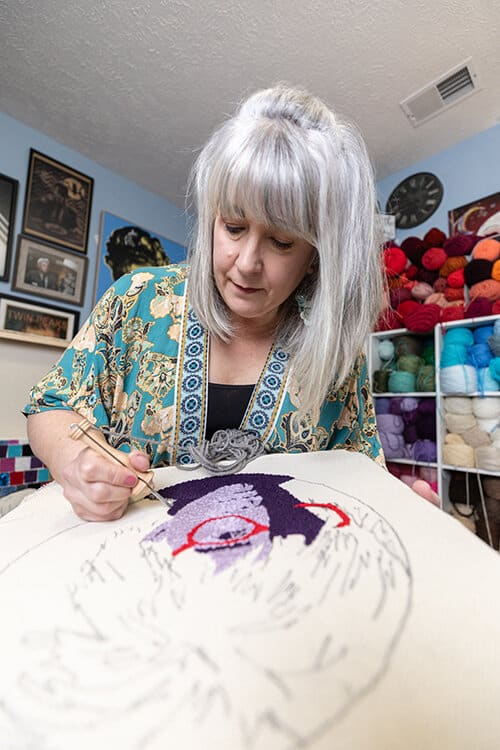
Three years later, Wilson retired to pursue art full time. After an online class sparked an interest in fiber art, she leveraged her background in painting to carve out a niche creating landscapes and portraits with a punch needle. Her work has since been featured on billboards and CATA buses through Arts Council of Greater Lansing programs, as well as in numerous local art shows.
“As soon as I started working with the yarn in weaving, and then the punch needle portraits, I was just so taken with the tactile nature of the yarn in my hands,” she said.
Wilson’s signature punch needle art employs a technique generally used for embroidery, which she became interested in through her sister.
“It’s a technique that’s usually used in home decor and rugs,” Wilson said. “Lots of people make pillows and stuff like that with a punch needle.”
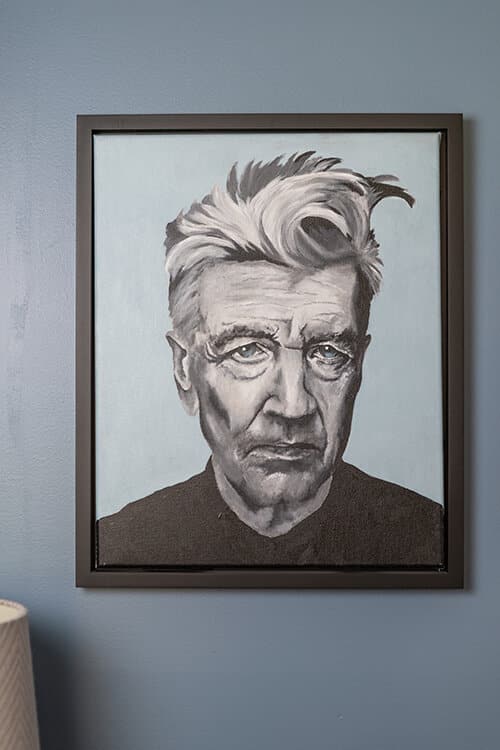
But for her first punch needle project, Wilson didn’t make a pillow or rug. Instead, she created a portrait of David Lynch, her favorite director.
“It was a small, small portrait, but when I finished it, I thought to myself, ‘Wow, I could use this technique on a larger scale to do some really interesting portraits in yarn,’” she said.
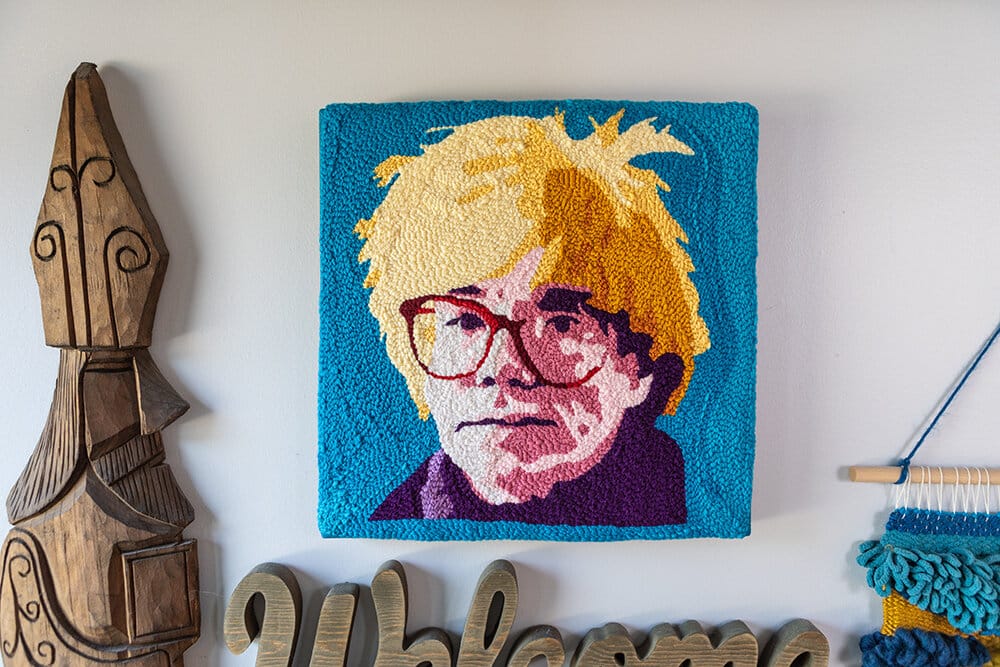
The yarn provided a unique challenge for Wilson. She had been painting portraits for a few years, but the medium was drastically different. In creating the portrait of Lynch, she had to navigate the inherent difficulty of producing a likeness in a medium that allows for much less detail than the paintings with which she was familiar.
“I was challenged by creating a piece that somebody would look at and say, ‘Oh, that’s David Lynch,’” she said. “It’s so much more difficult because it’s harder to get tiny details, so I find it even more challenging than painting.”
The joy of that challenge led her to paint more recognizable faces, which presented her with an opportunity to hone her skills while making art with a broad appeal.
But those who only see her finished work may not appreciate the detail that goes into crafting those likenesses. When stitches are a limited commodity, one tiny detail can make or break a project.
“Sometimes it doesn’t work,” she said. “I have a piece that’s supposed to be Harry Styles, but every time I put the next color in, it loses the likeness, so I take that color out. Eventually, I’ll find the right one — hopefully.”
As Wilson’s art has evolved, so, too, has her popularity in the community. She spent last year making art full time and exhibiting it at every event that came her way. She was even voted Best Artist in City Pulse’s inaugural Top of the Town People Contest.
But participating in shows across town led her to start making art that she knew would reliably sell at those shows, which she said was artistically stifling. The recognizable portraits still posed a fun challenge, but she wanted to expand her horizons.
“It opened a lot of doors for me, and I accomplished a lot, but by the end, I felt like I was producing things that I knew would sell at different shows,” she said. “So, I decided this year to focus on creative growth and not actively pursue solo shows.”
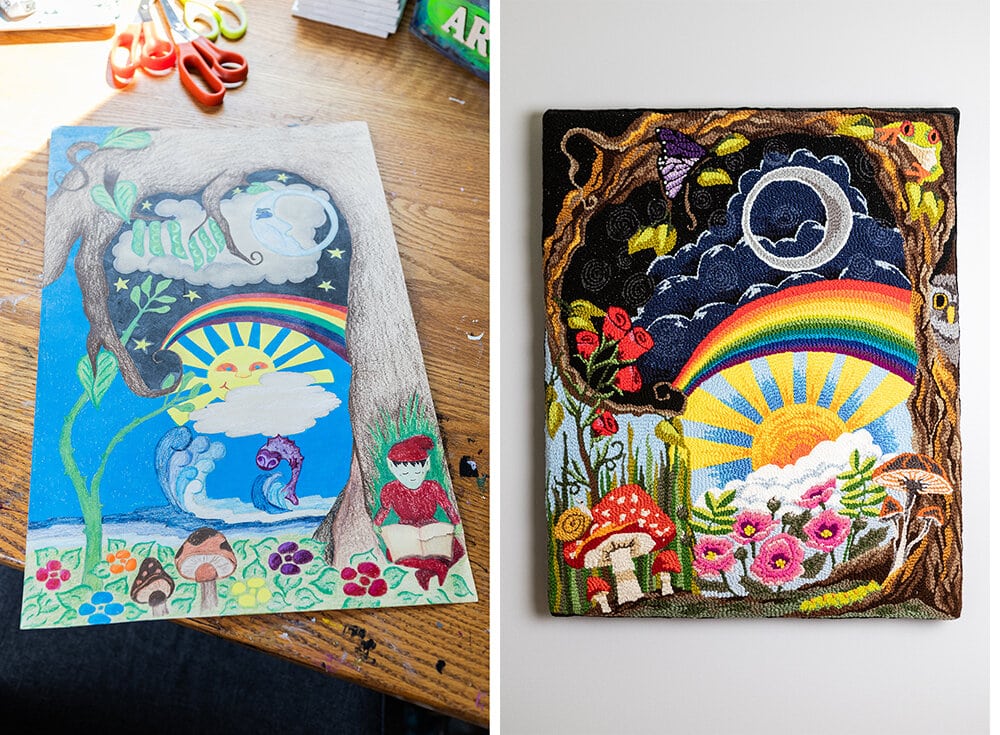
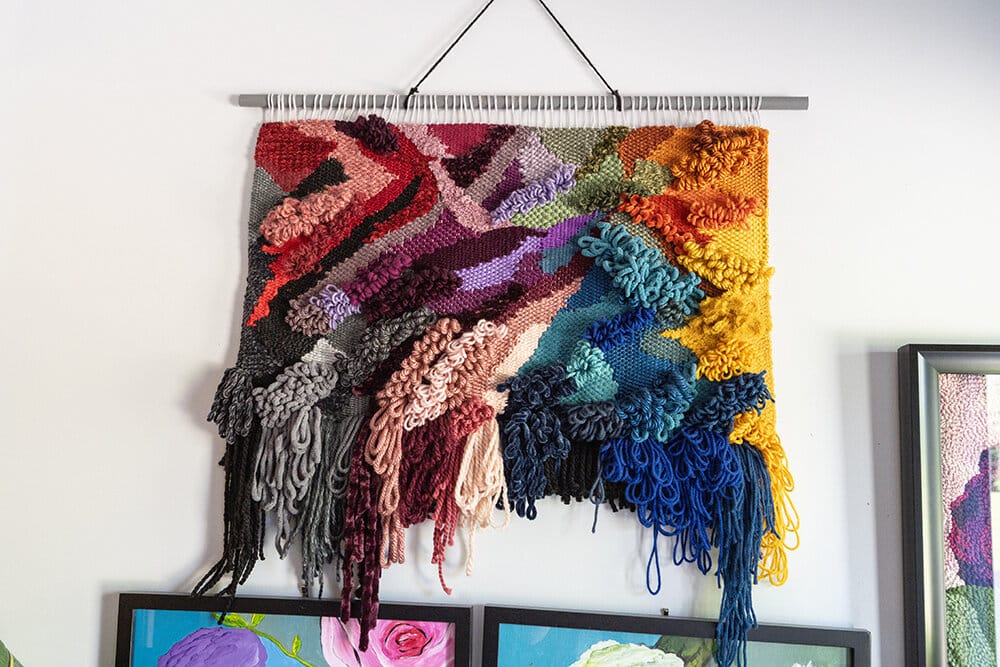
She’s begun creating “fantasyscapes,” wonderland-esque yarn landscapes featuring “suns and moons and rainbows.” She has also begun thinking more abstractly about her art.
“I want to deconstruct the face even further and see where I can go with that,” she said. “And I’d like to integrate some other mediums in with the yarn, so I’ve been integrating fabric into some of these pieces.”
Making her work more unique is a focus for Wilson, who said she doesn’t know of any other local artists creating the type of art she does.
“The punch needle and other fiber art techniques are starting to become more mainstream, but in the past, they were very few and far between. Most of the comments I get when I show locally are that no one has seen this type of work before,” she said.
As punch needle portraits gain traction, Wilson is staying ahead of the curve with new techniques. A work-in-progress yarn portrait uses squares of cut fabric to depict a disco ball, for instance.
Despite mostly portraying other people, Wilson’s art is really about her. She called art shows an opportunity to “grow and change” as she strives to make each one better than the last.
“I just want to create. It’s just something that I feel compelled to do,” she said.
Sitting in her living room, she gestured to felt flowers on the table, a rug under a cat tree and afghan blankets — all projects she made just for herself.
“I made these flowers, I made that rug over there. I crochet constantly. I’ve got a whole closet full of sweaters I crocheted, and I’m actually in the process of creating a series of crocheted portrait sweaters,” she said.
Some of those pieces might sell at shows. Some will remain home decor forever. But it’s clear that no matter how far her art career takes her, Wilson will continue to make art for herself, the same way she did when she started painting in elementary school.
“Even if nothing that I made ever sold, I think I would still have to make it,” she said.