Judge dismisses lawsuit seeking to unseal confidential utility contract
LANSING — A lawsuit filed by a local environmental advocacy group – centering on a long-term agreement between the Lansing Board of Water & Light and a multi-billion-dollar electric vehicle …
LANSING — A lawsuit filed by a local environmental advocacy group – centering on a long-term agreement between the Lansing Board of Water & Light and a multi-billion-dollar electric vehicle battery plant in Delta Township – has been dismissed.
Capital Area Friends of the Environment, or CAFE, asked a Michigan judge earlier this month to force the state’s largest municipal utility to unseal a confidential electricity contract that the group alleges triggered a series of residential rate hikes and the construction of a new fossil-fuel power plant.
The case was heard by Judge Wanda M. Stokes on Feb. 4 in the Veterans Memorial Courthouse and was dismissed the same day.
Although CAFE co-founder and former BWL commissioner Dusty Horwitt expressed disappointment in the ruling, the group said its efforts to achieve transparency on the contract continue.
Elaine Fischhoff, a representative for CAFE, said Monday, Feb. 16, that the group does not plan to appeal at this time. Instead, they intend to file a new Freedom of Information Act request tailored to address the legal basis of the dismissal once they have reviewed a transcript of the judge’s ruling.
“This lawsuit is about the public’s right to know what its utility is up to,” Horwitt said. “The BWL should show that it takes its role as a public utility seriously by sharing the contract voluntarily.”
A dispute over rates, responsibility
At the heart of the litigation is a disagreement over the financial impact of Lansing’s industrial expansion on residential customers.
When the deal to power the Ultium Cells battery plant was first announced, BWL officials suggested the contract would not lead to higher costs for residents.
However, by August 2024, the utility proposed a series of rate increases: a 7.8 percent hike for residential electricity in 2024, followed by another 6.8 percent in 2025.
BWL executives have stated in public meetings that the increases were necessary to keep pace with inflation and fund clean energy targets.
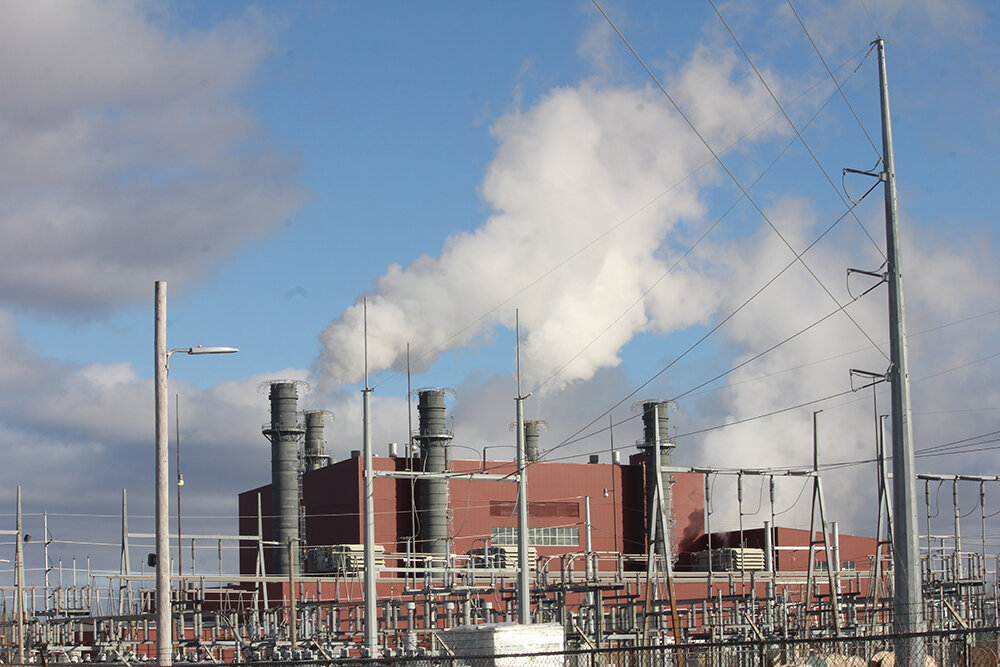
Questions, however, regarding the hikes intensified after general manager Dick Peffley reportedly acknowledged in 2024 that the rate increases were partly intended to fund a new natural gas-burning facility. The 110-megawatt Reciprocating Internal Combustion Engine (RICE) plant was designed to meet the energy load required by the Ultium facility and other regional growth.
Criticism of ‘shocking’ secrecy
The BWL denied CAFE’s initial records request by invoking a state law that allows public utilities to withhold electricity sales contracts containing “proprietary information,” Horwitt said.
Amy Adamy, public relations and marketing manager for the Lansing Board of Water and Light, refrained from providing a statement regarding the case.
“We don’t comment on pending litigation,” she wrote in an email to City Pulse.
Horwitt, who said he has spent 20 years observing major decision-making at the state and federal levels, described the utility’s lack of transparency as “shocking” and unusual for a government entity.
He noted that while other agencies typically issue detailed draft plans and allow 30-60 days for public comment, the BWL often operates with exclusivity.
“I have never seen secrecy and exclusivity from a governing board like I have from the BWL,” Horwitt said. He recalled an instance early in his tenure where a customer’s simple request for the utility to list its electricity sources took months to fulfill, only for the utility to eventually post what he described as a “misleading graphic.”
The lack of transparency extended to the governing board itself, Horwitt alleged. In December 2021, the board voted to give the general manager authority to negotiate the contract with the battery plant without further board approval.
Horwitt, who voted for the authorization at the time, said the board was not informed of the legal shield the utility would later use to keep the terms confidential.
“I had no idea that we were voting to give the general manager authority to negotiate a secret contract,” Horwitt said. “I wouldn’t have voted for secrecy if I had known because there is virtually no accountability for the BWL’s management or governing board if contracts can be kept secret from the public.”
Environmental impacts
The dismissal of the lawsuit leaves the details of the contract shielded as the RICE plant moves toward its expected 2026 completion.
State regulators at the Michigan Department of Environment, Great Lakes, and Energy approved air permits for the facility last year, despite an estimated 500,000 tons of annual carbon emission.
During public hearings, EGLE officials noted they are not legally permitted to consider “environmental justice” — the impact on low-income or minority neighborhoods — when approving such permits.
The BWL has maintained that the gas plant is a “bridge” technology meant to balance the intermittent nature of wind and solar power. In prior statements, the utility said the units allow them to provide reliable energy for current needs while planning for future economic growth.
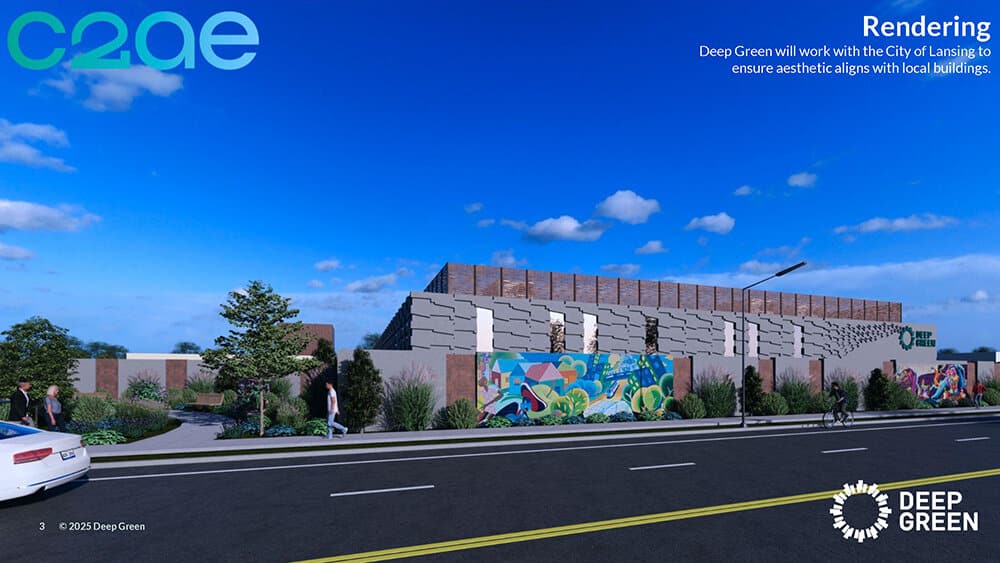
The legal battle comes as the BWL considers a new proposal from developer Deep Green for a large-scale data center in downtown Lansing.
“Deep Green designs and operates ultra-efficient, high-density data centers that capture and reuse the heat they produce with negligible water use. The company will partner with the Lansing Board of Water & Light to supply free, carbon-neutral heat directly into BWL’s hot water system, cutting carbon emissions and creating lasting community benefits,” according to the city’s website.
Data centers, which require significant amounts of electricity and water, have become a focus for utility transparency advocates nationwide.
Previous media reports have indicated that developers by mid-December 2025 had expressed interest in at least 16 sites in 10 counties across the state’s Lower Peninsula for the warehouses supporting artificial intelligence and cloud computing.