Lansing City Council delays an emergency ordinance to help homeless; dozens call for a long-term solution at council meeting
“Squirrel”, as she is known on the streets, is a 32-year-old unhoused woman who was evicted from Dietrich Park late last year. Amidst the chaos, as she describes it, she stayed there until the very end, helping to sort through people’s belongings and return them to their owners, who were staying at the Causeway, the hotel where those who had been evicted were sent.
The forced eviction of the 15-person homeless encampment on private property along the River Trail behind O’Leary’s Paints last week served as a grim reminder of the December she experienced at Dietrich.
“We have to be restarting constantly,” she said to City Pulse. “We don’t want to do it anymore. I can’t. I don’t have the energy. It’s not fair.”
Squirrel had hoped that an emergency ordinance – a 60-day moratorium against homeless evictions from around 10 city parks during the night – might have provided at least some relief to the city’s homeless population.
A few hours before the last city council meeting, the emergency measure was pushed back to the next meeting on December 7, said council member Deyanira Nevarez Martinez, who had pushed the ordinance.
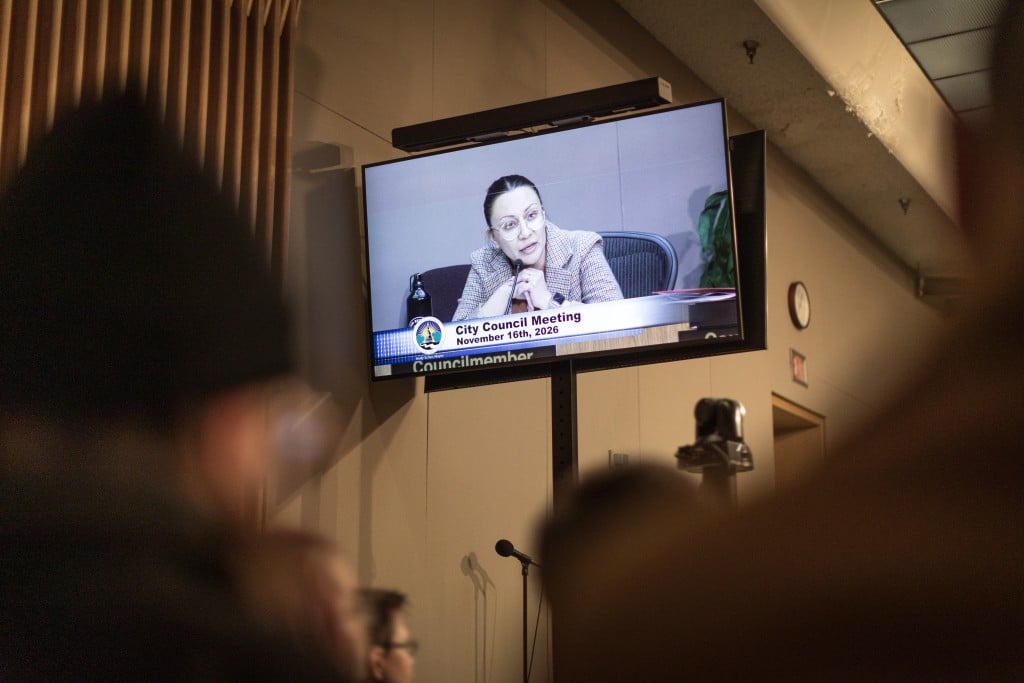
“I do not believe that allowing people to sleep in parks is a solution to homelessness,” Nevarez Martinez said. “If I believed this should be permanent, I would be proposing a permanent ordinance, which I am not doing. I am proposing 60 days because we need time. Time to develop an actual strategy. Time to stop punishing people for the failure of their government to provide meaningful alternatives.
“We do not have sufficient options for people,” she said. “And then we criminalize them for having nowhere else to go. That is unacceptable. I believe we need to address this crisis on multiple fronts. Sufficient low-barrier emergency shelter. Transitional housing and permanently affordable housing.”
Last night, a proposal for an ad hoc committee on homelessness strategy, introduced by Council President Peter Spadafore, was also slated for consideration.
It, too, was postponed until the next meeting, with email problems cited. The committee would review existing homelessness programs and spending and develop a coordinated strategy, including specific actions and budget priorities, and would make recommendations for the new fiscal year in July 2027.
“If they’ve never gone through being homeless,” Squirrel said, “If they’ve never gone through their destruction of our homes … why are they going to destroy ours? They don’t have to consistently start over, start over, start over. So why do we? They’re not doing anything to help us. How are we supposed to be able to do anything when we’re constantly being the targets of? it doesn’t make sense.”
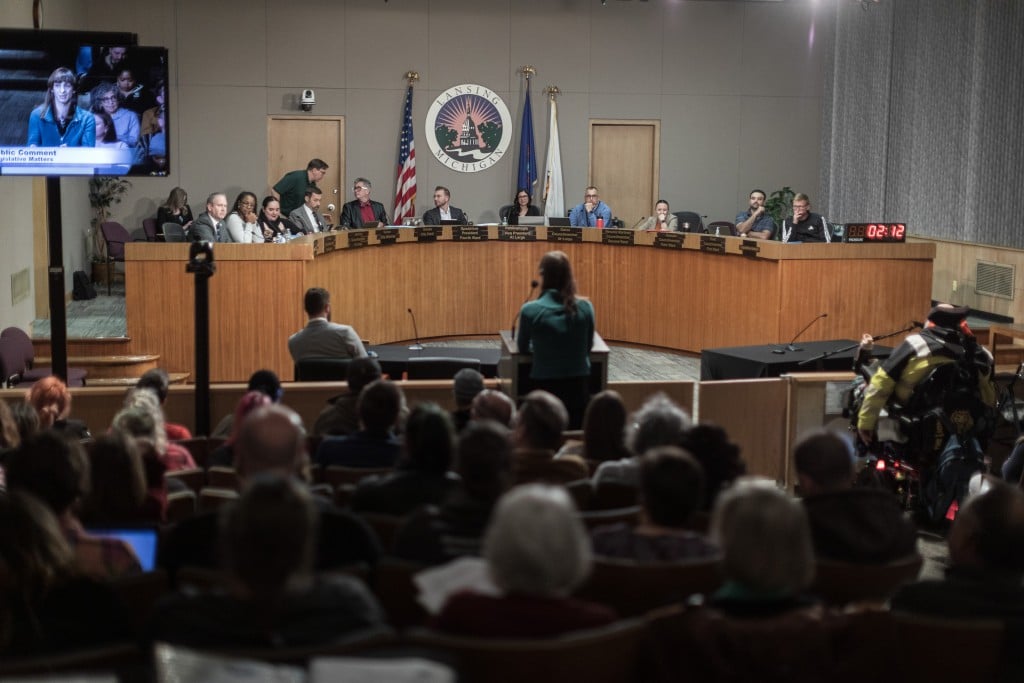
There was an avalanche of comments from people in the meeting; the common theme was finding a permanent solution to homelessness in the city.
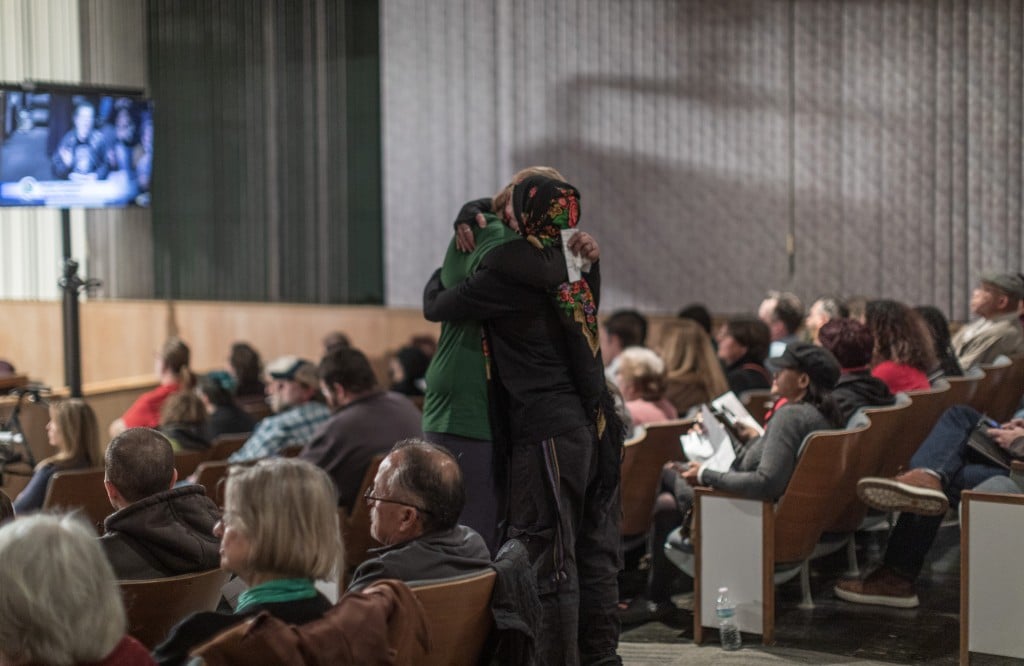
Although some residents disagreed on whether the moratorium was appropriate, citing safety and security concerns, there was a widespread agreement for a humanitarian solution.
Kelsea Hector, Executive Director of Punks with Lunch, suggested that each member of the city council should visit and speak with people experiencing homelessness to hear their stories, emphasizing that there is nothing that has not already been discussed.
“We’ve lost more than ten people in less than a year, and every single death is preventable,” Hector said. “We had someone die two weeks ago from a bacterial infection because they can’t receive the correct care in an encampment.”
“I just don’t know what to say anymore, “ she continued. “We’ve had meetings. Y’all came to our drop-in. You talked to our folks. You heard their stories. I don’t know what it’s gonna take for y’all to hear it and really, really hear it. I could sit up here and tell you, imagine your daughters, your sons, yourself being the person that’s on the street, being left behind, forgotten, and treated like trash. Stigma is killing our people and you need to check your own bias and your own agenda before making decisions.”
Activists, residents, and members of the unhoused community said they are seeing a lack of commitment from elected officials as another winter approaches.
“The city has had plenty of time, and we’re at another winter with a lot of homeless people and no real leadership from our city government,” said Kristan Small, a member of Unitarian Universalist Church and Lansing school district educator, to City Pulse. “And our patience is wearing thin. Additionally, we’re very concerned about the ordinances.”
During public remarks, Small highlighted the stigma that many unhoused individuals experience daily, describing it as a barrier and noting the start of progress with city officials.
“Can we, Lansing, spend more than two tenths of one percent of our city budget on this problem?” she asked, in her public comments. “Can we stop sweeps that separate unhoused people from the services and the supplies that we’ve barely gotten started, that we’ve tried to provide through our grants and through our donations in our faith communities?
“Start looking at your budget, our tax dollars,” Small said. “Don’t just do something. Do a lot of somethings and partner with us with real solutions. We are anxiously awaiting that.”