Rare photos recording a march in Lansing on the day MLK was buried
Following the assassination of Martin Luther King Jr. on Thursday, April 4, 1968, violence began erupting across the country. In many cities, the National Guard was called out and cities …
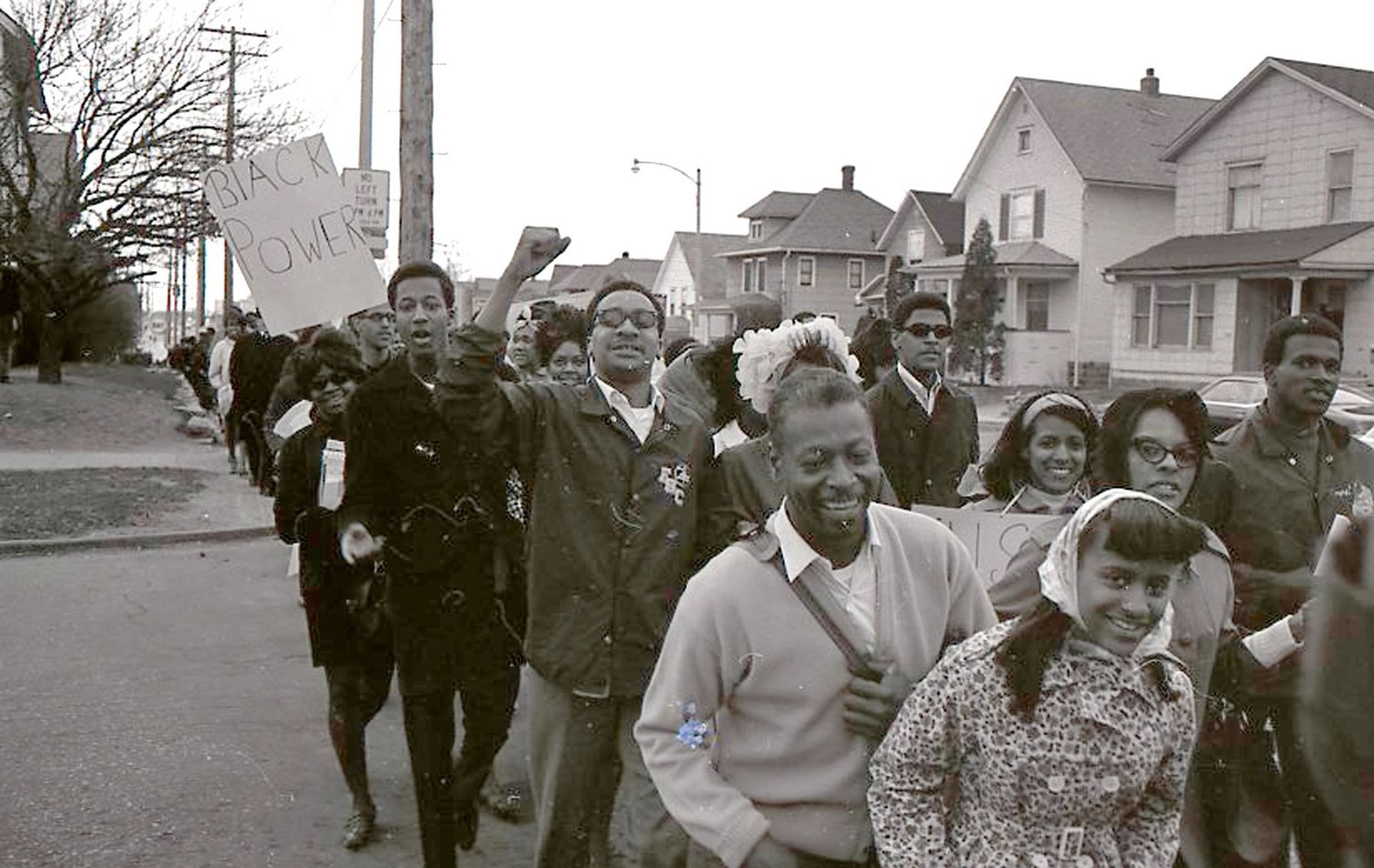
Following the assassination of Martin Luther King Jr. on Thursday, April 4, 1968, violence began erupting across the country. In many cities, the National Guard was called out and cities enforced curfew laws. In one famous instance, Bobby Kennedy campaigning in Indianapolis climbed on the back of a flatbed truck to give a speech that helped quiet a crowd. For many in the crowd, it was the first they had heard of King’s death. On Friday morning on the MSU campus, students gathered and conducted several marches; one had more than 1500 participants and Civil Rights Activist and lieutenant of Martin Luther King Dr. Robert Green addressed the crowd.
In Lansing a group of 200 to 300 mostly high school students marched to the Capitol for a peaceful demonstration and remembrance with some marching to MSU to meet up with marchers there.
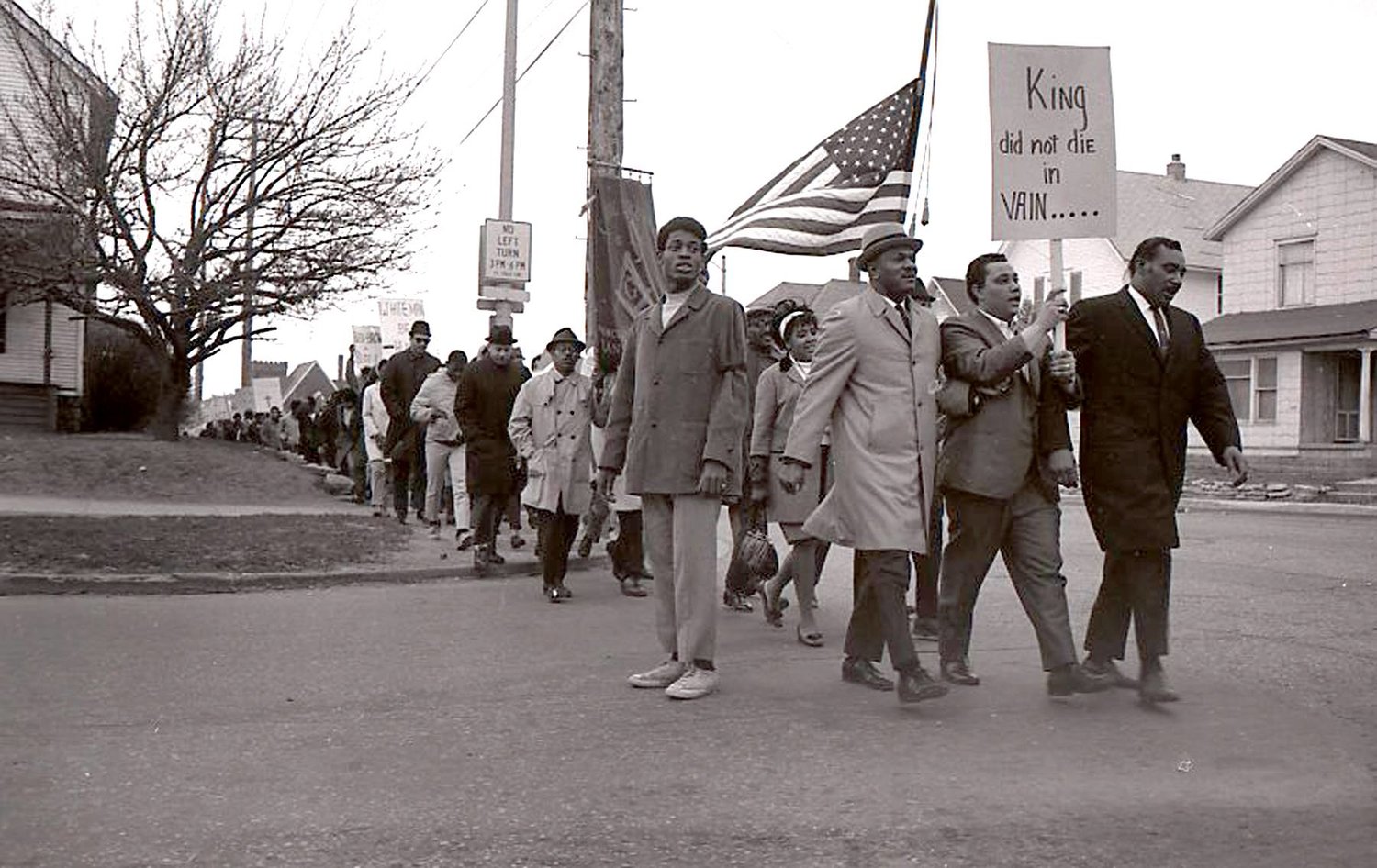
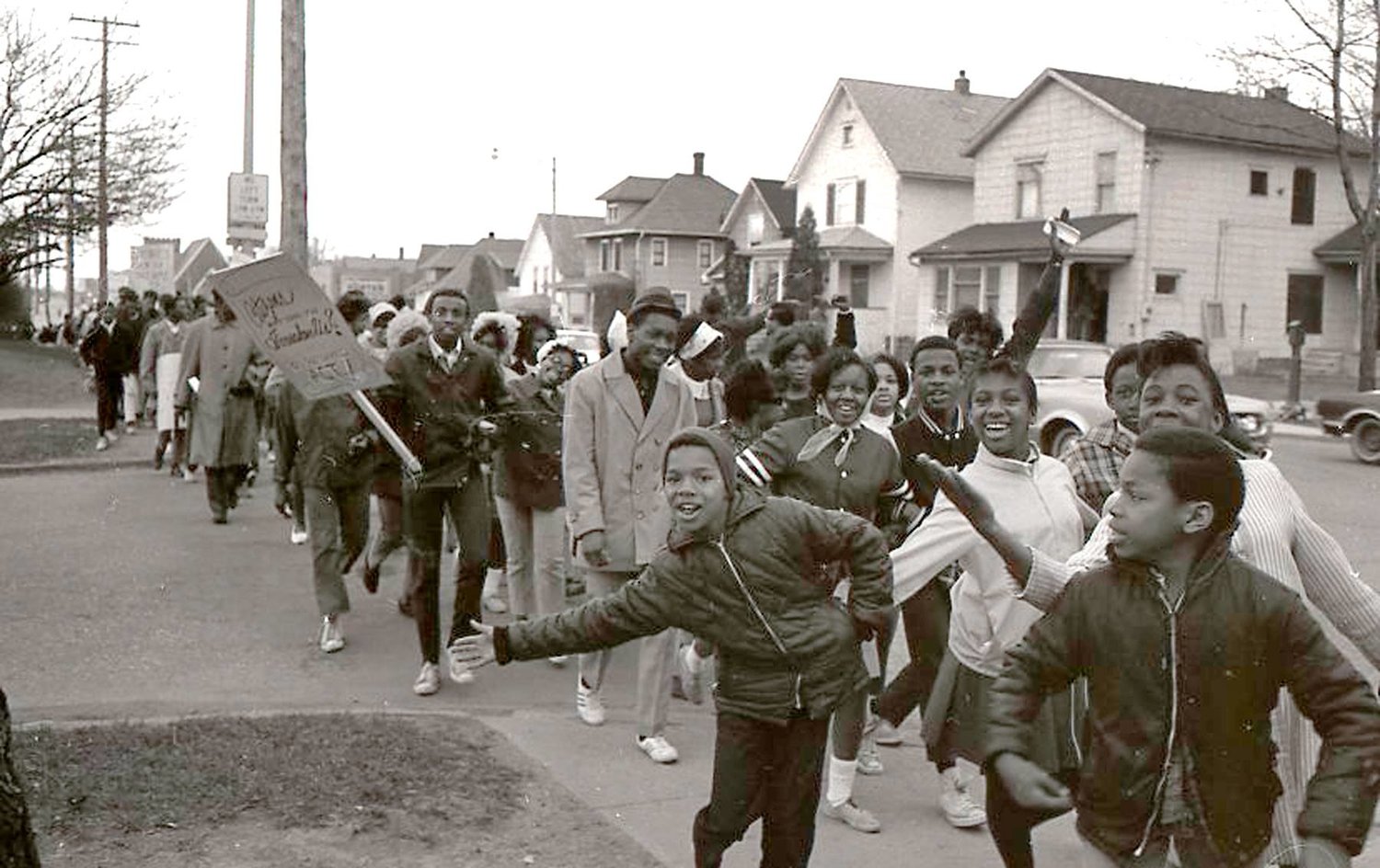
On the morning of King’s funeral, April 8, professional photographer Gary Boynton was driving down Logan Street (now Martin Luther King Jr. Boulevard) when he happened upon a large group of marchers on their way to the Capitol. The photographs he took that day are important artifacts from Lansing’s history since local media seemed to focus on the national news stories. These are the only known of the march.
After King’s murder, the East Lansing City Council moved quickly to approve its landmark policy that finally allowed people of color to live in the city.
Here is a story, by City Pulse editor and publisher Berl Schwartz, that was first published in 2019 about how Boynton happened to take these photos.
It happened by accident. Gary Boynton was driving on what was then Logan Street — now Martin Luther King Jr. Boulevard — when he saw people marching. One of the leaders held a sign: “King did not die in vain.”
Boynton, then in his 20s, began taking pictures.
Fifty-one years later, his may be the only photos of the march in Lansing on the day of the funeral of the Rev. Martin Luther King Jr., April 8, 1968. One of Boynton’s photos is on the cover, and two more are on pages 11 and 12.
“I think I had the camera in the car and just saw these people marching. Got my camera out and said, “This is cool.”
“I’m a white guy,” he said. “These people just me treated me like I was a king, you know what I mean. They waved at me and high fives. It was very upbeat.”
Boynton stayed with them as they turned east on Allegan Street heading to the Capitol. He broke away to return to work as they neared Pine Street.
Boynton, 76, said he was not a King fan at the time.
“My grandfather was a Baptist minister — very, very stringent on race at that time. When you grow up with that kind of atmosphere, you know, black people … they’re not as smart as you are, the whole crap. It took me a while after I got out of school and started working in the real business world to realize there’s no difference. We all cry, we all smile, we all love, we all have children. This segregation crap is all bull.”
After REO Motors folded, Boynton started his own photography business. He had a studio in the 1600 block of East Michigan Avenue till 2003.
In the 1980s, he was shooting a wedding of an African-American family in Lansing when he learned that King’s wife, Coretta Scott King, was there.
“I made it a point to go talk to her,” he said. “She was very lovely.”
He also recalled visiting the Lorraine Motel in Memphis. “Very, very moving.”
“That’s about all I remember,” he said. “I shot them on 35mm film. Decent images. Had to work with them a little bit.”
Author