Respect the velvet
Picture a parking lot in Lewiston, Maine, in the 1970s, coming alive with vivid velvet vistas of Aztec deities, Elvis, Jesus, 18-wheelers, leopards and bullfighters, “resplendent on a jet-deep …
“Black Velvet: A Rasquache Aesthetic”
Through November
10 a.m-4 p.m. Monday-Saturday
1-5 p.m. Sunday
Michigan History Museum
702 W. Kalamazoo St., Lansing
Adults , seniors , students
(517) 335-2573
michigan.gov/mhc
Exhibit shines loving light on once-throwaway art
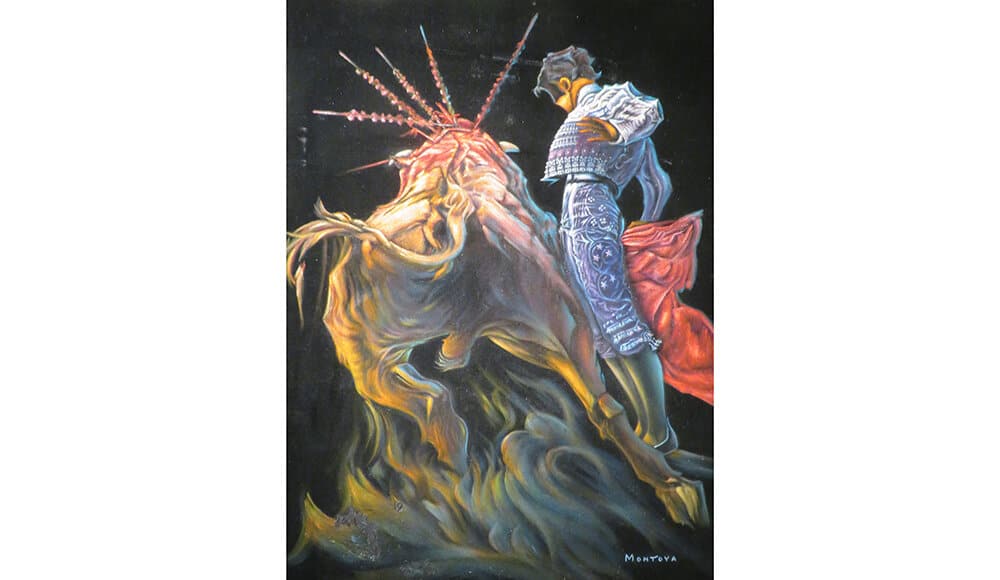
Picture a parking lot in Lewiston, Maine, in the 1970s, coming alive with vivid velvet vistas of Aztec deities, Elvis, Jesus, 18-wheelers, leopards and bullfighters, “resplendent on a jet-deep background of profoundly interstellar black,” in the words of American poet X.J. Kennedy.
Such art sales were widespread in the heyday of velvet paintings, but they never lasted long.
“The next day, we return to find all wonder banished,” Kennedy lamented.
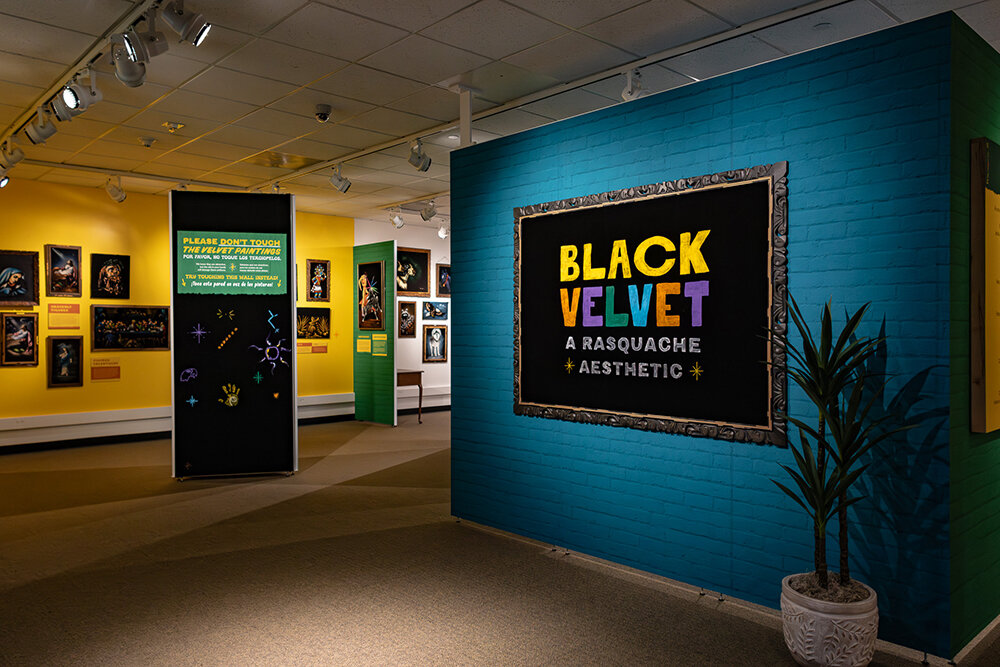
Instead of banishing the wonder after a day or two, the Michigan History Museum has enshrined it for a whole year in an eye-popping exhibit of more than 120 paintings, “Black Velvet: A Rasquache Aesthetic.”
“Rasquache” has many shades of meaning, but most of them relate to an underdog spirit, a resourcefulness born of necessity, and the need to have both “bread for all, and roses too,” in a phrase made famous by the women’s suffrage movement.
It signifies art for the people, a volcano in the kitchen and a bullfight in the bathroom, framed in rustic notched pine, painted black.
The exhibit is a loving, lingering look at a form of popular art familiar to many Latinos and Chicanos from their childhoods, much of it created in workshops across Mexico and the American Southwest.
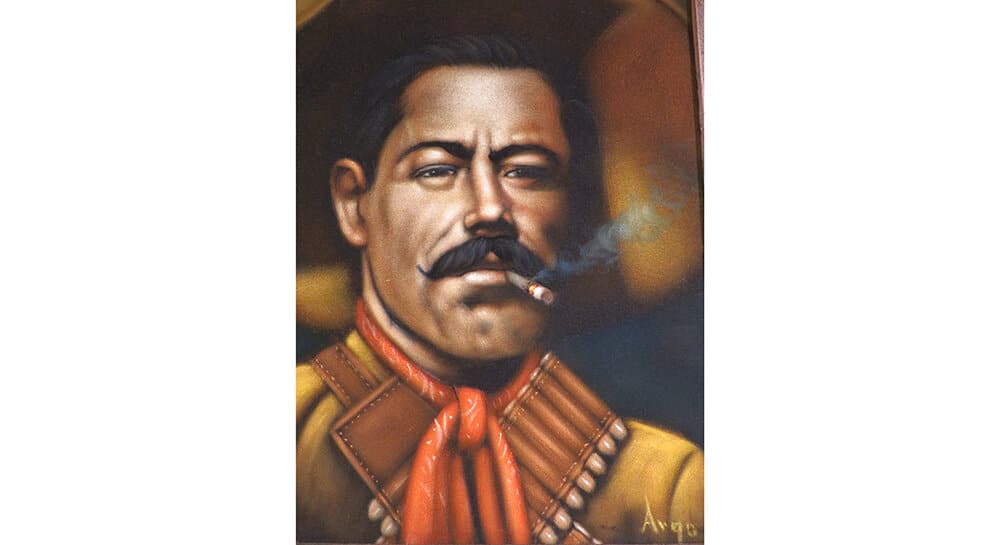
Brightly painted walls vibrate with lush portraits, evocative landscapes, cute vignettes of mischievous kids and plenty of familiar faces, from Nelson Mandela and Pancho Villa to Yosemite Sam, Charlie Brown and Marilyn Monroe.
The paintings were culled from a collection of some 300 works assembled by guest curators Elena Herrada, Diana Rivera and Minerva Martinez. Some were seen at a 2018 exhibit at Lansing’s Casa de Rosado Galeria and Cultural Center, but this is the first time in Michigan that they’ve been shown in a museum.
It’s also the first time the Michigan History Museum has provided labels in both English and Spanish.
“Velvet has always been kind of ridiculed as an art form, so to raise it up the way it has been by the museum is so important. It gives them so much respect and understanding,” Herrada said.
The idea for the collection goes back to 2008, when Rivera met Herrada at a Michigan State University Chicano studies class.
They agreed it was high time to bring the rasquache spirit of velvet art to light.
“I had maybe three velvet paintings to my name,” Herrada said. “But I said that not everyone sees their importance, and nobody’s going to if we don’t.”
Rivera already had a spectacular painting of the Aztec warrior Popocatépetl and the princess Iztaccíhuatl, or Popo and Izta, that she bought at the Frandor Woolworth’s in 1972 on layaway.
At the height of the velvet boom in the 1970s, a factory in Juárez turned out 10,000 paintings a day, funneling canvases to mass marketers like Woolworth’s and Piggly Wiggly.
Some of the paintings in the Michigan History Museum exhibit were created in factories, but most of them, including a stunning portrait of Pancho Villa, are the painstaking work of highly skilled painters.
For over 10 years, the three curators combed secondhand shops, restaurants and private homes. As word of the collection spread, owners began to dust off their own “velvets,” many of them languishing in storage, and donate or sell them to the collection.
“We talked about how happy the velvets were to be together,” Herrada said with a laugh. “People brought them in on loan, and then said, ‘Just keep it, because that’s where it belongs.’”
The curators crafted several fun settings for the paintings, including a paneled basement with a color scheme from the 1970s and a mockup of a garage with a workbench and a painting on the wall.
One display recreates the “assembly line” shops that produced many of the mass-market paintings, complete with a radio playing Latin music.
The brightly colored walls, vivid signage and many other design features of the exhibit are the work of graphic designer Jake Allarding.
“The excitement shared by the excellent exhibit team has given the collection a new and different look,” Rivera said. “It’s really cool that the carpenters made frames to protect and support fragile items.”
“Some of them needed a bit of care,” museum exhibits manager Meagan Papineau said. “We went through each one and made sure the velvet is attached well, the stretchers are good, the adhesive and tacks are in place, and they’re on proper hangers.”
The museum’s in-house carpenter crafted classic rough-hewn wood frames, with decorative notches, for some of the paintings and the signage. Touching the paintings is not allowed, but a velvet sample is provided for those who must scratch that itch.
“We really lucked out to get this crew to do the exhibit,” Herrada said. “It was a blessing.”
“I know they’re professionals, and this is what they do,” Rivera said. “But for me, the team’s care, interest and excitement brought me to tears.”
After exhibits at galleries and community centers in Detroit, Lansing and other cities, Herrada said velvet paintings have become harder and harder to find.
“They aren’t being trashed. They’re being hoarded,” she said. “Our collection has raised up the vibe for velvet paintings. People look at them differently. They have value where they didn’t before. I didn’t see that coming.”
Does that mean that this exhibit is the final word, the apotheosis of velvet art in Michigan? Not a chance. Despite the encroachment of trendies, hipsters and collectors, the curators will always keep an eye out for the next hidden treasure.
“It’s rumored that there’s a collector in Detroit who has Frida Kahlo on velvet with a Uniroyal tire around her head for a halo,” Herrada said. “I don’t usually covet things, but I would love to have that in the collection.”