JazzFest Michigan pitches a capacious five-day musical tent
A billowing tent of jazz and jazz-adjacent sounds is set to be pitched at JazzFest Michigan this week, beginning with a kickoff concert at Old Town’s UrbanBeat venue tonight, stretching through a weekend packed with three stages of music and climaxing in a gospel brunch Sunday with powerhouse vocalist Twyla Birdsong.
While East Lansing’s Summer Solstice Jazz Festival in June revolves, with a disciplined and centripetal spin, around the tight nucleus of Michigan State University’s jazz studies program, JazzFest whirls with centrifugal abandon around a loose cloud of funk, folk, pop, world music, gospel and other styles, echoing the eclectic roster of the festival’s epicenter, UrbanBeat. To scramble the eggs a bit more, each act has been asked to perform an original song or arrangement they’ve never played before. For a full schedule, visit michiganjazzfest.com.
Courtesy
LCB Big Band: Go big and go home
The majesty, momentum and subtlety (well, sometimes) of big-band jazz make it one of those towering national treasures, like Yellowstone or the Grand Canyon, that cry out to be experienced in person.
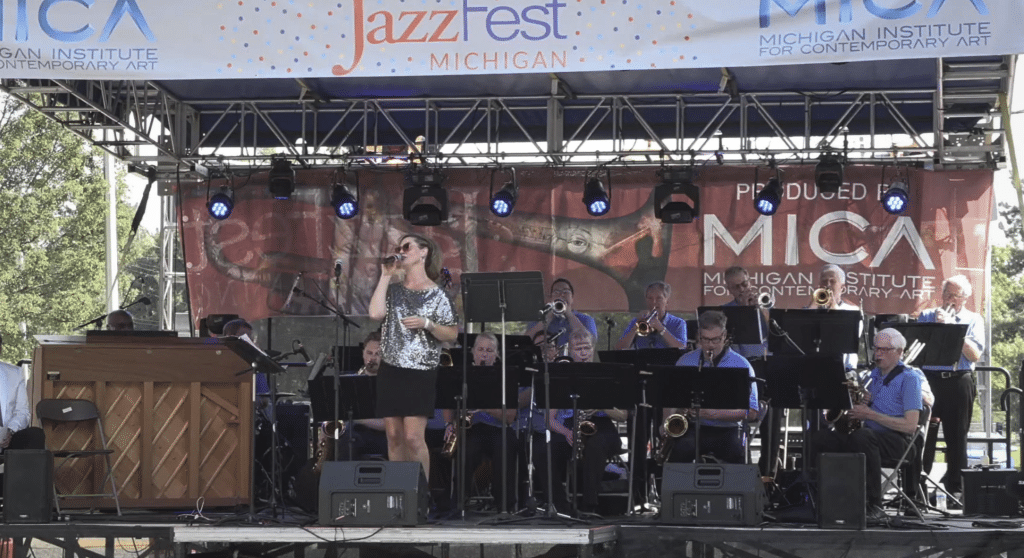
The 81-year-old Lansing Concert Band’s jazzy younger brother, the LCB Big Band, has kept the whitewater roaring and the geysers erupting since 1993. This weekend, it will bring a mix of familiar and fresh arrangements to the Fish Ladder stage at JazzFest.
The festival stipend goes toward defraying the cost of the band’s music library and other expenses, but the musicians themselves play just for the sheer joy of it.
“It’s a labor of love,” vocalist Dan Templin said.
The band’s repertoire begins in the classic 1930s heyday of Duke Ellington, Count Basie, Benny Goodman, Ella Fitzgerald and other greats of the big-band era, cruises into the swaggering mid-20th-century music book of Frank Sinatra, with original arrangements by the likes of Nelson Riddle and Neal Hefti, and stretches into the brassy energy of the 1970s rock group Chicago.
LCB Big Band founder, director and trumpeter Jim Kasprzak declined to blow his own horn, at least figuratively, but Templin called him “a very, very, very accomplished trumpet player who will really shine in several numbers we’re going to perform at JazzFest.”
Kasprzak, a mainstay of the Lansing Concert Band for many years, got the big band together in response to a call from a friend requesting a performance at a local party.
His father, an Army bugler in World War II and big-band devotee, taught him to love jazz (and how to find his way around a trumpet). Watching TV as a kid in the 1960s, when musical variety shows regularly featured big bands, he perked up whenever someone like Basie, Ellington or Johnny Carson’s trumpet minion Doc Severinsen swung into action.
He hastily recruited musicians from the concert band for the party gig and cobbled together some arrangements with the help of band member Tom Jones, then director of bands at Sexton High School.
The band started as a one-off, but the prospect of mining the vast riches and diverse styles of big-band music, from the 1930s to the present day, proved irresistible to Kasprzak and his comrades in swing. They built up a library of tunes and ramped up their concert schedule, responding the public’s undying appetite for big-band swing. The band is playing six gigs this summer, an all-time high.
To keep the pot stirred, Kasprzak constantly renews the repertoire with half-forgotten gems, nice things they’ve missed and even brand-new music. The JazzFest gig will feature a ballad by MSU composition student Kevin Charoensri, “One More Dance.”
In recent years, the band has had a fruitful collaboration with pianist, composer, arranger and former DeWitt High School band director Jeff Kressler.
“Jeff is a wonderful writer, and he’s done some custom arrangements just for us,” Kasprzak said. Kressler recently came up with a “very faithful” arrangement of Chicago’s 1969 hit “Does Anybody Really Know What Time It Is?”
No musical snob, Kasprzak will swap his trumpet for the notoriously difficult flugelhorn to play “Feels So Good,” the semi-cheesy 1977 megahit by Chuck Mangione.
Kasprzak grew up absorbing many styles of music and loving them all.
“Whether it’s big-band music or rock music, music is just a joy, an art form that moves people emotionally and physically,” he said.
Kasprzak grew up in Toledo, Ohio, and came to MSU for his graduate degree. He raised his family here and has now retired “twice” — the first time from a long career as an economist doing budget work for the state of Michigan, and the second time from an eight-year stint as director of Catholic charities for the Diocese of Lansing.
Templin, a breezy and energetic singer whose duties include channeling the likes of Frank Sinatra, Tony Bennett and Dean Martin, got involved in the LCB Big Band through his involvement in Singers on the Grand, a vocal ensemble originally formed to raise money for the Grand Ledge Opera House. Singers on the Grand is still active on the scene, and Templin often performs with his fellow LCB Big Band vocalist, Kelly Sandula-Gruner, as a vocal duet called Clique Vocals. (The duet will make two appearances at JazzFest, Thursday and Friday on the UrbanBeat Stage.)
Templin was thrilled when Kasprzak invited him to sing with the big band about seven years ago. At first, he was nervous about letting loose in the jazz style, but he quickly found it to be a gas. He’ll fulfill his Sinatra duties at JazzFest by singing the classic “Come Fly with Me.”
“We use the original arrangements,” Templin said. “Sometimes I pinch myself and I feel like I’m in New York or Las Vegas.”
Detroit Jazz Project: Astral traveling
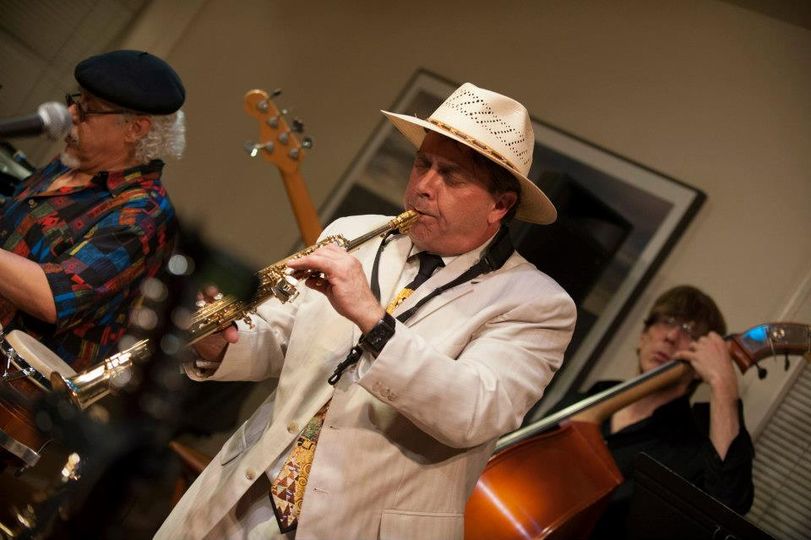
The expansive spirit of jazz in Detroit, mindful of history while cherishing the passing moment, will find a new showcase Saturday on JazzFest’s Cold Plunge stage.
Founder and saxophonist Mark Hershberger takes the band many places. He compared making music to his childhood dreams of flying.
“There’s an astral-traveling component to life,” he said. “Out of body is a way of describing it. We have to get outside of ourselves to be truly creative.”
Courtesy
On saxophone, Hershberger ranges from melodic swinging à la Dexter Gordon to volcanic burbling in the Ben Webster mode to spiritual probing in the manner of Pharoah Sanders. When called for, he can tap into an out-of-this-world, John Coltrane-inspired energy.
“I do have, shall we say, a propensity to take it out in my playing,” he said with a laugh.
But even when he takes it “out,” he’s careful to take the audience along.
“That’s always been key for me,” he said. “Even in our recent gigs at the Dirty Dog Jazz Cafe, the Blue LLama and Cliff Bell’s, it’s been about engaging people in the music. That’s why I do a mix of music — Latin tunes, vocals, Motown.”
After performing and studying a variety of styles of music for 30 years, Hershberger was ready to front a group of his own. The Detroit Jazz Project began in the early 2000s as the Global Jazz Project, playing gigs at Baker’s Keyboard Lounge, Aretha’s Jazz Café and other Detroit venues. Hershberger said the name change happened after newspaper columnist and author Mitch Albom told him, “It sounds more like the Detroit Jazz Project to me.”
Barely out of his teens, Hershberger backed up the legendary R&B duo Sam & Dave (Sam Moore and Dave Prater) at Jazz West, Club Mozambique and other Detroit clubs and recorded for Motown with vocalist Cecil Womack.
“It was a blast,” he said. He experimented with electronic sounds, led a group called The Extraterrestrials and played in many eclectic ensembles during his time as a student at Eastern Michigan University and the University of Michigan.
A key influence and mentor for several years was Detroit jazz-funk saxophonist and educator Sam Sanders.
“He was a phenomenal player, a technical wizard and a total inspiration,” Hershberger said.
Hershberger has has worked with a panoply of Detroit greats such as Gayelynn McKinney, Vincent Chandler, Marion Hayden and teenage piano sensation Jacob Hart. He’s made over 20 adventurous recordings with maverick Detroit drummer Muruga Booker, including the most recent, “Journey to Mars.”
The latest iteration of the Detroit Jazz Project, featured this weekend at JazzFest, includes Detroit’s Ryan Rose on drums, MSU grad Laura Simone on bass, Lisa Sung on piano, Terry Kimura (a staple of the group over the past decade) on trombone and energetic vocalist Vanessa Carr.
The group’s repertoire ranges from red-meat jazz classics like “Oleo” and “St. Thomas” to the deep-groove McCoy Tyner classic “Walk Spirit, Talk Spirit” to vocal classics like “I’m a Woman” and the Etta James showpiece “At Last.”
Hershberger is currently working on an album of original tunes and a live album culled from recent Detroit Jazz Project gigs at the Dirty Dog.
He has a bachelor’s and a master’s degree in addition to his musical life and has raised five kids along the way.
“I have a great appreciation for our world, our people,” he said. “I’m inspired by Detroit, the clubs, the music I hear when I go to Cadieux Cafe or Bert’s Marketplace, that vibration people emit when they listen to jazz. I look inside to my soul but also look outside to the universe for inspiration. The birds, the bugs.”