
Digitalization and Green Building: Trends and Technologies Unleashed
In the context of global climate change and the pursuit of sustainable development, the construction industry is progressively focusing on the environmental sustainability of buildings. Committed to …
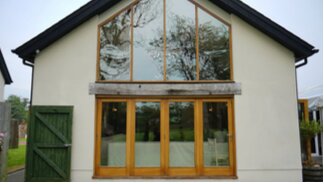
In the context of global climate change and the pursuit of sustainable development, the construction industry is progressively focusing on the environmental sustainability of buildings. Committed to innovation, eco-friendly construction is a robust blend of smart design, a closed-loop economy, and cutting-edge technologies.
It is expected that advanced inventions will become a core element of green building shortly, accelerating the reduction of emissions in the construction sector many times over. For instance, with the help of BIM models and smart systems, it is possible to downsize energy consumption for heating, ventilation, and air conditioning by 30-60%. In this article, we will explore top-notch green technologies in the building sphere, along with the present-day trends in the global building industry.
Why Green Building Matters
According to ongoing reports from the United Nations Environment Programme, the world is witnessing alarming records in CO2 emissions and soaring temperatures, which are transforming the climate and increasing extreme weather events.
For example, from 2024 to 2025, global greenhouse gas emissions increased by 1.2% and reached a new record of 57.4 gigatons of CO2. Unfortunately, governments aren’t making sufficient efforts to meet the goals of the Paris Agreement aimed at curbing global warming, so the world is moving towards a critical surge in temperature much faster than scientists anticipated.
The construction industry accounts for 42.2% of total global CO2 emissions. To boost energy efficiency and achieve carbon neutrality, 20% of existing buildings worldwide need to be retrofitted by 2030.
Overall, sustainable building is a smart concept for reducing the negative impact on the environment and people throughout the life cycle of a new building. To achieve this effect, various updated technologies are implemented in green construction, including high-tech solutions and sustainable materials.
In the building sector, high-performance technologies are actively utilized in the following areas:
- Residential real estate. Used as a marketing tool to attract potential buyers.
- Commercial real estate. Eco-friendly developments cut down operating costs if additional investments are made at the construction stage.
- Focused on the improvement and development of ESG principles (a set of environmental, social, and management principles aimed at sustainable business development).
To implement ESG principles into life, experts recommend shifting the focus to major repairs of existing buildings instead of new construction, reusing resources, using secondary building materials, increasing the energy efficiency of buildings, and minimizing resource costs.
Cyber Solutions in Green Construction
Although 34% of the world’s largest-scale enterprises have committed to achieving net-zero emissions, most of them won’t be able to do so unless they double their reduction targets by 2030. This requires more effort, and the fastest way to achieve this effect is a high-tech approach and the application of artificial intelligence.
This list presents some trendy green building digitalization options:
- BIM design. Building Information Modeling (BIM) is undoubtedly superior to old-school drawings, providing a holistic software representation of all building characteristics in a BIM model. BIM technology allows for more accurate planning and visualization of construction projects, reducing errors and additional material consumption. The BIM model helps develop software for energy sector, contributing to environmental performance.
For instance, a study conducted in China sought to improve the environmental performance of a library using BIM. Based on the BIM model data, the researchers analyzed the building, identified problem areas, and modeled the necessary solutions to adjust the indicators. As a result, by optimizing the building, it was possible to reduce energy consumption for heating, ventilation, and air conditioning.
- Smart systems and devices. Snappy sensors for monitoring electricity, water, heating, and other systems assist in monitoring indicators in real time, consume resources more economically, reduce utility costs, and reduce the carbon footprint.
Namely, Boston University has developed a sophisticated heating, ventilation, and air conditioning system that detects the number of people in a room and automatically adjusts the supply of resources. Thanks to this solution, the amount of energy needed to efficiently heat, cool, and ventilate commercial buildings is expected to be reduced by 30%.
- Drones and UAVs. Drones are used for aerial photography, surveying hard-to-reach places, monitoring construction progress, and measuring indicators. They can be used at different stages of construction for the following purposes:
- Preliminary survey of the area to get a clear picture of the entire site before construction kicks off.
- Monitoring the progress of construction in real time to compare the actual implementation of the project with the plan.
- Quality control of construction and installation work, etc.
This isn’t an exhaustive list of high-tech solutions for the building industry, since new ideas spring up daily.
The Bottom Line
Digitalization is in the limelight when it comes to the construction of green buildings. A smart approach and the use of artificial intelligence are the speediest way to achieve carbon neutrality. Experts from the software company Emerline recommend investing in digital technologies; in the modern landscape, the focus of primary attention will be on the technological strategies ensuring quick processing of data and intelligently optimizing internal systems.
Author

Related Articles

Jokaroom VIP: a straight-talking look for Aussie players
players
Start at Jokaviproom to find new experiences and get moving. Prefer a quick taste before you commit? Try pokies like Elvis Frog in Vegas or Aztec Magic Bonanza to see the pace and …

AI without illusions: How the role of artificial intelligence in business is transforming in 2026
A few years ago, artificial intelligence (AI) seemed like something abstract, futuristic, accessible only to large corporations with gigantic budgets. However, by 2026, AI is turning into a tool for …
Pick a mascot, pick your pace
Jump into 5Gringos Casino . New punters at this 5Gringos online Casino can choose a straightforward starter match with a handful of free spins—easy to understand, handy if you want a quick try. …