Mod Pods pushed back again as city makes new winter shelter plans
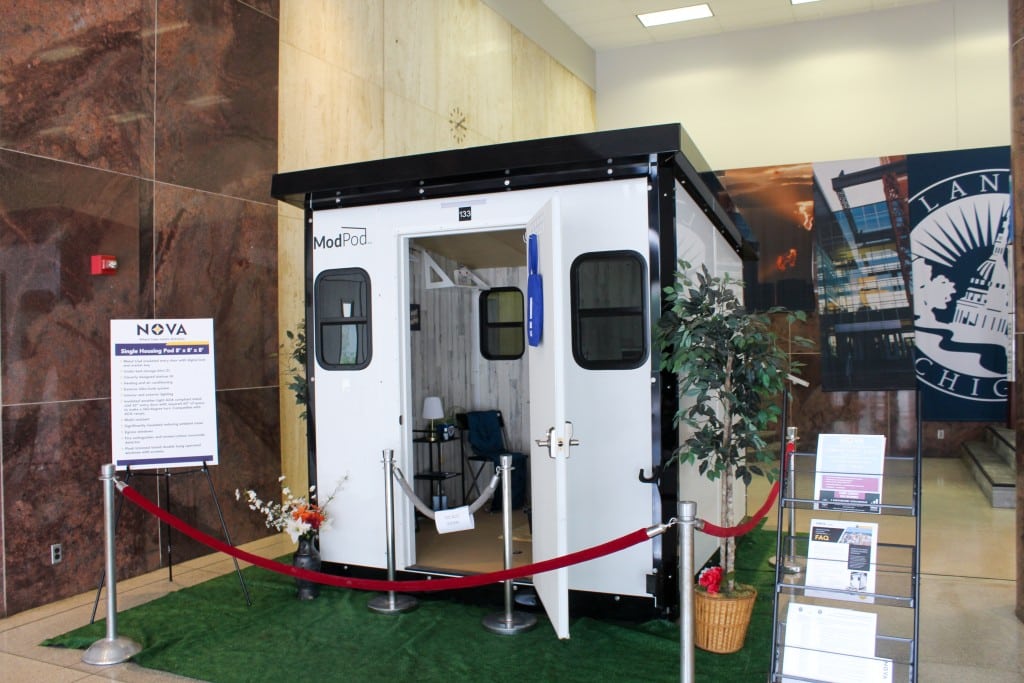
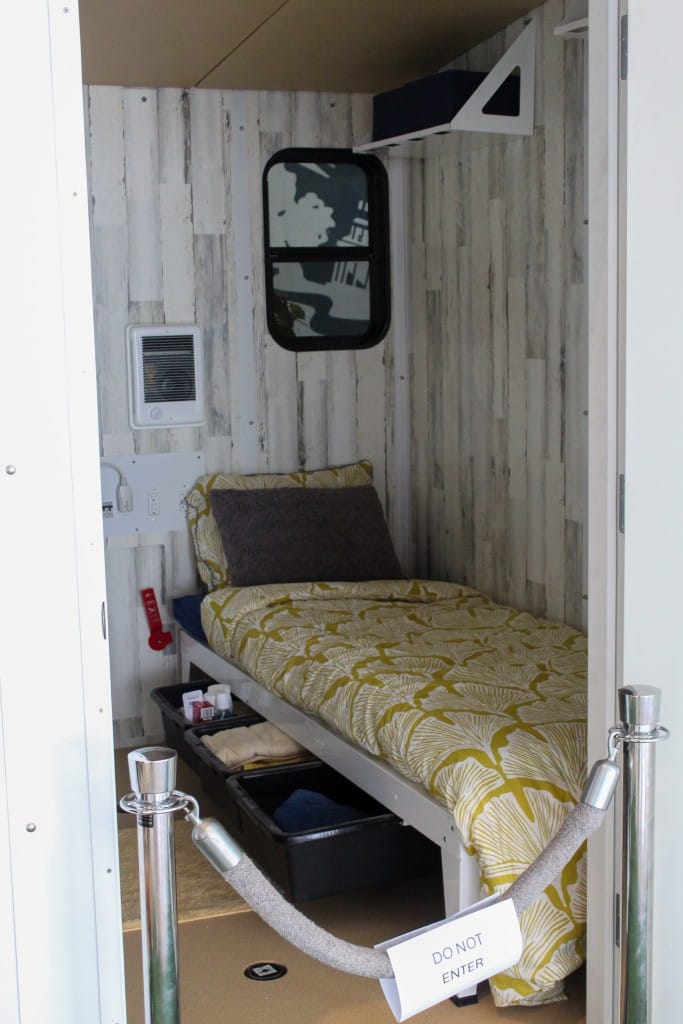
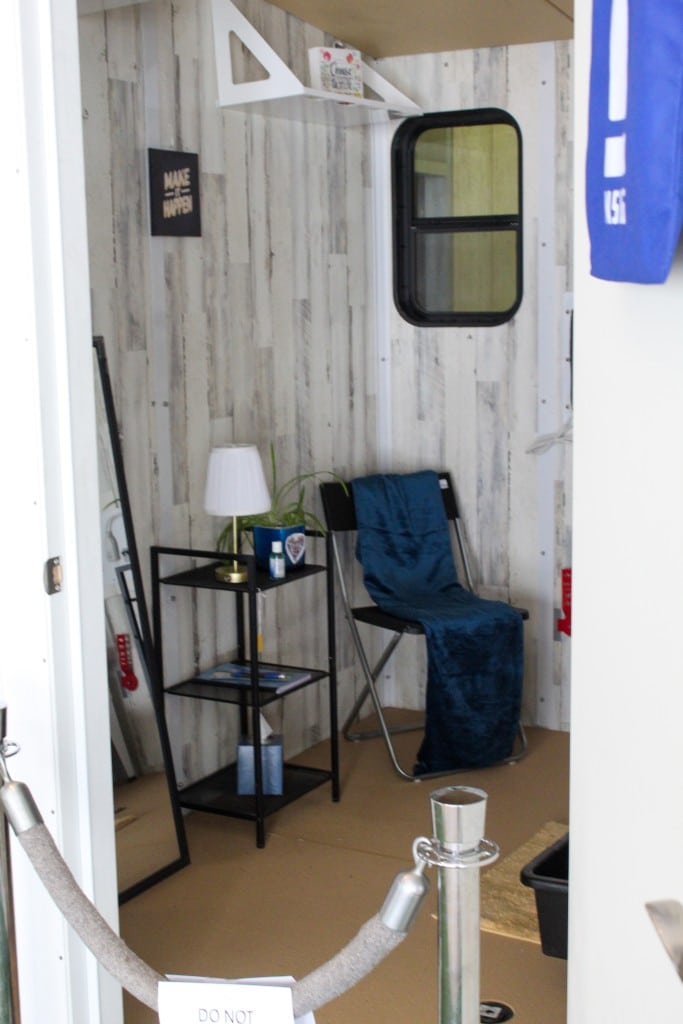
It has been just over a year since Lansing bought 50 modular housing units, better known as Mod Pods, to try to help the ongoing struggle of the estimated thousands who are experiencing homelessness in Lansing.
Then-HRCS Deputy Director Delvata Moses said the pods would house 66 residents experiencing homelessness and help them transition to permanent housing.
Initially, HRCS aimed to break ground in March 2026 and open operations for the pods in June if “all goes well.”
Then-HRCS Director Kimberly Coleman told City Pulse in August 2025 that the purchase was made somewhat rapidly.
“Because the purchase was time-sensitive, we moved quickly to address an urgent need,” she said at the time. “That speed came at the expense of upfront planning in some areas,” Coleman said, and that department would create a plan with “clear milestones.”
City Council approved the request for $640,000 for 50 modular housing units from Kalamazoo-based Housing Resources Inc. (HRI); the vote was met with largely public approval for the project.
HRI had put the pods up for sale after canceling its own transitional housing project. The nonprofit, which connects Kalamazoo County residents with housing resources, hit several snags when trying to find a potential location for the pods. Lansing city officials believed they had sidestepped that problem by looking at city-owned property for the pod sites.
Coleman retired as director in February and now leads the project for the city. In a July meeting with city council members, Coleman described the difficulties of the project in a July meeting with City Council members, saying, “we had really grandiose ideas.”
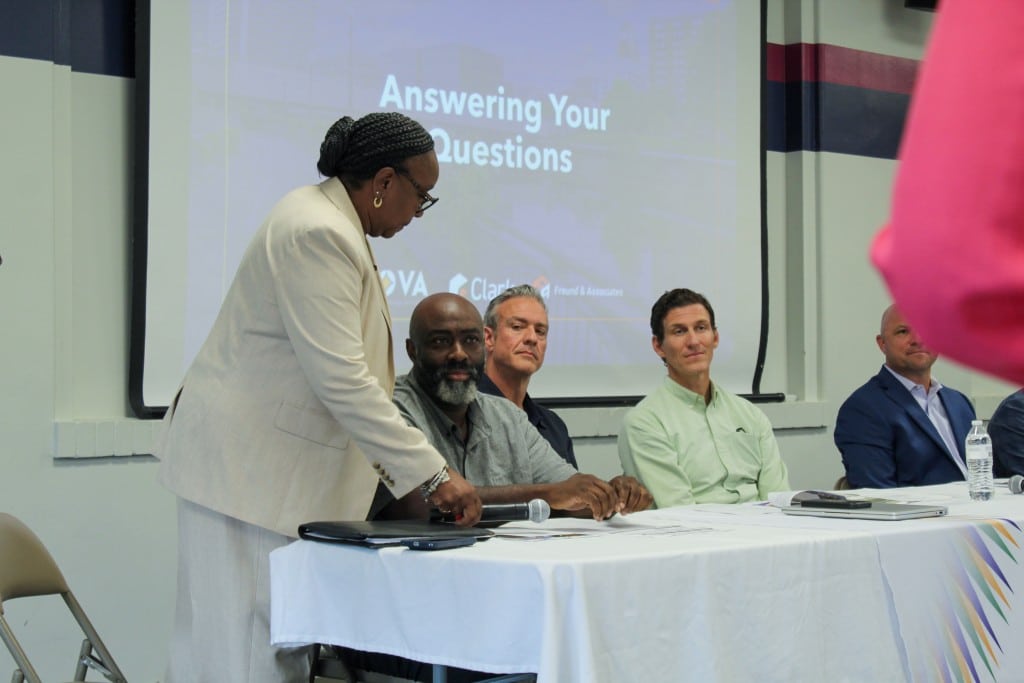
In a late August meeting with the public, officials with the Nova project said they had finally been able to hire a construction manager. The manager was needed to create a site plan and a timeline.
In November, council members were told that the priorities were shifting to a low-barrier winter shelter, with the Mod Pods being pushed off for another winter.
A year and some change later, the timeline for the urgent project is as clear as mud.
Paved lot instead of park
Over several months and numerous community meetings, the original supportive response from Lansing residents shifted into an onslaught of critiques, ranging from the plan’s development to site proposals for the pods.
After narrowing down 48 possible locations, the city presented five finalists to the public: Comstock Park, Hunter Park, Reasoner Park, the former warming house in Debbie Stabenow Park and the former Shabazz Academy.
Then the city completely switched course.
In January of this year, two advisory boards recommended the Ingham County Health and Human Services parking lot for the pods. Lansing Mayor Andy Schor supported their choice.
In the midst of the city deciding where to put the pods, leadership at HRCS changed. Coleman resigned, and Moses was named as interim director. In a statement announcing her resignation, Schor said Coleman would continue to work on the transitional housing project.
A Request for Proposal went out to find an organization to handle daily operations and case management for the initiative. In July, city officials announced that Detroit Rescue Mission Ministries (DRMM), the proposal’s only applicant, would run the Mod Pod community.
The annual cost of daily maintenance of the pods – including restrooms, laundry facilities, a community room, meeting and training spaces, 24/7 security and “resident empowerment programming” – is estimated at $952,335, roughly $14,400 per person. The city set aside about $1.9 million for site preparation and construction.
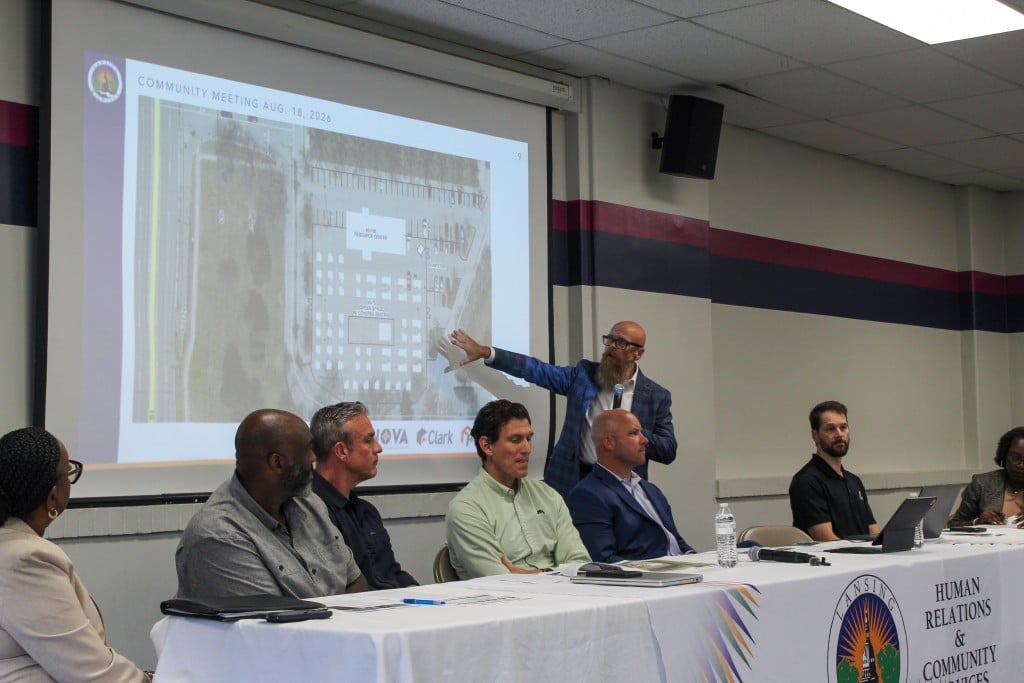
The most recent community meeting was in August. Representatives from DRMM, HRCS, the architect and construction companies updated residents on the project’s status. HRCS’s former director Coleman was also present as a “transitional housing and homelessness strategy consultant.”
The meeting marked progress on the project; a construction manager had finally been hired after two unsuccessful rounds.
But given the pods’ purpose and the designated location, which had moved from the county building’s east lot to the west, nothing about the project was standardized.
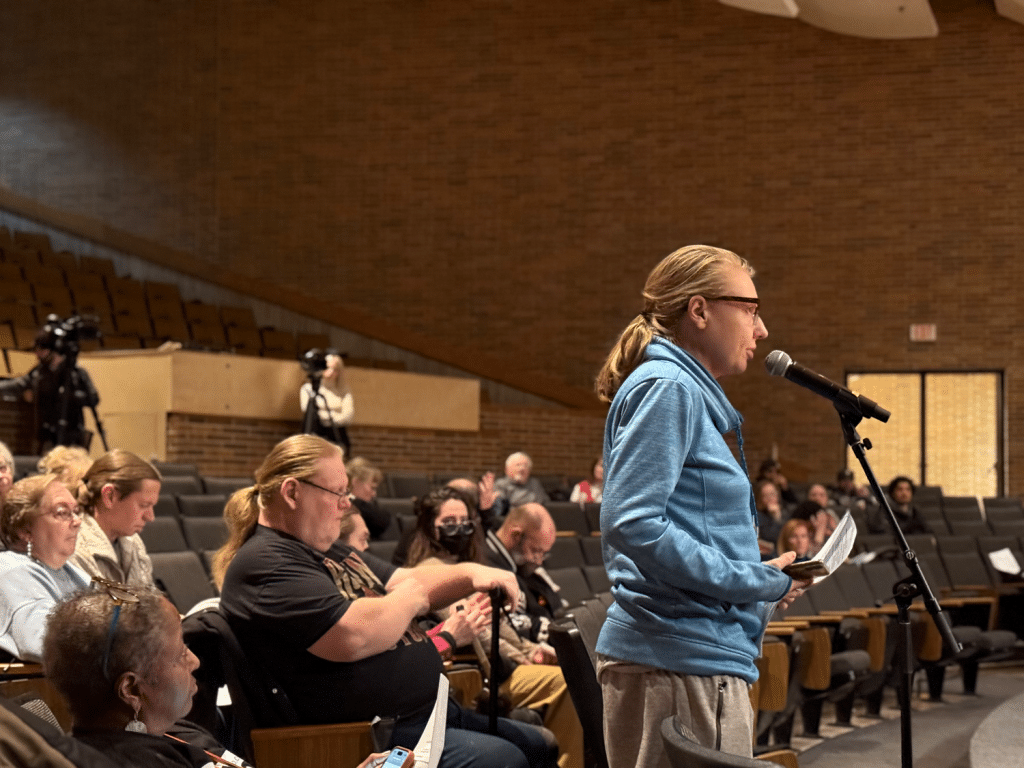
During the meeting, Clark Construction Company President Robert LaLonde said they had trouble finding a building code to assign the project, forcing the company to consider “doing it under a different kind of campground code.” The construction firm is the project’s general contractor.
Long-term funding sources and the potential burden on taxpayers to keep the project running remain up in the air. Coleman said in August that similar programs rely on a mix of private, public, and federal funding, and the city’s initiative will “be doing the same.”
HRCS has not provided a construction progress for the community or City Council since that August meeting.
Shifting priorities
Last week, HRCS Interim Director Moses brought a report to the Lansing City Council to update officials on “homelessness efforts.” Moses told council members that while the department is not switching gears entirely, priorities are changing from Mod Pods to an emergency drop-in center.
The priority now is setting up an “emergency” low-barrier, overnight drop-in center, meant to be open during the winter months, then focus on establishing a permanent center.
“The emergency overnight center addressed the immediate gaps,” Moses said. “So, our top priority right now is getting the low-barrier drop-in center up and running to address the current street and winter conditions, which require an immediate response.”
The center will be open daily from 8 p.m. to 8 a.m. Moses said the department is working to open a center at Union Baptist Church as an alternative for families with minor children.
The Lansing Planning Commission and City Council are expected to review the necessary zoning changes and permits for the temporary drop-in center next month. HRCS general funds, a portion of the City’s 2025 opioid crisis settlement and $100,000 from Ingham County’s housing and homeless millage will fund the temporary drop-in center.
‘Not just stringing us along’
Five months have passed since the Mod Pod project’s original anticipated opening date. Moses said the units will be operational “sometime next year.”
Councilmember Deyanria Nevarez Martinez said it was troubling to hear the project was delayed once again.
“The last update we had gave us an impression of something that’s obviously not happening,” she said. “These updates need to actually have outcomes, not just stringing us along on something that’s actually been very expensive and will continue to be very expensive for our city.”
Mayor Andy Schor said the construction crew was seeing “significant issues that are involved,” including site leveling, hooking up utilities and building a permanent shelter for extreme weather conditions.
“The pods will continue, but we have to navigate funding,” he said. “We want to get folks off the street … but there are limited resources.”
The temporary drop-in center presented to Lansing City Council has been in the works for months, according to city spokesperson Scott Bean. The first group chosen to operate a “Cold Blue” emergency center dropped out at the last minute, and the city pivoted.
“We went kind of hardcore, full speed ahead on, ‘Let’s do this seven days a week, every night through the winter, not just Code Blue nights,’” he said.
The center will be in the former Salvation Army building off of Pennsylvania Ave., and will include 70 beds.
Detroit Rescue Mission Ministries will be operating the center, Bean told City Pulse.
Continued delays
According to Ingham County Commissioner Chair Ryan Sebolt, there are options on the table for saving money, as a trade-off instead of opening sooner.
The county is building a new juvenile detention center, with construction supposed to start next year. When the new facility is finished and the old one is emptied, the NOVA Housing Initiative could use the old center as a site.
Sebolt said it would eliminate a significant number of the issues the construction contractor is encountering.
“There would be no utility hookup that’s needed because it’s already hooked up,” he said. “There’d be no need to build other structures to facilitate the pods because we can use the building that already exists. So we can actually take that off the price tag and present considerable savings on building, and then have more money for services if we delay.”
Waiting for construction of the new facility to finish would mean delaying opening the pods until 2028, if not later.
Sebolt told City Pulse he “threw that option out” to Mayor Schor and other staff members involved in the project, but the city is “really in the driver’s seat on this.”
It is unclear how seriously the city and HRCS are considering the possibility. City spokesperson Scott Bean said “it’s one of the options on the table” the city is looking at, but “we would really like to get up and running sooner than 2028.”
According to Bean, the initial $1.9 million set aside for site preparation and construction is no longer accurate. Moving the site to the county building’s west side parking lot ratcheted up the price tag, and final cost estimates are being evaluated.
When asked whether the city had sufficiently provided progress checks to the public, Bean said it was “subjective.”
“It’s tough because a lot of stuff is happening behind the scenes,” he said. “It’s hard to put out a public update about, ‘Hey, we had a meeting with the construction team to go through utility plans.’”
In terms of tangible next steps, Bean said the city is “still just working with the construction partners at this point.”
Lansing City Council President Peter Spadafore was unreachable for comment about the council’s response to the delays.
The push for a comprehensive plan
City officials are facing mounting backlash from advocates for the unhoused as the city continues to crack down on homeless encampments.
Advocates are demanding actionable solutions–recent killings and approaching winter weather make living on the street dangerous–but have yet to see any long-term or permanent proposals from the city come to fruition.
During a city council meeting on Monday, councilmember Nevarez Martinez opened with a biting statement condemning the city’s response, or lack thereof, to the demand for effective transitional and affordable housing for those experiencing homelessness.
“I have grown increasingly frustrated by our city’s lack of a comprehensive homelessness strategy,” she said. “[The Nov. 9 city council] meeting made something painfully clear to me … we do not have a plan.”
Nevarez Martinez proposed an emergency ordinance putting a 60-day moratorium on encampment sweeps and allowing encampments in select city parks. She also proposed an ad hoc committee to craft a strategy.
The number of residents who spoke in support of, and against, taking up the ordinance and establishing the committee during the public comment portion of the meeting took up well over an hour.
Khadja Erickson, the executive director of the Tenant Resource Center Mid-Michigan, criticized the council for focusing on insufficient temporary fixes, namely the emergency drop-in center. “In 2026, we found over 800 people in our point-in-time count. 70 beds is not even 10% of that number,” they said. “You’re not doing anything, nothing really, to actually put a dent in what is happening.”
Other residents opposed the ordinance, citing concerns for homeowner and business owner safety.
Both the resolution to establish the committee and the passage of the ordinance were pushed to December. Council President Peter Spadafore said the Microsoft Outlook outage from last week led to issues drafting the resolution to create the committee.
Nevarez Martinez said the delay would give her more time to work on the details of the ordinance and rally support from her fellow council members. The ordinance needs a two-thirds majority vote to pass.
The December 7 council meeting will be held in the new City Hall.