‘Hamilton’ aims for accessibility with lottery ticket system
Four-time Tony Award-winning producer Jeffrey Seller, an Oak Park native, revolutionized Broadway’s business model in 1997 with the $20 ticket lottery for “Rent,” making theater …
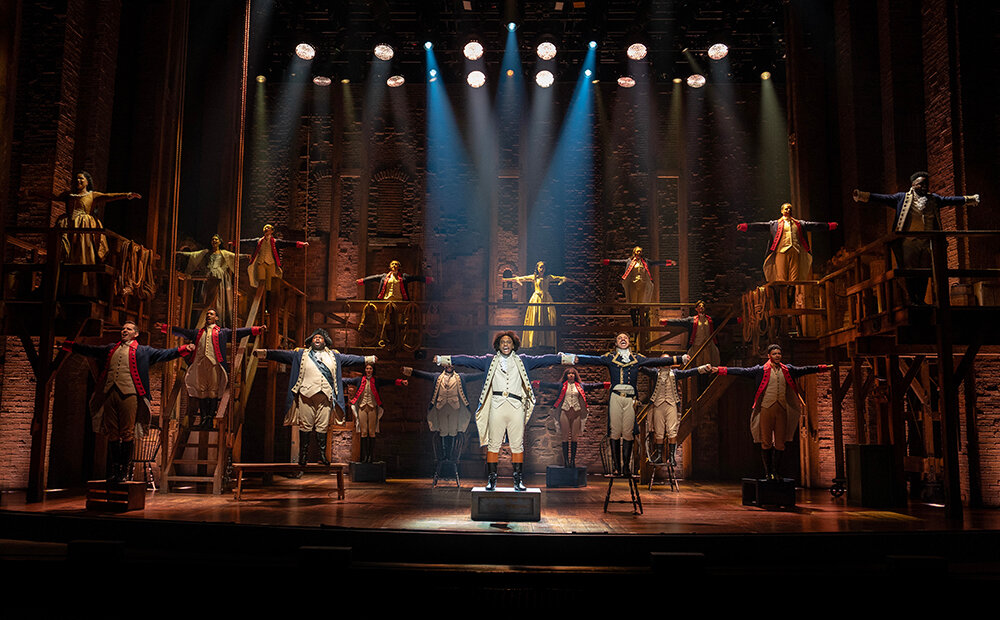
“Hamilton”
May 21-June 1
7:30 p.m. Tuesday-Saturday
1:30 p.m. Saturday; May 22
1 and 7 p.m. Sunday
Wharton Center Cobb Great Hall
750 E. Shaw Lane, East Lansing
(517) 432-2000
whartoncenter.com
How to enter the Hamilton lottery
The #HAM4HAM lottery will close at noon on Thursday, May 22, for tickets to performances from Tuesday, May 27, through Sunday, June 1.
Participants should enter using the official “Hamilton” app, available in the Apple App Store and Google Play Store. Only one entry is allowed per person.
Winner notifications will be sent between 1 and 3 p.m. Thursday, May 22, via email and mobile push notification. Winners will have two hours to claim and pay for their ticket(s). Each winning entrant may purchase up to two tickets. Tickets cannot be resold or transferred.
Lottery tickets may be picked up at will call beginning two hours prior to the performance with a photo ID. Patrons must be 18 years or older.
Four-time Tony Award-winning producer Jeffrey Seller, an Oak Park native, revolutionized Broadway’s business model in 1997 with the $20 ticket lottery for “Rent,” making theater more accessible and affordable for everyone.
Seller, 60, has applied that same lottery system to another musical he produced: “Hamilton,” returning to East Lansing’s Wharton Center for the third time since 2019. A limited number of $10 tickets are available for each performance in the week-and-a-half-long run, which begins tonight.
Seller explained that as Broadway ticket prices became increasingly expensive, he and business partner Kevin McCollum initiated Broadway’s first rush-ticket policy early on in the production of “Rent.” A select number of front-row tickets would be sold for $20 on a first-come, first-served basis. The idea was to keep the show accessible for people in their 20s and 30s.
“When I produced ‘Rent,’ I was 31 and could barely afford a ticket to a Broadway musical myself. At that moment in time, there had been some shows that had done student discounts. They were last-minute and in the nosebleed section. They were just for students,” Seller explained. “My theory was that we needed to do something not just for students, because people were coming to New York at 22, 25, and they didn’t have any money. And, of course, there were people who were 65, 75, and they didn’t have any money. We needed to make sure it was accessible to everyone.”
Rush tickets became so popular that people began to sleep on the streets outside the theater overnight to get a spot at the front of the line. Out of concern for their safety, Seller and McCollum created Broadway’s first lottery ticket policy, which offered $20 tickets to the winners of a drawing two hours before showtime.
When “Hamilton” debuted in 2015, lottery tickets dropped from $20 to $10 since the titular character, Alexander Hamilton, is on the $10 bill.

“We’re selling the first two rows of ‘Hamilton’: 36 tickets for $10,” Seller said. “Tens of thousands of people have seen ‘Hamilton’ all over the country for $10!”
Based on Ron Chernow’s 2004 biography of the Founding Father, “Hamilton” was created by multiple-time Grammy, Tony and Emmy Award-winning songwriter, actor, singer, rapper and filmmaker Lin-Manuel Miranda. The show has won 11 Tonys, seven Olivier Awards, the Pulitzer Prize for Drama, a Grammy and a special citation from the Kennedy Center Honors.
Seller first met Miranda in 2008 when he produced Miranda’s first musical, “Into the Heights.”
“I’ve been able to bear witness to his ingenuity, creativity and rise. I’ve watched him get better and better over our years together,” Seller said. “It’s very satisfying to be a producer who has a long-term relationship with an artist based on trust, dependability and nurturing.”
Seller credited the enduring popularity of “Hamilton” to the score, which blends hip-hop, jazz, R&B and Broadway music.
“People have loved the music for 10 years. People still love listening to it, still love singing to it,” he said. “When there are that many people who love it, their children start loving it as well. You wind up regenerating more audiences as kids come around. You have kids who are maybe 16 or 17 who were little when it debuted and are now as excited about it as their parents.
“The other thing that makes people fall in love with the musicals is the characters. ‘Hamilton’ has incredibly compelling characters,” Seller continued. ‘Hamilton’ is this completely fresh lens looking at the Revolutionary War and the founding of our country through the eyes of Alexander Hamilton as opposed to all of our other Founding Fathers.”
Hamilton, “the ultimate American dreamer,” has a story many can relate to, Seller said.
“He’s an immigrant who wants to make it big in New York City,” Seller said. “I’ve certainly witnessed people inspired by that over the last 10 years when young kids — particularly kids of color — who look on that stage see themselves and say, ‘I’m part of the American story, too.’ ‘Hamilton’ manages to embrace all of us.”