‘Mixed in and out blood’ — Marc Turcotte’s rough ride from Potterville to Illinois poet laureate
Who are poets writing for? Illinois Poet Laureate Marc Turcotte likes the question, but he doesn’t have a pat answer.
“I’m not sure. It varies from poem to poem, from moment to moment in my life,” he said. “It seems kind of silly if we’re all writing poems and just reading them to our goldfish.”
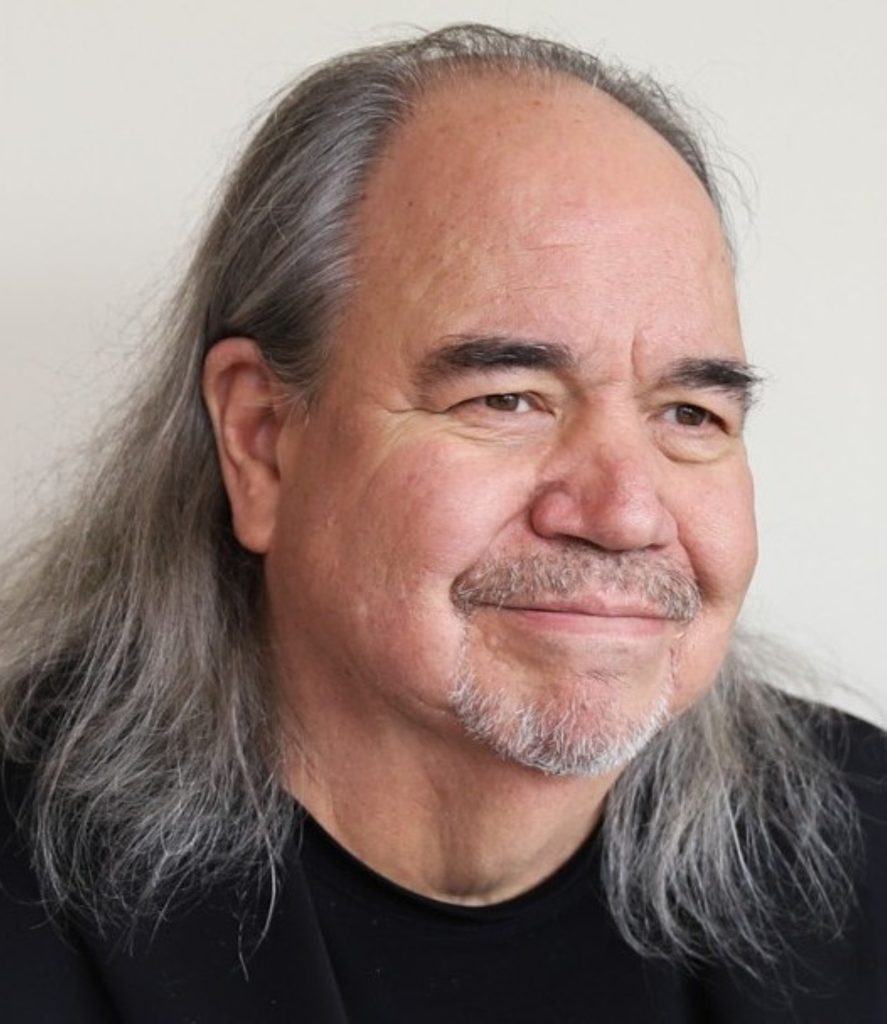
Turcotte, a member of the Anishinaabe-Turtle Mountain Band, was raised on North Dakota’s Turtle Mountain Reservation but spent much of his youth in the Lansing area and took part in the early phases of Lansing’s spoken word scene.
He is no ivory tower poet. Years of bruising life experience — on and off the reservation, in and out of migrant camps, composing poetry in his head while hauling lumber and hanging sheetrock — give his verses tough sinews and a furnace in the belly.
“When I was a kid, I vividly remember dancing to drum music,” he said. “People were constantly playing fiddles and guitars. From the beginning, poetry was sung to me more than spoken. That led to storytellers. Even if it was just a bunch of slightly drunk aunties and uncles sitting around a table trading stories and barbs, there was a rhythm to it.”
Now based in Chicago, Turcotte will breathe in some old memories, some good and some not, as he returns to the Lansing area to help kick off this weekend’s Poets Roundtable at Michigan State University’s Kellogg Center. Friday’s other featured reader is Gordon Henry Jr., MSU professor emeritus of literature and Native American studies. The Friday reading is open to the public, but registration is required for Saturday’s workshops.
There isn’t much doubt about the audience Turcotte had in mind when he wrote “Dear New Blood,” a powerful 2020 poem published by the Academy of American Poets as part of its Poem-a-Day series.
The poem explicitly calls out to the bored, alienated, young Native American writing student, “hunched in the back of the room, tilted in your hard-earned reservation lean” with a “ho-hum gaze out the window toward some other sky.”
“Dear fully mixed up mixed down mixed in and out blood,” he pleads. “Go ahead and kick the shit, kiss the shit from my ears. I swear I swear I’ll listen.”
Turcotte closes the poem by saying, “You don’t need me, but I need you.”
“I needed to write a poem aimed at those young people, because I was one of them,” he said.
Turcotte’s mother, a member of a dirt-poor Scots-Irish family that immigrated to the Lansing area, met his father in the late 1950s.
“My father was from Turtle Mountain, North Dakota,” Turcotte said. “He wandered into a diner on Saginaw Street, near one of the Olds plants, where my mother was waiting tables. He kind of swept her off her feet, and the next thing you know, there I was.”
His father returned to Turtle Mountain with baby Marc and his mother in tow, but the union between his parents didn’t last long.
“My mother loved living among Native people but didn’t have good luck with men,” Turcotte said. “She picked us up one night, and we caught a train and headed back to Michigan.”
They lived in a trailer park near Old Lansing Road, close to the Secretary of State office where his mother worked.
Turcotte spent his elementary, junior high and high school years in and around Lansing, ending up in high school in Potterville.
They were formative years, but the mold was mostly negative.
Turcotte doesn’t like to dwell on this period, but you can find it in his poems, especially “Meanwhile in America”: “I’m eleven years old, fistfighting my way back and forth to school each day. The freckle-faced kids holler, ‘hey Chinese boy, hey Chinese boy.’”
In the poem, he asks his teacher, “Why did the Europeans take away the Indians’ land, anyway?” Her answer: “Well, they didn’t know how to take care of it now, did they?”
Turcotte’s poem “Away” finds him “listening to the white world” while lying awake in bed: “Across the city the Lansing Drop Forge chomps at the night. Sirens like dying crows.”
Turcotte’s memories intersect with the world of young Malcolm X, another future luminary Lansing didn’t treat kindly. Turcotte recalled asking his mother to invite his Black friend, Willie, to his birthday party.
“His mother called my mother and said, ‘Hi, I’m Willie’s mom. I just wanted you to know we’re a Black family. Willie’s never been invited to any parties.’ My mother said, ‘We know.’” Turcotte’s reward was finding the words “Nigger lover” inscribed on his school desk. A staggeringly bleak stanza from “Meanwhile in America” finds Willie comforting him by saying, “At least you don’t have to be black.”
In a strange twist, Martin Luther King Jr. was assassinated on April 4, the day before Turcotte’s birthday, and Willie never came to his party.
“His mother was afraid to put him on the streets. It’s interesting how history has these little ripples,” Turcotte said.
Turcotte’s life took many turns before he settled in, if that’s the right phrase, as a senior lecturer and distinguished writer in residence at DePaul University in Chicago. He spent years doing demanding, physical work in lumberyards, oil fields and construction sites across the West.
“I tell my students, ‘Don’t let life happen to you,’” he said. “When I was 19 or 21, I was choosing to be in love with the person standing in front of me. I took the job that was available. I just wasn’t participating in my own life, and I should have been.”
In winter 1992, he came to Chicago at the invitation of a former Lansing-area teacher who appreciated his poetic gifts. She invited him to remodel her house, with the ulterior motive of slipping him into the city’s burgeoning spoken word scene.
“I reacquainted myself with my original love for writing and poetry,” Turcotte said. “Weirdly, how I read my poems to myself or my friends before I ever got to Chicago fit very well into the slam and performance scene there. The next time I went to Lansing, I was inhabiting this world and started looking for it.”
Soon, poets Ruelaine Stokes and Sam Mills were inviting Turcotte to readings in Old Town, such as Mills’ “Anti-Valentine’s Day” open mics.
“That scene has been good to me,” Turcotte said.
The barriers between the academic poetry world and the spoken word scene, between “page and stage,” have become more fluid since Turcotte broke into the Chicago scene.
“As I began doing readings in the mid-1990s at many universities, I received plenty of openly hostile questions about my so-called credentials,” he said.
But he had the gift of actually having something to write about, a life jaggedly lived. One of his admirers was Michigan literary legend Jim Harrison, who sent him encouraging letters he still treasures. One of them reads, “Don’t forget you’re a working guy. That’s one of the things that’ll keep you from becoming a limp sack of shit, which is what most writers are.”
Harrison happened to call Turcotte one day when he was in the midst of moving.
“He said, ‘You’re probably one of the few poets I know who can move his own furniture,’” Turcotte recalled with a laugh.
In the spirit of breaking down the barriers between page and stage, this weekend’s reading and workshops are hosted by the Lansing Poetry Club, the MSU Native American Institute and the MSU Residential College in the Arts and Humanities’ Center for Poetry.
Friday’s other featured speaker, Gordon Henry, has also spent decades navigating that boundary. Henry is a member of the White Earth Anishinaabe tribe of Minnesota.
“Gordon comes from people who tell stories out loud, so I think that was an easy adjustment for him,” Turcotte said. “He could dwell in the academy but also reach out into the community. I’ve read with him before, and I really appreciate his work.”