Stirring the pot: Endea Owens brings excellence, exuberance to Wharton Center
When people say a band is “cooking,” they aren’t just talking about musical excellence. It means that soulful, savory things are simmering, and you’re about to be nourished.
Bassist Endea Owens is a pot stirrer with one hell of a big spoon. Her aptly named band, The Cookout, can play anything in the world but sticks to a recipe of joyful, jazz-based music she’ll bring to Michigan State University’s Wharton Center on Friday.
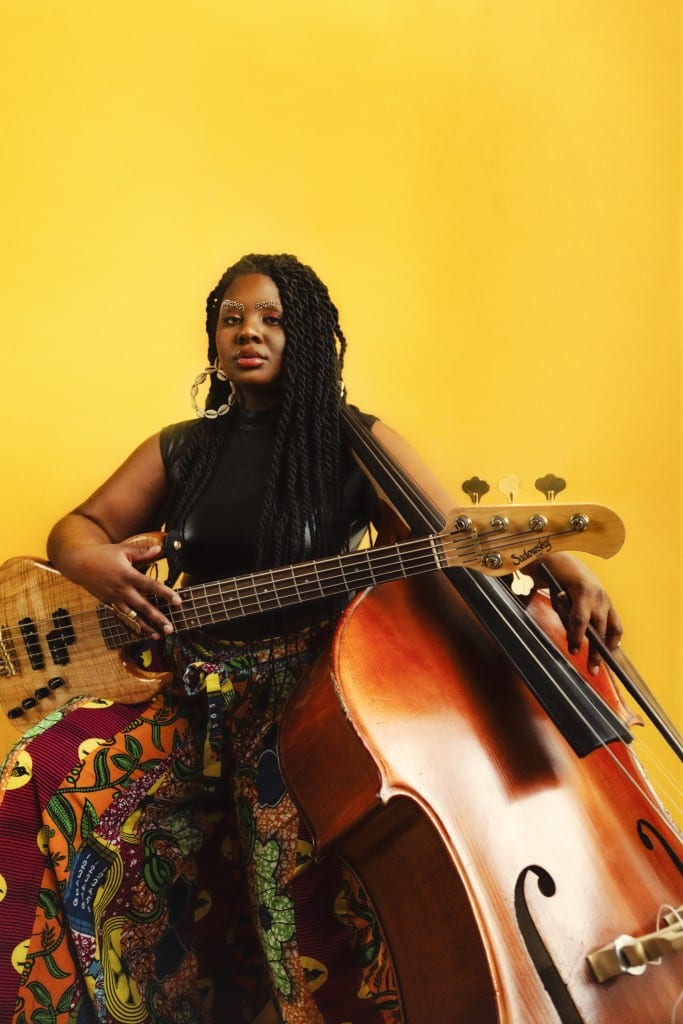
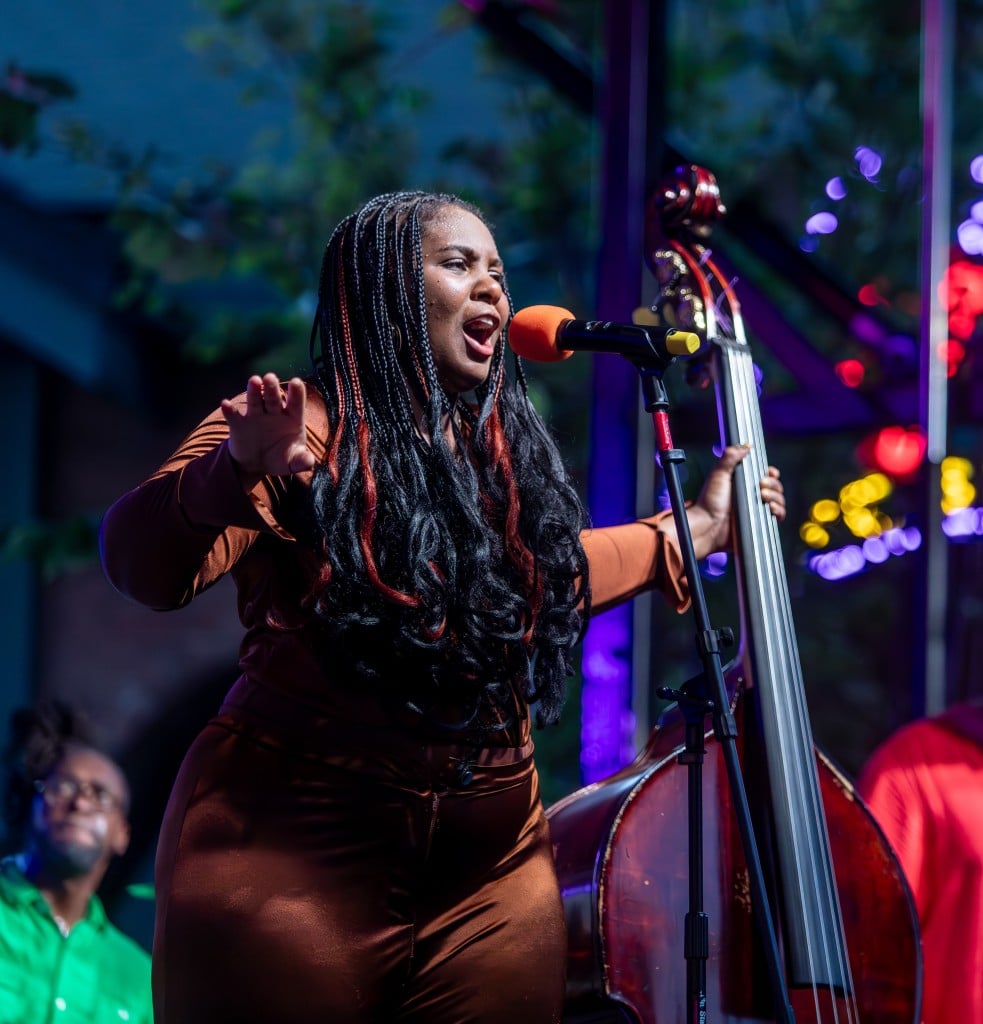
You can even block your ears, if you’re feeling perverse, and still catch the vibe from watching Owens lead the band while all but dancing with her upright bass.
“I’ve always thought about music and dance together,” Owens said. “I know there are moments in life when you have to sit down, take a rest and just think, but there are a lot of moments where you have to get up and go. I always want to feel the dance in the music.”
Endea Owens & The Cookout
7:30 p.m. Friday, Oct. 9
Wharton Center Pasant Theatre
750 E. Shaw Lane, East Lansing
(517) 432-2000
A proud native of Detroit, Owens studied at MSU under Professor Rodney Whitaker, went on to Juilliard and made it big in New York, where she leads her own group and collaborates with a stellar roster of musical legends, from Wynton Marsalis, Diana Ross and Solange Knowles to, most recently, rapper Juicy J, on a powerful, soul-searching 2025 album, “Caught up in This Illusion.”
“I just got off the road with Elvis Costello a few days ago,” Owens said in a phone interview last week. “Just being able to listen to his lyrics, his poetry, on stage — I had a wonderful time with him. I am blessed to work with a lot of people who I respect and admire.”
That blessing multiplied beyond her dreams when she became the bassist in the house band for “The Late Show with Stephen Colbert.”
At the taping of the show’s final episode, aired in May, Costello, Jon Batiste and Paul McCartney were on hand.
McCartney didn’t schmooze much that day, but he made a point of collaring Owens.
“He told me I was an excellent bassist and that I was ‘choppy,’ meaning I have chops,” she said. “To get a compliment from Paul McCartney about my bass playing was really nice.”
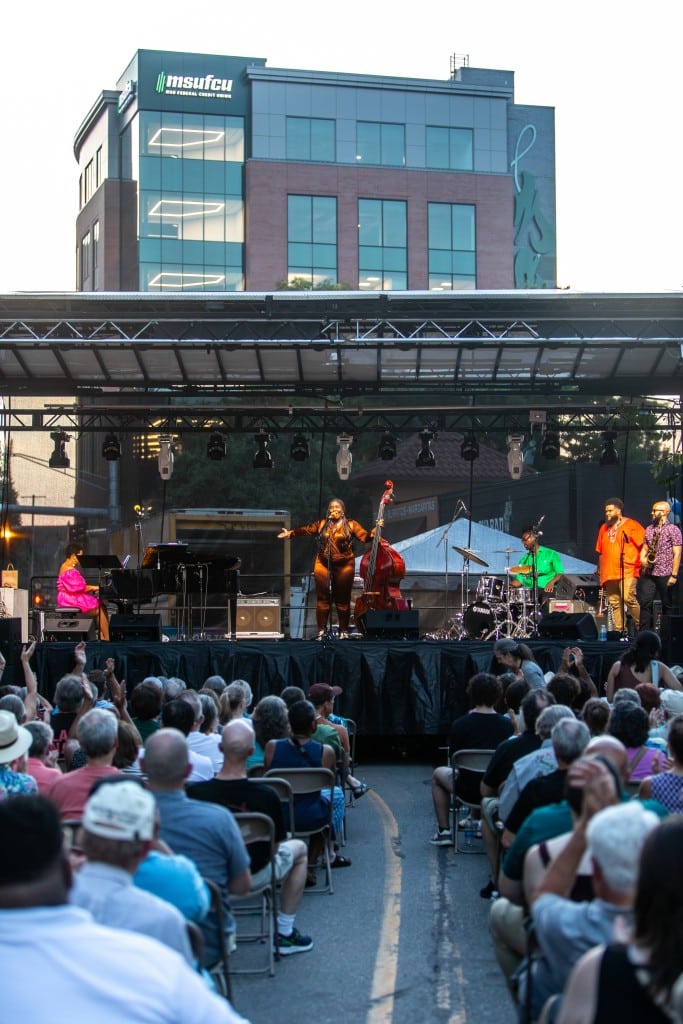
Although Owens is from Detroit, the time she spent studying with Whitaker and the jazz studies faculty at MSU makes Friday’s visit a kind of homecoming.
“I owe a lot of what I know to the professors and especially to Rodney,” she said. “They gave me the foundation to succeed in New York.”
She still enjoys strolling the wooded “Sacred Space” at the heart of campus, adjoining the Music Building.
“MSU’s campus is so gorgeous. Everywhere I walk, I have a nice place where I can clear my mind.”
Well-being and positivity are key ingredients in Owens’ musical recipe.
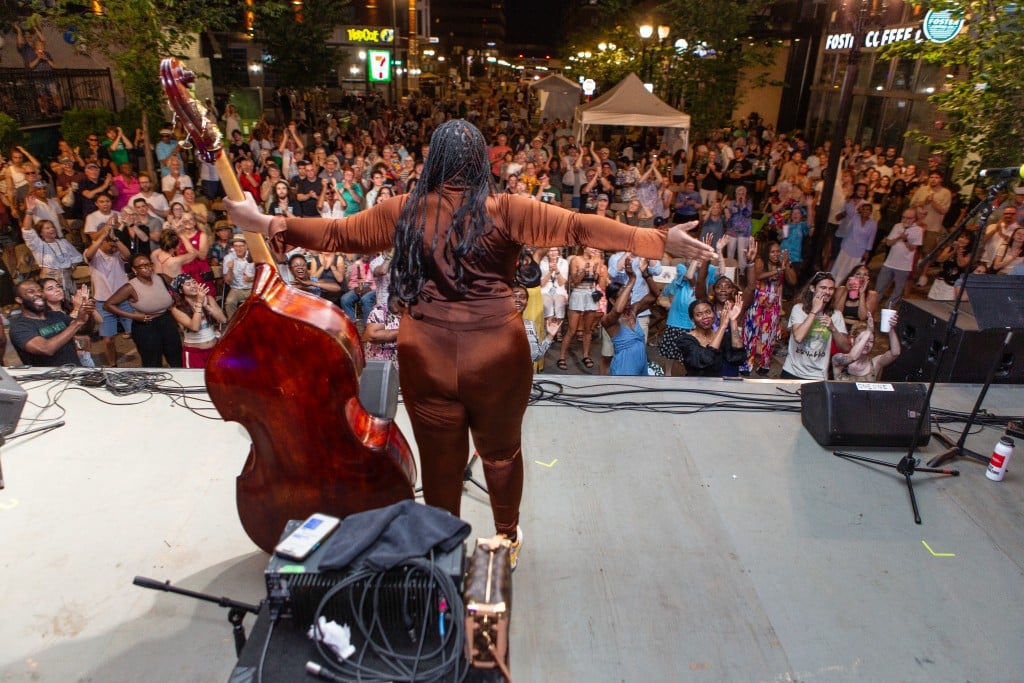
“It’s not about, ‘Let’s play the blues,’ or ‘Oh, let’s play this song in 4/4.’ I can play anything,” she said. “I’ve written odd-meter songs, and I’ve written for orchestra. This is just my take on what I feel about jazz, and how I want to feel.”
When it came to putting a band and a sound together, Owens was inspired largely by the Jazz Messengers, the seminal hard-bop group led by firebrand drummer Art Blakey that carried the torch of straight-ahead jazz from the 1950s until Blakey’s death in 1990, and one of the group’s worthiest successors, trumpeter Roy Hargrove’s high-energy 1990s quintet.
Both groups were rooted deeply in jazz tradition while vigorously pushing the music into fresh territory.
“Art Blakey had the power and the pull,” Owens said. “I always felt pulled to what was happening in the rhythm section, what was happening melodically. And when I listened to Roy Hargrove’s quintet, I felt like I heard everything I grew up with.”
The six-piece Cookout will perform some of Owens’ favorite compositions from her first album, including the spiritual, danceable “Feel Good” and “Where the Nubians Grow,” in addition to new songs and standards.
For Owens, “The Late Show” was a dream gig in many ways, but the show’s demise left her free to take her music in multiple directions. Besides touring with the likes of Elvis Costello and her own Cookout combo, she is writing tunes for a new album she plans to release next summer. “Ida’s Crusade,” a composition paying tribute to civil rights leader, women’s rights advocate and journalist Ida B. Wells, has been performed by the Jazz at Lincoln Center Orchestra and Carnegie Hall’s national youth ensemble NYO Jazz, with more performances in the works.
As if all that weren’t enough, Owens has her eye on a fresh frontier. So far, her only experience in film has been playing bass in the score to Shaka King’s “Judas and the Black Messiah,” but that’s about to change.
“Next time, hopefully, I’ll be behind the score,” she said. “I love, love, love film scoring. It’s been a dream of mine. I like to say I’m John Williams looking for my Steven Spielberg.”
Her all-time favorite is Williams’ score for Spielberg’s “E.T.”
“What he did with French horns — if you really listen to that soundtrack, it’s amazing.”
Always searching for ways to take her music to a higher level, Owens recently studied with the most accomplished bassist in jazz history, Ron Carter.
“I wanted to get over a certain hurdle in my playing, and I wanted to go to the best,” she said. “It’s incredible how much history is in one person: born in the 1930s, playing with Miles Davis, being sampled on so many hip-hop records, playing on more than 3,000 records. It definitely put me more into shape as a bassist.”
They shared insights, not only on playing bass, but also on leading a band.
“He told me to be comfortable with change,” Owens said.
“You have to adapt, and Ron Carter is amazing at that.” Carter drove home the point that if you are the bassist, you are the key player, whether you are the nominal leader of the date or not.
“The bassist really drives the band and changes its whole structure,” Owens said. “Playing one note on the bass versus another can create two different feelings, and changing the rhythm can pull the band back or push it forward. He always talks about the bass being in the driver’s seat.”